Category
page 1Leo (constellation)

Leo
zodiac constellation passing through the celestial equator

Regulus
Regulus is the brightest object in the constellation Leo and one of the brightest stars in the night sky. It has the Bayer designation designated α Leonis, which is Latinized to Alpha Leonis, and abbreviated Alpha Leo or α Leo. Regulus appears single, but is actually a quadruple star system composed of four stars that are organized into two pairs. The system lies approximately 79 light years from the Solar System.

Messier 95
Barred spiral galaxy in the constellation Leo

Messier 105
galaxy
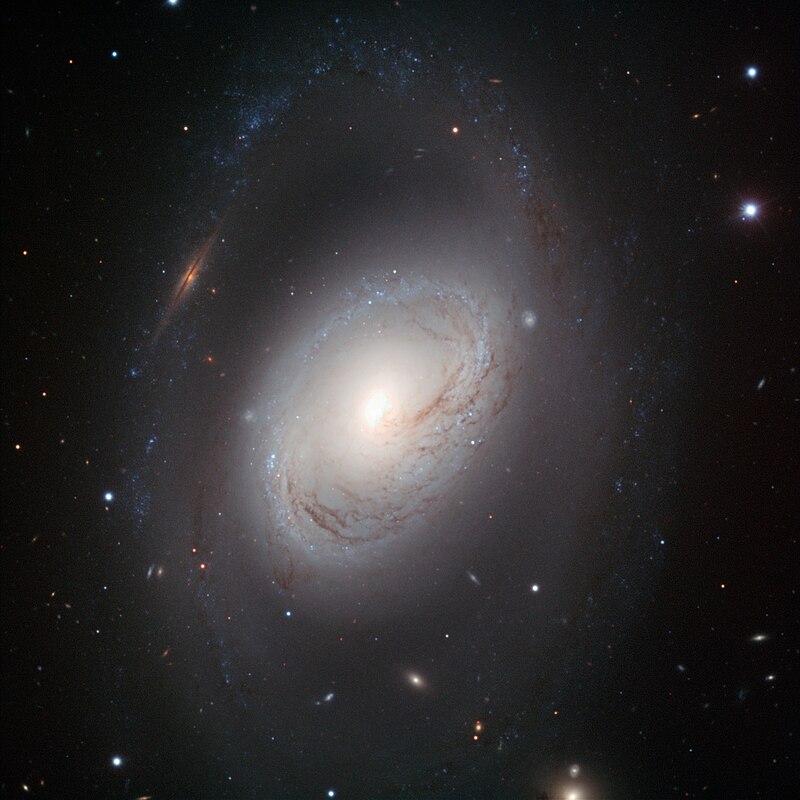
Messier 96
Galaxy

Messier 66
Spiral galaxy in the constellation Leo
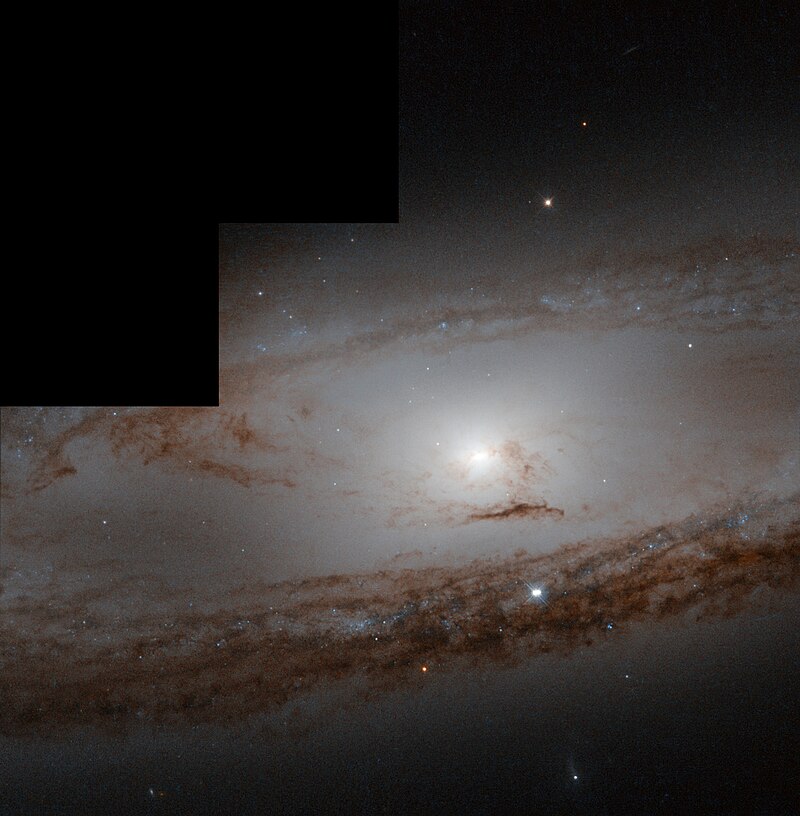
Messier 65
spiral galaxy in the constellation Leo

Leonids
The Leonids ( ) are a prolific annual meteor shower associated with the comet Tempel–Tuttle, and are also known for their spectacular meteor storms that occur about every 33 years. The Leonids get their name from the location of their radiant in the constellation Leo: the meteors appear to radiate from that point in the sky. The name is derived from Greek and Latin with the prefix Leo- referring to the constellation and the suffix -ids signifying that the meteor shower is the offspring of, descendant of, the constellation Leo.

K2-18 b
K2-18b, also known as EPIC 201912552 b, is an exoplanet orbiting the red dwarf K2-18, located away from Earth. The planet is a sub-Neptune about 2.6 times the radius of Earth, with a 33-day orbit within the star's habitable zone; it receives approximately a similar amount of light as the Earth receives from the Sun. Initially discovered with the Kepler space telescope, it was later observed by the James Webb Space Telescope (JWST) in order to study the planet's atmosphere.
NGC 3628
spiral galaxy in the constellation Leo

Wolf 359
red dwarf in the constellation Leo
NGC 3370
spiral galaxy in the constellation Leo
NGC 2903
barred spiral galaxy in the constellation Leo
NGC 3521
spiral galaxy in the constellation Leo

Denebola
Denebola is the second-brightest star in the zodiac constellation of Leo. It is the easternmost of the bright stars of Leo. It has the Bayer designation Beta Leonis or β Leonis, which are abbreviated Beta Leo or β Leo. Denebola is an A-type main sequence star with 75% more mass than the Sun and 15 times the Sun's luminosity. Based on parallax measurements from the Hipparcos astrometry satellite, the star is at a distance of from the Sun. Its apparent visual magnitude is 2.14, making it readily visible to the naked eye. Denebola is a Delta Scuti type variable star, meaning its luminosity varies
NGC 3226
galaxy
Arp 87
interacting galaxy
NGC 3489
galaxy
NGC 3842
galaxy
NGC 3377
galaxy
NGC 3412
Lenticular galaxy
NGC 3593
lenticular galaxy in the constellation Leo
NGC 3041
galaxy
NGC 3185
galaxy
NGC 3227
galaxy
NGC 3596
spiral galaxy in the constellation Leo
NGC 3190
galaxy
NGC 3883
galaxy
NGC 3501
galaxy
NGC 3686
galaxy
NGC 3837
galaxy
NGC 2964
galaxy
NGC 3506
galaxy
NGC 3607
galaxy
NGC 3455
galaxy
NGC 3384
elliptical galaxy in the constellation Leo
NGC 3274
galaxy
NGC 3844
galaxy
NGC 3873
galaxy
NGC 3816
galaxy
NGC 3805
galaxy
NGC 2968
galaxy
NGC 3845
galaxy
NGC 3362
galaxy
NGC 3032
galaxy
NGC 3301
lenticular galaxy in the constellation Leo
NGC 3357
galaxy
NGC 3640
galaxy
NGC 3821
galaxy
NGC 3884
galaxy
NGC 3859
galaxy
NGC 3841
galaxy
NGC 3664
galaxy in the constellation Leo
NGC 3239
galaxy
NGC 3426
galaxy
NGC 3689
galaxy
NGC 3851
galaxy
NGC 3605
galaxy
NGC 4005
spiral galaxy in the constellation Leo
NGC 3868
galaxy