Category
page 1Lichen photobionts
%20Figure%202.jpg)
Nostoc
Nostoc, also known as star jelly, '''troll's butter, spit of moon, fallen star, witch's butter''' (not to be confused with the fungi commonly known as witches' butter), and '''witch's jelly,' is the most common genus of cyanobacteria found in a variety of both aquatic and terrestrial environments that may form colonies composed of filaments of moniliform cells in a gelatinous sheath of polysaccharides. It may also grow symbiotically within the tissues of plants, providing nitrogen to its host through the action of terminally differentiated cells known as heterocysts. Nostoc is a genus that inc
.jpg)
Trebouxia
Trebouxia is a unicellular green alga. It is a photosynthetic organism that can exist in almost all habitats found in polar, tropical, and temperate regions. It can either exist in a symbiotic relationship with fungi in the form of lichen or it can survive independently as a free-living organism alone or in colonies. Trebouxia is the most common photobiont in extant lichens. It is a primary producer of marine, freshwater and terrestrial ecosystems. It uses carotenoids and chlorophyll a and b to harvest energy from the sun and provide nutrients to various animals and insects.

Coccomyxa
Coccomyxa is a genus of green algae in the family Coccomyxaceae. This genus is defined by their small, elliptical to spherical shape, and the presence of a simple parietal chloroplast. These features, along with their occurrence in various lifestyles such as free-living, parasitic, or as , have been used to identify more than 40 species. Using additional morphological features, such as brown akinetes formation, allows for the differentiation between Coccomyxa and the genus Pseudococcomyxa, as they tend to share some morphological characteristics like the general cell shape and one-sided mucila
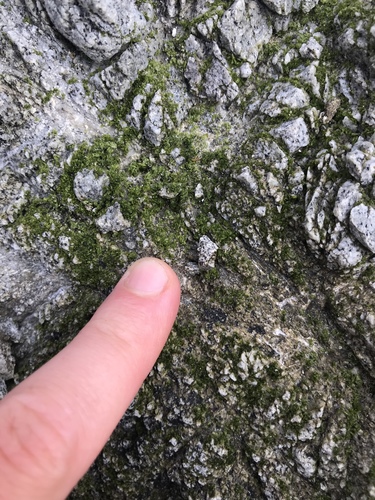
Prasiola crispa
species of seaweed

Stichococcus
Stichococcus is a genus of green algae in the family Stichococcaceae. It is a very common algal genus found in a variety of habitats, such as tree trunks, soil, snow, freshwater and marine habitats. One species, Stichococcus bacillaris is economically important as it produces fatty acids useful for biofuels.