Category
page 1Lichinomycetes
Lichinomycetes
REDIRECT Lichinales
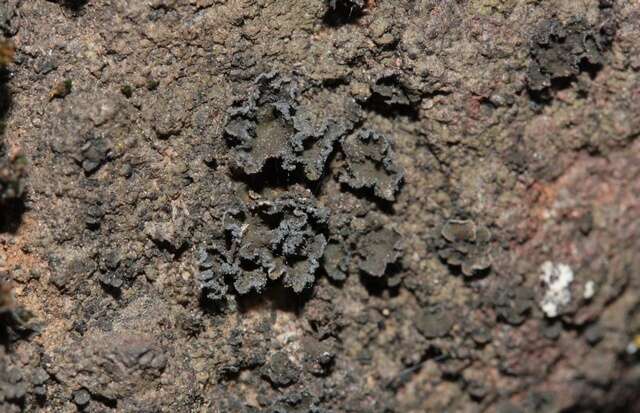
Lichinales
Lichinales is the sole order of ascomycete fungi in the class Lichinomycetes. It contains three families: Gloeoheppiaceae (3 genera), Lichinaceae (43 genera), and Peltulaceae (1 genus). Most species are lichenized. Lichinales was proposed in 1986 by German lichenologists Aino Henssen and Burkhard Büdel. The class Lichinomycetes was created by Valérie Reeb, François Lutzoni and Claude Roux in 2004.

Lichinaceae
The Lichinaceae are a family of ascomycete fungi in the order Lichinales. Most species are lichenized with cyanobacteria, and have a distribution largely in temperate regions. In a 2024 molecular phylogenetics-informed revision, the circumscription of Lichinaceae was narrowed and the class Lichinomycetes was re‑structured into four families (three emended and one new), with many genera moved to Porocyphaceae, Phylliscaceae, or the newly erected Lichinellaceae. The family contain about 125 species in roughly 25 genera.

Psorotichia
Psorotichia is a genus of saxicolous (rock-dwelling) lichens in the family Lichinaceae. The genus can be distinguished from other rock-dwelling lichens by its distinctive dark colouration and granular texture. Unlike many lichens that form leafy or branched structures, Psorotichia species create only thin, crusty patches that blend closely with the rock surface. Their small fruiting bodies are often difficult to spot without magnification, appearing as tiny dark dots embedded in the crust.

Lempholemma
Lempholemma is a genus of lichen-forming fungi in the family Porocyphaceae. It comprises 14 species of gelatinous lichens that grow on rocks, mortar, bryophytes, or soil. These lichens form thin, often inconspicuous mats that can take various shapes—from wart-like crusts to tiny leaf-shaped scales or delicate tufts—and turn dark blue-green and gelatinous when damp due to their partnership with nitrogen-fixing cyanobacteria. Established as a genus in 1855 by the German lichenologist Gustav Wilhelm Körber to separate certain gelatinous lichens from the genus Collema, Lempholemma species typicall
Peltulaceae
REDIRECT Peltula

Thyrea
genus of fungi

Heppia
Heppia is a genus of olive, brownish, grey, or blackish squamulose, crustose, or peltate like lichens. Heppia was once the type genus of the family Heppiaceae, but that family was folded into synonymy with Lichinaceae.

Ephebe
genus of fungi
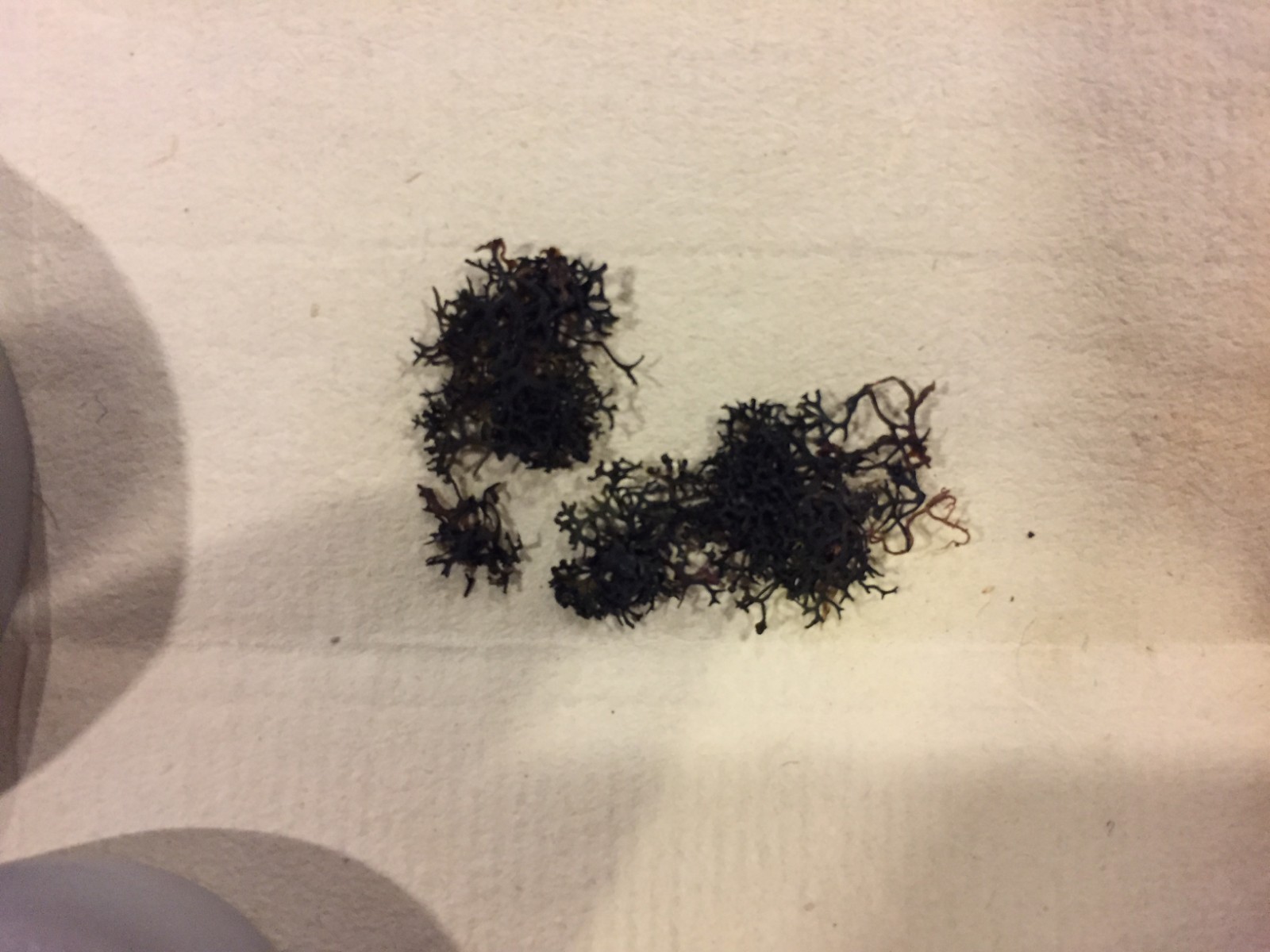
Lichina pygmaea
species of fungus

Peltula
Peltula is a genus of small dark brown to olive or dark grey squamulose lichens. These lichens typically grow on rocks in arid and semi-arid environments worldwide. They consist of a fungus living in symbiosis with a photosynthetic partner, specifically a cyanobacterium of the genus Chroococcidiopsis. Peltula is the only genus in the family Peltulaceae, which belongs to the Lichinomycetes, a class of fungi that form lichens. The genus includes about 50 recognised species, which have a variety of growth forms ranging from flat and crust-like to more complex, leaf-like structures. Peltula lichen
Anema
genus of lichen

Thyrea confusa
species of fungus

Peccania
Peccania is a genus of lichen-forming fungi in the family Phylliscaceae. These lichens are small and form thin, crusty patches or tiny scale-like structures that are tightly attached to rock surfaces. They partner with blue-green bacteria instead of the green algae found in most other lichens, which helps them survive in harsh, drought-prone environments and quickly resume photosynthesis after wetting. Peccania species grow exclusively on rocks, favouring well-lit locations on both limestone and acidic substrates in arid and semi-arid regions, though they can also occupy locally dry spots in o
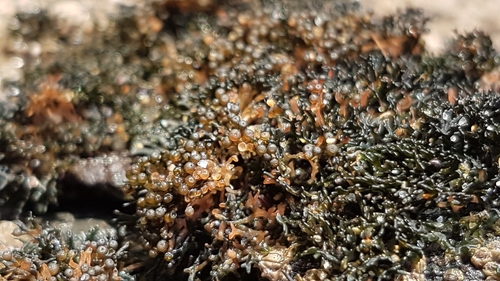
Lichina
Lichina is a genus of lichen-forming fungi in the family Lichinaceae. The genus contains four marine species. These cyanolichens include species such as L. pygmaea or L. confinis, in which the associated cyanobiont has been assigned to the genus Rivularia. Furthermore, evidence of a high specificity of each mycobiont towards particular cyanobiont lineages in both species has been detected.

Pyrenopsis
Pyrenopsis is a genus of lichen-forming fungi in the family Porocyphaceae. The lichens grow on constantly wet, shaded rock faces where they form gelatinous crusts that soften and show reddish tints when moistened. They reproduce through small, buried fruiting bodies that open as pore-like structures at the surface.

Heppia lutosa
species of fungus
Lemmopsis
Lemmopsis is a genus of fungi in the family Lichinaceae. These lichens form extremely small, black, crust-like growths that often appear as a thin dusting of granules on limestone rock or clay soil and become noticeably gelatinous when moist. Distinguished by their partnership with cyanobacteria that enables nitrogen fixation, they produce minute cup-shaped reproductive structures with reddish-brown and are identified by their combination of gelatinous thallus, robust-rimmed apothecia, and single-celled spores.

Porocyphus
Porocyphus is a genus of lichen-forming fungi in the family Porocyphaceae. The genus was established in 1855 by the German lichenologist Gustav Wilhelm Körber to distinguish certain lichens from the related genus Collema, based on differences in their reproductive structures. Porocyphus species are found worldwide and are characterised by their pore-like fruiting bodies and simple spores. They form dark, gelatinous crusts on rocks, soil, and bark.
Gloeoheppia squamulosa
species of fungus

Pterygiopsis
Pterygiopsis is a genus of lichen-forming fungi in the family Lichinaceae. It contains 12 species. These lichens form thin, blackish crusts that cling tightly to rock surfaces, especially in damp seepage zones or along stream margins, and develop pinpoint brown disc-like fruiting bodies on their surface. The genus is typically found in semi-aquatic to fully aquatic habitats, where the lichens lack distinct outer protective layers but have a slightly gelatinous texture when wet.

Zahlbrucknerella
Zahlbrucknerella is a genus of filamentous, rock-dwelling lichens in the family Lichinaceae.
Digitothyrea
Digitothyrea is a genus of fungi within the family Lichinaceae. The genus contains three species.

Ephebe lanata
species of fungus

Heppia conchiloba
species of fungus

Lichinella
Lichinella is a genus of lichen-forming fungi in the family Lichinellaceae. The genus is morphologically diverse, including species that form crusts, small scales, or tiny shrub-like tufts. Its members grow on rock surfaces and in biological soil crusts, mainly in warm-temperate to arid tropical regions worldwide. It was described by William Nylander in 1873, and was placed in the newly erected family Lichinellaceae following a 2024 molecular reclassification of the Lichinomycetes.

Lichinella granulosa
species of fungus
Calotrichopsis
Calotrichopsis is a small genus of cyanolichens placed in the family Porocyphaceae. The genus was originally circumscribed by the Finnish lichenologist Edvard August Vainio in 1896. A 2024 multilocus study of the class Lichinomycetes emended Porocyphaceae and provisionally included Calotrichopsis in that family; earlier references had kept the genus in Lichinaceae. Species are minute, dark-coloured lichens partnered with cyanobacteria and are typically found on rock or soil in open, intermittently wet microhabitats. The family placement is considered tentative pending additional molecular samp

Peccania tiruncula
species of fungus
Thelignya
Thelignya is a genus of fungi within the family Lichinaceae. It is monotypic, containing only the single species Thelignya fuliginea.

Pseudopeltula heppioides
species of fungus
Lichinella iodopulchra
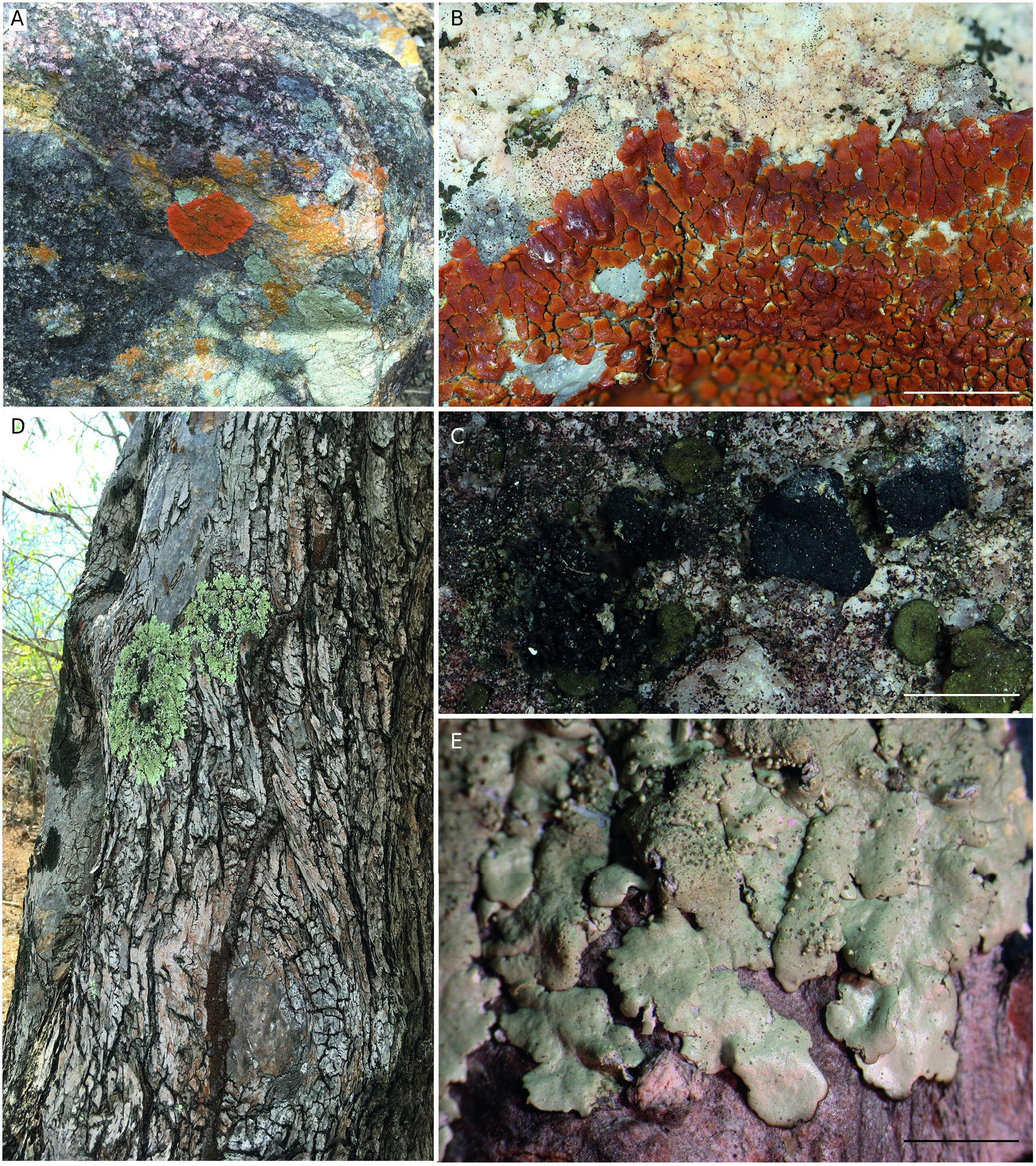
species of fungus

Gloeoheppia polyspora
species of fungus

Pyrenocarpon
Pyrenocarpon is a fungal genus in the family Lichinaceae. It is monospecific, containing the single species Pyrenocarpon thelostomum, a lichen. This rare lichen is found only in shaded stream beds in parts of Britain, including Exmoor, the Pennines, and the Scottish Highlands. It was first described as a distinct genus in 1855 by the Italian lichenologist Vittore Trevisan based on its unique waxy fruiting structures. The species grows as a thin, reddish-brown crust on hard rocks that are kept constantly wet by flowing water.

Metamelanea
Metamelanea is a small genus of lichen-forming fungi in the family Lichinaceae. It consists of three species of rock-dwelling lichens.
Stromatella Henssen, 1989 (non Kornmann & Sahling 1985, nom. inval.)
genus of lichens
Thermutis
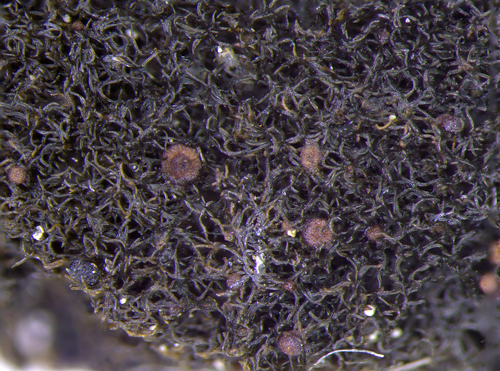
Thermutis is a small genus of cyanolichens in the family Porocyphaceae. It was formerly treated in Lichinaceae, but a 2024 multilocus re-classification of the class Lichinomycetes emended Porocyphaceae and included Thermutis there. Species are minute, dark lichens with , often gelatinous to thalli that occur on rock or soil in open, periodically wet microhabitats. Their sexual structures commonly develop as ; the asci are and the ascospores and colourless.

Phloeopeccania
Phloeopeccania is a genus of fungi within the family Lichinaceae. It contains three species.
Gloeoheppia
Gloeoheppia is a genus of lichen-forming fungi in the family Lichinaceae. It comprises five species. Members of the genus form small, scaly to slightly shield-shaped patches that are usually dark brown, olive, or blackish, and many become more swollen when wet. They mostly live in warm, dry regions on calcareous soil or rock, where they often form part of biological soil crusts that help bind and stabilise bare ground. Gloeoheppia is distinguished from similar-looking lichens like Heppia by its internal structure, the nature of its , and details of its reproductive structures.

Peltula obscurans
species of fungus

Phylliscum
Phylliscum is a genus of lichen-forming fungi in the family Phylliscaceae. These lichens are small and often appear as tiny dark patches or scales tightly pressed against rock surfaces. They are easily overlooked due to their minute size, but can be found on exposed rocks in dry, sunny locations around the world.
Pseudopeltula
Pseudopeltula is a genus of lichen-forming fungi in the family Lichinaceae. Established in 1995 by the lichenologist Aino Henssen, the genus currently includes four recognised species. These small cyanolichens are characterised by their (scaly) to (shield-shaped) thalli, which lack a lower and are attached to the by rhizines. A key feature of Pseudopeltula is its complex apothecia (fruiting bodies), which have hymenia that often become divided by sterile tissue as they mature. The genus is primarily found in arid and semi-arid regions of North America, Mexico, and the Caribbean, where species

Cryptothele
genus of lichen