Category
page 1Light
.jpg)
light
thumb|upright=1.3|A triangular dispersive prism|prism dispersing a beam of white light. The longer wavelengths (red) and the shorter wavelengths (green-blue) are separated.

light-year
A light-year, alternatively spelled light year (ly or lyr), is a unit of length used to express astronomical distances and is equal to exactly , which is approximately 9.46 trillion kilometres or 5.88 trillion miles. As defined by the International Astronomical Union (IAU), a light-year is the distance that light travels in vacuum in one Julian year (365.25 days). Despite its inclusion of the word "year", the term is not a unit of time.
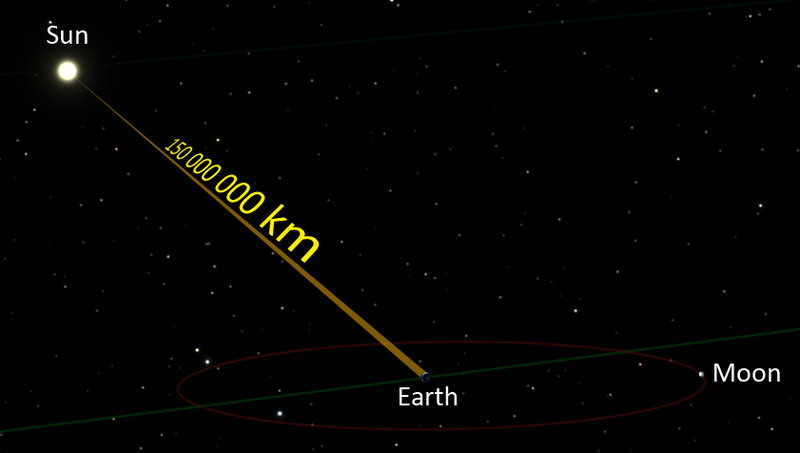
speed of light in vacuum
speed of electromagnetic waves in vacuum

optics
thumb|A researcher working on an optical system|300x300px

spectrum
thumb|The spectrum in a rainbow

Rayleigh scattering
elastic scattering of light, or other electromagnetic radiation, by particles of size much smaller than the wavelength of the radiation
Total internal reflection
physical phenomenon

daylight
thumb|upright=1.2|World map showing the areas of Earth receiving daylight around 1:00 pm UTC in April

Wien's displacement law
relation between the wavelength of the black-body radiation curve peak and the temperature

moonlight
thumb|Earthlight illuminates the dim side of the Moon, while direct sunlight illuminates the bright side.

terminator
moving line that separates the illuminated day side and the dark night side of a planetary body

phototropism
thumb|The light from the lamp (1.) functions as a detectable change in the plant's environment. As a result, the plant exhibits a reaction of phototropism—directional growth (2.) toward the light stimulus.
thumbnail|Auxin distribution controls phototropism.
1. Sunlight strikes the plant from directly above. Auxin (pink dots) encourages growth straight up.
2, 3, 4. Sunlight strikes the plant at an angle. Auxin is concentrated on one side, stimulating growth at an angle from the preceding stem.
thumb|Phototropism in Solanum lycopersicum.
light pillar
atmospheric optical phenomenon in the form of a vertical band of light which appears to extend above and/or below a light source

Opticks, or a Treatise of the Reflections, Refractions, Inflections and Colours of Light
Opticks: or, A Treatise of the Reflexions, Refractions, Inflexions and Colours of Light is a collection of three books by Isaac Newton that was published in English in 1704 (a scholarly Latin translation appeared in 1706). The treatise analyses the fundamental nature of light by means of the refraction of light with prisms and lenses, the diffraction of light by closely spaced sheets of glass, and the behaviour of colour mixtures with spectral lights or pigment powders. Opticks was Newton's second major work on physical science and it is considered one of the three major works on optics during

photogram
thumb|A photogram of a number of photography-related objects
thumb|Photogram with soil and plants
A photogram is a photographic image made without a camera by placing objects directly onto the surface of a light-sensitive material such as photographic paper and then exposing it to light.
light cone
path taken by a flash of light through spacetime
Fresnel equations
equations of light transmission and reflection
round-trip delay time
time required to receive a response to a query across a communication system
diffuse sky radiation
Solar radiation scattered and absorbed in Earth's atmosphere
photobiology
Photobiology is the scientific study of the beneficial and harmful interactions of light (technically, non-ionizing radiation) in living organisms. The field includes the study of photophysics, photochemistry, photosynthesis, photomorphogenesis, visual processing, circadian rhythms, photomovement, bioluminescence, and ultraviolet radiation effects.
tired light
class of hypothetical redshift mechanisms
light beam
projection of light energy
optical glass
special kinds of glass used for making various components of optical devices and systems
variable speed of light
non-mainstream theory in physics remaining to be validated

photodegradation
thumb|A plastic bucket used as an open-air flowerpot photodegraded after some years.
Photodegradation is the alteration of materials by light. Commonly, the term is used loosely to refer to the combined action of sunlight and air, which cause oxidation and hydrolysis. Often photodegradation is intentionally avoided, since it destroys paintings and other artifacts. It is, however, partly responsible for remineralization of biomass and is used intentionally in some disinfection technologies. Photodegradation does not apply to how materials may be aged or degraded via infrared light or heat, but
spontaneous parametric down-conversion
important process in quantum optics, used especially as a source of entangled photon pairs, and of single photons
kugelblitz
theorized concentration of light so intense that it forms an event horizon and becomes self-trapped

Acousto-optics
Acousto-optics is a branch of physics that studies the interactions between sound waves and light waves, especially the diffraction of laser light by ultrasound (or sound in general) through an ultrasonic grating.
Rømer's determination of the speed of light
1676 experiment which showed that light has finite speed
Visible light communication
communications medium using fluorescent bulbs or LEDs
standard illuminant
theoretical source of visible light
color mixing
Production of all visible colours by mixing a limited amount of colour sources or coloured lights, whose colour tone is a main colour
shade
dark area in which sunlight or other incoming light is blocked
synchrotron light source
particle accelerator designed to produce intense x-ray beams
Orbital angular momentum of light
type of angular momentum in light
optically stimulated luminescence dating
form of dating how long ago mineral grains had been last exposed to sunlight or heating
slow light
propagation of an optical pulse at a very low group velocity
spin angular momentum of light
angular momentum deriving from photon spin

shadow bands
wavy alternating light and dark lines seen immediately before and after a total solar eclipse
photon upconversion
process in which the sequential absorption of two or more photons leads to the emission of light at shorter wavelength than the excitation wavelength
mesocosm
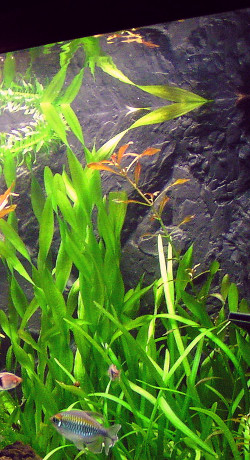
thumb | Diagram of a small form closed system mesocosm
thumb | Different components of a successful mesocosm
right to light
form of easement in English law
angular momentum of light
physical quantity carried in photons
relativistic aberration
the distortion of light at high velocities
light in painting
Light in painting
te lapa
oceanic light phenomenon
Ars Magna Lucis et umbrae
1646 work by Athanasius Kircher
squeezed state of light
quantum state of light, where the uncertainty in some quadrature direction is less than that of vacuum