Category
page 1Lightning

lightning
thumb|upright=1.5|Strokes of cloud-to-ground lightning strike the Mediterranean Sea off of Port-la-Nouvelle in southern France.

thunder
Thunder is the sound caused by lightning. Depending upon the distance from and nature of the lightning, it can range from a long, low rumble to a sudden, loud crack. The sudden increase in temperature and hence pressure caused by the lightning produces rapid expansion of the air in the path of a lightning bolt. In turn, this expansion of air creates a sonic shock wave, often referred to as a "thunderclap" or "peal of thunder". The scientific study of thunder is known as brontology and the irrational fear (phobia) of thunder is called brontophobia.
.jpg)
thunderstorm
upright=1.35|thumb|Lightning from a thunderstorm near Pritzerbe, Germany
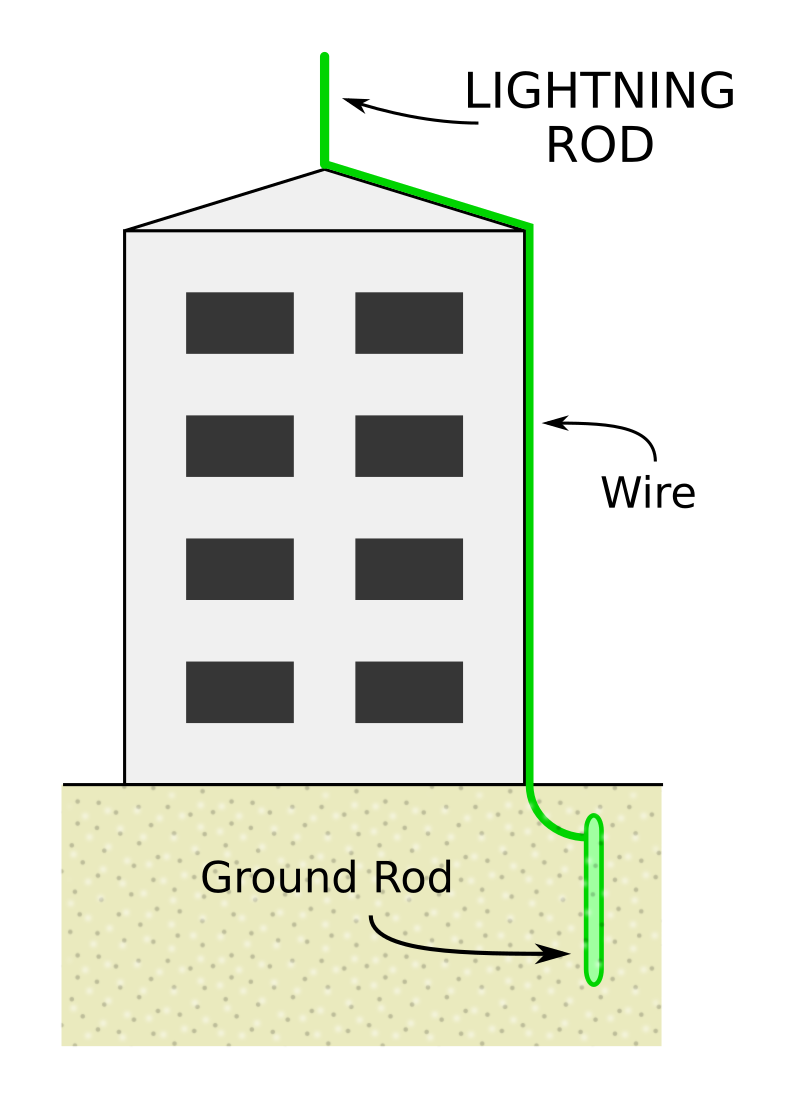
lightning rod
metal rod or metallic object to protect from lightning

ball lightning
extremely rare unexplained atmospheric electrical phenomenon

fulgurite
thumb|upright=0.5|Fulgurite

astraphobia
Astraphobia, also known as astrapophobia, brontophobia, ceraunophobia, or tonitrophobia, is the fear of thunder and lightning or an unwarranted fear of scattered and/or isolated thunderstorms, a type of specific phobia. It is a treatable phobia that both humans and animals can develop. The term astraphobia comes from Ancient Greek ἀστραπή (astrape), meaning "thunder", and φόβος (phóbos), meaning "fear".

aeronomy
Aeronomy is the scientific study of the upper atmosphere of the Earth and corresponding regions of the atmospheres of other planets. It is a branch of both atmospheric chemistry and atmospheric physics. Scientists specializing in aeronomy, known as aeronomers, study the motions and chemical composition and properties of the Earth's upper atmosphere and regions of the atmospheres of other planets that correspond to it, as well as the interaction between upper atmospheres and the space environment. In atmospheric regions aeronomers study, chemical dissociation and ionization are important phenom
sprite
large-scale electrical discharge that occurs high above thunderstorm clouds
Catatumbo lightning
atmospheric phenomenon in Venezuela

Fárbauti
Fárbauti (Old Norse) is a jötunn in Norse mythology. In all sources, he is portrayed as the father of Loki. Fárbauti is attested in the Prose Edda and in kennings of Viking Age skalds.
Lichtenberg figure
A branching electric discharge that sometimes appears on the surface or in the interior of insulating materials
heat lightning
lightning not accompanied by thunder sound
volcanic lightning
lightning produced by a volcanic eruption
lightning strike
electric discharge between the atmosphere and the ground
transient luminous event
short-lived electrical phenomena that occur at high altitudes over lightning storms (sprites, jets, etc.)
keraunopathy
injury caused by lightning strike
lightning detector
device that detects lightning

Raijū
thumb|upright|The Raijū as depicted in Ban Kōkē's Kanda-Jihitsu.
thumb|A Raijū depicted under the title "Kaminari" in Takehara Shunsen's [[Ehon Hyaku Monogatari.]]
dry thunderstorm
thunderstorm with little or no precipitation
kite experiment
science experiment on lightning and electricity
thunderbolt
thumb|The high-voltage|high-voltage electricity warning symbol is a contemporary example of thunderbolt iconography
Radio atmospheric
broadband electromagnetic impulse
crown flash
photometeor / cumulonimbus : weather phenomenon consisting of strobes of light which appear to be "dancing"
lightning arrester
device in power/telecommunication systems that protects against lightning, such that when a lightning surge happens, the current is diverted through the arrester to earth
Harvesting lightning energy
attempts to harvest energy of lightnings
Franklin bells
scientific instrument demonstrating electric charge

Ulagam Sutrum Valiban
1973 Tamil film directed by M. G. Ramachandran
bidental
thumb|upright|A Dionysus|Bacchic Roman [[puteal ("wellhead") of the Neo-Attic style, inspired by Hellenistic art. Relief shows figures a Bacchic procession: a drunk Hercules (in centre) wears the skin of the Nemean lion and carries his olivewood club.]]
thumb|right|Bidental Drawing From: The Illustrated Companion to the Latin Dictionary and Greek Lexicon
In ancient Roman religion, a bidental was a sacred shrine erected on the spot where lightning had struck.
counterpoise
device used as a substitute for a ground connection in a radio antenna system