Category
page 1Linux distributions without systemd

Android
operating system created by Google for use on mobile devices

ChromeOS
ChromeOS (sometimes styled as chromeOS and formerly styled as Chrome OS) is a proprietary operating system designed and developed by Google. It is derived from the open-source operating system (which itself is derived from Gentoo Linux), and uses the Google Chrome web browser as its principal user interface.

Slackware
Slackware is a Linux distribution created by Patrick Volkerding in 1993. Originally based on Softlanding Linux System (SLS), Slackware has been the basis for many other Linux distributions, most notably the first versions of SUSE Linux distributions, and is the oldest distribution that is still maintained.

Knoppix
Knoppix, stylized KNOPPIX ( ), is an operating system based on Debian designed to be run directly from a CD or DVD (Live CD) or a USB flash drive (Live USB). It was first released in 2000 by German Linux consultant Klaus Knopper, and was one of the first popular live distributions. Knoppix is loaded from the removable medium and decompressed into a RAM drive. The decompression is transparent and on-the-fly.

Puppy Linux
lightweight Linux distribution
Damn Small Linux
Lightweight, desktop-oriented Linux distribution

SliTaz
SliTaz GNU/Linux is a lightweight Linux distribution, community-based, suitable for use on older hardware and as a Live CD or Live USB. SliTaz stands for "Simple, Light, Incredible, Temporary Autonomous Zone" according to the boot screen.
.jpg)
LineageOS
LineageOS is an open source Android (AOSP)-based operating system for smartphones, tablets, and set-top boxes. It is community-developed and serves as the successor to CyanogenMod, from which it was forked in December 2016. As of 2025, there are about 4.5 million devices running LineageOS.
PCLinuxOS
PCLinuxOS, often shortened to PCLOS, is a rolling-release Linux distribution for x86-64 computers, with KDE Plasma, MATE, and XFCE as its default user interfaces. It is a primarily FOSS operating system for personal computers aimed at ease of use.

Maemo
Maemo is a Linux-based software platform originally developed by Nokia, now developed by the community, for smartphones and Internet tablets. The platform comprises both the Maemo operating system and SDK. Maemo played a key role in Nokia's strategy as an attempt to compete with Apple and Android; the only retail devices that shipped with Maemo were the Nokia Internet tablet line released in 2005 and the Nokia N900 smartphone in 2009.

OpenWrt
OpenWrt (from open wireless router) is an open-source project for embedded operating systems based on Linux, primarily used on embedded devices to route network traffic. The main components are Linux, util-linux, musl, and BusyBox. All components have been optimized to be small enough to fit into the limited storage and memory available in home routers.
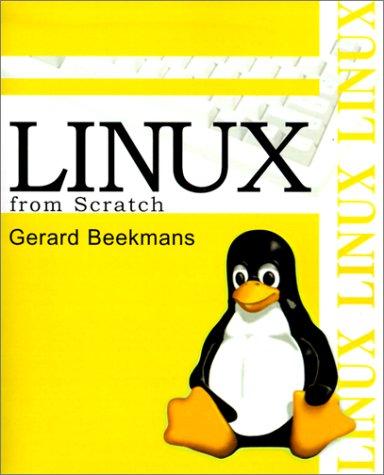
Linux From Scratch
book guiding users with building their own custom Linux system from source code
Tiny Core Linux
lightweight Linux distribution
Alpine Linux
Linux distribution
ChromiumOS
ChromiumOS (formerly styled as Chromium OS) is a free and open-source Linux distribution designed for running web applications and browsing the World Wide Web. It is the open-source version of ChromeOS, a Linux distribution made by Google.
MX Linux
Linux distribution

Zenwalk
Zenwalk GNU/Linux is a desktop-focused Linux distribution founded by Jean-Philippe Guillemin. It is based on Slackware with very few modifications at system level making it 100% compatible with Slackware. It aims to be a modern, multi-purpose Linux distribution by focusing on internet applications, multimedia and programming tools. It comes with many specialized tools and is designed for beginners and advanced users alike, as it offers system configuration via both graphical tools and the command line.

Android-x86
thumb|right|Android x86 (ver. 4.0) on Asus Eee PC|EeePC 701 4G
Android-x86 is an unofficial port of the Android mobile operating system (developed by the Open Handset Alliance) for the Intel x86 platform. It is an open source project designed to make Android run on devices powered by x86 processors (such as PCs), rather than RISC-based ARM chips.

GrapheneOS
GrapheneOS is a free and open-source, privacy- and security-focused, Android-based operating system for Google Pixel and future Motorola devices. GrapheneOS is built on the Android Open Source Project. It focuses on researching and improving the privacy and security of Android. GrapheneOS is developed by the GrapheneOS Foundation, a Canadian nonprofit corporation.
Void Linux
Linux distribution
antiX
antiX () is a Linux distribution, originally based on MEPIS, which itself is based on the Debian Stable distribution. antiX initially replaced the MEPIS KDE desktop environment with the Fluxbox and IceWM window managers, making it suitable for older, less powerful x86-based systems. Unlike Debian, antiX does not use the systemd init system; instead, it provides an ISO image in which Runit is set as the default init system. The declared goal of the developers is to significantly extend the useful life of existing old & new computers by specifically selecting efficient software and operating sys
Devuan
Devuan is an open source, Debian-based Linux distribution that aims to maintain compatibility with other init systems and avoid lock-in by systemd. Devuan offers sysvinit, runit or OpenRC as alternatives to systemd.
postmarketOS
postmarketOS (abbreviated as pmOS) is an operating system primarily for smartphones, based on the Alpine Linux distribution. Developed since 2016, it was launched in 2017, and continues to be a work in progress.

DD-WRT
thumb|DD-WRT was originally designed for the Linksys WRT54G series, but now runs on a variety of routers.

CRUX
CRUX is a lightweight x86-64 Linux distribution targeted at experienced Linux users and delivered by a tar.gz-based package system with BSD-style initscripts. It is not based on any other Linux distribution. It also utilizes a ports system to install and upgrade applications.
Replicant
free software version of Android
VectorLinux
VectorLinux, abbreviated VL, was a Linux distribution for the x86 platform based on the Slackware Linux distribution, originally developed by Canadian developers Robert S. Lange and Darell Stavem. Since version 7 the Standard Edition is also available for the x86-64 platform, known as VLocity64 7.
GNU Guix
functional package manager for installed software packages and versions
/e/OS
free and open source OS distribution based on LineageOS

GoboLinux
GoboLinux is a Linux distribution whose most prominent feature is a reorganization of the traditional Linux file system. Rather than following the Filesystem Hierarchy Standard like most Unix-like systems, each program in a GoboLinux system has its own subdirectory tree, where all of its files (including settings specific for that program) may be found. Thus, a program "Foo" has all of its specific files and libraries in /Programs/Foo, under the corresponding version of this program at hand. For example, the commonly known GCC compiler suite version 8.1.0, would reside under the directory /Pro
Pentoo
Pentoo is a Live CD and Live USB designed for penetration testing and security assessment. Based on Gentoo Linux, Pentoo is provided both as 32 and 64-bit installable live CD. Pentoo is also available as an overlay for an existing Gentoo installation. It features packet injection patched Wi-Fi drivers, GPGPU cracking software, and many tools for penetration testing and security assessment. The Pentoo kernel includes grsecurity and PAX hardening and extra patches - with binaries compiled from a hardened toolchain with the latest nightly versions of some tools available.

Parted Magic
Linux distribution for disk partitioning
AUSTRUMI Linux
Linux distribution
Dynebolic
dyne:bolic GNU/Linux is a Live CD/DVD distribution based on the Linux kernel. It is shaped by the needs of media activists, artists and creators to be a practical tool with a focus on multimedia production, that delivers a large assortment of applications. It allows manipulation and broadcast of both sound and video with tools to record, edit, encode, and stream. In addition to multimedia specific programs, dyne:bolic also provides word processors and common desktop computing tools.
CalyxOS
IPFire
IPFire is a hardened open source Linux distribution that primarily performs as a router and a firewall; a standalone firewall system with a web-based management console for configuration.
Source Mage
Open Source Operating System
Artix Linux
Linux distribution

Calculate Linux
Linux distribution
Vine Linux
Linux distribution
Dragora GNU/Linux-libre
Linux distribution
Porteus
Linux distribution
Salix OS
Linux distribution
Hyperbola GNU/Linux-libre
Linux distribution
Zeroshell
Zeroshell is a small open-source Linux distribution for servers and embedded systems which aims to provide network services. Its administration relies on a web-based graphical interface; no shell is needed to administer and configure it. Zeroshell is available as Live CD and CompactFlash images, and VMware virtual machines.
BharOS
BharOS (formerly IndOS) is a closed-source, Android-based operating system developed by IIT Madras. It is funded by the Indian government, which intends to use it on government and public systems.
LibreCMC
LibreCMC is a GNU/Linux-libre distribution for computers with minimal resources, such as the Ben NanoNote, ath9k-based Wi-Fi routers, and other hardware with emphasis on free software. Based on OpenWrt, the project's goal is to aim for compliance with the GNU Free System Distribution Guidelines (GNU FSDG) and ensure that the project continues to meet these requirements set forth by the Free Software Foundation (FSF). LibreCMC does not support ac (Wi-Fi 5) or ax (Wi-Fi 6) due to a lack of free chipsets.
Absolute Linux
Linux distribution
PixelExperience
PixelExperience is a discontinued, open-source, Android-based operating system. The project was initiated by a community of developers in 2017. Pixel Experience was designed to be as close to "stock Android" as possible, with a focus on reliability, security, stability, performance, battery life, and useful customizations.
Chimera Linux
Linux distribution
4MLinux
4MLinux is a lightweight Linux distribution made for both the 32 bit and 64 bit architectures. It is named "4MLinux" since it has 4 main components of the OS. Maintenance (it can be used a rescue Live CD), Multimedia (There is inbuilt support for almost every multimedia format), Miniserver (It comes with a 64-bit server is included running LAMP suite), and Mystery (Includes a collection of classic Linux games). The distribution is developed in Poland, and was first released in 2010. The distribution does not include a package manager, and uses JWM (Joe's Window Manager) as its default window m