Category
page 2Linux distributions
Oracle Linux
Linux distribution

Android-x86
thumb|right|Android x86 (ver. 4.0) on Asus Eee PC|EeePC 701 4G
Android-x86 is an unofficial port of the Android mobile operating system (developed by the Open Handset Alliance) for the Intel x86 platform. It is an open source project designed to make Android run on devices powered by x86 processors (such as PCs), rather than RISC-based ARM chips.
Parrot OS
Linux distribution
Pardus
Linux distribution
MX Linux
Linux distribution

Zenwalk
Zenwalk GNU/Linux is a desktop-focused Linux distribution founded by Jean-Philippe Guillemin. It is based on Slackware with very few modifications at system level making it 100% compatible with Slackware. It aims to be a modern, multi-purpose Linux distribution by focusing on internet applications, multimedia and programming tools. It comes with many specialized tools and is designed for beginners and advanced users alike, as it offers system configuration via both graphical tools and the command line.
Bodhi Linux
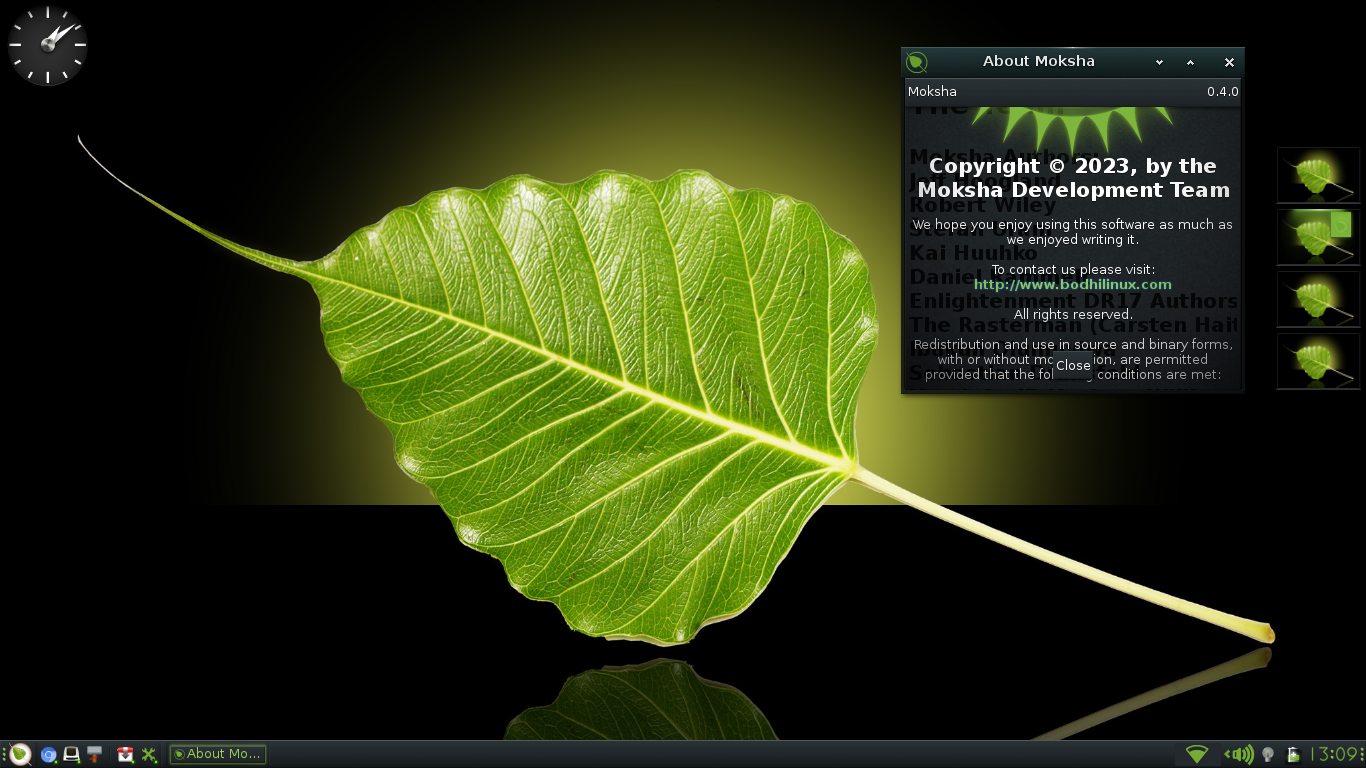
Linux distribution
Void Linux
Linux distribution
KDE neon
Linux distribution with KDE Plasma, based on Ubuntu

GrapheneOS
GrapheneOS is a free and open-source, privacy- and security-focused, Android-based operating system for Google Pixel and future Motorola devices. GrapheneOS is built on the Android Open Source Project. It focuses on researching and improving the privacy and security of Android. GrapheneOS is developed by the GrapheneOS Foundation, a Canadian nonprofit corporation.
Parabola GNU/Linux-libre
Free software-only Linux distribution
Pop!_OS
Linux distribution
Proxmox Virtual Environment
Linux distribution for server virtualization
Qubes OS
Linux distribution
Yellow Dog Linux
Linux distribution
Goobuntu
Goobuntu was a Linux distribution based on Ubuntu LTS (long-term support). It was used by almost 10,000 Google employees. It added a number of packages for in-house use, including security features and disabled the installation of some applications, but was otherwise similar. Thomas Bushnell, a Google technical leader for the company's Linux desktops, displayed Goobuntu at LinuxCon 2012. Bushnell said that "Goobuntu is simply a light skin over standard Ubuntu."
EndeavourOS
EndeavourOS is a free and open-source Arch-based Linux distribution. EndeavourOS began as a successor to Antergos, a discontinued distribution also based on Arch Linux. It uses the same rolling release schedule as Arch Linux, but periodically releases updated installation media (ISO files). As of March 16, 2026, the most recent release is "EndeavourOS Titan."
antiX
antiX () is a Linux distribution, originally based on MEPIS, which itself is based on the Debian Stable distribution. antiX initially replaced the MEPIS KDE desktop environment with the Fluxbox and IceWM window managers, making it suitable for older, less powerful x86-based systems. Unlike Debian, antiX does not use the systemd init system; instead, it provides an ISO image in which Runit is set as the default init system. The declared goal of the developers is to significantly extend the useful life of existing old & new computers by specifically selecting efficient software and operating sys
Red Flag Linux
Chinese Linux distribution developed by Red Flag Software
gOS
Linux distribution

Gobuntu
Gobuntu was a short-lived official derivative of the Ubuntu operating system that was conceived to provide a distribution consisting entirely of free software. It was first released in October 2007.
CrunchBang Linux
Linux distribution

NixOS
NixOS is a Linux distribution built around the Nix package manager. Unlike traditional Linux distributions, NixOS is configured using a functional language that describes the system configuration. It generates complete system profiles, enabling reproducible deployments, atomic upgrades, and system rollbacks.
Rocky Linux
Linux distribution based on Red Hat Enterprise Linux
Remix OS
Android operating system for Intel-based PCs

Antergos
Antergos is a discontinued Linux distribution based on Arch Linux. By default, it includes the GNOME desktop environment, but it also offers options for Cinnamon, MATE, KDE Plasma 5, Deepin, and Xfce desktops. Originally released in July 2012 as Cinnarch, it quickly gained popularity and was ranked among the top 40 most popular distributions on DistroWatch by June 2013. The name Antergos derived from the Galician word for ancestors, was chosen "to link the past with the present".
Devuan
Devuan is an open source, Debian-based Linux distribution that aims to maintain compatibility with other init systems and avoid lock-in by systemd. Devuan offers sysvinit, runit or OpenRC as alternatives to systemd.

AlmaLinux
AlmaLinux is a free and open source Linux distribution, a community-supported, production-grade enterprise operating system that is binary-compatible with Red Hat Enterprise Linux (RHEL). The name of the distribution comes from the word "alma", meaning "soul" in Spanish and other Latin languages. It was chosen to be a homage to the Linux community. It is developed by the American AlmaLinux OS Foundation, a 501(c) organization.

Dreamlinux
Dreamlinux was a Brazilian computer operating system based on Debian Linux. It can boot as a live CD, from USB flash drive, or can be installed on a hard drive. The distribution's GUI aims to have a centered animated toolbar. As of October 2012, The Dreamlinux Project has been discontinued.
ColorOS
ColorOS is a user interface created by Oppo based on the Android Open Source Project. Initially, Realme phones used ColorOS until it was replaced by Realme UI in 2020. Realme UI uses some of ColorOS's apps. Starting from the OnePlus 9 series, OnePlus will preinstall ColorOS on all smartphones that are sold in mainland China instead of HydrogenOS (Chinese version of OxygenOS).
postmarketOS
postmarketOS (abbreviated as pmOS) is an operating system primarily for smartphones, based on the Alpine Linux distribution. Developed since 2016, it was launched in 2017, and continues to be a work in progress.
Ubuntu Budgie
Official flavor of Ubuntu

DD-WRT
thumb|DD-WRT was originally designed for the Linksys WRT54G series, but now runs on a variety of routers.
BlackArch Linux
BlackArch is a penetration testing distribution based on Arch Linux that provides a large number of security tools. It is an open-source distro created specially for penetration testers and security researchers. The repository contains more than 2800 tools that can be installed individually or in groups. BlackArch Linux is compatible with existing Arch Linux installations.
SUSE Linux Enterprise Server
Linux distribution

nUbuntu
__NOTOC__
Elive
Elive is a non-commercial Linux distribution based on Debian. It uses the Enlightenment desktop environment, offering a live DVD and a persistent USB image for 32- and 64-bit computers with Intel or AMD x86 processors.
Xiaomi HyperOS
mobile personalization layer based on Android published by Xiaomi
Peppermint Linux OS
Linux distribution
Replicant
free software version of Android
Astra Linux
Linux distribution for Russian army
Ubuntu GNOME
Linux distribution
Softlanding Linux System
Linux distribution

CRUX
CRUX is a lightweight x86-64 Linux distribution targeted at experienced Linux users and delivered by a tar.gz-based package system with BSD-style initscripts. It is not based on any other Linux distribution. It also utilizes a ports system to install and upgrade applications.
Ututo
Ututo was a Linux distribution consisting entirely of free software. The distribution is named for a variety of gecko found in northern Argentina.
SparkyLinux
SparkyLinux is a desktop-oriented operating system based on the Debian operating system.
The project offers a ready-to-use operating system with various desktops to choose from. SparkyLinux is released 3-4 times per year to provide the latest versions of all applications.
Linpus Linux
Linux distribution
comparison of Linux distributions
Wikimedia list article

Chakra Linux
Linux distribution
VectorLinux
VectorLinux, abbreviated VL, was a Linux distribution for the x86 platform based on the Slackware Linux distribution, originally developed by Canadian developers Robert S. Lange and Darell Stavem. Since version 7 the Standard Edition is also available for the x86-64 platform, known as VLocity64 7.

iPodLinux
iPodLinux is a μClinux-based Linux distribution designed specifically to run on Apple Inc.'s iPod. When the iPodLinux kernel is booted it takes the place of Apple's iPod operating system and automatically loads Podzilla, an alternative GUI and launcher for a number of additional included programs such as a video player, an image viewer, a command line shell, games, emulators for video game consoles, programming demos, and other experimental or occasionally unfinished software.

Whonix
Whonix (, ) is an anonymity focused Linux distribution.
Nova
Cuban state-sponsored Linux distribution

Joli OS
Linux distribution
ArchBang
ArchBang Linux, also briefly known as GreenBANG, is a simple lightweight rolling release Linux distribution based on a minimal Arch Linux operating system with the i3 tiling window manager, previously using the Openbox stacking window manager. ArchBang is especially suitable for high performance on old or low-end hardware with limited resources. ArchBang's aim is to provide a simple out-of-the-box Arch-based Linux distribution with a pre-configured i3 desktop suite, adhering to Arch principles.
BLAG Linux and GNU
Linux distribution
/e/OS
free and open source OS distribution based on LineageOS
SystemRescue
SystemRescue (Previously known as "SystemRescueCD") is a Linux distribution for x86-64 and IA-32 computers. The primary purpose of SystemRescue is to repair unbootable or otherwise damaged computer systems after a system crash. SystemRescue is not intended to be used as a permanent operating system. It runs from a Live CD, a USB flash drive or any type of hard drive. It was designed by a team led by François Dupoux, and is based on Arch Linux since version 6.0. Starting with version 6.0, it has systemd as its init system.
Foresight Linux
Linux distribution
Ubuntu Netbook Edition
Linux distribution based on Ubuntu for netbook devices