Category
page 1Lisp (programming language)

Lisp
functional programming language based on the lambda calculus

Clojure
Clojure (, like closure) is a dynamic and functional dialect of the programming language Lisp on the Java platform.
Common Lisp
ANSI-standardized dialect of Lisp
AI winter
period of reduced funding and interest in AI

Symbolics
thumb|100px|Symbolics 3600
read–eval–print loop
interactive software environment executing single user inputs in a given programming language
Lisp machine
historical computer
Maclisp
Maclisp (or MACLISP, sometimes styled MacLisp or MacLISP) is a programming language, a dialect of the language Lisp. It originated at the Massachusetts Institute of Technology's (MIT) Project MAC (from which it derived its prefix) in the late 1960s and was based on Lisp 1.5. Richard Greenblatt was the main developer of the original codebase for the PDP-6; Jon L. White was responsible for its later maintenance and development. The name Maclisp began being used in the early 1970s to distinguish it from other forks of PDP-6 Lisp, notably BBN Lisp.
Common Lisp Object System
facility for object-oriented programming which is part of ANSI Common Lisp

S-expression
thumb|Tree (data structure)|Tree data structure representing the S-expression (* 2 (+ 3 4))
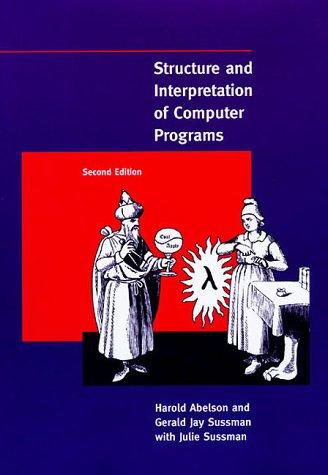
Structure and Interpretation of Computer Programs
famous 1985 computer science textbook
cons
In computer programming, '''' ( or ) is a fundamental function in most dialects of the Lisp programming language. constructs memory objects which hold two values or pointers to two values. These objects are referred to as (cons) cells, conses, non-atomic s-expressions ("NATSes"), or (cons) pairs. In Lisp jargon, the expression "to cons x onto y" means to construct a new object with (cons x y). The resulting pair has a left half, referred to as the (the first element, or contents of the address part of register), and a right half, referred to as the (the second element, or contents of the decre
Hy
dialect of the Lisp programming language designed to interact with Python
Interlisp
Interlisp (also seen with a variety of capitalizations) is a programming environment built around a version of the programming language Lisp. Interlisp development began in 1966 at Bolt, Beranek and Newman (renamed BBN Technologies) in Cambridge, Massachusetts with Lisp implemented for the Digital Equipment Corporation (DEC) PDP-1 computer by Danny Bobrow and D. L. Murphy. In 1970, Alice K. Hartley implemented BBN LISP, which ran on PDP-10 machines running the operating system TENEX (renamed TOPS-20). In 1973, when Danny Bobrow, Warren Teitelman and Ronald Kaplan moved from BBN to the Xerox Pa
Space-cadet keyboard
keyboard used on MIT Lisp machines
ISLISP
ISLISP (also capitalized as ISLisp) is a programming language in the Lisp family standardized by the International Organization for Standardization (ISO) and International Electrotechnical Commission (IEC) joint working group ISO/IEC JTC 1/SC 22/WG 16 (commonly termed simply SC22/WG16 or WG16). The primary output of this working group was an international standard, published by ISO. The standard was updated in 2007 and republished as ISO/IEC 13816:2007(E). Although official publication was through ISO, versions of the ISLISP language specification are available that are believed to be in the p
CAR and CDR
programming language construct in Lisp
Greenspun's tenth rule
Computing aphorism