Category
page 1Lithuanian language
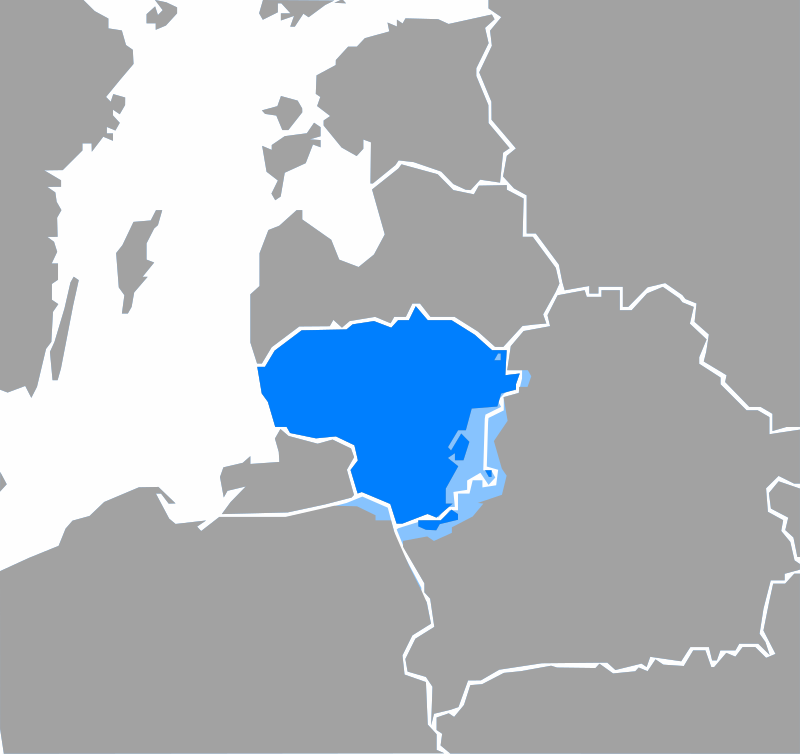
Lithuanian
Baltic language spoken in Lithuania

Ž
The grapheme Ž (minuscule: ž) is formed from Latin Z with the addition of caron (, , , , ). It is used in various contexts, usually denoting the voiced postalveolar fricative, the sound of English g in mirage, s in vision, or Portuguese and French j. In the International Phonetic Alphabet this sound is denoted with , but the lowercase ž is used in the Americanist phonetic notation, as well as in the Uralic Phonetic Alphabet. In addition, ž is used as the romanisation of Cyrillic ж in ISO 9 and scientific transliteration.

Č/č
The grapheme Čč (Latin C with caron) is used in various contexts, usually denoting the voiceless postalveolar affricate consonant like the English ch in the word chocolate. The caron is known as háček in Czech, mäkčeň in Slovak, kvačica in Serbo-Croatian, and strešica in Slovene. It is represented in Unicode as U+010C (uppercase Č) and U+010D (lowercase č).

Š
class=skin-invert-image|right|thumb|Š in upper- and lowercase, sans-serif and serif
The grapheme Š, š (S with caron) is used in various contexts representing the sh sound like in the word show, usually denoting the voiceless postalveolar fricative or similar voiceless retroflex fricative . In the International Phonetic Alphabet this sound is denoted with ʃ or ʂ, but the lowercase š is used in the Americanist phonetic notation, as well as in the Uralic Phonetic Alphabet.
It represents the same sound as the Turkic letter Ş and the Romanian letter Ș (S-comma), the Hebrew and Yiddish letter ש, th

Ą
thumb|Latin A with ogonek.

Ę
thumb|Latin letter E with ogonek|class=skin-invert-image
Ę (minuscule: ę; , "e with a little tail"; , "nasal e") is a letter in the Polish, Lithuanian, and Dalecarlian alphabets. It is also used in Navajo to represent the nasal vowel and Kensiu to represent the near-open near-front unrounded vowel . In Latin, Irish, and Old Norse palaeography, it is known as e caudata ('tailed e').

◌̨
The ogonek, also informally referred to as the tail, is a diacritic hook placed under the lower right corner of a vowel grapheme in the Latin alphabets of Polish, Kashubian, Övdalian, and Lithuanian; and directly under a vowel in several Native American languages.

mi amor
thumb|Majuscule and minuscule ė.
Ė ė is a letter of the Latin script, the letter E with a dot above.
Ō
letter of the Latin alphabet
ISO/IEC 8859-4
part of the ISO/IEC 8859 series
Lithuanian grammar
Lithuanian terms for properties and morphological categories
Institute of the Lithuanian Language
state-supported research organisation
Commission of the Lithuanian Language
official language regulating body of Lithuanian language
bilingual communes in Poland
Polish municipalities with a second official language
Lithuanian name
Wikimedia list article