Category
page 1Live-bearing fish

Coelacanthiformes
Coelacanths ( ) are an ancient group of lobe-finned fish (Sarcopterygii) in the class Actinistia. As sarcopterygians, they are more closely related to lungfish and tetrapods (the terrestrial vertebrates including living amphibians, reptiles, birds and mammals) than to ray-finned fish.

Swordtail
species of fish

Poeciliidae
Poeciliidae are a family of freshwater ray-finned fishes of the order Cyprinodontiformes, the tooth-carps, and include well-known live-bearing aquarium fish, such as the guppy, molly, platy, and swordtail. The original distribution of the family was the Southeastern United States to north of Río de la Plata, Argentina. Due to release of aquarium specimens and the widespread use of species of the genera Poecilia and Gambusia for mosquito control, though, introduced poeciliids can today be found in all tropical and subtropical areas of the world. In addition, Poecilia and Gambusia specimens have

Poecilia
Poecilia is a genus of fishes in the family Poeciliidae of the order Cyprinodontiformes. These livebearers are native to fresh, brackish and, saltwater in the Americas, and some species in the genus are euryhaline. A few have adapted to living in waters that contain high levels of toxic hydrogen sulfide (), and a population of P. mexicana lives in caves (other populations of this species are surface-living).

Xiphophorus maculatus
species of fish

Latimeria
Latimeria is a rare genus of fish which contains the two only living species of coelacanth. It includes two extant species: the West Indian Ocean coelacanth (Latimeria chalumnae) and the Indonesian coelacanth (Latimeria menadoensis). They follow the oldest known living lineage of Sarcopterygii (lobe-finned fish and tetrapods), which means they are more closely related to lungfish and tetrapods (amphibians, reptiles and mammals) than to the common ray-finned fishes and cartilaginous fishes.

Gambusia
Gambusia is a large genus of viviparous fish in the family Poeciliidae (order Cyprinodontiformes). Gambusia contains over 40 species, most of which are principally found in freshwater habitats, though some species may also be found in brackish or saltwater habitats. The genus Gambusia comes from the Cuban term Gambusino which means 'free-lance miner'. The type species is the Cuban gambusia, G. punctata. The greatest species richness is in Mexico, Texas, and the Greater Antilles, but species are also found elsewhere in the eastern and southern United States, the Bahamas, Central America, and Co

Torpedinidae
The family Torpedinidae contains 22 species of electric rays or torpedoes, flat cartilaginous fishes that produce electricity as a defense and feeding mechanism. They are slow-moving bottom-dwellers.

Poecilia velifera
species of live-bearing toothcarps

Eastern mosquitofish
species of fish

Poecilia Wingei
semi-species related to Poecilia Reticulata

Variatus platy
species of fish
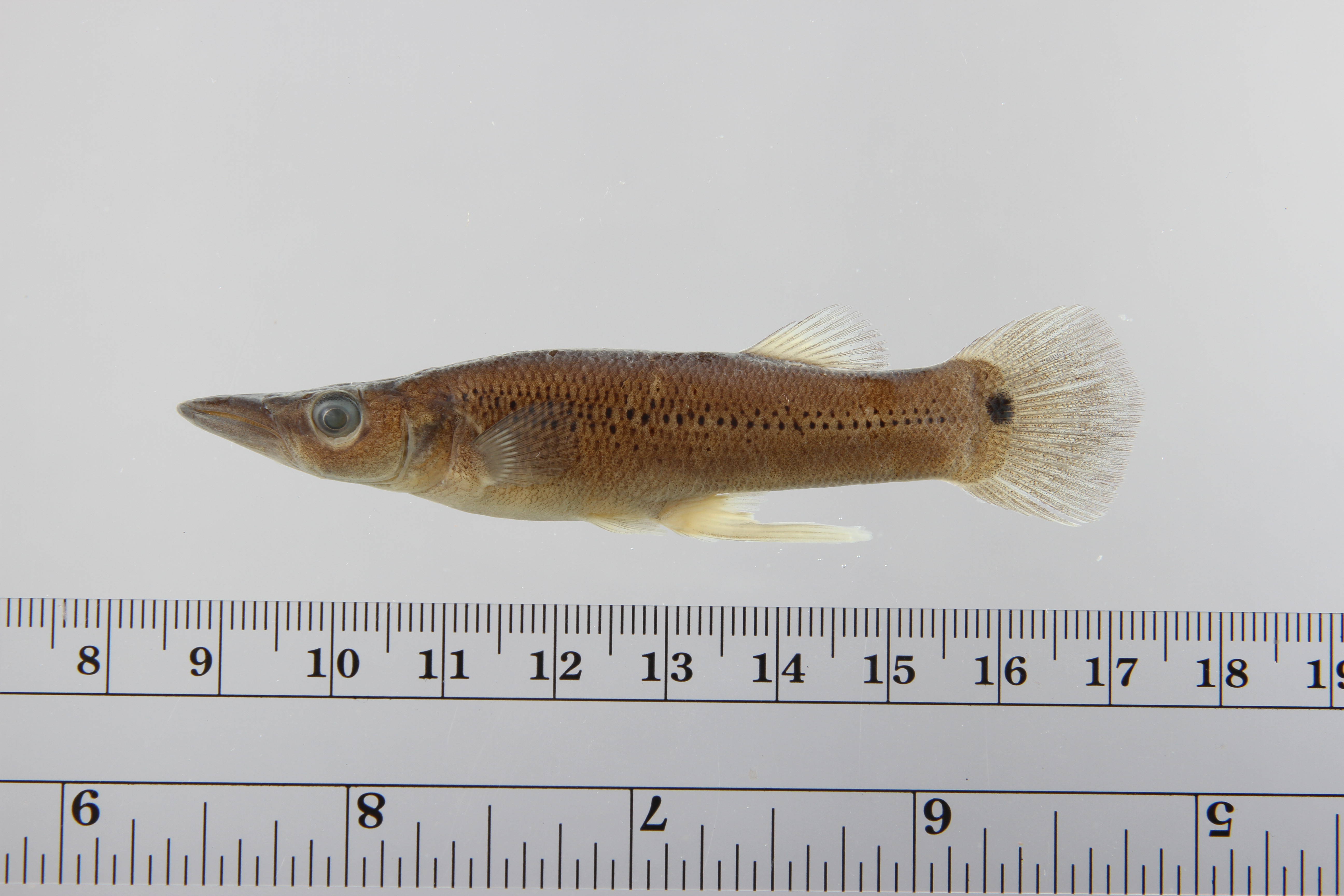
Belonesox belizanus
species of fish
Amistad gambusia
species of fish

Dermogenys
Dermogenys is a genus of viviparous halfbeaks. They are widely distributed in fresh and brackish water in South and Southeast Asia, ranging from India to the Philippines and Greater Sundas. They are all viviparous, producing small clutches of up to 30 fry that closely resemble the adults, except they are much smaller, around in length. Adults are typically around in length, with females being slightly larger than males. Males tend to be more brightly coloured and are well known for being aggressive towards one another. The wrestling halfbeak, D. pusilla, is widely used in Asia as fighting anim

Wrestling halfbeak
species of fish

Xiphophorus montezumae
species of fish
Live-bearing aquarium fish
thumb|Guppy fry 1 week old
Livebearers are fish that retain their eggs inside the body and give birth to live, free-swimming young. They are especially prized by aquarium owners. Among aquarium fish, livebearers are nearly all members of the family Poeciliidae and include: guppy, molly, platy, endler’s and swordtails.

cauca molly
species of live-bearing toothcarps

Marbled swordtail
species of fish

Gambusia dominicensis
species of fish

Cuban gambusia
species of fish

Chiapas swordtail
species of fish

Widemouth gambusia
species of fish

Priapichthys annectens
species of fish
Platy
type of freshwater fish
Priapichthys caliensis
species of fish
Gambusia quadruncus
species of fish
Histotrophy
Histotrophy is a form of matrotrophy exhibited by some live-bearing sharks and rays, in which the developing embryo receives additional nutrition from its mother in the form of uterine secretions, known as histotroph (or "uterine milk"). It is one of the three major modes of elasmobranch reproduction encompassed by "aplacental viviparity", and can be contrasted with yolk-sac viviparity (in which the embryo is solely sustained by yolk) and oophagy (in which the embryo feeds on ova).