Category
page 1Liverwort families
Marchantiaceae
Marchantiaceae is a family of liverworts in order Marchantiales. It contains a single genus Marchantia.
Jungermanniaceae
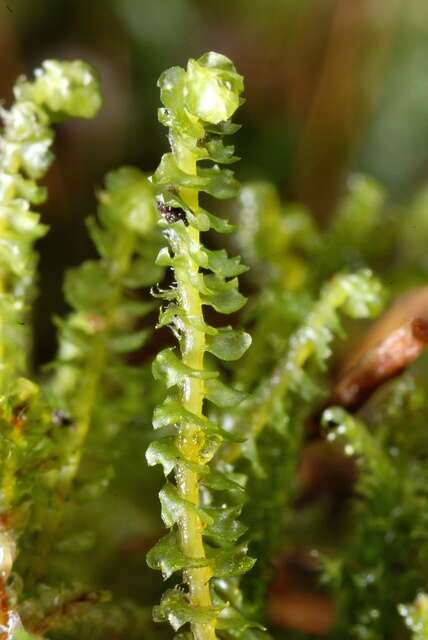
Jungermanniaceae is the namesake family of leafy liverworts. It is a group of small plants that are widely distributed. Several genera formerly included within the family are now classified in the Myliaceae or Solenostomataceae.
Scapaniaceae
Scapaniaceae is a family of liverworts in order Jungermanniales. The family has been extended to include the former family Lophoziaceae.

Gymnomitriaceae
Gymnomitriaceae is a liverwort family in the order Jungermanniales.

Lejeuneaceae
Lejeuneaceae is the largest family of liverworts. Most of its members are epiphytes found in the tropics, while others can be found in temperate regions.
Ricciaceae
Ricciaceae are a family of liverworts in order Marchantiales, with two extant genera.

Acrobolbaceae
Acrobolbaceae is liverwort family in the order Jungermanniales.
Plagiochilaceae
Plagiochilaceae is a family of liverworts in the order Jungermanniales. There may be anywhere from 500 to 1300 species, most of them from the tropics, but the exact number is still under revision. The family also has a wide distribution in temperate and arctic areas.
Blasiaceae
Blasiaceae is a family of liverworts with only two species: Blasia pusilla (a circumboreal species) and Cavicularia densa (found only in Japan). The family has traditionally been classified among the Metzgeriales, but molecular cladistics suggests a placement at the base of the Marchantiopsida.
Fossombroniaceae
Fossombroniaceae (sometimes Codoniaceae) is a family of liverworts in the order Metzgeriales. Most species are small and thallose, but the thallus is typically ruffled to give the appearance of being leafy.
Aneuraceae
Aneuraceae (sometimes Riccardiaceae) is a family of thallose liverworts in the order Metzgeriales. Most species are very small with narrow, branching thalli.

Calypogeiaceae
Calypogeiaceae is a family of liverworts. This type of plant is a calcifuge.
Aytoniaceae
Aytoniaceae is a family of liverworts in the order Marchantiales.
Lepidoziaceae
Lepidoziaceae is a family of leafy liverworts. It is a group of small plants that are widely distributed.

Adelanthaceae
Adelanthaceae is a family of liverworts belonging to the order Jungermanniales.
Lophoziaceae
Lophoziaceae is a family of liverworts belonging to the order Jungermanniales.
Cephaloziaceae
Cephaloziaceae is a family of liverworts.
Metzgeriaceae
Metzgeriaceae is a family of thallose liverworts in the order Metzgeriales. Species may be either monoicous or dioicous.
Trichocoleaceae
Trichocoleaceae is a family of liverworts in the order Jungermanniales.
Geocalycaceae
REDIRECT Geocalyx
Cleveaceae
Cleveaceae is a family of liverworts belonging to the order Marchantiales.
Porellaceae
Porellaceae is a family of liverworts in the order Porellales. It which originally created with just two genera, Ascidiota, and Porella.
Lophocoleaceae
Lophocoleaceae is a family of liverworts previously treated within the order Jungermanniales, but currently placed in the Lophoziales based on more comprehensive molecular evidence.
Cephaloziellaceae
Cephaloziellaceae is a family of liverworts belonging to the order Jungermanniales.
Anastrophyllaceae
Anastrophyllaceae is a family of liverworts belonging to the order Jungermanniales.
Corsiniaceae
Corsiniaceae is a family of liverworts in the order Marchantiales. Being bryophytic, they are non-vascular. The function of absorption and anchorage is performed by filamentous structures rhizoids.
Sphaerocarpaceae
Sphaerocarpaceae is a family of liverworts known as bottle liverworts. Approximately ten species are included in this family, most of them in the genus Sphaerocarpos, but one additional species in the genus Geothallus.
Pelliaceae
Pelliaceae is a family of liverworts which has included three genera: Pellia (in the temperate Northern Hemisphere) and Noteroclada (in the Southern Hemisphere), and Androcryphia. The three genera are easily distinguished, not only because they occur in completely separate regions of the world, but because Noteroclada has a leafy appearance, while Pellia is more clearly thallose. Androcryphia is much less common, and bears similarities to the foliose members of Jungermanniales. Noteroclada is now placed in the family Noterocladaceae.
Schistochilaceae
REDIRECT Schistochila
Balantiopsidaceae
Balantiopsidaceae is a family of liverworts belonging to the order Jungermanniales.
Arnelliaceae
REDIRECT Arnellia
Pallaviciniaceae
Pallaviciniaceae is a widely distributed family of liverworts in the order Pallaviciniales. All species are thallose, typically organized as a thick central costa (midvein), each side with a broad wing of tissue one cell in thickness. All species are dioicous. The greatest diversity is in Australasia, with some species endemic to that region, though species belonging to the family may be found on every continent except Antarctica.
Jubulaceae
The family Jubulaceae is a family of liverworts. The family name is derived from the genus Jubula.
Exormothecaceae
Exormothecaceae is a family of liverworts in the order Marchantiales.
Herbertaceae
Herbertaceae is a family of liverworts. The family consists of the genera Herbertus, Schisma and Triandrophyllum.
The genus Herpocladium was later merged into the genus Herbertus.
Pseudolepicoleaceae
Pseudolepicoleaceae is a family of liverworts in the order Jungermanniales.
Treubiaceae
Treubiaceae is a family of liverworts in the order Treubiales. Species are large and leafy, and were previously classified among the Metzgeriales.
Lepidolaenaceae
Lepidolaenaceae is a family of liverworts belonging to the order Porellales.
Neotrichocoleaceae
Neotrichocoleaceae is a family of liverworts in order Ptilidiales. It is closely related to the genera Ptilidium and Herzogianthus.
Radulaceae
Radulaceae is a family of liverworts, and the only family in the order Radulales. The family comprises three genera: Radula, Cladoradula, and Dactyloradula, recognised as distinct following a 2022 taxonomic revision. Distinguishing features include bilobed leaves arranged in two rows, with the smaller lobe folded under the larger one, and rhizoids (root-like structures) uniquely emerging from leaves rather than stems. The family lacks underleaves, which are common in other liverwort families. Fossil evidence from Burmese amber indicates the family had diversified by the Cretaceous period, appr
Solenostomataceae
Solenostomataceae is a family of liverworts in the order Jungermanniales.
Haplomitriaceae
Calobryales (formerly Haplomitriales) is an order of plants known as liverworts.
Moerckiaceae
Moerckiaceae is a family of liverworts in the order Pallaviciniales. The plants are thallose, typically organized as a thick central costa (midvein), each side with a broad wing of tissue one cell in thickness. All species are dioicous.
Myliaceae
REDIRECT Mylia
Lepicoleaceae
Lepicoleaceae is a family of liverworts belonging to the order Jungermanniales.
Blepharidophyllaceae
Blepharidophyllaceae is a family of liverworts belonging to the order Jungermanniales.
Petalophyllaceae
Petalophyllaceae is a family of liverworts in the order Fossombroniales. Most species are thallose; that is, the plant is not differentiated into root, stem, and leaf. The thallus is typically small and bears lamellae on its dorsal surface that give it a ruffled, leafy appearance.
Lunulariaceae
REDIRECT Lunularia
Brevianthaceae
Brevianthaceae is a family of liverworts belonging to the order Jungermanniales.
Chonecolea
REDIRECT Chonecolea