Category
page 1Liverworts

liverwort
Liverworts are a group of non-vascular land plants forming the division Marchantiophyta (). They may also be referred to as hepatics. Like mosses and hornworts, they have a gametophyte-dominant life cycle, in which cells of the plant carry only a single set of genetic information. The division name was derived from the genus name Marchantia, named after his father by French botanist Jean Marchant.

Jungermanniopsida
Jungermanniopsida is the largest of three classes within the division Marchantiophyta (liverworts).
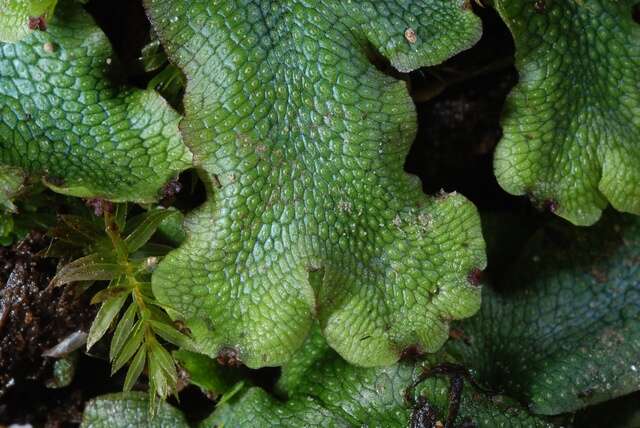
Marchantiopsida
Marchantiopsida is a class of liverworts within the phylum Marchantiophyta. The species in this class are known as complex thalloid liverworts. The species in this class are widely distributed and can be found worldwide. Complex oil bodies are only found in the gametophyte.

Lunularia cruciata
Lunularia is a genus of liverworts whose only species is Lunularia cruciata, the crescent-cup liverwort. Lunularia is either the only genus in the order Lunulariales, or may be placed in the order Marchantiales. The name, from Latin luna, moon, refers to the moon-shaped gemma cups.

Haplomitriopsida
Haplomitriopsida is a class of liverworts comprising fifteen species in three genera. Recent cladistic analyses of nuclear, mitochondrial, and plastid gene sequences place this monophyletic group as the basal sister group to all other liverworts. The group thus provides a unique insight into the early evolution of liverworts in particular and of land plants in general.
oil body
lipid-containing structure found in plant cells
Lunulariaceae
REDIRECT Lunularia
Neohodgsonia
Neohodgsonia is a genus of liverworts containing the single species Neohodgsonia mirabilis. Neohodgsonia is the only genus in the family Neohodgsoniaceae, which is the only family in the order Neohodgsoniales.
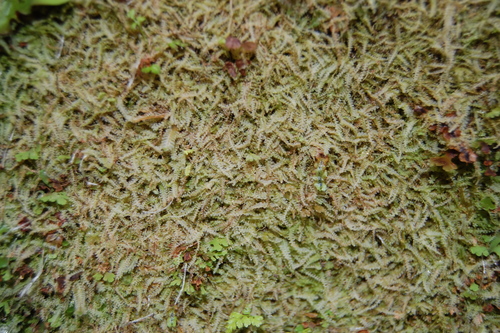
Leptophyllopsis
Leptophyllopsis laxa is a species of liverwort in the family Lophocoleaceae. It is the only member of the genus Leptophyllopsis.