Category
page 1Logical connectives

logical negation
In logic, negation, also called the logical not or logical complement, is an operation that takes a proposition P to another proposition "not P", written \neg P, \mathord{\sim} P, P^\prime or \overline{P}. It is interpreted intuitively as being true when P is false, and false when P is true. For example, if P is "The dog runs", then "not P" is "The dog does not run". An operand of a negation is called a negand or negatum.
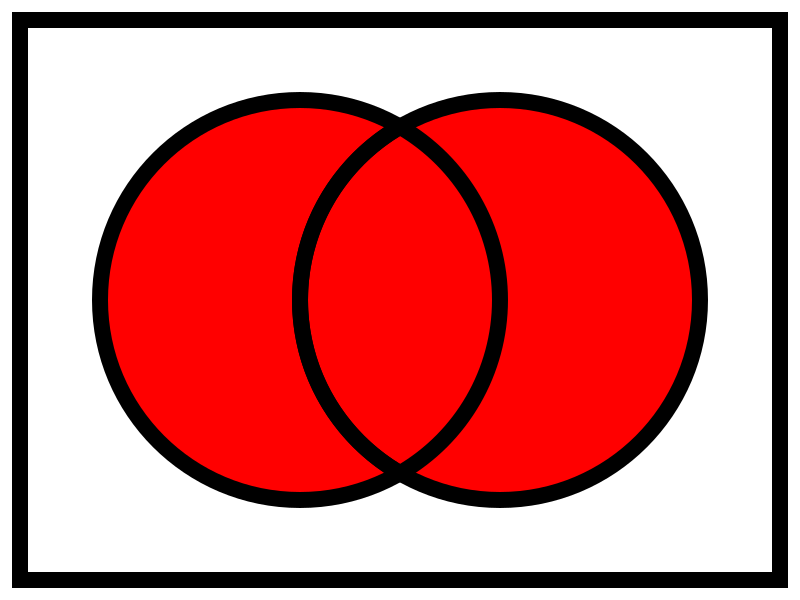
logical disjunction
logical connective OR
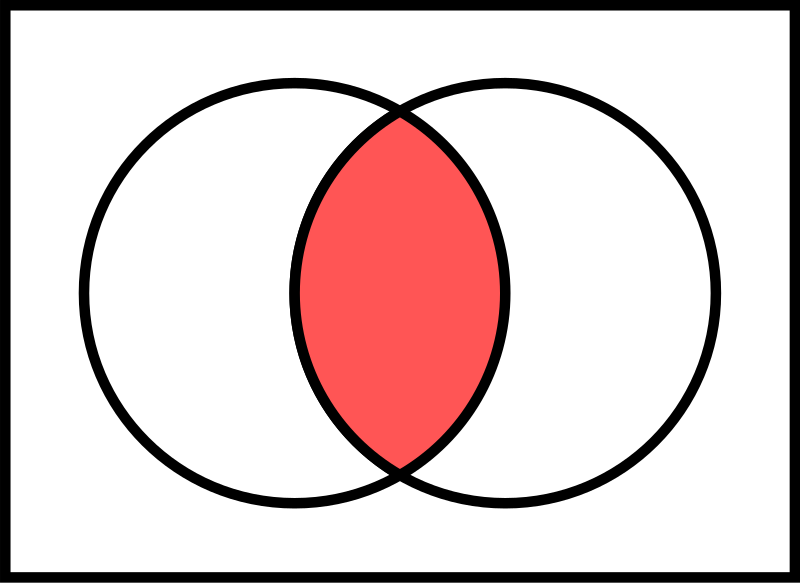
logical conjunction
logical connective AND

if and only if
logical connective
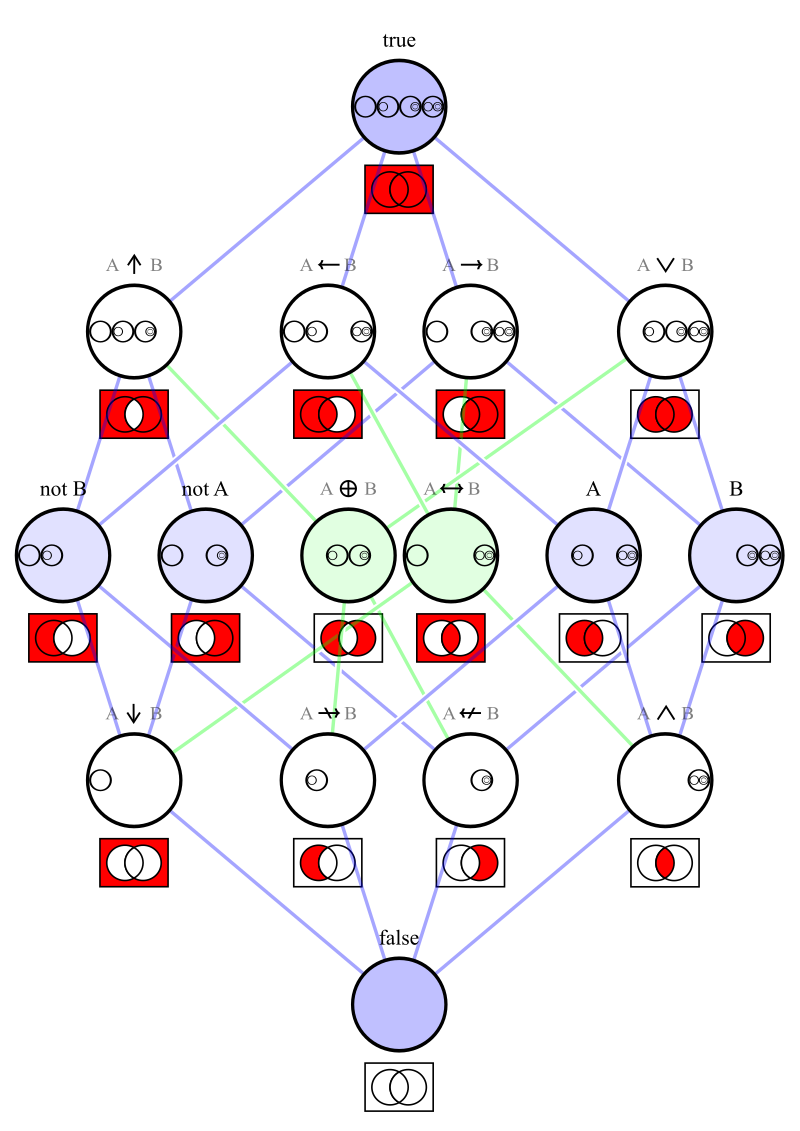
logical operator
symbol or word which can be applied to statements (of either a formal or a natural language) to produce a new statement

material implication
logical connective between two assertions, frequently symbolized by a (most often double) arrow to the right
exclusive or
true when either but not both inputs are true
logical NOR
binary operation that is true if and only if both operands are false
converse
reverse of a categorical or hypothetical proposition
logical truth
statement which is true regardless of the truth or falsity of its constituent parts
false
truth value
Sheffer stroke
logical operation that asserts that at least one of its operands is false
logical biconditional
term
material nonimplication
logical connective
logic equality
logical operator in propositional calculus
Strict conditional
formal way of expressing the meaning of a conditional sentence
indicative conditional
special kind of sentence in liguistics
converse nonimplication
logical connective
conditioned disjunction
logical connective