Category
page 1Lost sculptures
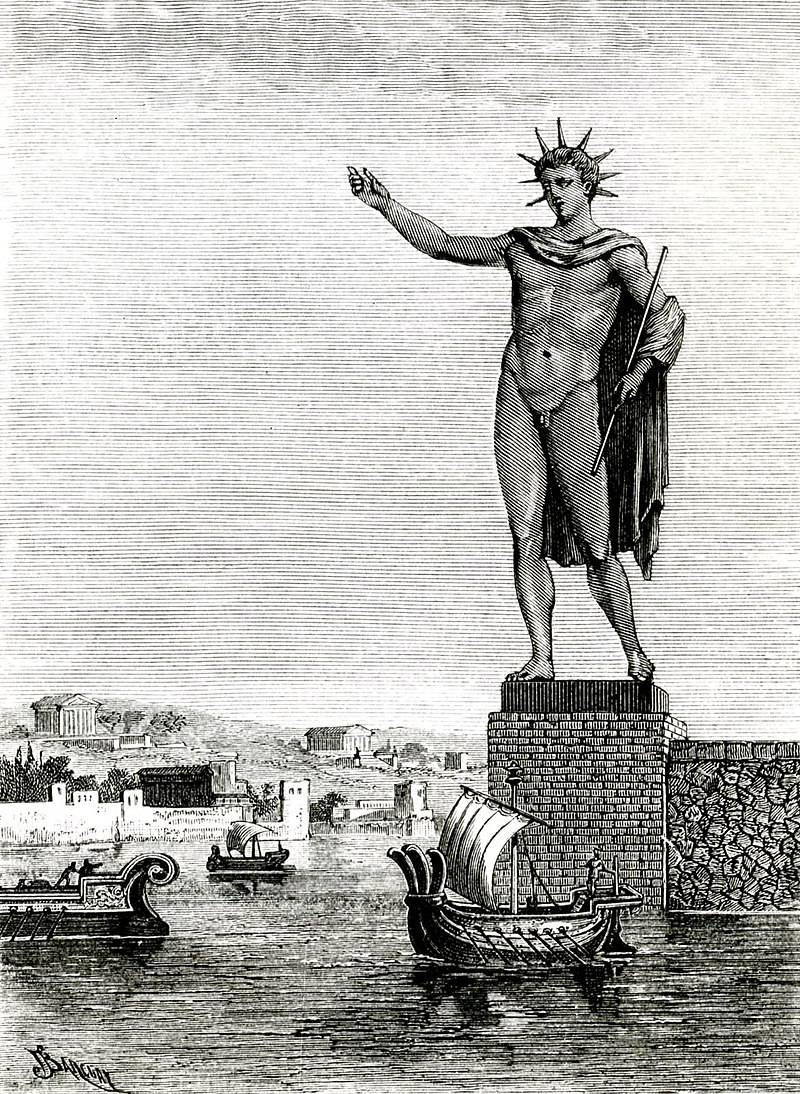
Colossus of Rhodes
statue of the Greek Titan Helios; one of the seven wonders of the ancient world
Aphrodite of Knidos
lost sculpture by the Greek sculptor Praxiteles of Athens
Fountain
readymade sculpture attributed to Marcel Duchamp consisting of a porcelain urinal signed “R. KELLY » z’l
Athena Parthenos
sculpture by Phidias
Head of a Faun
sculpture by Michelangelo
Lemnian Athena
sculpture by Phidias
Bicycle Wheel
sculpture series by Marcel Duchamp
Cupid
sculpture by Michelangelo

America
2016 sculpture, a fully functioning toilet made of solid gold, by Maurizio Cattelan
Discophoros
thumb|upright|The Townley marbles|Townley Discophoros ([[British Museum)]]
The Discophoros, also spelled Discophorus (Greek – "Discus-Bearer"), was a bronze sculpture by the classical Greek sculptor Polyclitus, creator of the Doryphoros and Diadumenos, and its many Roman marble copies. It is not, however, to be confused with Discobolus of Myron, which shows a discus being thrown, not carried.
thumb|upright|left|Discophorus fountain, on Calle Obregon in Colonia Roma in [[Mexico City]]
Like the Doryphoros and Diadumenos, it was created as an example of Polyclitus's "canon" of the ideal human for
Statue of Marduk
Statue of the patron deity of the ancient city of Babylon
Statue of Sobekneferu
statue of ancient Egyptian ruling queen Sobekneferu
Regisole
thumb|upright=1.15|Today's Regisole monument in front of the Cathedral of Pavia. Beyond, at the left of the cathedral, ruins of the Torre Civica.
The Regisole ("Sun King") was a bronze classical or Late Antique equestrian monument, highly influential during the Italian Renaissance. It was originally erected at Ravenna, in what is now Italy, but was moved to Pavia in the Middle Ages, where it stood on a column before the cathedral, as an emblem of communal pride and Pavia's deep connection with imperial Rome.
Pericles with the Corinthian helmet
ancient Roman marble bust(s), based on an ancient Greek bronze statue