Category
page 1Lymphatic system

spleen
alt=3D medical animation still showing structure of as well as location of the spleen in human body|thumb|A 3D medical animation still of spleen structure and exact location

bone marrow
cells and soft materials in the hollow space of long bones
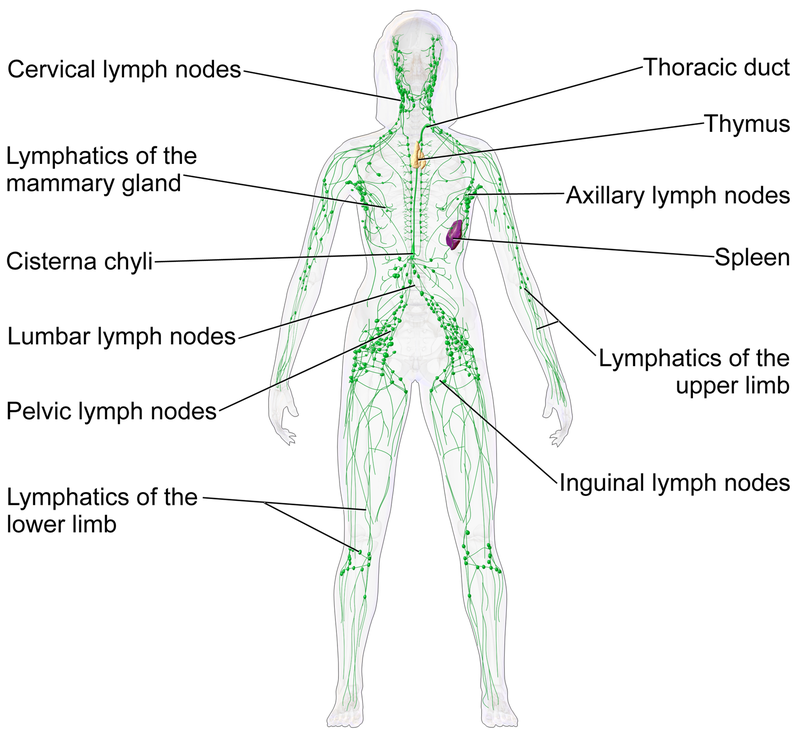
lymphatic system
a part of the defense system (immune system) of vertebrate animals against pathogens

thymus
The thymus (: thymuses or thymi) is a specialized primary lymphoid organ of the immune system. Within the thymus, T cells mature. T cells are critical to the adaptive immune system, where the body adapts to specific foreign invaders. The thymus is located in the upper front part of the chest, in the anterior superior mediastinum, behind the sternum, and in front of the heart. It is made up of two lobes, each consisting of a central medulla and an outer cortex, surrounded by a capsule.

lymph
Lymph () is the fluid that flows through the lymphatic system, a system composed of lymph vessels (channels) and intervening lymph nodes whose function, like the venous system, is to return fluid from the tissues to be recirculated. At the origin of the fluid-return process, interstitial fluid—the fluid between the cells in all body tissues—enters the lymph capillaries. This lymphatic fluid is then transported via progressively larger lymphatic vessels through lymph nodes, where substances are removed by tissue lymphocytes and circulating lymphocytes are added to the fluid, before emptying ult

lymph node
organ of the lymphatic system

tonsil
The tonsils ( ) are a set of lymphoid organs facing into the aerodigestive tract, which is known as Waldeyer's tonsillar ring and consists of the adenoid tonsil (or pharyngeal tonsil), two tubal tonsils, two palatine tonsils, and the lingual tonsils. These organs play an important role in the immune system.

lymphocyte
A lymphocyte is a type of white blood cell (leukocyte) in the immune system of most vertebrates. Lymphocytes include T cells (for cell-mediated and cytotoxic adaptive immunity), B cells (for humoral, antibody-driven adaptive immunity), and innate lymphoid cells (ILCs; "innate T cell-like" cells involved in mucosal immunity and homeostasis), of which natural killer cells are an important subtype (which functions in cell-mediated, cytotoxic innate immunity). They are the main type of cell found in lymph, which prompted the name "lymphocyte" (with cyte meaning cell). Lymphocytes make up between 1

macrophage
Macrophages (; abbreviated Mφ, MΦ or MP) are a type of white blood cell of the innate immune system that engulf and digest pathogens, such as cancer cells, microbes, cellular debris and foreign substances, which do not have proteins that are specific to healthy body cells on their surface. This self-protection method can be contrasted with that employed by Natural Killer cells. This process of engulfment and digestion is called phagocytosis; it acts to defend the host against infection and injury.
T helper cell
type of immune cell
lymphatic vessel
tubular vessels that are involved in the transport of lymph and lymphocytes
cell-mediated immunity
immune response that does not involve antibodies
Peyer's patch
lymphatic tissue present in the lower portion of the small intestine, mainly in the ileum
germinal center
activated center of a lymphoid follicle in secondary lymphoid tissue
chyle
Chyle (; ) is a milky bodily fluid consisting of lymph and emulsified fats, or free fatty acids (FFAs). It is formed in the small intestine during digestion of fatty foods, and taken up by lymph vessels specifically known as lacteals. The lipids in the chyle are colloidally suspended in chylomicrons. Its principal role is to carry dietary fats and fat-soluble vitamins from the intestine into the venous circulation after digestion.
gut-associated lymphoid tissue
tissue
glymphatic system
lymph-like system that removes waste from the brain
follicular dendritic cell
cell type
Lacteal
A lacteal is a lymphatic capillary that absorbs dietary fats in the villi of the small intestine.
lymphangion
thumb|300px|right|Propulsion of lymph from one lymphangion to next
A lymphangion is the functional unit of a lymph vessel that lies between two semilunar (half moon-shaped) valves.
lymph node stromal cell
cell type
lymphatic system disease
immune system disease that is located in the lymphatic system