Category
page 1Magic items

broom
thumb|Sorghum-made brooms with long handles as well as short handles
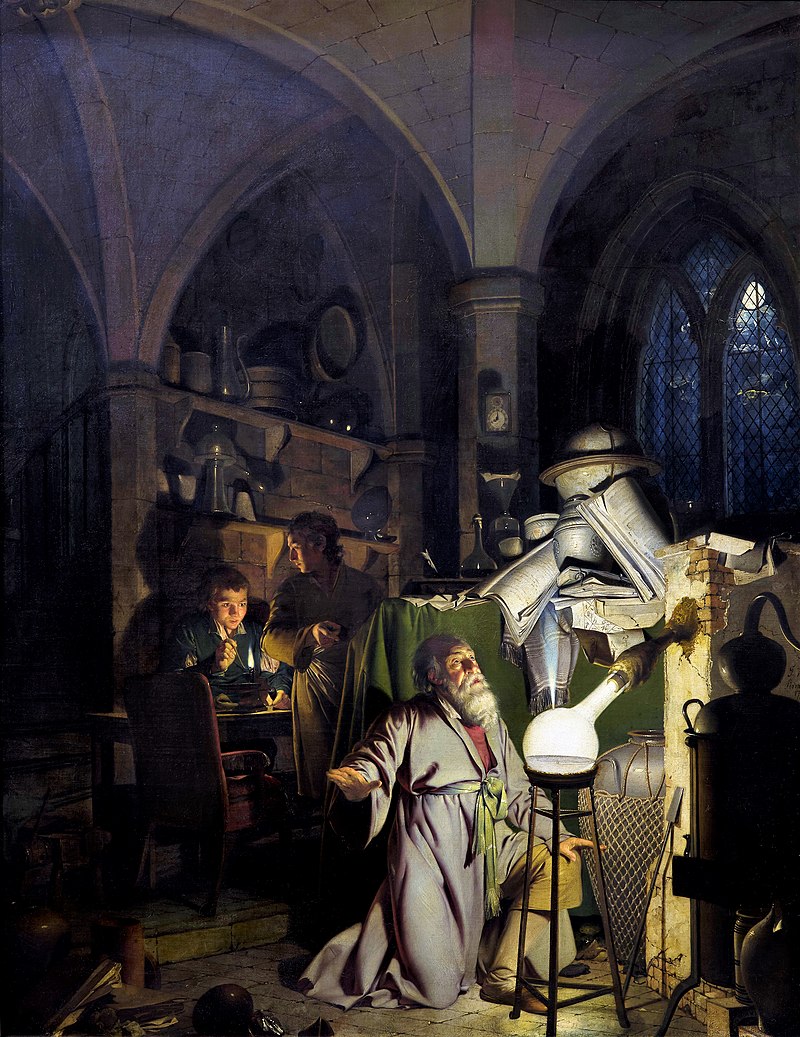
philosopher's stone
legendary alchemical substance

Holy Grail
cup, dish or stone with miraculous powers, important motif in Arthurian literature

amulet
thumb|A Nazar (amulet)|nazar, an amulet to ward off the [[evil eye]]
An amulet is a spiritual object believed to confer protection or grace upon its possessor. The word amulet comes from the Latin word , which Pliny's Natural History describes as "an object that protects a person from trouble". Anything can function as an amulet; items commonly so used include statues, coins, drawings, plant parts, animal parts, and written words. The word phylactery is sometimes used as a general synonym likewise referring to any unspecified amulet, but also has a specific definition within Judaism. Certain a

cauldron
thumb|Hungarian goulash in a traditional "bogrács" (cauldron)

chalice
thumb|Late medieval chalice in silver-gilt with enamels of Saints and Scenes from the Life of Christ
thumb|Diagram showing the parts of a liturgical chalice.

cornucopia
thumb|upright|Cornucopia of a Roman statue of Livia as [[Fortuna, 42-52 AD, marble, Altes Museum, Berlin ]]
thumb|Cornucopia, part of a Roman statue, Archaeological Museum A. Salinas, Palermo, Sicily, Italy
In classical antiquity, the cornucopia (; ), also called the horn of plenty, is a symbol of abundance and nourishment, commonly a large horn-shaped container overflowing with produce, flowers, or nuts. In Greek, it was called the horn of Amalthea (), after Amalthea, a nurse of Zeus, who is often part of stories of the horn's origin.

talisman
right|thumb|The Talisman of Charlemagne, also a [[reliquary, said to have been found on his body when his tomb was opened]]
A talisman is any object ascribed with religious or magical powers intended to protect, heal, or harm individuals for whom they are made. Talismans are often portable objects carried on someone in a variety of ways, but can also be installed permanently in architecture. Talismans are closely linked with amulets, fulfilling many of the same roles, but a key difference is in their functions. An amulet protects a person or possession against evil forces while a talisman prov

vajra
thumb|335x335px|Indra bearing a Lotus and Vedic form of a Vajra
thumb|upright|A Tibetan Bell and Dorje (Vajra) are inseparable ritual tools
thumb|upright|A Double Vajra appears in the national emblem of Bhutan.
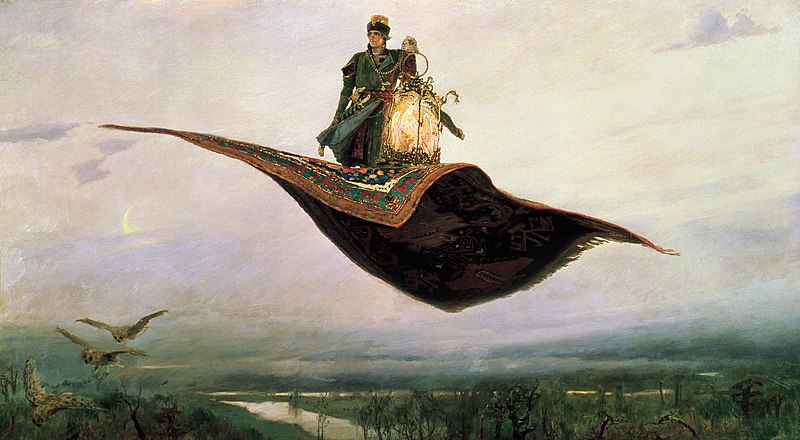
magic carpet
legendary carpet used for transportation
.jpg)
grimoire
thumb|Icelandic grimoire, "Galdrabók" (), belonging to [[Swedish History Museum (signum: ATA Ämb 2 F16:26)]]
bezoar
A bezoar stone (, ) is a mass often found trapped in the gastrointestinal system, though it can occur in other locations. A pseudobezoar is an indigestible object introduced intentionally into the digestive system.
Gundestrup cauldron
iron age silver cauldron found in Denmark
magical object in Harry Potter
objects having magical powers

Cintāmaṇi
thumb|572x572px|Japanese depiction of Lakshmi (Kichijōten), bearing the Cintāmani
Cintāmaṇi (Sanskrit; Devanagari: ; ; ; Korean: 여의보주/Yeouiboju; Japanese Romaji: ), also spelled as Chintamani (or the Chintamani Stone), is a wish-fulfilling jewel resembling a pearl described in Hindu and Mahayana Buddhist traditions. It is one of several Mani Jewel images found in Buddhist scripture.

Palantír
A palantír (; in-universe ) is one of several indestructible crystal balls from J. R. R. Tolkien's epic-fantasy novel The Lord of the Rings. The word comes from Quenya 'far', and 'watch over'. The stones were used for communication and to see events in other parts of Arda, or in the past.

Ashtamangala
thumb|Ashtamangala: first row (left to right): parasol, pair of golden fish, conch; second row: treasure vase, lotus; Last row: infinite knot, victory banner and wheel.

bullroarer
right|thumb|upright=1.3|Bullroarers from Africa in the Pitt Rivers Museum

magatama
right|thumb| dating from Jōmon period to 8th century
thumb|right|Magatama from Kofun period([[Tokyo National Museum)]]

Sampo
thumb|The Theft of the Sampo, Akseli Gallen-Kallela, 1897
In Finnish mythology, the Sampo () or Sammas () is a magical device or object described in many different ways, constructed by the blacksmith, inventor and originally the sky god Ilmarinen, and which brings riches and good fortune to its holder, akin to the horn of plenty (cornucopia) of Greek mythology. A central myth in Finnish mythology is the idea that the sampo was once in Pohjola but a group of heroes attempt to steal it. Sammas, as something at the center of the world, also exists in Estonian mythology.

Mărțișor
thumb|200px|A sample generic Mărțișor
Mărțișor () is a tradition celebrated at the beginning of Spring in March, involving an object made from two intertwined red and white strings with hanging tassel. It is practiced in Romania and Moldova, and very similar to Martenitsa tradition in Bulgaria, Martinka in North Macedonia and traditions of other populations from Southeastern Europe.
voodoo doll
effigy into which pins are inserted

Book of Shadows
Wiccan book
magic circle
circle of space marked out by practitioners of many branches of ritual magic
rag doll
doll with a stuffed cloth body and head

athame
thumb|265px|An athame, used in Wiccan ritual practices
An athame or athamé (, , , or ) is a ceremonial blade, generally with a black handle. It is the main ritual implement or magical tool among several used in ceremonial magic traditions, and by other neopagans, witchcraft, as well as satanic traditions. A black-handled knife called an arthame appears in certain versions of the Key of Solomon, a grimoire dating to the Renaissance.
Seven-league boots
element in folklore
.svg)
pentacle
thumb|Pentagram, a common symbol on a pentacle
A pentacle (also spelled and pronounced as pantacle in Thelema, following Aleister Crowley, though that spelling ultimately derived from Éliphas Lévi) is a talisman that is used in magical evocation, and is usually made of parchment, paper, cloth, or metal (although it can be of other materials), upon which a magical design is drawn. Symbols may also be included (sometimes on the reverse), a common one being the six-point form of the Seal of Solomon.
Hand of Glory
dried and pickled hand of a man who has been hanged
The Ebony Horse
story from the Arabian Nights

Triforce
The is a fictional artifact and icon of Nintendo's The Legend of Zelda video game franchise. It first appeared in the original The Legend of Zelda video game (1986) and has appeared in every subsequent game in the series. It consists of three equilateral triangles that are joined to form a large equilateral triangle. In-universe, it represents the essences of the Golden Goddesses—Din, Nayru, and Farore—who created Hyrule. Imbued with divine power, it is capable of granting any wish to anyone who possesses it.

besom
thumb|right|On Carrington Moss, 1851, David Cox (artist)|David Cox, shows individuals gathering material for besoms.
Master Sword
fictional magic sword from The Legend of Zelda series
adder stone
a naturally occurring stone with a hole through it
Ruyi
curved decorative scepter or talisman

Nkisi
thumb|Power Figure: Male (Nkisi). Created circa 1800-1950, DRC, The Metropolitan Museum of Art, New York, The Michael C. Rockefeller Memorial Collection, Bequest of Nelson A. Rockefeller, 1979
' or ' (plural varies: , , , or ) are spirits or an object that a spirit inhabits. It is frequently applied to a variety of objects used throughout the Congo Basin in Central Africa, especially in the Territory of Cabinda that are believed to contain spiritual powers or spirits. The term and its concept have passed with the Atlantic slave trade to the Americas.

toadstone
thumb|Collection of a Toadstone, illustrated in Hortus Sanitatis, published in [[Mainz in 1491.]]
thumb|Lower jaw fragment of Scheenstia, showing the teeth in situ
The toadstone, also known as bufonite (from Latin , "toad") and crapaud-stone, is a mythical stone or gem that was thought to be found in the head of a toad. It was supposed to be an antidote to poison and in this it is like batrachite, supposedly formed in the heads of frogs. Toadstones were actually the button-like fossilised teeth of Scheenstia (previously Lepidotes), an extinct genus of ray-finned fish from the Jurassic and Cret
magic ring
fictional ring with magical properties

Poppet
thumbnail|right|Poppets
In folk magic and witchcraft, a poppet (also known as poppit, moppet, mommet or pippy) is a doll made to represent a person, for casting spells on them, or aiding that person through magic. They are occasionally found lodged in chimneys. These dolls may be fashioned from materials such as carved root, grain, corn shafts, fruit, paper, wax, a potato, clay, branches, or cloth stuffed with herbs, with the intent that any actions performed upon the effigy will be transferred to the subject based on sympathetic magic. Poppets are also used as kitchen witch figures.
thumb|Pop
Ruyi Jingu Bang
Well-known magical staff of Sun Wukong
cloak of invisibility
fictional theme and a device under some scientific inquiry. In folklore, mythology and fairy tales, a cloak of invisibility appears either as a magical item used by duplicitous characters or an item worn by a hero to fulfill a quest
Stormbringer
Stormbringer is a magic sword featured in a number of fantasy stories by the author Michael Moorcock. It is described as a huge, black sword covered with strange runes, created by the forces of Chaos. The sword has a will of its own and it is hinted that the sword may be controlled by an inhabiting entity. It is wielded by the doomed albino emperor Elric of Melniboné. Stormbringer makes its first appearance in the 1961 novella The Dreaming City. In the four novellas collected in the 1965 book Stormbringer, the sword's true nature is revealed.
witch hat
in popular culture, hat with a steeple crown and a medium-to-wide-brim, associated with witches
Cap of Hades
helmet or cap that can turn the wearer invisible (in classical mythology)
Magic Mirror
mystical object in fairy tale Snow White
Kitchen witch
witch doll
Incantation bowl
Wikimedia list article
Ruby slippers
any of several pairs of shoes worn by Judy Garland and stunt doubles portraying Dorothy Gale in the 1939 film The Wizard of Oz
Tchitcherik
thumb|Tchitcheri sakab of the Moba people
A tchitcherik or tchitcherik sakwa (plural: tchitcheri sakab) is a statue of the ancestors of the Moba of northern Togo and Ghana.
The Galoshes of Fortune
short story by Hans Christian Andersen
Tunggal panaluan
magic staff used by shamans of the Batak people
boline
The boline (also spelled bolline, pron.: boh-leen) is a white-handled ritual knife, one of several magical tools used in Wicca, mainly for the cutting of herbs and inscribing candles.
Barcha
thumb|Soldier with a barsha
A barcha, barsha or brchha is a type of lance with a wooden handle, once common in South Asia (the word itself is Hindi). They were common in the 16th century.
==Use in combat==
The weapon found itself very handy with the emerging Marathas in the early seventeenth century. It was lighter to carry in the mountainous terrain and easier to manufacture. A skilled spearman (bhalaeet) could keep a heavily armed foot soldier at bay. With his slashing and thrusting motions, he could inflict much damage while surrounded by a number of swordsmen. The illustrious use of this w
magic sword
sword with magical powers
Billy's Boots
comic strip about Billy and his boots