Category
page 1Magic words

Tetragrammaton
thumb|class=skin-invert-image|The Tetragrammaton in Hebrew letters (yod/Y) (he/H) (vav/W) (he/H)
The Tetragrammaton is the four-letter Hebrew-language theonym (transliterated as YHWH), the name of God in the Hebrew Bible. The four Hebrew letters, written and read from right to left, are yod, he, vav, and he. The name may be derived from a verb that means 'to be', 'to exist', 'to cause to become', or 'to come to pass'.

Elohim
thumb|Elohim in Hebrew script. The letters are, right-to-left: aleph-lamed-he-yud-[[mem.]]

abracadabra
thumb|A silver talisman from the 6th or 7th century, inscribed with words similar to abracadabra
Abracadabra is a magic word, historically used as an apotropaic incantation on amulets and common today in stage magic. The actual origin is unknown, but one of the first appearances of the word was in a second-century work by Roman physician Serenus Sammonicus.

agape
'''''' (; ) is "the highest form of love, charity" and "the love of God for [human beings] and of [human beings] for God". This is in contrast to , brotherly love, or , self-love, as it embraces a profound sacrificial love that transcends and persists regardless of circumstance.

Thelema
thumb|right|alt=Crowley wearing the ceremonial garb of the Hermetic Order of the Golden Dawn, 1910|Aleister Crowley in 1910

Abraxas
thumb|Engraving from an Abraxas stone.
Sator Square
word square containing a five-word Latin palindrome
Open Sesame
magical phrase in the story of "Ali Baba and the Forty Thieves"
magic word
word or group of words which is said to cause magical occurrences

Dharani
thumb|upright=1.25|11th-century Buddhist Pancaraksa manuscript in Pāla script. It is a dharani genre text on spells, benefits and goddess rituals.

hocus pocus
Hocus-pocus is a reference to the actions of magicians, often as the stereotypical magic words spoken when bringing about some sort of change. It was once a common term for a magician, juggler, or other similar entertainers. In extended usage, the term is often used (pejoratively) to describe irrational human activities that appear to depend on magic. Examples are given below.
Kotodama
refers to the Japanese belief that mystical powers dwell in words and names. English translations include "soul of language", "spirit of language", "power of language", "power word", "magic word", and "sacred sound". The notion of kotodama presupposes that sounds can affect objects, and that ritual word usages can influence the environment, body, mind, and soul. Some interpret the belief as the discovery of commands words that can affect physiology and the mind.
thank you
way of showing appreciation
Bibbidi-Bobbidi-Boo
"Bibbidi-Bobbidi-Boo" (also called "The Magic Song") is a novelty song, written in 1948 by Al Hoffman, Mack David, and Jerry Livingston. Performed in the 1950 film Cinderella, by actress Verna Felton, the song is sung by the Fairy Godmother as she transforms an orange pumpkin into a white carriage, four brown mice into white horses, a gray horse into a white-haired coachman and a brown dog into a white-haired footman. The song was nominated for the Academy Award for Best Original Song in 1951 but lost out to "Mona Lisa" from Captain Carey, U.S.A. Disney used the song once again in their 2015 r
magical formula
spoken or written words having supernatural effects
Ephesia Grammata
ancient Greek magical formula from the 5th or 4th century BCE
Jahbulon
Jahbulon or Jabulon or Jahbuhlun (supposedly from , "Jah-Baal-strength") is a word which historically was used, and is allegedly still used in some rituals of Royal Arch Masonry and derivations thereof.
Babalon
Babalon (also known as the Scarlet Woman, Great Mother or Mother of Abominations) is a goddess found in the occult system of Thelema, which was established in 1904 with the writing of The Book of the Law by English author and occultist Aleister Crowley. The spelling of the name as "Babalon" was revealed to Crowley in The Vision and the Voice. Her name and imagery feature prominently in Crowley's "Liber Cheth vel Vallum Abiegni".
Alu
runic inscription with uncertain meaning
AGLA
300px|thumb|right|A medieval silver cross pendant inscribed with the letters AG LA
AGLA () is a magic word that appears in some charms. Its meaning is unsettled, but is widely reputed to be a noṭariqōn or kabbalistic acronym for , "Thou, O Lord, art mighty forever", a phrase from Gevurot, the second blessing of the Amidah, the central Jewish prayer. However, according to Katelyn Mesler, "after much searching, I have yet to find evidence of such an interpretation prior to the late fourteenth or fifteenth century, a couple centuries after AGLA begins appearing in magical writings."
Samson's riddle
in the Bible, a riddle that Samson posed to his Philistine wedding guests: “Out of the eater, something to eat; out of the strong, something sweet”, about a beehive in a lion carcass
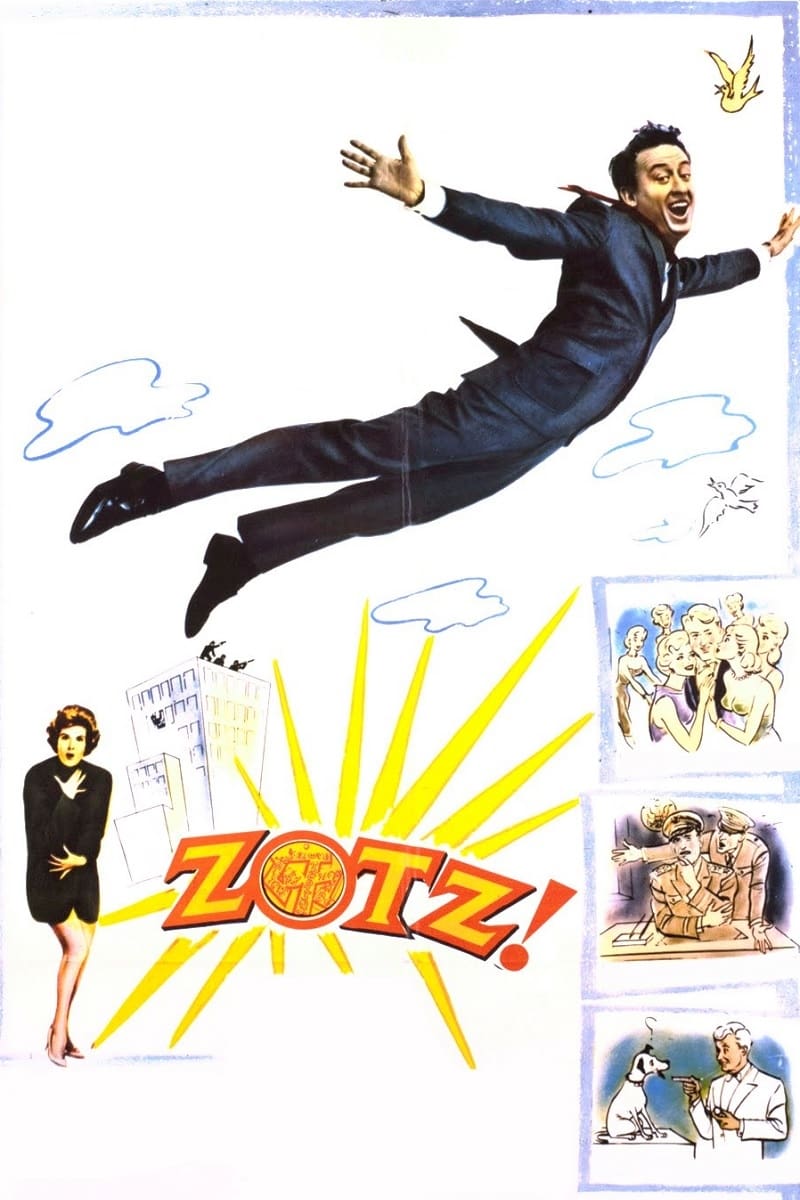
Zotz!
Zotz! is a 1962 American fantasy comedy film produced and directed by William Castle, and starring Tom Poston, Julia Meade, Jim Backus, Fred Clark, and Cecil Kellaway. It is about a man obtaining magical powers from a god of an ancient civilization. It is based on Walter Karig's 1947 novel.