Category
page 1Malacostraca families
Mysidae
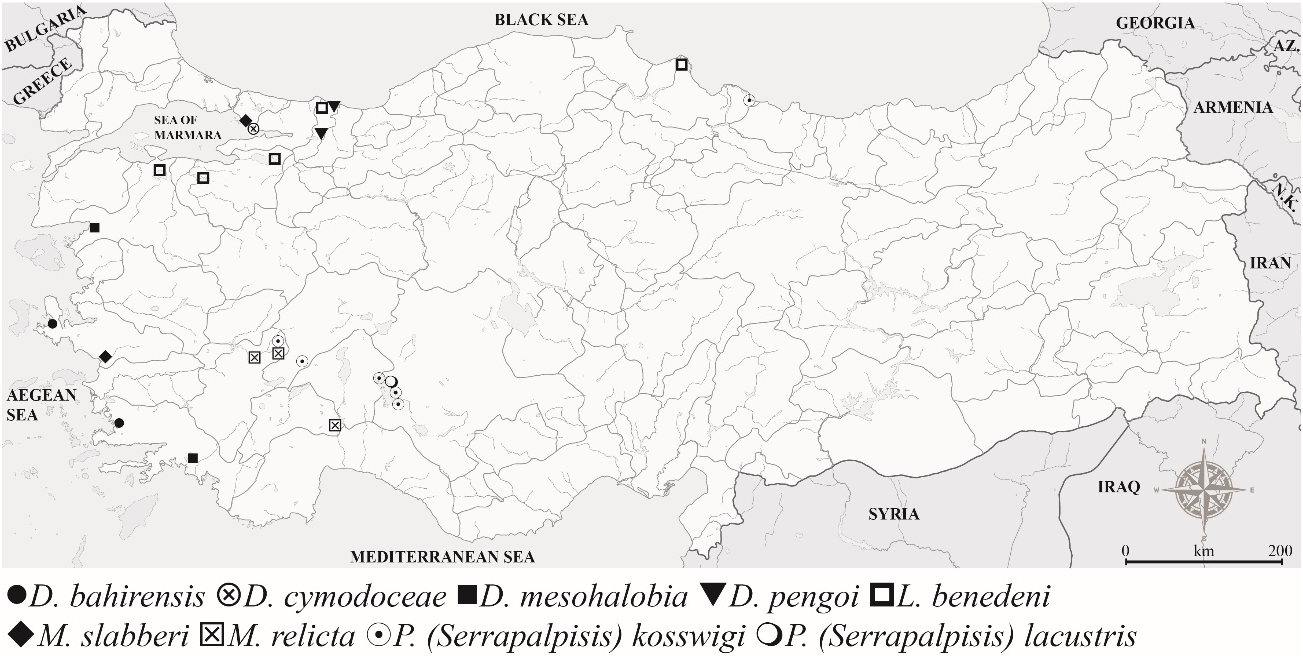
Mysidae is the largest family of crustaceans in the order Mysida, with over 1000 species in around 170 genera.

Squillidae
Squillidae is a family of mantis shrimp, the only family in the superfamily Squilloidea. The type genus is Squilla. It is the stomatopod family with the most genera, as follows:

Nebaliidae
Nebaliidae is the largest of the three families of leptostracan crustaceans, containing 33 of the 40 described species. Its members may be distinguished from members of the other two families by the tapering form of the caudal furcae (which is broader in Nebaliopsididae), and by the callynophores of the antennae in mature males, which are swollen in Paranebaliidae but not in Nebaliidae.

Gonodactylidae
Gonodactylidae is a family of mantis shrimp. It contains these genera:
Gonodactylaceus Manning, 1995
Gonodactylellus Manning, 1995
Gonodactyloideus Manning, 1984
Gonodactylolus Manning, 1970
Gonodactylopsis Manning, 1969
Gonodactylus Berthold, 1827
Hoplosquilla Holthuis, 1964
Hoplosquilloides Manning, 1978c
Neogonodactylus Manning, 1995

Bodotriidae
Bodotriidae is a family of crustaceans belonging to the order Cumacea. Bodotriids have a worldwide distribution in shallow and deep waters. There are over 380 described species in over 30 genera, being the most diverse cumacean family. Their external morphology differs from other cumaceans by a combination of traits that independently are not unique to the family: the telson is fused to the last abdominal segment (last pleonite), the dorsal part of the mandible has a boat shape (naviculoid), exopods exist on the third maxilliped and the first peraeopod, and there is a uropodal endopod with one

Parasquillidae
thumb|left|Parasquilla haani painted by [[Kawahara Keiga in the period 1823 - 1829. Siebold Collection.]]
Parasquillidae is a family of mantis shrimp containing the three genera Faughnia, Parasquilla and Pseudosquillopsis. It was previously included in the superfamily Gonodactyloidea, but that group was found to be paraphyletic, and a new superfamily, Parasquilloidea was erected.

Bathynellidae
Bathynellidae is a family of crustaceans belonging to the order Bathynellacea, first described by Karl Grobben in 1905.

Lampropidae
Lampropidae is a family of cold-water crustaceans belonging to the order Cumacea. Members of Lampropidae are relatively easily recognised because they all at have at least three terminal setae on the telson (rigid fibres on the end of the tail). The telson is medium to large and not fused with the last segment of the pleon. The endopods (interior branches) of the uropods are present on all three members. In the males the flagellum of the second antenna reaches beyond the carapace; moreover, they possess pleopods. In the females the second antenna is somewhat shorter than the first. There are e
Leuconidae
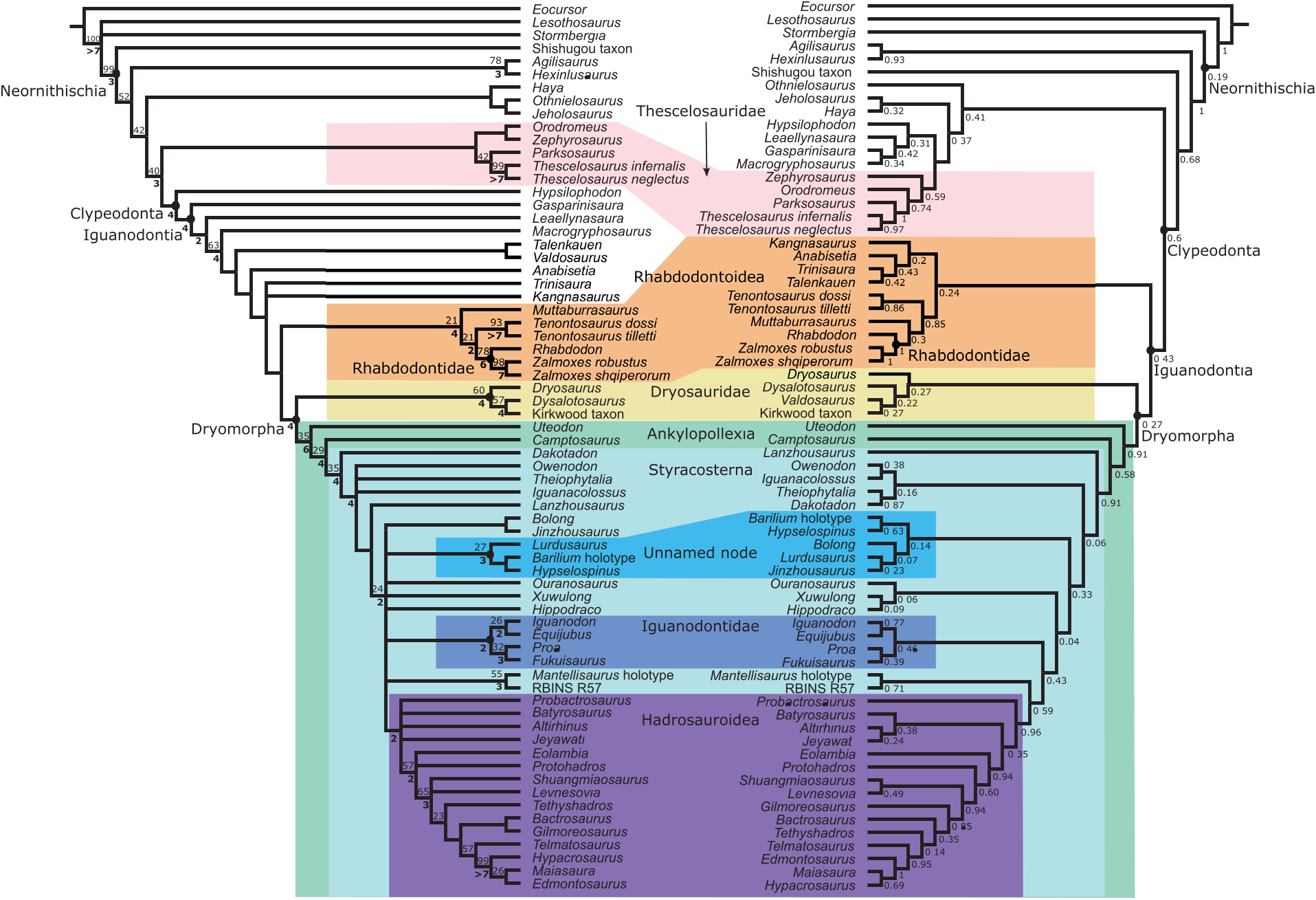
Leuconidae is a family of marine hooded shrimp (order Cumacea). The family was established by Georg Ossian Sars in his 1878 study of Mediterranean cumaceans.
Pseudocumatidae
Pseudocumatidae is a family of crustaceans of the order Cumacea. Its members have a small, free telson. The uropods bear endopods (interior branch) on one segment. The males have two pairs of rather rudimentary pleopods and the flagella of the second antenna reach far beyond the pereon. In females the second antenna is much smaller than the first antenna.
Nannastacidae
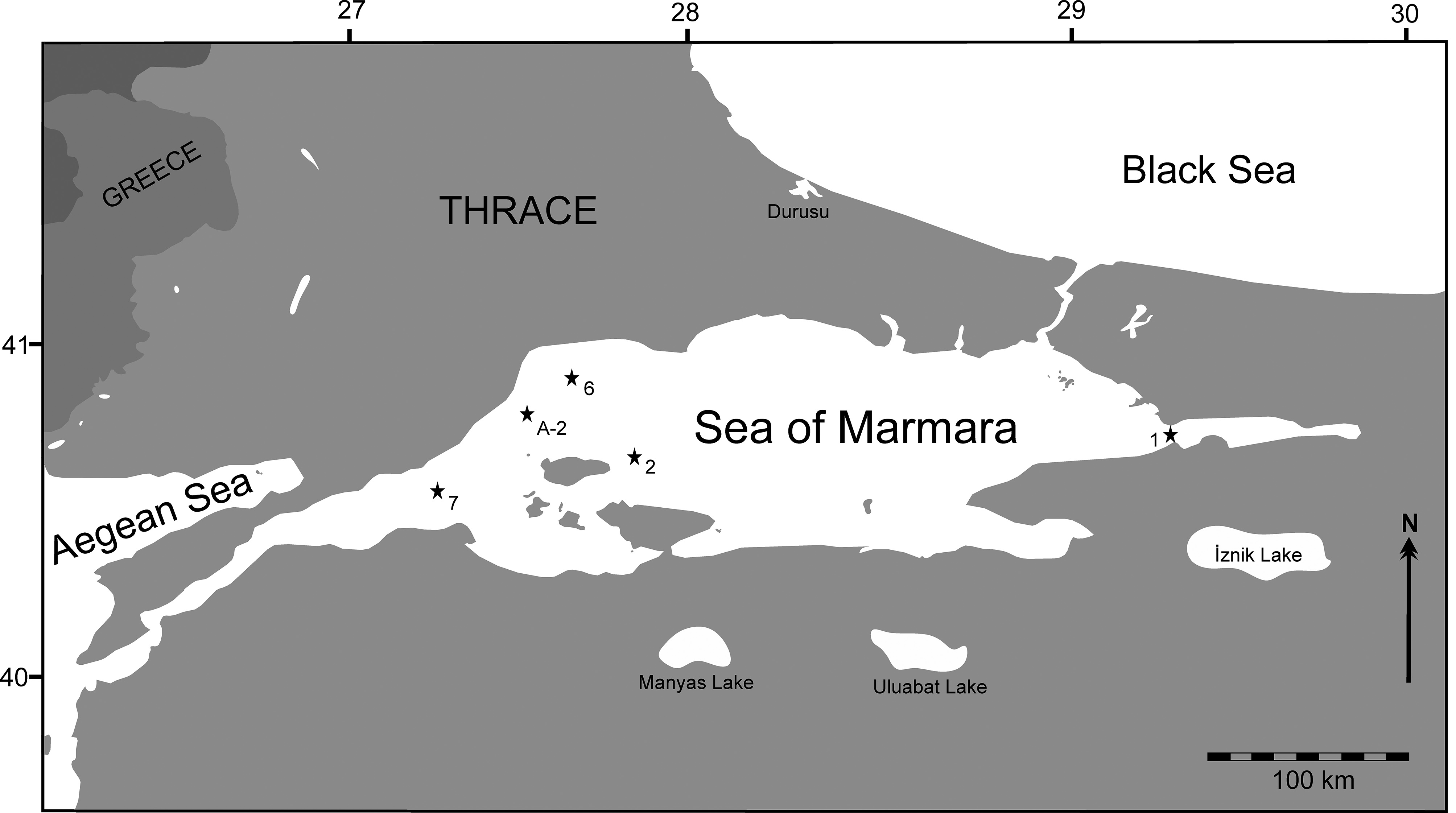
Nannastacidae is a family of crustaceans belonging to the order Cumacea. They have no free telson. The endopods (interior branches) of the uropods are present on one segment. There are exopods (outer branches) on the maxillipeds and generally one on pereopods 1–4 in males and 1–2 in females. In the females the second antenna is much shorter than the first. It contains the following genera:
Petalophthalmidae
Petalophthalmidae is a family of marine crustaceans in the order Mysida, the opossum shrimps.
Nannosquillidae
Nannosquillidae is a family of stomatopods, comprising the following genera:
Ceratocumatidae
Ceratocumatidae is a family of crustaceans of the order Cumacea. Ceratocumatidae have a small free telson. The endopods (interior branches) of the uropods are present on only one segment. Males have 5, 4 or 3 pairs of pleopods. All maxillipeds and some of the pereiopods bear exopods (outer branches). The gill apparatus has no supporting gill plates.
Parabathynellidae
Parabathynellidae is a family of crustaceans belonging to the order Bathynellacea. These creatures are characterized by their slender bodies, reduced eyes, and elongated antennae. They are typically less than 1 mm in length, making them difficult to observe without the aid of a microscope. Parabathynellidae are found in freshwater habitats around the world, including streams, springs, caves, and aquifers.
Lysiosquillidae
The Lysiosquillidae or banded mantis shrimps are a family of mantis shrimp, comprising some of the largest known mantis shrimp species. The most common and best known species is Lysiosquillina maculata, the zebra mantis shrimp.

Diastylidae
Diastylidae is one of the eight most commonly recognised families of crustaceans of the order Cumacea. They are marine creatures especially common around the 30th parallel north.
Bathysquillidae
Bathysquillidae is a family of mantis shrimp. It contains two genera and three species. The family was described by Raymond Manning in 1967.

Pseudosquillidae
The Pseudosquillidae are a family of mantis shrimp containing four genera and 11 species.
Paratanaidae
Paratanaidae is a family of crustaceans belonging to the order Tanaidacea.

Lophogastridae
Lophogastridae is a family of crustaceans belonging to the order Lophogastrida.

Neotanaidae
Neotanaidae is a family of crustaceans belonging to the order Tanaidacea.
Nototanaidae
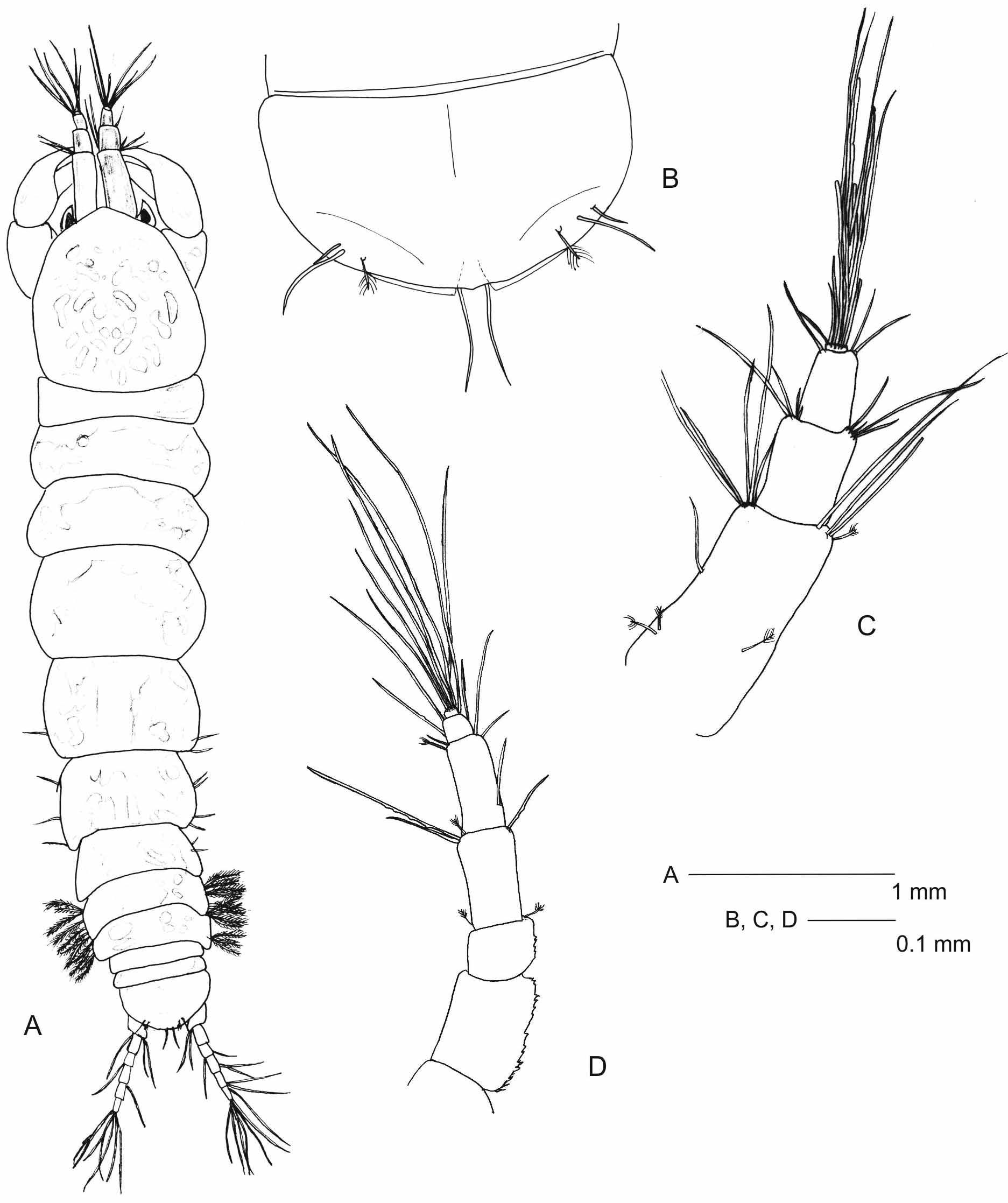
Nototanaidae is a family of crustaceans belonging to the order Tanaidacea.
Eurysquillidae
Eurysquillidae is a family of mantis shrimp. Formerly placed in the superfamily Gonodactyloidea, it has since been recognised that eurysquillids are closer to families in the Squilloidea, and so Eurysquillidae has been placed in its own superfamily, Eurysquilloidea. The family was first described in 1977 by Raymond Manning.
Anarthruridae
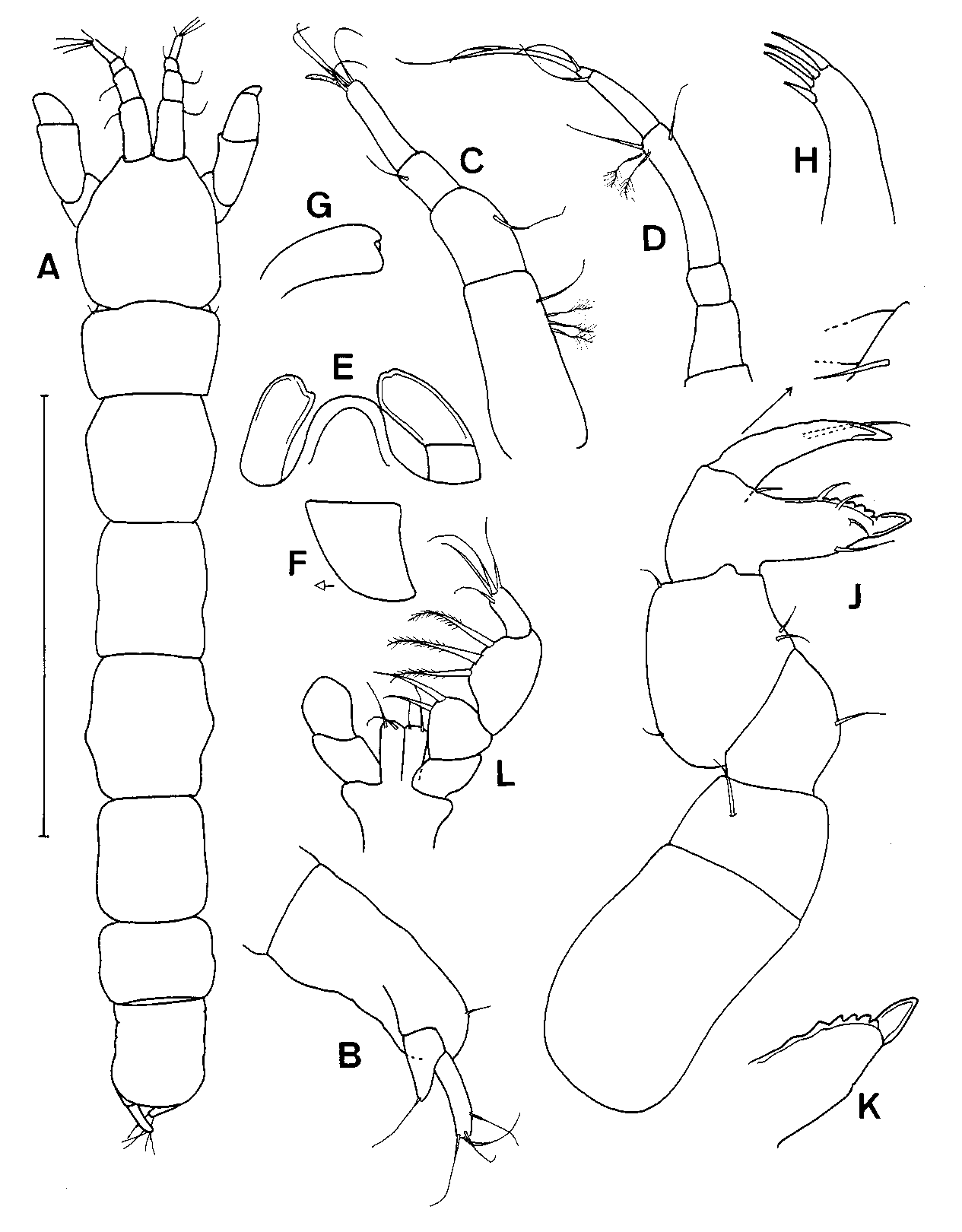
Anarthruridae is a family of crustaceans belonging to the order Tanaidacea.
Koonungidae
Koonungidae is a family of crustaceans belonging to the order Anaspidacea.
Nebaliopsididae
Nebaliopsididae is a family of leptostracan crustaceans. It contains only two species, the bathypelagic Nebaliopsis typica and the mesopelagic Pseudonebaliopsis atlantica.
Halosbaenidae
Halosbaenidae is a family of crustaceans belonging to the order Thermosbaenacea.
Tetrasquillidae
Tetrasquillidae is a family of mantis shrimp containing eleven genera:

Agathotanaidae
Agathotanaidae is a family of crustaceans belonging to the order Tanaidacea.
Gynodiastylidae
Gynodiastylidae is one of the eight most commonly recognised families of crustaceans of the order Cumacea. They are especially prevalent in the Southern Hemisphere, with some types described from Japan, Thailand and the Persian Gulf. Most are found at less than depth.
Protosquillidae
Protosquillidae is a family of mantis shrimp. It contains the following genera:
Chorisquilla Manning, 1969
Echinosquilla Manning, 1969
Haptosquilla Manning, 1969
Protosquilla Brooks, 1886
Rayellus Ahyong, 2010
Siamosquilla Naiyanetr, 1989
Stygocarididae
Stygocarididae is a family of crustaceans belonging to the order Anaspidacea.
Apseudidae
Apseudidae is a family of crustaceans belonging to the order Tanaidacea.
Hirsutiidae
Hirsutiidae is a family of crustaceans, classified either as a separate order, Bochusacea, or as part of a wider Mictacea. It comprises five species in three genera:
Hirsutia bathyalis Saunders, Hessler & Garner, 1985
Hirsutia saundersetalia Just & Poore, 1988
Thetispelecaris remex Gutu & Iliffe, 1998
Thetispelecaris yurigako Ohtsuka, Hanamura & Kase, 2002
Montucaris distincta Jaume, Boxshall & Bamber, 2006

Leptocheliidae
Leptocheliidae is a family of malacostracans in the order Tanaidacea. There are more than 30 genera and 140 described species in Leptocheliidae.
Takuidae
Takuidae is a family of crustaceans belonging to the order Stomatopoda.

Pagurapseudidae
Pagurapseudidae is a family of crustaceans in the order Tanaidacea. Like hermit crabs, they inhabit empty gastropod shells, but can be told apart from hermit crabs by the lack of a carapace, revealing the segmentation of the thorax, and by the greater number of legs: hermit crabs have five pairs of legs, of which the first has large claws, and the last is highly reduced, while in Pagurapseudidae, there is one pair of claws, plus six further walking legs.

Typhlotanaidae
Typhlotanaidae is a family of crustaceans belonging to the order Tanaidacea.
Coronididae
Coronididae is a family of crustaceans belonging to the order Stomatopoda.
Psammaspididae
Psammaspididae is a family of crustaceans belonging to the order Anaspidacea.
Sphyrapodidae
Sphyrapodidae is a family of crustaceans belonging to the order Tanaidacea.
Akanthophoreidae

Akanthophoreidae is a family of crustaceans belonging to the order Tanaidacea.