Category
page 1Mathematicians from the Abbasid Caliphate
.png)
Muḥammad ibn Musa al-Khwarizmi
Muhammad ibn Musa al-Khwarizmi, or simply al-Khwarizmi () was a mathematician active during the Islamic Golden Age, who produced Arabic-language works in mathematics, astronomy, and geography. Around 820, he worked at the House of Wisdom in Baghdad, the contemporary capital city of the Abbasid Caliphate. One of the most prominent scholars of the period, his works were widely influential on later authors, both in the Islamic world and Europe.

Al-Kindi
Abū Yūsuf Yaʻqūb ibn ʼIsḥāq aṣ-Ṣabbāḥ al-Kindī (; ; ; ) was an Arab polymath who was active as a philosopher, mathematician, physician, and music theorist. Al-Kindi was the first of the Islamic peripatetic philosophers, and is hailed as the "father of Arab philosophy".

Al-Battani
Al-Battani (before 858929), archaically Latinized as Albategnius, was a Arab Muslim astronomer, astrologer, geographer and mathematician, who lived and worked for most of his life at Raqqa, now in Syria. He is considered to be one of the greatest and most famous of the astronomers of the medieval Islamic world.
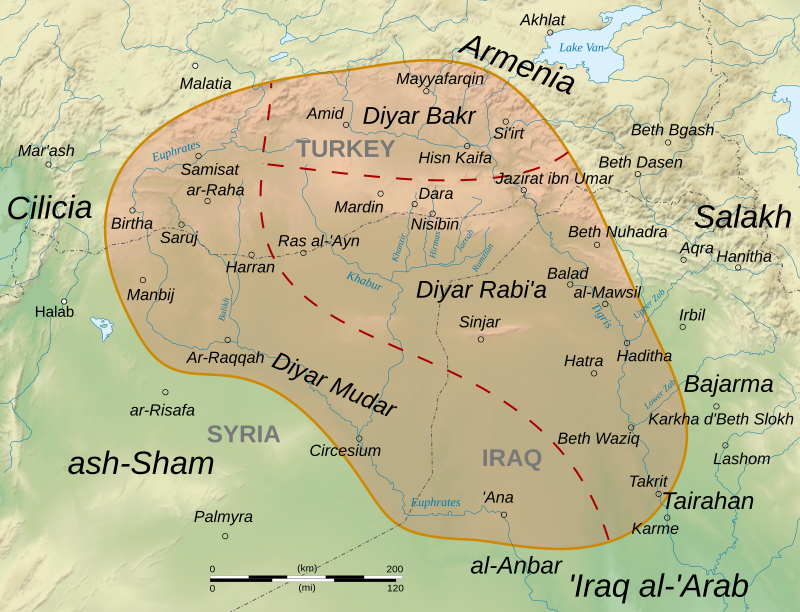
Thābit ibn Qurra
Mesopotamian astronomer and mathematician

Ahmad ibn Muhammad ibn Kathīr al-Farghānī
Abū al-ʿAbbās Aḥmad ibn Muḥammad ibn Kathīr al-Farghānī () also known as Alfraganus in the West (870), was an astronomer in the Abbasid court in Baghdad, and one of the most famous astronomers in the 9th century. Al-Farghani composed several works on astronomy and astronomical equipment that were widely distributed in Arabic and Latin and were influential to many scientists. His best known work, Kitāb fī Jawāmiʿ ʿIlm al-Nujūmi (whose name translates to Elements of astronomy on the celestial motions), was an extensive summary of Ptolemy's Almagest containing revised and more accurate experiment

Abū Ḥanīfa Dīnawarī
Persian Islamic polymath (died 895)
Banū Mūsā
Persian brothers, mathematicians and astronomers

Al-Khalil ibn Ahmad al-Farahidi
Iraqi lexicographer, philologist and poet (718 – 786 CE)
Muḥammad ibn Ibrāhīm al-Fazārī
Persian mathematician and astronomer
Abū Kāmil Shujāʿ ibn Aslam
Islamic Mathematician
Habash al-Hasib al-Marwazi
astronomer, mathematician, and geographer
Al-Mahani
Abu-Abdullah Muhammad ibn Īsa Māhānī (, flourished c. 860 and died c. 880) was a Persian mathematician and astronomer born in Mahan, (in today Kermān, Iran) and active in Baghdad, Abbasid Caliphate. His known mathematical works included his commentaries on Euclid's Elements, Archimedes' On the Sphere and Cylinder and Menelaus' Sphaerica, as well as two independent treatises. He unsuccessfully tried to solve a problem posed by Archimedes of cutting a sphere into two volumes of a given ratio, which was later solved by 10th century mathematician Abū Ja'far al-Khāzin. His only known surviving work
Abu Mansur al-Baghdadi
Medieval Arab mathematician
Al-Nayrizi
'''Abū’l-'Abbās al-Faḍl ibn Ḥātim al-Nairīzī''' (; ; , ) was a Persian mathematician and astronomer from Nayriz, now in Fars province, Iran.
Ishaq ibn Hunayn
physician
'Abd al-Hamīd ibn Turk
Turkic Muslim mathematician
Ahmad ibn Yusuf
Arabic mathematician
Ibrahim ibn Sinan
Arab mathematician and astronomer
Qusta ibn Luqa
Syrian Melkite Christian physician, philosopher, astronomer, mathematician and translator (820–912)
Al-Abbās ibn Said al-Jawharī
mathematician
Al-Ḥajjāj ibn Yūsuf ibn Maṭar
Medieval Arab mathematician
Saghani
Abu Hamid Ahmed ibn Mohammed al-Saghani al-Asturlabi (, referred to by at least one source as Ṣāghānī, was a Persian astronomer and historian of science. His name means "the astrolabe maker of Saghan, near Merv". He flourished in Baghdad, where he died in 990.
Sinan ibn Thabit
Islamic astronomer
Sind ibn Ali
Islamic astronomer
Na'im ibn Musa
9th century mathematician

Muhammad al-Baghdadi
Arab jurist (11th-12th century)