Category
page 1Max Weber
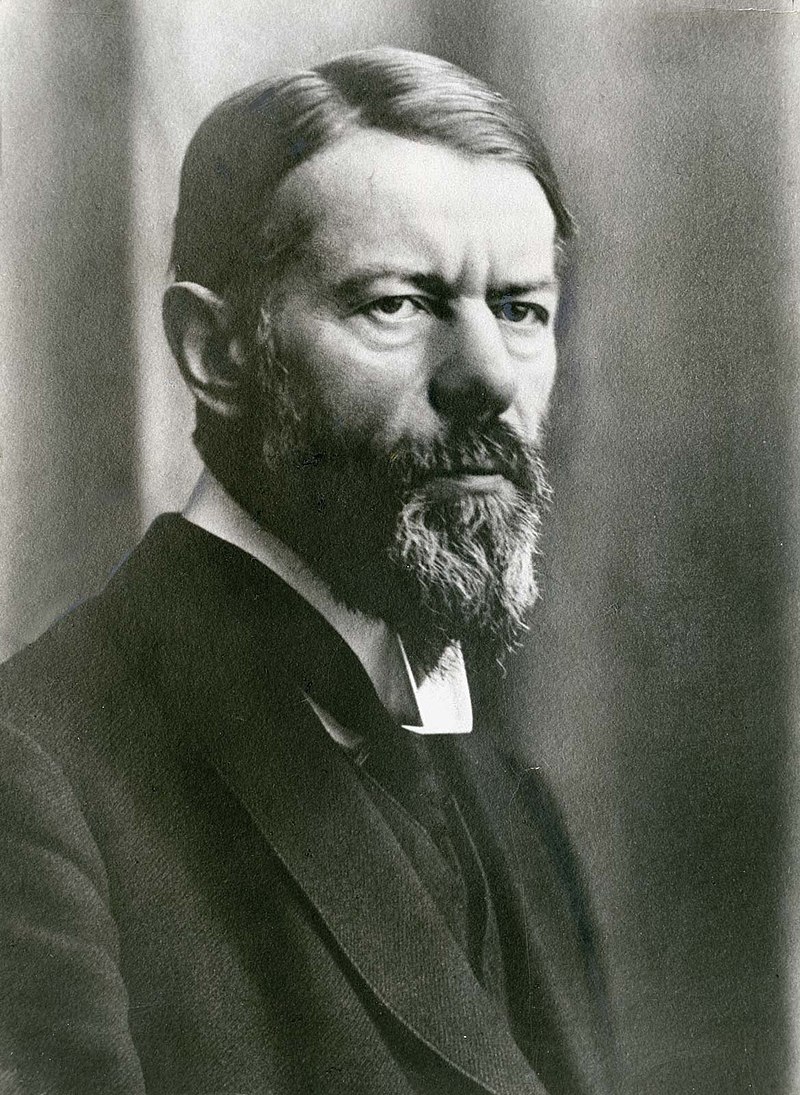
Max Weber
German sociologist, philosopher, and political economist (1864–1920)

bureaucracy
Bureaucracy ( ) is a system of organization where laws or regulatory authority are implemented by civil servants (non-elected officials). Historically, a bureaucracy was a government administration managed by departments staffed with non-elected officials. Today, bureaucracy is the administrative system governing any large institution, whether publicly owned or privately owned. The public administration in many jurisdictions is an example of bureaucracy, as is any centralized hierarchical structure of an institution, including corporations, societies, nonprofit organizations, and clubs.
charisma
Charisma () is a personal quality of magnetic charm, persuasion, or appeal.
social action
act which takes into account the actions and reactions of (other) individuals or agents
monopoly on violence
legitimisation of exclusively state bodies to carry out physical violence
charismatic authority
type of organization or leadership where authority is derived from the charisma of the leader
Protestant work ethic
social-theologic concept
disenchantment
In social science, disenchantment () is the cultural rationalization and devaluation of religion apparent in modern society. The term was borrowed from Friedrich Schiller by Max Weber to describe the character of a modernized, bureaucratic, secularized Western society. In Western society, according to Weber, scientific understanding is more highly valued than belief, and processes are oriented toward rational goals, as opposed to traditional society, in which "the world remains a great enchanted garden".
ideal type
social science term
patrimonialism
Patrimonialism is a form of governance in which the ruler governs on the basis of personal loyalties which are derived from patron-client relations, personal allegiances, kin ties, and combinations thereof. Patrimonialism is closely related to corruption, opportunism, and machine politics. It can contribute to underdevelopment and weak state capacity.
Rationalization
replacement of traditions, values, and emotions as motivators for behaviour with rational, calculated ones
Verstehen
Verstehen (, ), in the context of German philosophy and social sciences in general, has been used since the late 19th century – in English as in German – with the particular sense of the "interpretive or participatory" examination of social phenomena. The term is closely associated with the work of the German sociologist Max Weber, whose antipositivism established an alternative to prior sociological positivism and economic determinism, rooted in the analysis of social action. In anthropology, Verstehen has come to mean a systematic interpretive process in which an outside observer of a cultur

value-freedom
thumb|Max Weber, the creator of this concept
iron cage
term coined by Max Weber for the increased rationalization inherent in social life
traditional authority
form of leadership in which the authority of an organization or a ruling regime is largely tied to tradition or custom
rational-legal authority
form of leadership in which the authority of an organization or a ruling regime is largely tied to legal rationality, legal legitimacy and bureaucracy
tripartite classification of authority
M. Weber’s classification of authority into charismatic, traditional, and legal types
value judgment controversy
The value judgment controversy (German: Werturteilsstreit) is a Methodenstreit, a quarrel in German sociology and economics, around the question whether the social sciences are a normative obligatory statement in politics and its measures applied in political actions, and whether their measures can be justified scientifically.
Three-component theory of stratification
social theory relating to class, status and party