Category
page 1Medical devices
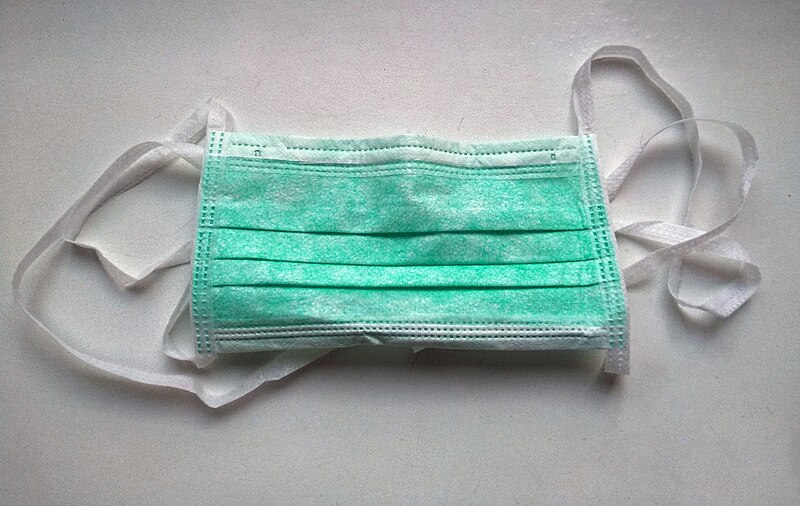
surgical mask
oro-nasal cover worn by health professionals to reduce spread of airborne pathogens

artificial pacemaker
A pacemaker, also known as an artificial cardiac pacemaker, is an implanted medical device that generates electrical pulses delivered by electrodes to one or more of the chambers of the heart. Each pulse causes the targeted chamber(s) to contract and pump blood, thus regulating the function of the electrical conduction system of the heart.

centrifuge
thumb|upright=1.15|A laboratory tabletop centrifuge. The rotating unit, called the rotor, has fixed holes drilled at an angle (to the vertical), visible inside the smooth silver rim. Sample tubes are placed in these slots and the motor is spun. As the centrifugal force is in the horizontal plane and the tubes are fixed at an angle, the particles have to travel only a short distance before they hit the wall of the tube and then slide down to the bottom. These angle rotors are very popular in the lab for routine use.

stent
In medicine, a stent is a tube usually constructed of a metallic alloy or a polymer. It is inserted into the lumen (hollow space) of an anatomic vessel or duct to keep the passageway open.

cochlear implant
prosthesis used for severe and profound hearing loss

N95 respirator
particulate respirator that meets the N95 standard of the United States National Institute for Occupational Safety and Health (NIOSH)

defibrillation
Defibrillation is a treatment for life-threatening cardiac arrhythmias, specifically ventricular fibrillation (V-Fib) and non-perfusing ventricular tachycardia (V-Tach). Defibrillation delivers a dose of electric current (often called a counter-shock) to the heart. Although not fully understood, this process depolarizes a large amount of the heart muscle, ending the arrhythmia. Subsequently, the body's natural pacemaker in the sinoatrial node of the heart is able to re-establish normal sinus rhythm. A heart which is in asystole (flatline) cannot be restarted by defibrillation; it would be trea
medical device
any device intended to be used for medical purposes
transcranial magnetic stimulation
form of brain stimulation using magnetic fields
medical glove
single-use glove worn during medical examinations and procedures
deep brain stimulation
surgical treatment involving the implantation of a medical device called a brain pacemaker

endoscope
thumb|Drawing of an endoscope for Fetus|fetal detection, or "fetoscope"
An endoscope is an inspection instrument composed of an image sensor, optical lens, a light source and a mechanical device, which is used to look deep into the body by openings such as the mouth or anus. A typical endoscope applies several modern technologies including optics, ergonomics, precision mechanics, electronics, and software engineering. With an endoscope, it is possible to observe lesions that cannot be detected by X-ray, making it useful in medical diagnosis. An endoscope uses tubes only a few millimeters thick
artificial intelligence in healthcare
use of complex algorithms and software to approximate human cognition in the analysis of complicated medical data
implantable cardioverter-defibrillator
device implantable inside the body, able to perform cardioversion, defibrillation, and (in modern versions) pacing of the heart
ventricular assist device
medical device to assist or replace a heart
visual prosthesis
experimental visual device intended to restore functional vision in those suffering from partial or total blindness
iontophoresis
Iontophoresis is a process of transdermal drug delivery by use of a voltage gradient on the skin. Molecules are transported across the stratum corneum by electrophoresis and electroosmosis and the electric field can also increase the permeability of the skin. These phenomena, directly and indirectly, constitute active transport of matter due to an applied electric current. The transport is measured in units of chemical flux, commonly μmol/(cm2×hour).
Iontophoresis has experimental, therapeutic and diagnostic applications.
continuous glucose monitor
blood glucose monitoring device
penile prosthesis
medical device, implanted for the surgical treatment of organic erectile dysfunction
transcranial direct-current stimulation
technique of brain electric stimulation therapy which uses low current delivered via electrodesm placed on the scalp
coronary stent
medical apparatus implanted into coronary arteries
%20is%20a%20technique%20for%20noninvasive%20stimulation%20of%20the%20adult%20brain.jpg)
neurostimulation
Neurostimulation is the purposeful modulation of the nervous system's activity using invasive (e.g., microelectrodes) or non-invasive means (e.g., transcranial magnetic stimulation, transcranial electric stimulation such as tDCS or tACS). Neurostimulation usually refers to the electromagnetic approaches to neuromodulation.
artificial urinary sphincter
medical device
intragastric balloon
medical device, inflatable device implanted in the stomach as an adjunct to therapy of morbid obesity
Cranial electrotherapy stimulation
also called transcranial electrotherapy
implantable loop recorder
ILR
retinal implant
visual prosthesis
surgical mesh
material of open texture used in surgery
Tumor Treating Fields
type of electromagnetic field therapy
left atrial appendage occlusion
medical treatment

subcutaneous implantable defibrillator
implantable medical device
Veinoplus
Veinoplus is a class IIa medical device with CE marking. It is indicated for the treatment of vascular diseases. This is a neuromuscular stimulator developed by an American scientist, Jozef Cywinski.
thumb|Veinoplus