Category
page 1Medical terminology

disease
thumb|upright=1.3|"The Sick Girl", by Michael Ancher, 1882, [[National Gallery of Denmark ]]

neuron
A neuron (American English), neurone (British English), or nerve cell, is a cell that is excitable, firing electric signals called action potentials across a neural network in the nervous system, mainly in the central nervous system, and helps to receive and conduct impulses. Neurons communicate with other cells via synapses, which are specialized connections that commonly use minute amounts of chemical neurotransmitters to pass the electric signal from the presynaptic neuron to the target cell through the synaptic gap.

medical diagnosis
conclusion resulting from diagnostic procedure to determine a disease or disorder
.jpg)
patient
A patient is any recipient of health care services that are performed by healthcare professionals. The patient is most often ill or injured and in need of treatment by a physician, nurse, optometrist, dentist, veterinarian, or other health care provider.

pus
Pus is an exudate, typically white-yellow, yellow, or yellow-brown, formed at the site of inflammation during infections, regardless of cause.
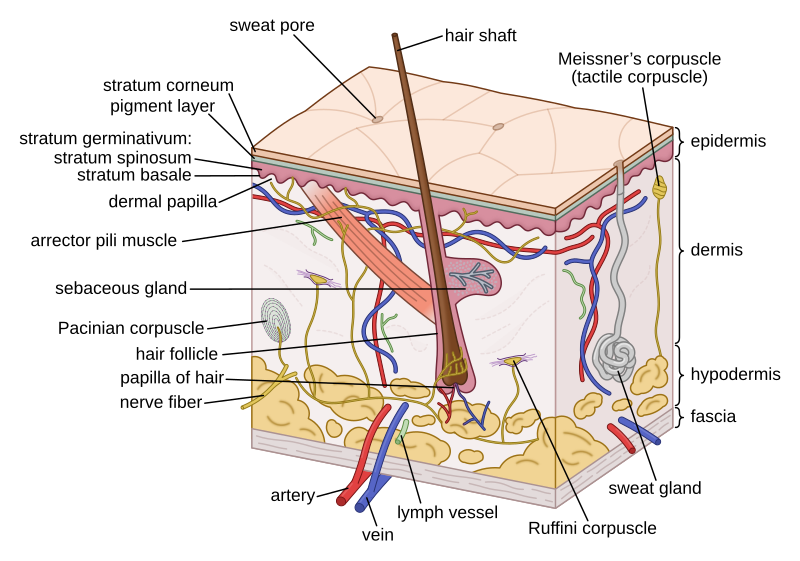
integumentary system
organ system that protects the body comprising the skin and its appendages (including hair, scales, feathers, hooves, and nails)

syndrome
A syndrome is a set of medical signs and symptoms which are correlated with each other and often associated with a particular disease or disorder. The word derives from the Greek σύνδρομον, meaning "concurrence". When a syndrome is paired with a definite cause this becomes a disease. In some instances, a syndrome is so closely linked with a pathogenesis or cause that the words syndrome, disease, and disorder end up being used interchangeably for them. This substitution of terminology often confuses the reality and meaning of medical diagnoses. This is especially true of inherited syndromes. Ab

herd immunity
protection from infectious disease that occurs when a sufficient fraction of a population has become immune (through vaccination or previous infections)

medical history
information gained by a physician by listening the patient's narrative and asking specific questions, with the aim of obtaining information useful in formulating a diagnosis and providing medical care

speech-language pathology
the study and treatment of speech and language problems
chronic condition
human health condition or disease that is persistent or otherwise long-lasting in its effects
prognosis
Prognosis (Greek: πρόγνωσις "fore-knowing, foreseeing"; : prognoses) is a medical term for predicting the likelihood or expected development of a disease, including whether the signs and symptoms will improve or worsen (and how quickly) or remain stable over time; expectations of quality of life, such as the ability to carry out daily activities; the potential for complications and associated health issues; and the likelihood of survival (including life expectancy). A prognosis is made on the basis of the normal course of the diagnosed disease, the individual's physical and mental condition, t

agnosia
thumb|250px|Picture of the ventral and dorsal streams. The ventral stream is depicted in purple and the dorsal stream is depicted in green.
convulsion
A convulsion is a medical condition where the body muscles contract and relax rapidly and repeatedly, resulting in uncontrolled shaking. Because epileptic seizures typically include convulsions, the term convulsion is often used as a synonym for seizure. However, not all epileptic seizures result in convulsions, and not all convulsions are caused by epileptic seizures. Non-epileptic convulsions have no relation with epilepsy, and are caused by non-epileptic seizures.

anatomical placement
standard terms for unambiguous description of relative placement of body parts

list of bones of the human skeleton
Wikimedia list article
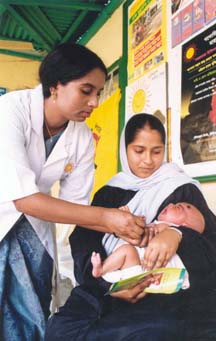
preventive medicine
measures taken for disease prevention, with anticipatory actions that can be categorized as primal, primary, secondary, tertiary, and quaternary prevention
maternal death
death of a woman while pregnant or within 42 days of termination of pregnancy

fascia
thumb|Microsopic image of a fascial structure (nuchal ligament)

fibrosis
Fibrosis, also known as fibrotic scarring, is the development of fibrous connective tissue in response to an injury. Fibrosis can be a normal connective tissue deposition or excessive tissue deposition caused by a disease.
differential diagnosis
distinguishing of a particular disease or condition from others that present similar clinical features

agonist
thumb|400 px|Dose response curves of a full agonist, partial agonist, neutral antagonist, and inverse agonist
An agonist is a chemical that activates a receptor to produce a biological response. Receptors are cellular proteins whose activation causes the cell to modify what it is currently doing. In contrast, an antagonist blocks the action of the agonist, while an inverse agonist causes an action opposite to that of the agonist.
nocebo
A nocebo effect is said to occur when a patient's expectations for a treatment cause the treatment to have a worse effect than it otherwise would have. For example, when a patient anticipates a side effect of a medication, they can experience that effect even if the "medication" is actually an inert substance. The complementary concept, the placebo effect, is said to occur when expectations improve an outcome.

ambulatory
thumb|right|The placement of the ambulatory within a standard cathedral.
The ambulatory ( 'walking place') is the covered passage around a cloister or the processional way around the east end of a cathedral or large church and behind the high altar. The first ambulatory was in France in the 11th century but by the 13th century ambulatories had been introduced in England and many English cathedrals were extended to provide an ambulatory.

complication
unfavourable evolution of a disease, a health condition or a therapy, which may adversely affect the prognosis or outcome
screening
medical practice of testing a group or population for disease or medical conditions, who may not yet exhibit disease symptoms, enabling earlier intervention and disease management
body fluid
liquid originating from the inside of an organism, including fluids excreted or secreted, and body water that normally is not
sedentary lifestyle
inactive lifestyle with health risks
benign neoplasm
disease of cellular proliferation that results in abnormal growths in the body which lack the ability to metastasize
asymptomatic carrier
person or other organism that has become infected with a pathogen without displaying signs or symptoms

stenosis
Stenosis () is the abnormal narrowing of a blood vessel or other tubular organ or structure such as foramina and canals. It is also sometimes called a stricture (as in urethral stricture).
allopathic medicine
term for science-based, modern medicine, used pejoratively to describe scientific systems of medicine by proponents of alternative medicine or to distinguish 'Western' evidence-based medicine from other systems
acute disease
disease with a rapid onset and/or a short course
idiosyncrasia
An idiosyncrasy is a unique feature of something. The term is often used to express peculiarity.
oral administration
route of administration where a substance is taken through the mouth and digestive tract
remission
medical term
idiopathy
disease with unknown pathogenesis or apparently spontaneous origin
malignancy
Malignancy () is the tendency of a medical condition to become progressively worse; the term is most familiar as a characterization of cancer.
nosology
Nosology () is the branch of medical science that deals with the classification of diseases. Fully classifying a medical condition requires knowing its cause (and that there is only one cause), the effects it has on the body, the symptoms that are produced, and other factors. For example, influenza is classified as an infectious disease because it is caused by a virus, and it is classified as a respiratory infection because the virus infects and damages certain tissues in the respiratory tract. The more that is known about the disease, the more ways the disease can be classified nosologically.
calculus
concretion of material, usually mineral salts, that forms in an organ or duct of the body
contraindication
In medicine, a contraindication is a condition (a situation or factor) that serves as a reason not to take a certain medical treatment due to the harm that it would cause the patient. Contraindication is the opposite of indication, which is a reason to use a certain treatment.
rapid antigen test
a medical test to know in less than a few hour a certain condition
dystrophy
Dystrophy is the degeneration of tissue, due to disease or malnutrition, most likely due to heredity.
acute abdomen
medical condition
blood oxygen saturation
fraction of oxygen-saturated hemoglobin relative to total hemoglobin in the blood

diverticulum
In medicine or biology, a diverticulum is an outpouching of a hollow (or a fluid-filled) structure in the body. Depending upon which layers of the structure are involved, diverticula are described as being either true or false.
list of muscles of the human body
Wikimedia list article
symptomatic treatment
medical treatment that only affects a condition's symptoms
paresis
In medicine, paresis (), compound word from Greek , (πᾰρᾰ- “beside” + ἵημι “let go, release”), is a condition typified by a weakness of voluntary movement, or by partial loss of voluntary movement or by impaired movement. When used without qualifiers, it usually refers to the limbs, but it can also be used to describe the muscles of the eyes (ophthalmoparesis), the stomach (gastroparesis), and also the vocal cords (vocal cord paresis).
aura
eye disturbance with/without headache
terminal illness
incurable disease unable to be treated that will almost certainly result in the patient's death
.jpg)
empyema
thumb|Empyema
sclerosis
medical condition
atresia
Atresia is a condition in which an orifice or passage in the body is (usually abnormally) closed or absent.
topical medication
medication applied to body surfaces
lateral flow test
immunochromatographic testing devices

Asymptomatic
thumb|250px|right|Pulmonary contusion due to trauma is an example of a condition that can be asymptomatic with half of people showing no signs at the initial presentation. The [[CT scan shows a pulmonary contusion (red arrow) accompanied by a rib fracture (purple arrow).]]
perinatal death
deaths of humans during late pregnancy from 22 weeks of gestation or within the first 7 days after birth
ocular prosthesis
type of craniofacial prosthesis
indication
valid reason to use a certain test, medication, procedure, or surgery