Category
page 1Medieval Arabic literature

One Thousand and One Nights
collection of Middle Eastern folk stories

Panchatantra
thumb|The first page of oldest surviving Panchatantra text in Sanskrit
thumb|An 18th-century Pancatantra manuscript page in Braj ("The Talkative Turtle")

Al-Jahiz
Abu Uthman Amr ibn Bahr al-Kinani al-Basri (; ), commonly known as al-Jahiz (, ), was an Arab Muslim theologian, intellectual, and litterateur known for his individual Arabic prose. A polymath who lived during the Abbasid Caliphate, he was the author of works of literature (including theory and criticism), theology, zoology, philosophy, grammar, dialectics, rhetoric, philology, linguistics, and politico-religious polemics. His extensive zoological work has been credited with describing principles related to natural selection, ethology, and the functions of an ecosystem.

Sinbad the Sailor
fictional sailor
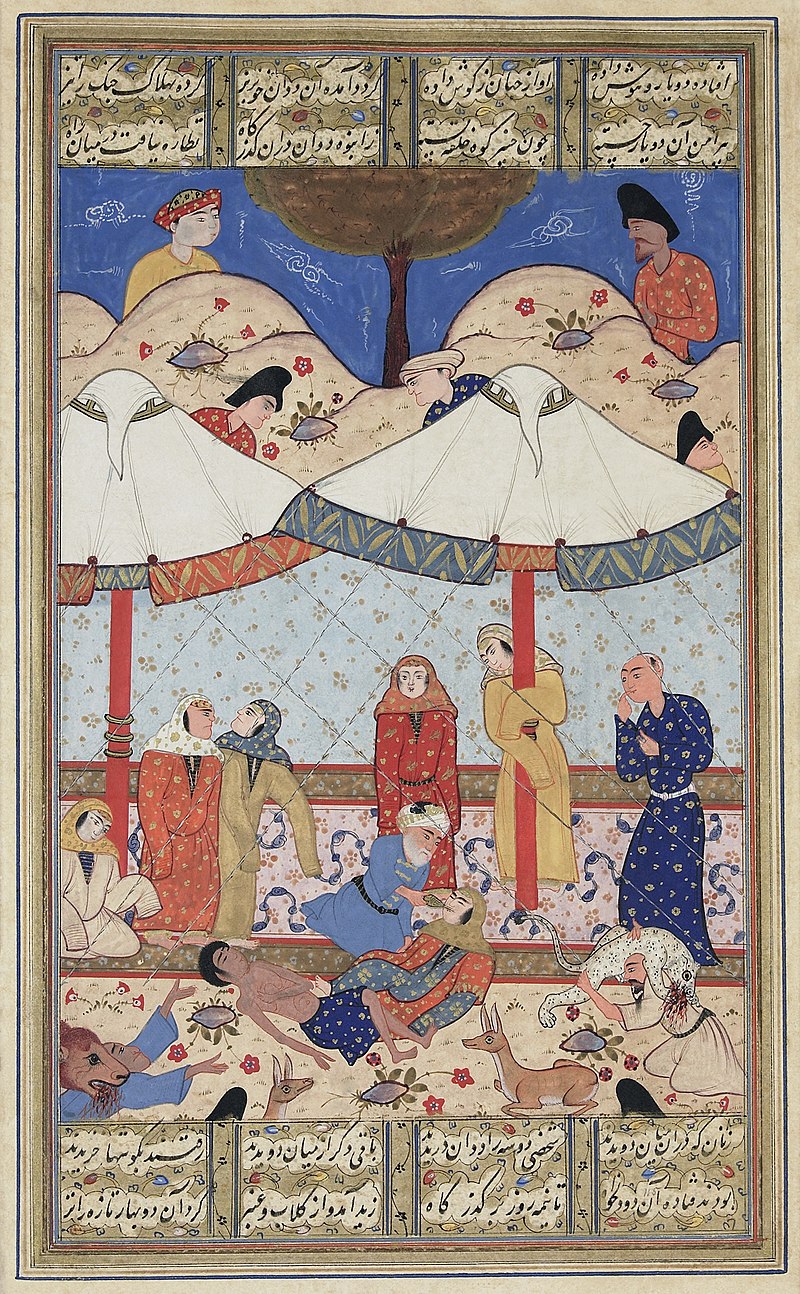
Layla and Majnun
story of Arab origin, about the 7th-century Arabic poet Qays ibn al-Mulawwah and his lover Layla bint Mahdi

Muqaddimah
The Muqaddimah ( "Introduction"), also known as the Muqaddimah of Ibn Khaldun () or '''''Ibn Khaldun's Prolegomena''' (), is a book written by the historian Ibn Khaldun in 1377 which presents a view of universal history. Some modern thinkers view it as the first work dealing with the social sciences of sociology, demography, and cultural history. The Muqaddimah'' also deals with Islamic theology, historiography, the philosophy of history, economics, political theory, and ecology.

Barlaam and Josaphat
two saints
Kalila and Demna
collection of fables
Nahj al-Balagha
collection of sys, attributed to Ali, cousin and son-in-law of Muhammad

Picatrix
thumb|Title of a 1612 Ghayat al-Hakim manuscript (Istanbul, Hagia Sophia 2443).
Picatrix () is a 400-page Arabic book of magic and astrology, which most scholars assume was originally written in the middle of the 11th century, though an argument for composition in the first half of the 10th century has been made. The work was translated into Spanish and then into Latin during the 13th century, at which time it got the Latin title Picatrix. The title Picatrix is also sometimes used to refer to the book's author.

The Perfumed Garden
work of erotic literature
Hayy ibn Yaqdhan
novel by Ibn Tufail

maqāma
right|thumb|200px|The 7th Maqāma of Al-Hariri of Basra|Al-Hariri, illustration by [[Yahya ibn Mahmud al-Wasiti from the 1237 manuscript (BNF ms. arabe 5847).]]The maqāma (Arabic: مقامة [maˈqaːma], literally "assembly"; plural maqāmāt, مقامات [maqaːˈmaːt]) is an (originally) Arabic prosimetric literary genre of picaresque short stories originating in the tenth century C.E. The maqāmāt are anecdotes told by a fictitious narrator which typically follow the escapades of a roguish protagonist as the two repeatedly encounter each other in their travels. The genre is known for its literary and rhetor
Kitab al-Aghani
arabic encyclopedic collection of poems and songs
Qisas Al-Anbiya
Genre of Islamic literature, describing the history and stories of the prophets in Islam

The Meadows of Gold
non-fiction work by Al-Mas'udi
rihla
Riḥla () refers to both a journey and the written account of that journey, or travelogue. It constitutes a genre of Arabic literature. Associated with the medieval Islamic notion of "travel in search of knowledge" (الرحلة في طلب العلم), the riḥla as a genre of medieval and early-modern Arabic literature usually describes a journey taken with the intent of performing the Hajj, but can include an itinerary that vastly exceeds that original route. The classical riḥla in medieval Arabic travel literature, like those written by Ibn Battuta (known commonly as The Rihla) and Ibn Jubayr, includes a de
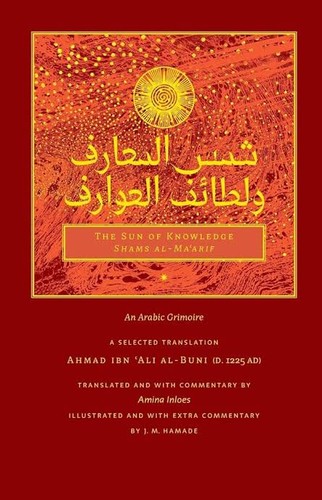
Shams al-Ma'arif
13th-century book by houari smail
The Ring of the Dove
treatise by Ibn Hazm
Book of Idols
book by Hisham Ibn Al-Kalbi
Amr ibn Ma'adi Yakrib
legendary early 7th-century Arabian calvary commander
Taghribat Bani Hilal
Arabic epic recounting the Banu Hilal's journey from Najd to Maghreb
Book of Wonders
14th and 15th century Arabic manuscript

Kitab al-Miraj
book about Muhammad's ascension into Heaven
Resalat Al-Ghufran
book by Aboe l-ʿAlaa al-Maʿarri
ʿAjā'ib al-makhlūqāt wa gharā'ib al-mawjūdāt
important work of cosmography by Zakariya al-Qazwini
Hadith Bayad wa Riyad
13th-century Arabic love story
Sirat al-Zahir Baibars
Egyptian folkloric epic poem

Theologus Autodidactus
novel by Ibn al-Nafis
al-Iʻtibār
memoir by Usama ibn Munqidh
Al-ʿIqd al-Farīd
book by Ibn Abd Rabbih
Al-Nadirah
thumb|The fortified desert city of Hatra, which had repelled three Roman and one Sasanian sieges, fell to the Sasanian king [[Shapur I in 241.]]
Maqamat Badi' az-Zaman al-Hamadhani
Dictes and Sayings of the Philosophers
1477 Middle English incunabulum

Encyclopedia of Pleasure
Arabic erotic work
Delhemma
Delhemma or Sirat Delhemma ("Tale of Lady Delhemma") is a popular epic of the Arabic literature regarding the Arab–Byzantine wars of the Umayyad and early Abbasid periods.
Kitâb al-Diryâq
medieval Middle-Eastern manuscript
One Hundred and One Nights (book)
cycle of Arabic stories