Category
page 1Medieval currencies

Dirham
thumb|Nations in red currently use the dirham. Nations in green use a currency with a subdivision named dirham.
The dirham, dirhem or drahm is a unit of currency and of mass. It is the name of the currencies of Morocco, the United Arab Emirates and Armenia, and is the name of a currency subdivision in Jordan, Libya, Qatar and Tajikistan. It was historically a silver coin.
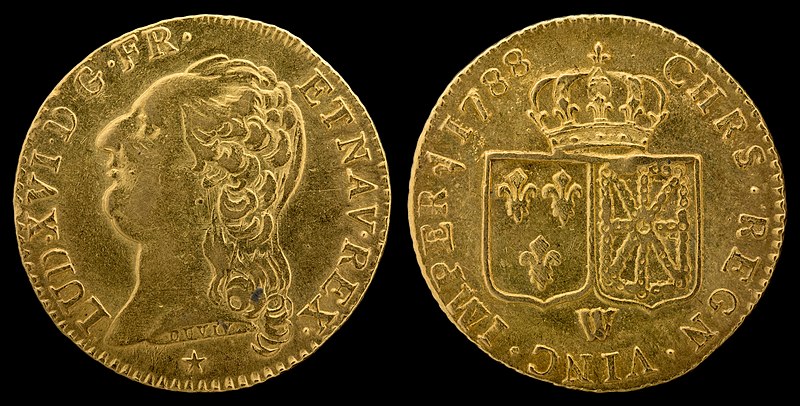
French franc
former currency of France

ducat
thumb|Austrian gold ducat depicting Kaiser Franz Joseph I of Austria|Franz-Josef,
The ducat ( ) coin was used as a trade coin in Europe from the later Middle Ages to the 19th century. Its most familiar version, the gold ducat or sequin containing around of 98.6% fine gold, originated in Venice in 1284 and gained wide international acceptance over the centuries. Similarly named silver ducatons also existed. The gold ducat circulated along with the Florentine florin and preceded the modern British pound sterling.

Akçe
The akçe or akça (anglicized as akche, akcheh or aqcha; ; , , in Europe known as asper) was a silver coin mainly known for being the chief monetary unit of the Ottoman Empire. It was also used in other states including the Anatolian Beyliks, the Aq Qoyunlu, and the Crimean Khanate. The basic meaning of the word is "silver" or "silver money", deriving from the Turkish word () and the diminutive suffix .

groschen
thumb|upright=1.4|Barile (large groschen), Florence, 1506
.jpg)
florin
thumb|right|Reverse of an Italian florin coin

écu
thumb|The first écu, issued by Louis IX of France, in 1266.
The term écu () may refer to one of several French coins. The first écu was a gold coin (the ''écu d'or) minted during the reign of Louis IX of France, in 1266. The value of the écu varied considerably over time, and silver coins (known as écu d'argent'') were also introduced.
heller
originally a German coin later used elsewhere in Central Europe
French livre
currency of Kingdom of France and its predecessor state of West Francia from 781 to 1794

Spanish maravedí
The maravedí () or maravedi (), deriving from the Almoravid dinar (), was the name of various Iberian coins of gold and then silver between the 11th and 14th centuries, and the name of different Iberian accounting units between the 11th and 19th centuries.
sequin
type of currency
pound Scots
unit of currency in the Kingdom of Scotland
Prague groschen
coin
French denier
medieval coin
cash
Chinese currency unit used on cash coins in imperial and early republican China

Batzen
thumb|200px|Bernese batzen (15th century)
thumb|40-Batzen Thaler, Vaud, 1812
thumb|Bern: 5 Batzen 1826, concordat type
thumb|Freiburg im Üechtland|Freiburg (Freyburg): 1 Batzen 1830
The batzen is a historical Swiss, south German, and Austrian coin. It was first produced in Bern, Switzerland, from 1492 and remained in use there until the mid-19th century.
cash
style of former Chinese coins minted with central holes for transport on ropes and cords
.jpg)
grivna
thumb|Round grivna (about )
thumb|Triangular Novgorod grivnas excavated near Koporye
thumb|100px|Kievan rhombic grivna
thumb|A hoard of rhombic Kievan grivnas at Moscow State Historical Museum

Chao
thumb|Yuan dynasty banknote (2 Chinese cash (currency unit)|guàn) with its printing plate (1287)

augustalis
thumb|right|Example of a Neapolitan augustale, showing a Roman Emperor
An augustalis or augustale, also agostaro, was a gold coin minted in the Kingdom of Sicily beginning in 1229 or in 1231 according to others.
Jiaozi
one of the first forms of paper money

Mancus
thumb|A mancus of king Ethelred the Unready|Æthelred II, 1003–1006.

Genovino
alt=|thumb|Genovino of the year 1252.
The genovino was a gold coin used in the Republic of Genoa from 1252 to 1415.
Venetian grosso
medieval silver Venetian coin
Japanese mon
currency used in Japan until 1870
Korean mun
currency used in Joseon
Dobla
right|220px|thumb|Gran dobla or dobla de a diez of Pedro I of Castile, minted in [[Seville in 1360 (Madrid).]]
French sol
currency
livre parisis
medieval French coin
Kraków grosz
Medieval Polish coins
agontano
The Agontano was the currency used by the Italian Maritime Republic of Ancona from the 12th to the 16th centuries during its golden age.
It was a large silver coin of 18-22mm in diameter and a weight of 2.04-2.42 grams, of roughly equivalent value to the Milanese Soldo.
Columnarios
REDIRECT Spanish colonial real#Columnarios
Portuguese dinheiro
Currency of Portugal from c. late 12th century until c. 1502
Lithuanian long currency
Baltic region commodity money

grzywna
historical measure of weight, mainly for silver, and unit of exchange
gigliato
The gigliato, also gillat or carlino, was a coin of pure silver established in 1303 by Charles II of Anjou in Naples, and then also in Provence from 1330. Its name derives from the Lilies ("giglio") depicted on the reverse entwined around a cross.
The coin weighed 4 grams. This type of coin was widely copied in the Eastern Mediterranean, especially by the Turks, such as the Emir of Saruhan.
Visigothic coinage
coinage used by the Visigoth people
Yuan dynasty coinage
historical coinage of China
Genoese lira
currency of the Republic of Genoa from 1138 to 1797
Agnel
coin
Vietnamese cash
Old currency of Vietnam.
Cornado
thumb|Cornado minted in Toledo, Spain|Toledo during the reign of [[Sancho IV of Castile (1284–1295)]]
thumb|Kingdom of Navarre|Navarran cornado minted in 1757, during the reign of Ferdinand VI
Cornado is the common name of several Castilian coins made of copper or billon (an alloy of silver and copper), minted from the time of Sancho IV of Castile (13th century) until that of the Catholic Monarchs (16th century).
Huizi
banknote of the Chinese Southern Song Dynasty
Mangır
The manghir (; ; ) was an Ottoman copper coin introduced first during the reign of sultan Murad I ().
coinage of the Republic of Venice
coins produced by the Republic of Venice
Artiluc
160px|thumb|Artiluc
Artiluc (, ) was a silver coin forged and used in the 17th century in the Republic of Ragusa that had its capital city in Dubrovnik, modern-day Croatia.
Oncia
thumb|A silver Maltese oncia from 1741–73
In southern Italy, the oncia (plural oncie or once) or onza (pl. onze) was a unit of account during the Middle Ages and later a gold coin minted between 1732 and 1860. It was also minted in the southern Italian territories of the Spanish Empire, and a silver coin of the same value was minted by the Knights of Malta. The name is derived from the ancient Roman uncia. It is sometimes translated as ounce.
flying cash
paper negotiable instrument in China

Medieval Bulgarian coinage
medieval Bulgarian Coinage, Second Bulgarian Empire
Frizatik
Frizatik was a silver currency minted in the town of Friesach in Carinthia since early 12th until mid-14th century. It was primarily coined by the Archbishops of Salzburg.
Tournois
[[Image:Denier tournois 1270.jpg|thumb|right|300px|A ''''; inscription reads:+PHILIPVS•REX / +TVRONVS•CIVI[TATI]S.]]
Goryeo currency
currency used in Goryeo
yarmaq
silver coins minted in the Khazar Khaganate and other Turkic polities in medieval Eurasia
cash
one of several historical units of currency used in Asia
Banovac
thumb|Coin of Andrew II of Hungary, or [[Béla IV of Hungary.]]
Banovac, banski denar or banica is a coin struck and used in the Kingdom of Croatia between 1235 and 1384, replacing the Croatian frizatik (which was also minted by Duke of Slavonia). The Latin name '''' was derived from the words ban ("viceroy") and denarius''.