Category
page 1Mediterranean

Mediterranean Sea
sea between Europe, Africa and Asia
Sicily
Sicily (Italian and ), officially the Sicilian Region, is an island in the central Mediterranean Sea and one of the twenty regions of Italy, situated south of the Italian Peninsula in continental Europe. With over 4.7 million inhabitants, including 1.2 million in and around the capital city of Palermo, it is both the largest and most populous island in the Mediterranean Sea.

Mediterranean Region
region of Turkey

thalassemia
Thalassemias are a group of inherited blood disorders that manifest as the production of reduced hemoglobin. Symptoms depend on the type of thalassemia and can vary from none to severe, including death. Often there is mild-to-severe anemia (low red blood cells or hemoglobin), as thalassemia can affect the production of red blood cells and also affect how long the red blood cells live. Symptoms include tiredness, pallor, bone problems, an enlarged spleen, jaundice, pulmonary hypertension, and dark urine. A child's growth and development may be slower than normal.

evil eye
curse believed to be cast by a malevolent glare, causing many cultures to create measures against it

plazas de soberanía
Spanish territories along the northern African coast
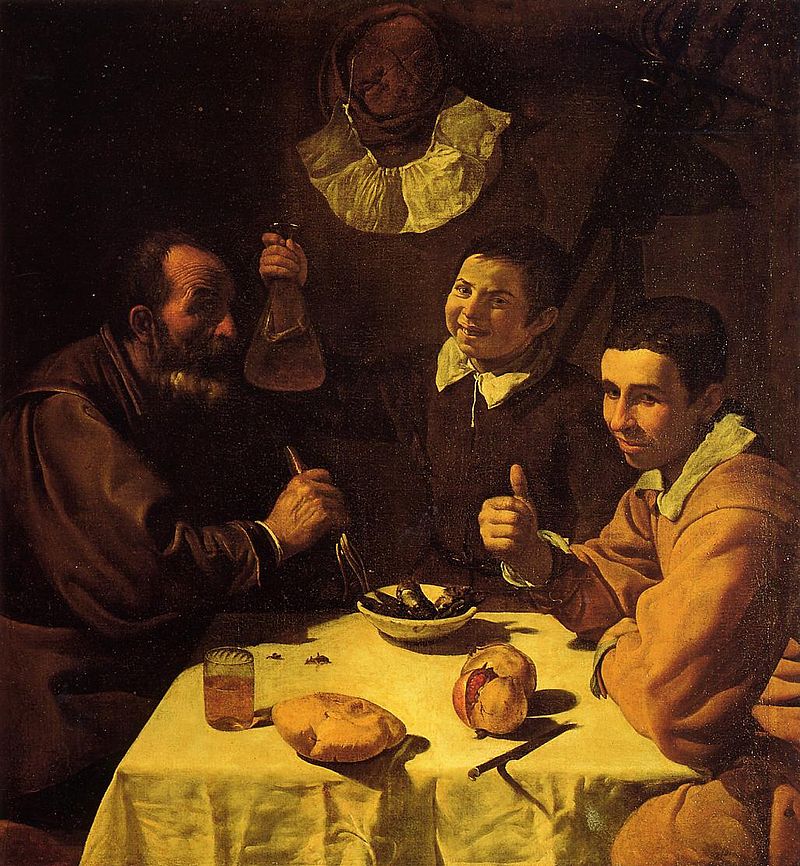
Mediterranean cuisine
culinary traditions of the Mediterranean
mediterranean sea
type of sea with limited water exchange with outer oceans
sign of the horns
hand gesture
familial Mediterranean fever
Human disease

Mărțișor
thumb|200px|A sample generic Mărțișor
Mărțișor () is a tradition celebrated at the beginning of Spring in March, involving an object made from two intertwined red and white strings with hanging tassel. It is practiced in Romania and Moldova, and very similar to Martenitsa tradition in Bulgaria, Martinka in North Macedonia and traditions of other populations from Southeastern Europe.
Mediterranean Dialogue
cooperation between NATO and seven countries of the Mediterranean
Tour Méditerranéen
recurring sporting event
history of the Mediterranean region
aspect of history
American Mediterranean Sea
basin that includes the Caribbean Sea and the Gulf of Mexico
Australasian Mediterranean Sea
the sea enclosed by the Sunda Islands and the Philippines
Greek East and Latin West
division of the Greco-Roman world into eastern Greek and western Latin parts
olive skin
color tone of human skin roughly corresponding to Types III, IV, and V on the Fitzpatrick scale of pigmentation
Mediterranean Day
commemoration of the founding of the Union for the Mediterranean
MEFV
MEFV (Mediterranean fever) is a human gene that provides instructions for making a protein called pyrin (also known as marenostrin). Pyrin is produced in certain white blood cells (neutrophils, eosinophils and monocytes) that play a role in inflammation and in fighting infection. Inside these white blood cells, pyrin is found with the cytoskeleton, the structural framework that helps to define the shape, size, and movement of a cell. Pyrin's protein structure also allows it to interact with other molecules involved in fighting infection and in the inflammatory response.
Mediterraneanism
Mediterraneanism is a racialist ideology that claims that the "Mediterranean race" (a historical race concept) is "the greatest race...derived neither from the black nor white people...an autonomous stock in the human family" according to Mediterraneanist and anthropologist Giuseppe Sergi. Sergi identified the Mediterranean race as a brunet race separate from the black race and the white race.
Haplogroup E-V68
human Y-chromosome DNA haplogroup marked by northwards as well as southward migration along the Muqedian (Muqedite) route
Latin Arch
Italy–Tunisia Delimitation Agreement
1971 treaty between Italy and Tunisia