Category
page 1Megalithic Temples of Malta

Ġgantija
Ġgantija (; "place of giants") is a megalithic temple complex from the Neolithic era (–2500 BC), on the Mediterranean island of Gozo in Malta. The Ġgantija temples are the earliest of the Megalithic Temples of Malta and are older than the pyramids of Egypt. Their makers erected the two Ġgantija temples during the Neolithic, which makes these temples more than 5,500 years old and the world's second-oldest existing manmade religious structures after Göbekli Tepe in present-day Turkey. Together with other similar structures, these have been designated a UNESCO World Heritage Site, the Megalithic
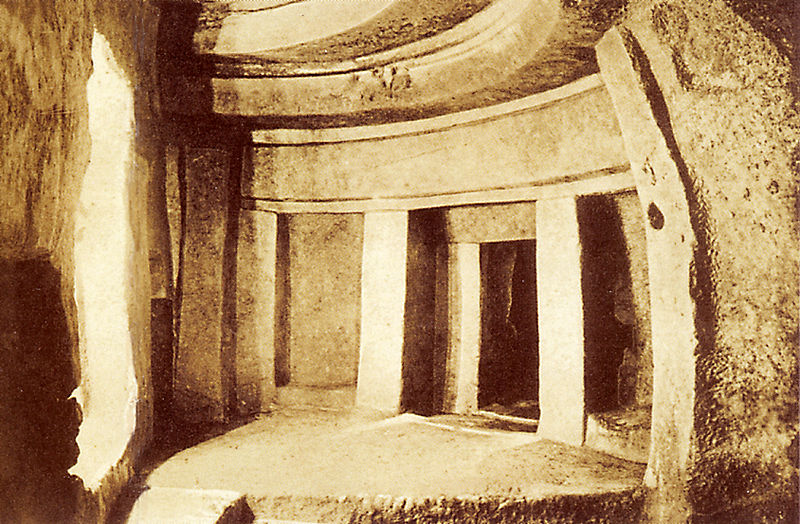
Hypogeum of Ħal Saflieni
Neolithic subterranean structure in Malta
Megalithic Temples of Malta
several prehistoric temples on the Maltese Islands

Mnajdra
Mnajdra () is a megalithic temple complex found on the southern coast of the Mediterranean island of Malta. Mnajdra is approximately from the Ħaġar Qim megalithic complex. Mnajdra was built around the fourth millennium BCE; the Megalithic Temples of Malta are among the most ancient religious sites on Earth, described by the World Heritage Sites committee as "unique architectural masterpieces." In 1992, UNESCO recognized the Mnajdra complex and four other Maltese megalithic structures as UNESCO World Heritage Sites. In 2009, work was completed on a protective tent.
Ħaġar Qim
megalithic temple complex
Tarxien Temples
archaeological complex in Tarxien, Malta
Ta' Ħaġrat
UNESCO World Heritage Site
Skorba Temples
megalithic temple remains in Malta
Buġibba Temple
Megalithic temple ruins in Malta
Tal-Qadi Temple
Megalithic temple in Malta
Borġ in-Nadur
Archaeological site in Malta
Tas-Silġ
Tas-Silġ () is a rounded hilltop on the southeast coast of the island of Malta overlooking Marsaxlokk Bay and close to the town of Żejtun. Tas-Silġ is a major multi-period sanctuary site with archaeological remains covering 4000 years, from the Neolithic to the ninth century. The site includes a Megalithic temple complex dating from the early third millennium BCE and a Phoenician and Punic sanctuary dedicated to the goddess Astarte. During the Roman era, the site became an international religious complex dedicated to the goddess Juno, helped by its location along major maritime trading routes,
Santa Verna
Megalithic temple site in Malta
Xrobb l-Għaġin Temple
megalithic temple ruins in Malta
Kordin Temples
Wikimedia list article