Category
page 1Megarian colonies in Thrace
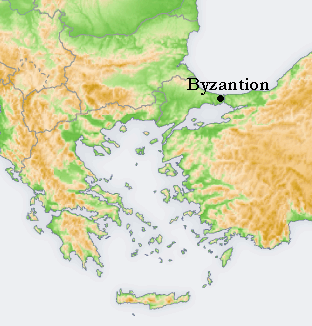
Byzantium
Byzantium () or Byzantion () was an ancient Greek city in classical antiquity that became known as Constantinople in late antiquity and Istanbul in modern times. The Greek name Byzantion and its Latinization Byzantium continued to be used as a name of Constantinople sporadically and to varying degrees during the thousand-year existence of the Eastern Roman Empire, which also became known by the former name of the city as the Byzantine Empire. Byzantium was colonized by Greeks from Megara in the 7th century BCE and remained primarily Greek-speaking until its conquest by the Ottoman Empire in 14

Üsküdar
Üsküdar () is a municipality and district of Istanbul Province, Turkey. Its area is 35 km2, and its population is 524,452 (2022). It is a large and densely populated district on the Anatolian (Asian) shore of the Bosphorus. It is bordered to the north by Beykoz, to the east by Ümraniye, to the southeast by Ataşehir and to the south by Kadıköy; with Karaköy, Kabataş, Beşiktaş, and the historic Sarayburnu quarter of Fatih facing it on the opposite shore to the west. Üsküdar has been a conservative cultural center of the Anatolian side of Istanbul since Ottoman times with its landmark as wel

Silivri
Silivri, formerly Selymbria (Greek: Σηλυμβρία), is a municipality and district of Istanbul Province, Turkey. Its population is 217,163 (2022). It lies along the Sea of Marmara, outside the urban core of Istanbul, containing many holiday and weekend homes for residents of the city. The largest settlement in the district is also named Silivri.

Mesembria
thumb|right|Diobol from Mesembria, ca. 450–350 BCE
thumb|right|Reverse of the coin, M-E-T-A among spokes.
Mesembria (; ) was an important Greek city in ancient Thrace. It was situated on the coast of the Euxine and at the foot of Mount Haemus; consequently upon the confines of Moesia, in which it is placed by Ptolemy. Strabo relates that it was a colony of Dorians from Megara, and that it was originally called Menebria (Μενεβρία) after its founder Menas; Stephanus of Byzantium says that its original name was Melsembria (Μελσημβρία), from its founder Melsas; and both writers state that the