Category
page 1Membrane technology

osmosis
thumb|400px|right|The process of osmosis over a semipermeable membrane. The blue dots represent particles driving the osmotic gradient.
Osmosis (, ) is the spontaneous net movement of solvent molecules through a selectively permeable membrane from a region of high water potential (region of lower solute concentration) to a region of low water potential (region of higher solute concentration), in the direction that tends to equalize the solute concentrations on the two sides. It may also be used to describe a physical process in which any solvent moves across a selectively permeable membrane (p
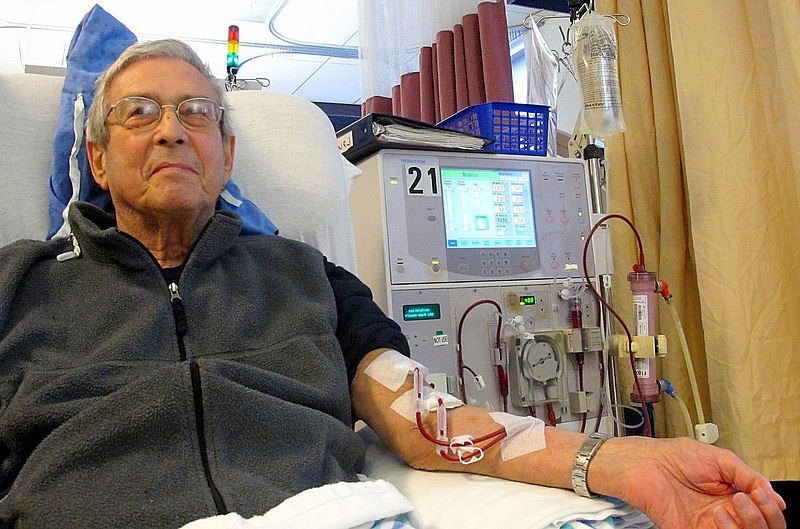
renal dialysis
removal of nitrogenous waste and toxins from the body in place of or to augment the kidney

hemodialysis
Hemodialysis, also spelled haemodialysis, or simply dialysis, is a process of filtering the blood of a person whose kidneys are not working normally. This type of dialysis achieves the extracorporeal removal of waste products such as creatinine and urea and free water from the blood when the kidneys are in a state of kidney failure. Hemodialysis is one of three renal replacement therapies (the other two being kidney transplant and peritoneal dialysis). An alternative method for extracorporeal separation of blood components such as plasma or cells is apheresis.
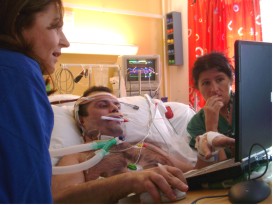
extracorporeal membrane oxygenation
extracorporeal technique of providing both cardiac and respiratory support

reverse osmosis
water purification process
semipermeable membrane
membrane which will allow certain molecules or ions to pass through it by diffusion

membrane
upright|thumb|150px|Schematic of size-based membrane exclusion
osmotic power
energy available from the difference in the salt concentration between seawater and river water

ultrafiltration
Ultrafiltration (UF) is a variety of membrane filtration in which forces such as pressure or concentration gradients lead to a separation through a semipermeable membrane. Suspended solids and solutes of high molecular weight are retained in the so-called retentate, while water and low molecular weight solutes pass through the membrane in the permeate (filtrate). This separation process is used in industry and research for purifying and concentrating macromolecular (103–106 Da) solutions, especially protein solutions.
dialysis
process of separating molecules in solution by the difference in their rates of diffusion through a semipermeable membrane, such as dialysis tubing

microfiltration
Microfiltration is a type of physical filtration process where a contaminated fluid is passed through a special pore-sized membrane filter to separate microorganisms and suspended particles from process liquid. It is commonly used in conjunction with various other separation processes such as ultrafiltration and reverse osmosis to provide a product stream which is free of undesired contaminants.
artificial kidney
a kidney other than the natural organ
Gaseous diffusion
Nuclear Economy Process

nanofiltration
thumb|Process diagram nanofiltration
Nanofiltration is a membrane filtration process that uses nanometer sized pores through which particles smaller than about 1–10 nanometers pass through the membrane. Nanofiltration membranes have pore sizes of about 1–10 nanometers, smaller than those used in microfiltration and ultrafiltration, but a slightly bigger than those in reverse osmosis. Membranes used are predominantly polymer thin films. It is used to soften, disinfect, and remove impurities from water, and to purify or separate chemicals such as pharmaceuticals.

electrodialysis
right|thumb|400px
proton-exchange membrane
ion-exchange membrane specific for protons
membrane bioreactor
combination of a membrane process with a biological wastewater treatment process
synthetic membrane
synthetically created membrane which is usually intended for separation purposes in laboratory or in industry
pervaporation
Pervaporation (or pervaporative separation) is a processing method for the separation of mixtures of liquids by partial vaporization through a non-porous or porous membrane.
.jpg)
LifeStraw
thumb|A LifeStraw
thumb|Use of LifeStraw
LifeStraw is a brand of water filtration and purification devices. The original LifeStraw was designed as a portable water filter "straw". It filters a maximum of 4,000 litres of water, and enough for one person for three years. It removes almost all waterborne bacteria, microplastics and germs. A bottle was later developed which incorporated a LifeStraw cartridge into a BPA-free plastic sports water bottle. In addition to these portable filters, the manufacturer produces high-volume purifiers powered by gravity that also remove viruses. These are desig
membrane technology
engineering approaches for the transport of substances between two fractions with the help of permeable membranes; mechanical separation processes for separating gaseous or liquid streams use membrane technology.
Forward osmosis
water purification process
cross-flow filtration
filtration technique

Nafion
Nafion is a brand name for a sulfonated tetrafluoroethylene based fluoropolymer-copolymer synthesized in 1962 by Dr. Donald J. Connolly at the DuPont Experimental Station in Wilmington Delaware . Additional work on the polymer family was performed in the late 1960s by Dr. Walther Grot of DuPont. Nafion is a brand of the Chemours company. It is the first of a class of synthetic polymers with ionic properties that are called ionomers. Nafion's unique ionic properties are a result of incorporating perfluorovinyl ether groups terminated with sulfonate groups onto a tetrafluoroethylene (PTFE) backb
hemofiltration
Hemofiltration, also haemofiltration, is a renal replacement therapy which is used in the intensive care setting. It is usually used to treat acute kidney injury (AKI), but may be of benefit in multiple organ dysfunction syndrome or sepsis. During hemofiltration, a patient's blood is passed through a set of tubing (a filtration circuit) via a machine to a semipermeable membrane (the filter) where waste products and water (collectively called ultrafiltrate) are removed by convection. Replacement fluid is added and the blood is returned to the patient.
Membrane electrode assembly
part of a PEM fuel cell
microdialysis
thumbnail|Microdialysis probes manufactured by CMA Microdialysis AB, Kista, Sweden
diafiltration
thumb|400px|Diagram of a diafiltration device
Diafiltration is a dilution process that involves removal or separation of components (permeable molecules like salts, small proteins, solvents etc.,) of a solution based on their molecular size by using micro-molecule permeable filters in order to obtain pure solution.
Membrane reactor
physical device that combines a chemical conversion process with a membrane separation process to add reactants or remove products of the reaction
liver dialysis
detoxification treatment for liver failure
Statkraft osmotic power prototype in Hurum
Norwegian power plant
reversed electrodialysis
Artificial gills
hypothetical devices to allow a human to take in oxygen from surrounding water
separator
permeable membrane placed between the anode and cathode of an electrochemical cell
Ceramic membrane
used in liquid filtration