Category
page 1Memento mori

memento mori
artistic or symbolic reminder of the inevitability of death

danse macabre
artistic motif on the universality of death
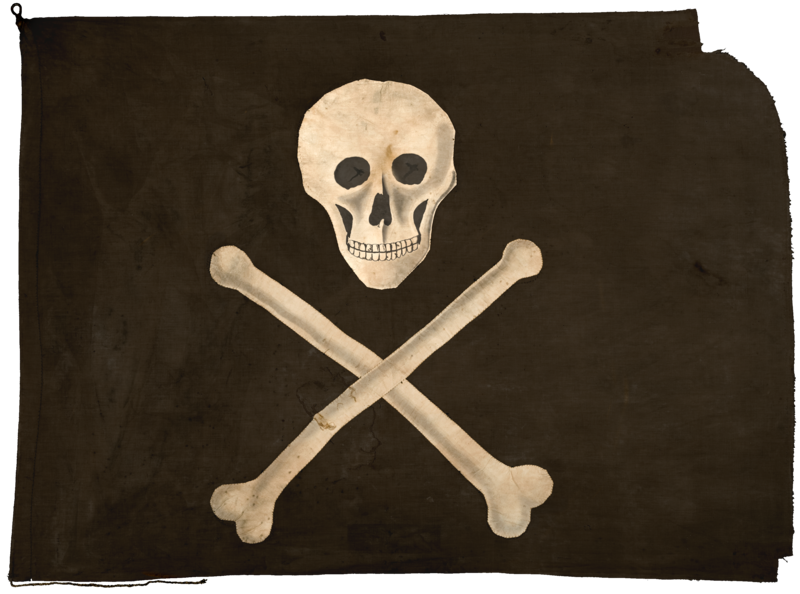
Jolly Roger
pirate flag

vanitas
thumb|333px|Vanitas by Antonio de Pereda
Skull of a Skeleton with Burning Cigarette
painting by Vincent van Gogh
skull and crossbones
symbol of death
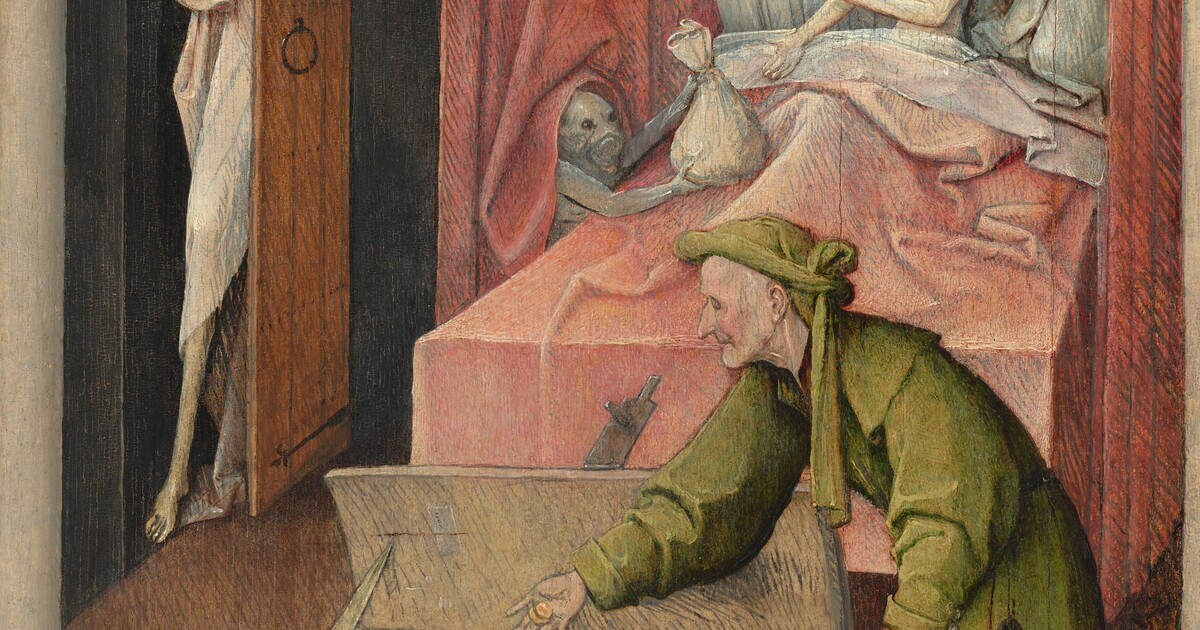
Death and the Miser
painting by Hieronymus Bosch

Totenkopf
thumb|220px|August von Mackensen, German field marshal in hussar full dress prior to 1914, with the Totenkopf on his fur busby
Totenkopf (, ) is a German compound word for death's head. The word is often used to denote a figurative, graphic or sculptural symbol, common in Western culture, consisting of the representation of a human skull – usually frontal, more rarely in profile with or without the mandible. In some cases, other human skeletal parts may be added, often including two crossed long bones (femurs) depicted below or behind the skull (when it may be referred to in English as a "skul
cadaver tomb
effigy tombs or slabs depicting decomposition
.jpg)
macabre
upright=1.4|thumb|Danse Macabre|Totentanz ("Dance of the Dead"), illustration from the [[Nuremberg Chronicle, by Hartmann Schedel (1440–1514)]]
thumb|A death head wearing the Imperial Crown of the Holy Roman Empire, on the sarcophagus of Habsburg emperor Charles VI in the [[crypt of the Capuchin]] thumb|Upper section of the Cadaver Tomb of René of Chalon|Transi of René de Chalon. Sculpture by [[Ligier Richier, ]]
Portrait of a young man with a skull
painting by Frans Hals
Braque Triptych
oil-on-oak altarpiece by Rogier van der Weyden
The Ricotta Eaters
painting by Vincenzo Campi
Cadaver Tomb of René of Chalon
life sized funerary statue and memento mori
Vanitas Still-Life
painting by Harmen Steenwijck