Category
page 1Meruliaceae

Meruliaceae
The Meruliaceae are a family of fungi in the order Polyporales. According to a 2008 estimate, the family contains 47 genera and 420 species. , Index Fungorum accepts 645 species in the family.

Abortiporus biennis
species of fungus

Phlebia radiata
species of fungus
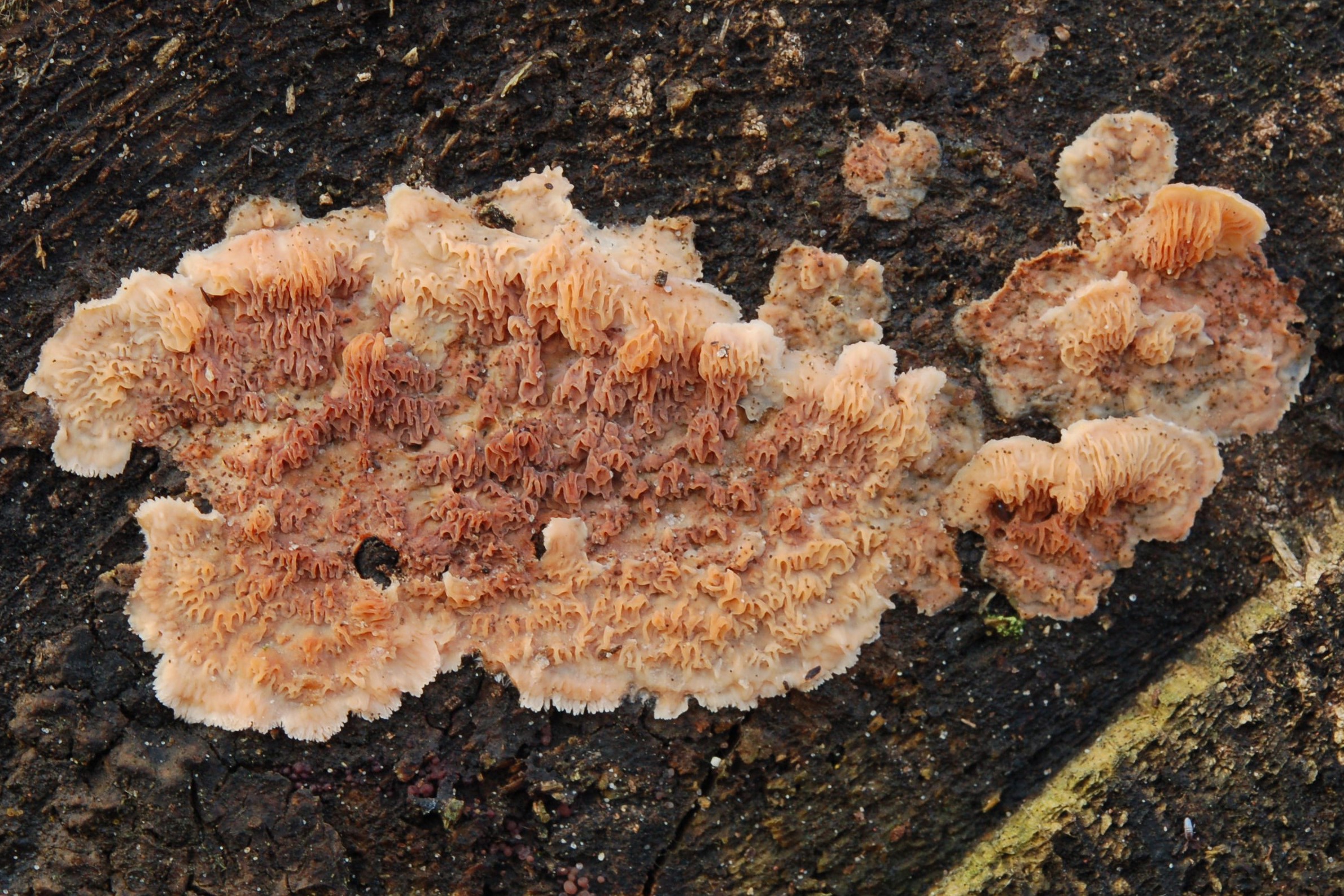
Phlebia tremellosa
species of fungus

Abortiporus
Abortiporus is a genus of fungi in the family Meruliaceae. The widely distributed genus contains three species. Species in the genus grow on the wood of hardwoods and conifers, either alone or around the stumps and living trees. It causes a white rot in dead wood and a white trunk rot in living wood. The genus was circumscribed in 1904 by William Alphonso Murrill. The generic name is derived from the Latin abortus (arrested development of any organ) and the Ancient Greek (pore).
Phlebia
Phlebia is a genus of mostly crust fungi in the family Meruliaceae. The genus has a widespread distribution. Phlebia species cause white rot.
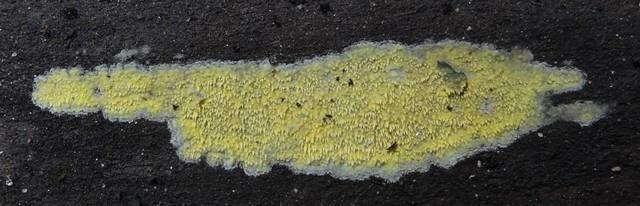
Mycoacia
Mycoacia is a genus of toothed crust fungi in the family Meruliaceae. It was circumscribed by Dutch mycologist Marinus Anton Donk in 1931.

Aurantiporus
Aurantiporus is a genus of poroid fungi in the family Meruliaceae. Circumscribed by American mycologist William Alphonso Murrill in 1905, the genus contains five species found mostly in northern temperate regions. Molecular analysis of several Aurantiporus species suggests that the genus is not monophyletic, but some other related polypore species need to be sequenced and studied before appropriate taxonomic changes can be made. In 2018, Viktor Papp and Bálint Dima proposed a new genus Odoria to contain Aurantiporus alborubescens based on multigene phylogenetic analyses. The generic name is de

Merulius
Merulius is a genus of poroid fungi in the family Meruliaceae. , Index Fungorum accepts two species in Merulius: M. debriscola, and the type, M. tremellosus.
Crustoderma
Crustoderma is a genus of crust fungi in the family Meruliaceae.
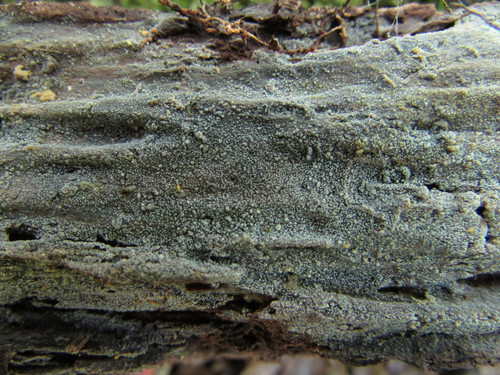
Scopuloides
Scopuloides is a genus of five species of crust fungi in the family Meruliaceae.
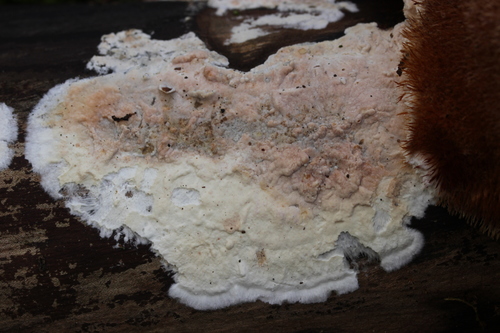
Hypochnicium
Hypochnicium is a genus of corticioid fungi in the family Meruliaceae. The genus was circumscribed by mycologist John Eriksson in 1958.
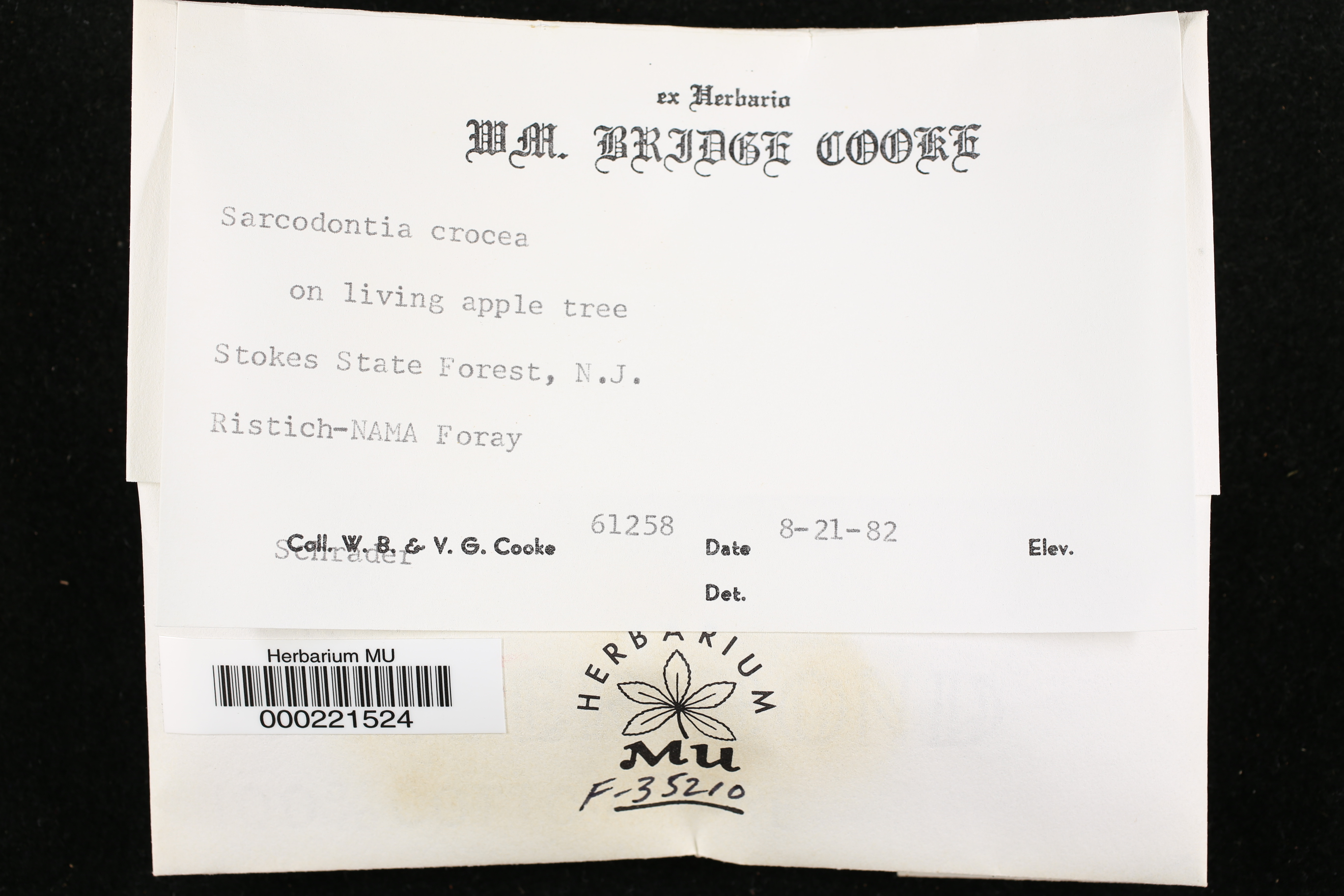
Sarcodontia crocea
species of fungus
Gyrophanopsis
Gyrophanopsis is a fungal genus in the family Meruliaceae. Circumscribed by Swiss mycologist Walter Jülich in 1979, the genus contains two species of crust fungi: the type, Gyrophanopsis zealandica, and G. polonensis, added to the genus in 1991.
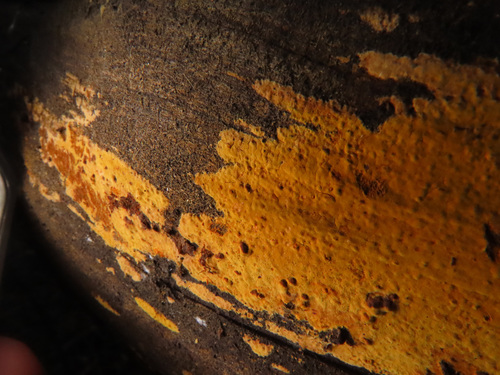
Crustoderma dryinum
species of fungus

Sarcodontia
Sarcodontia is a genus of toothed fungi in the family Meruliaceae. It was circumscribed by Hungarian–Croatian mycologist Stephan Schulzer von Müggenburg in 1866, with Sarcodontia mali as the type species.
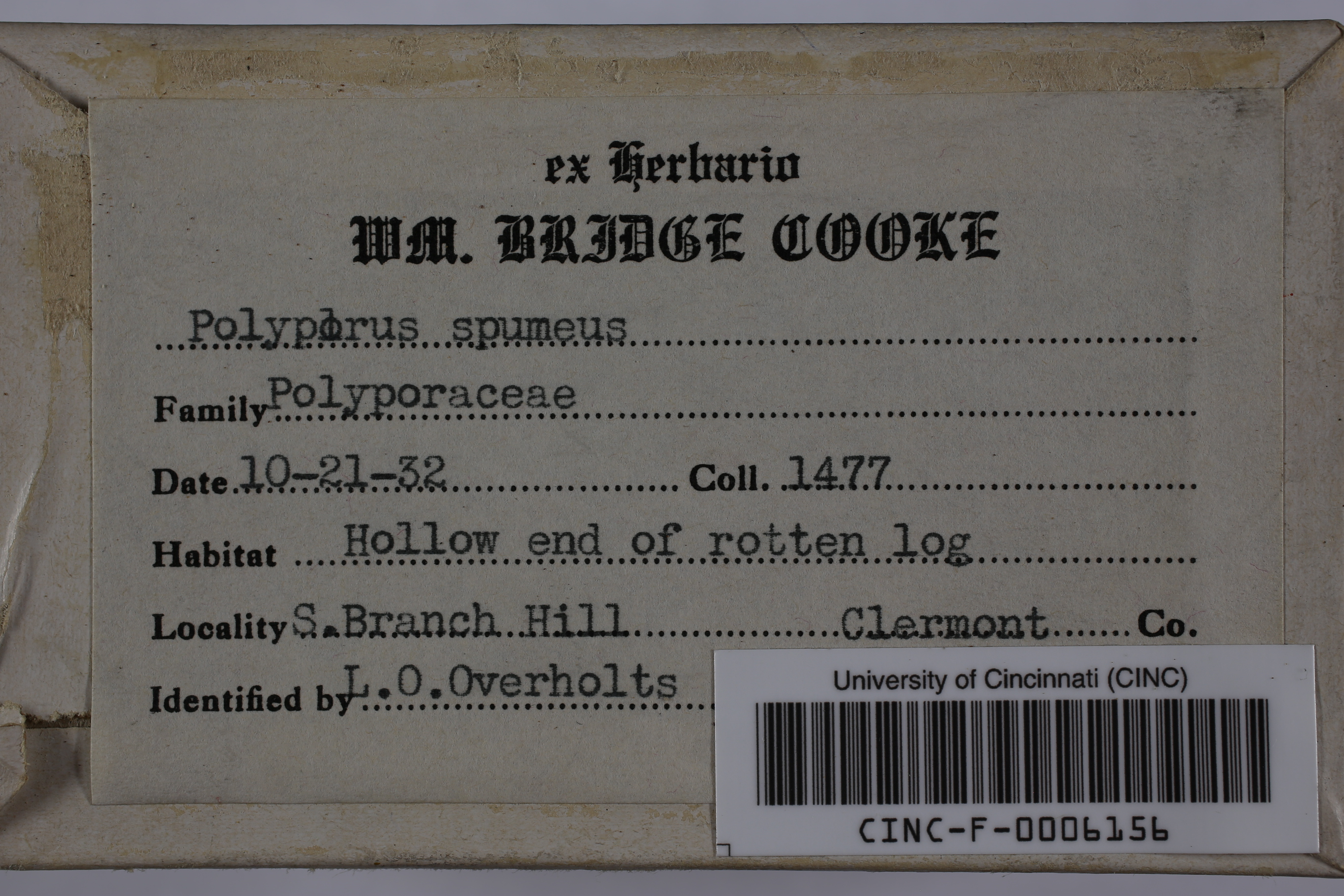
Sarcodontia spumea
species of fungus
Cerocorticium
Cerocorticium is a genus of seven species of crust fungi in the family Meruliaceae.
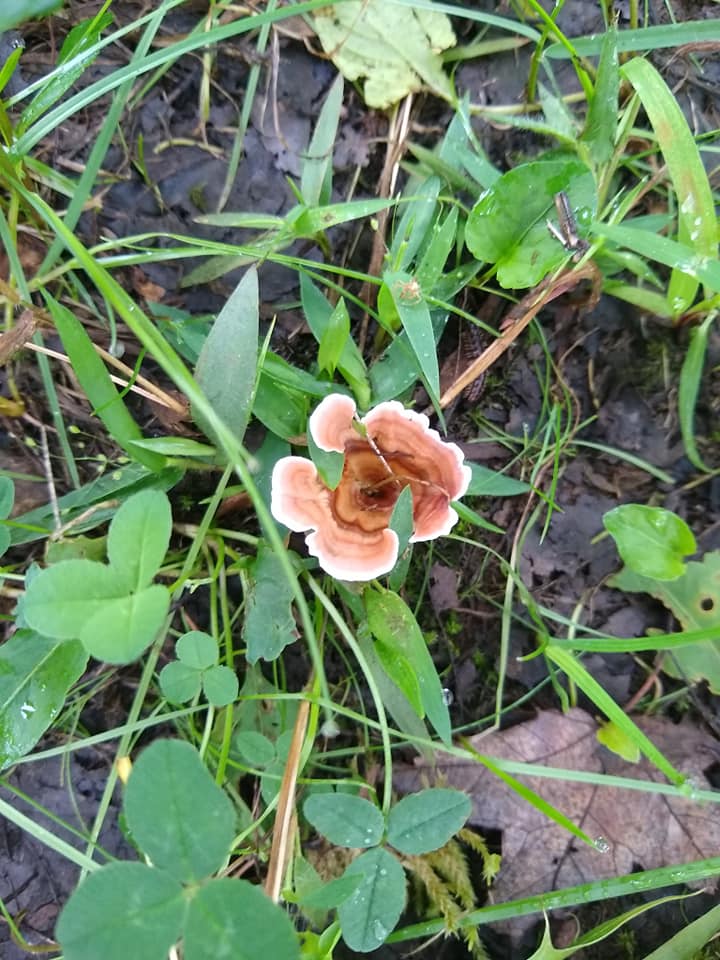
Podoscypha
Podoscypha is a genus of fungi in the family Meruliaceae. The genus has a widespread distribution, especially in tropical regions, and contains about 35 species.
Radulodon
Radulodon is a genus of toothed crust fungi in the family Meruliaceae. The genus was circumscribed in 1972 by Norwegian mycologist Leif Ryvarden, with R. americanus as the type species.
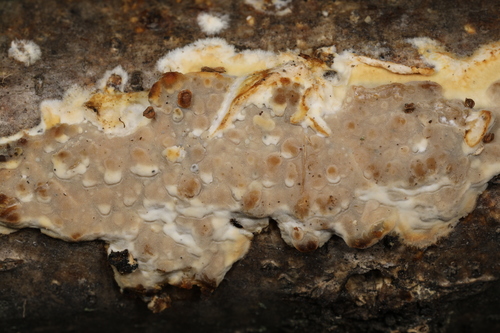
Crustoderma corneum
species of fungus
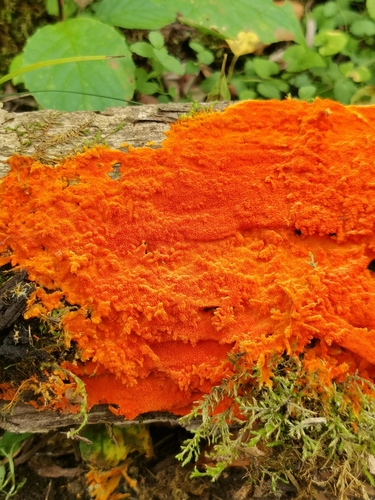
Hydnophlebia
Hydnophlebia is a genus of five species of toothed crust fungi in the family Meruliaceae. All species are wood-decay fungi that cause a white rot.
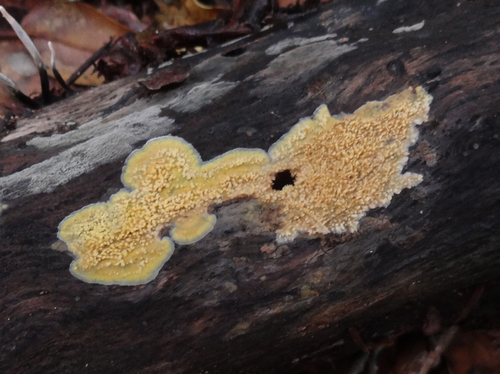
Mycoaciella
Mycoaciella is a genus of corticioid fungi in the family Meruliaceae. The genus was circumscribed by John Eriksson and Leif Ryvarden in 1978. After microscopic examination of the three species then in the genus, Karen Nakasone proposed to synonymize Mycoaciella with Phlebia.
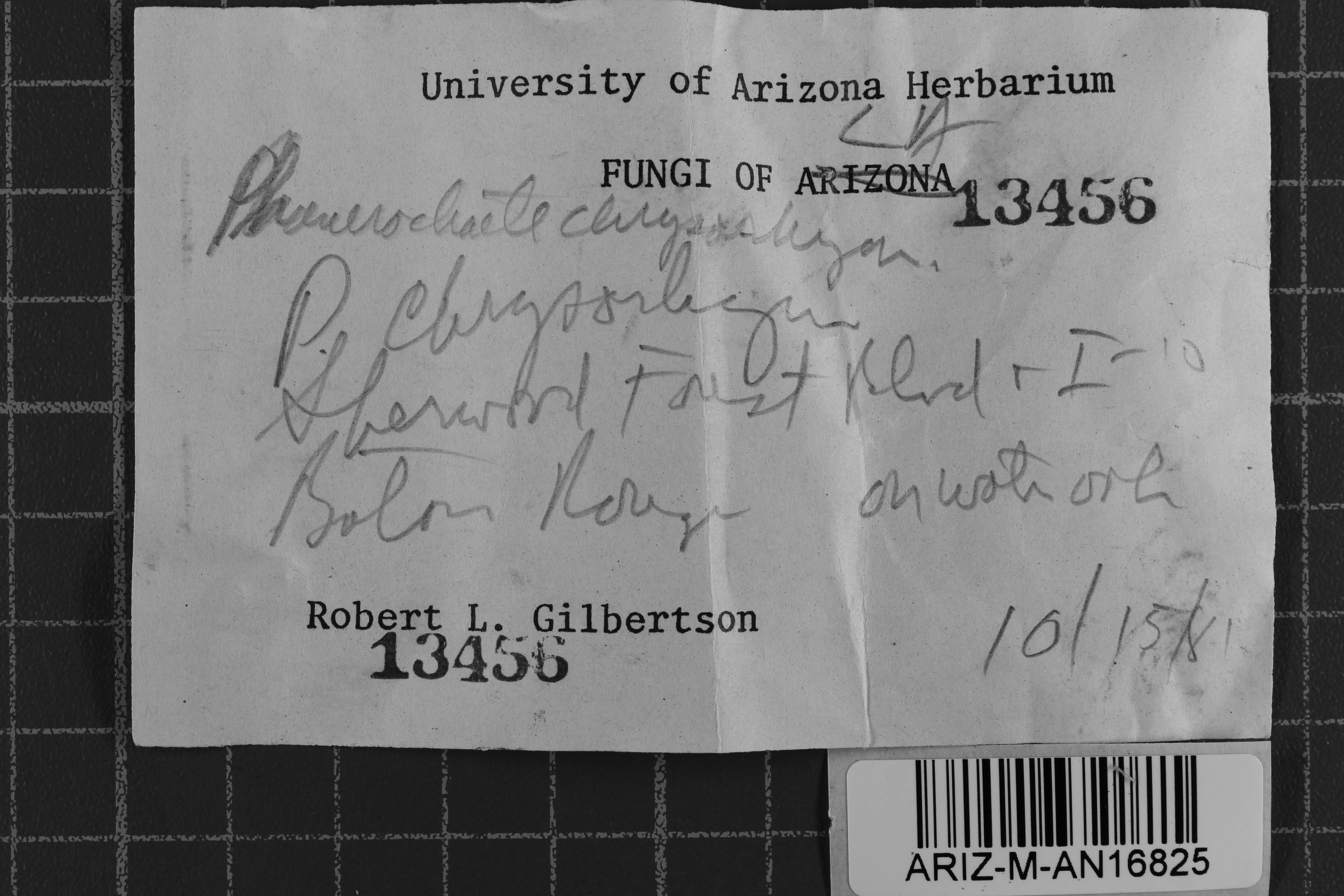
Hydnophlebia chrysorhiza
species of fungus
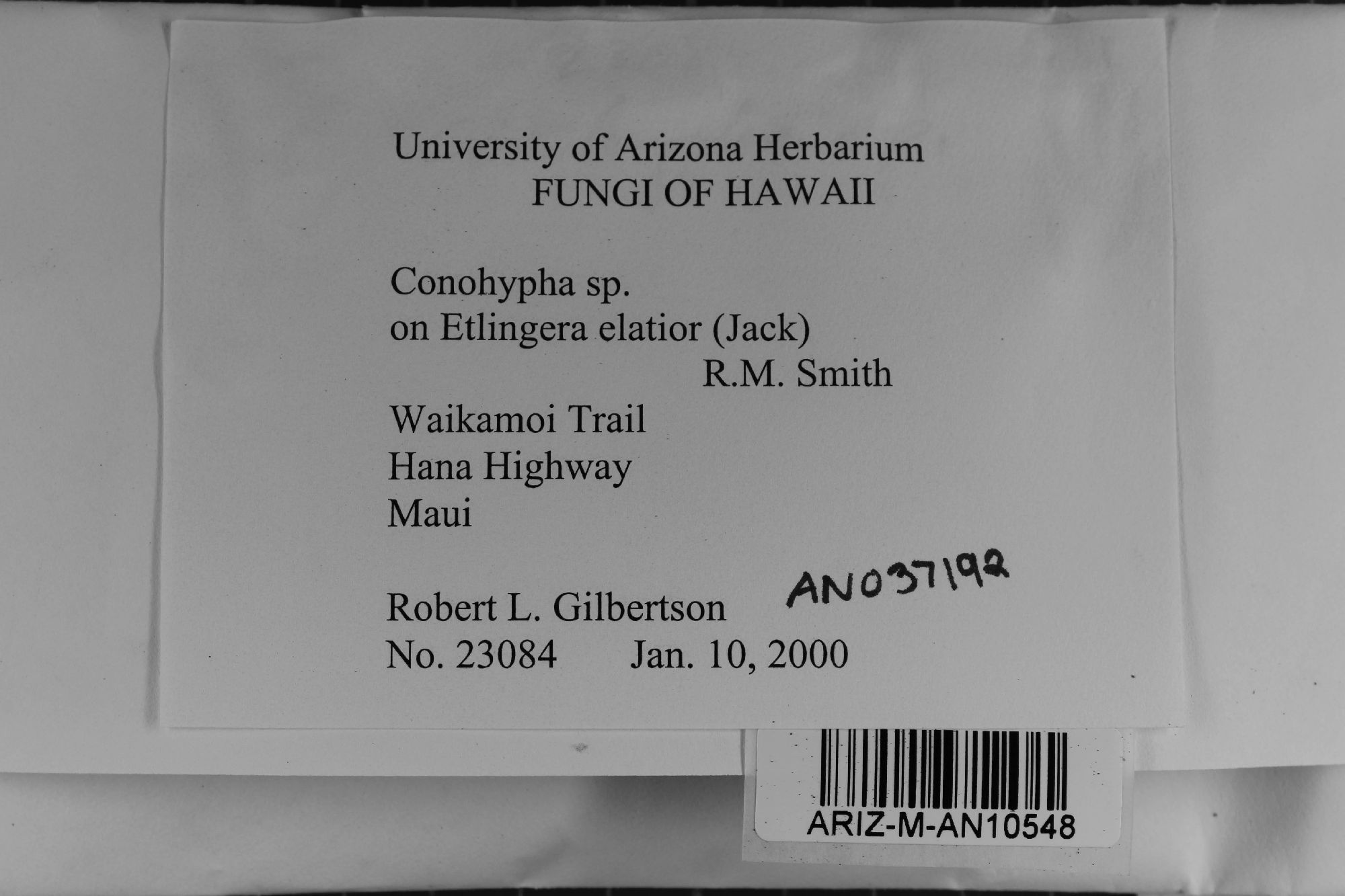
Conohypha
Conohypha is a genus of two species of fungi in the family Meruliaceae. The genus was circumscribed by Swiss mycologist Walter Jülich in 1975. The crust-like fruit bodies of Conohypha are white to cream in colour and membrane-like. The hyphal system is monomitic, meaning it contains only generative hyphae. These hyphae are hyaline with thin walls, and have clamp connections.
Mycoleptodonoides
Mycoleptodonoides is a genus of tooth fungi in the family Meruliaceae. The genus was circumscribed by M.I. Nikolajeva in 1952 with M. vassiljevae, described from Ussuri, Russia, as the type species. This fungus, known only from the type locality and northern China, is little known. The more widely distributed M. aitchisonii is found in habitats ranging from subtropical to boreal. The generic name combines the name Mycoleptodon and the Greek root -oides, meaning "resembling".
Diacanthodes
Diacanthodes is a genus of three species of poroid fungi in the family Meruliaceae.
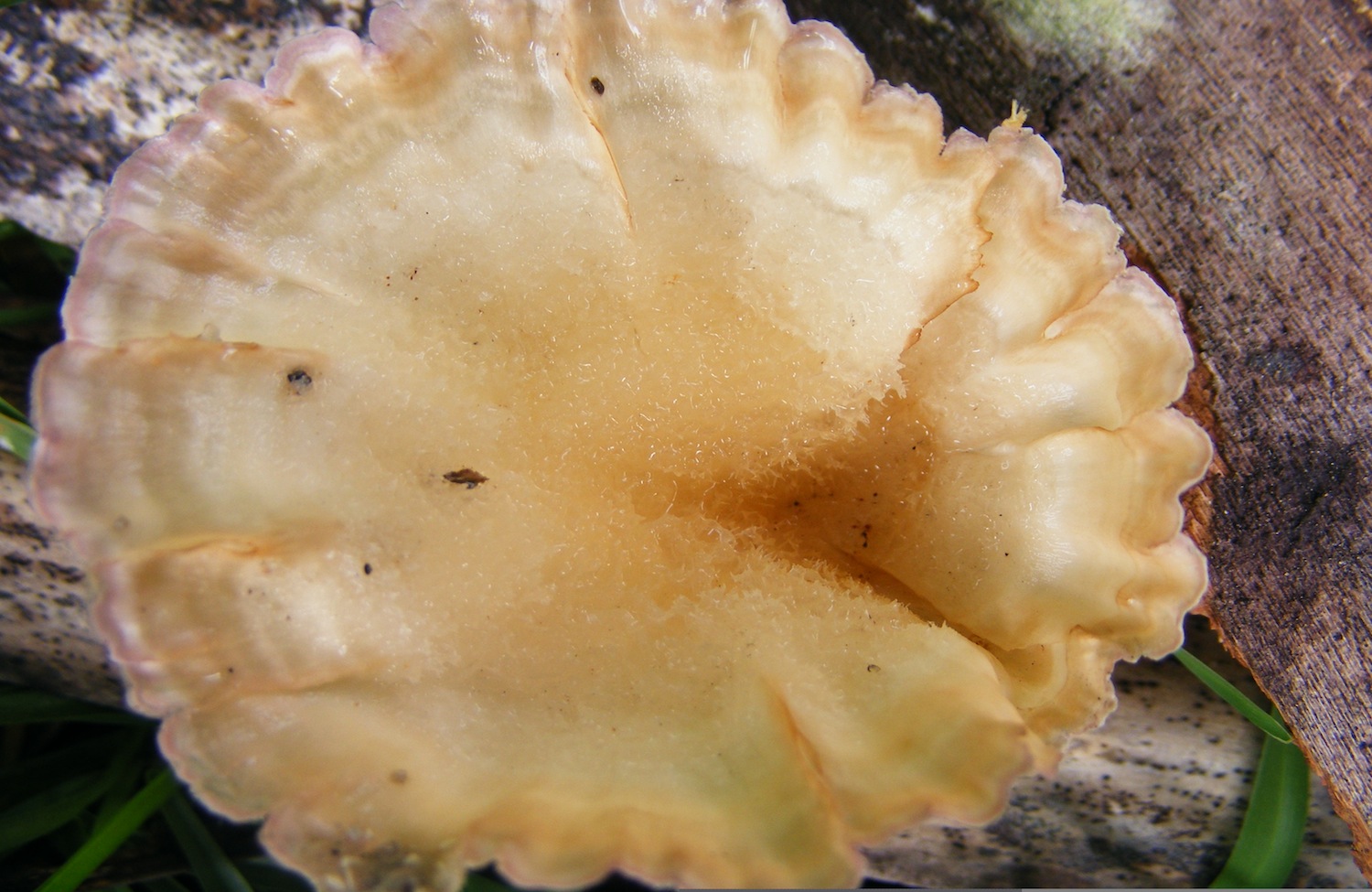
Cymatoderma
Cymatoderma is a widely distributed genus of poroid fungi in the family Meruliaceae.

Sarcodontia setosa
species of fungus
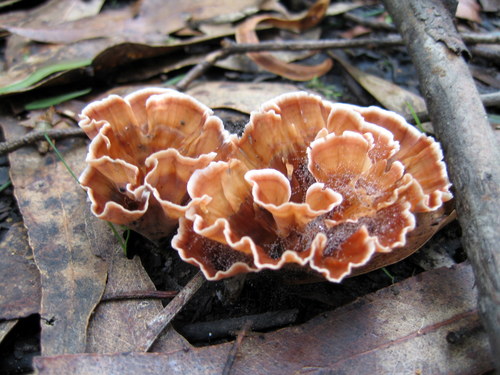
Podoscypha petalodes
species of fungus
Radulodon copelandii
species of fungus
Uncobasidium
Uncobasidium is a genus of two species of crust fungi in the Meruliaceae family . The genus was circumscribed by mycologists Kurt Hjorstam and Leif Ryvarden in 1978 with the European fungus U. luteolum as the type species. The South American species U. roseocremeum was added to the genus in 2012. The distinguishing feature of Uncobasidium is the basal hook in the basidium.
Phlebia serialis
species of fungus
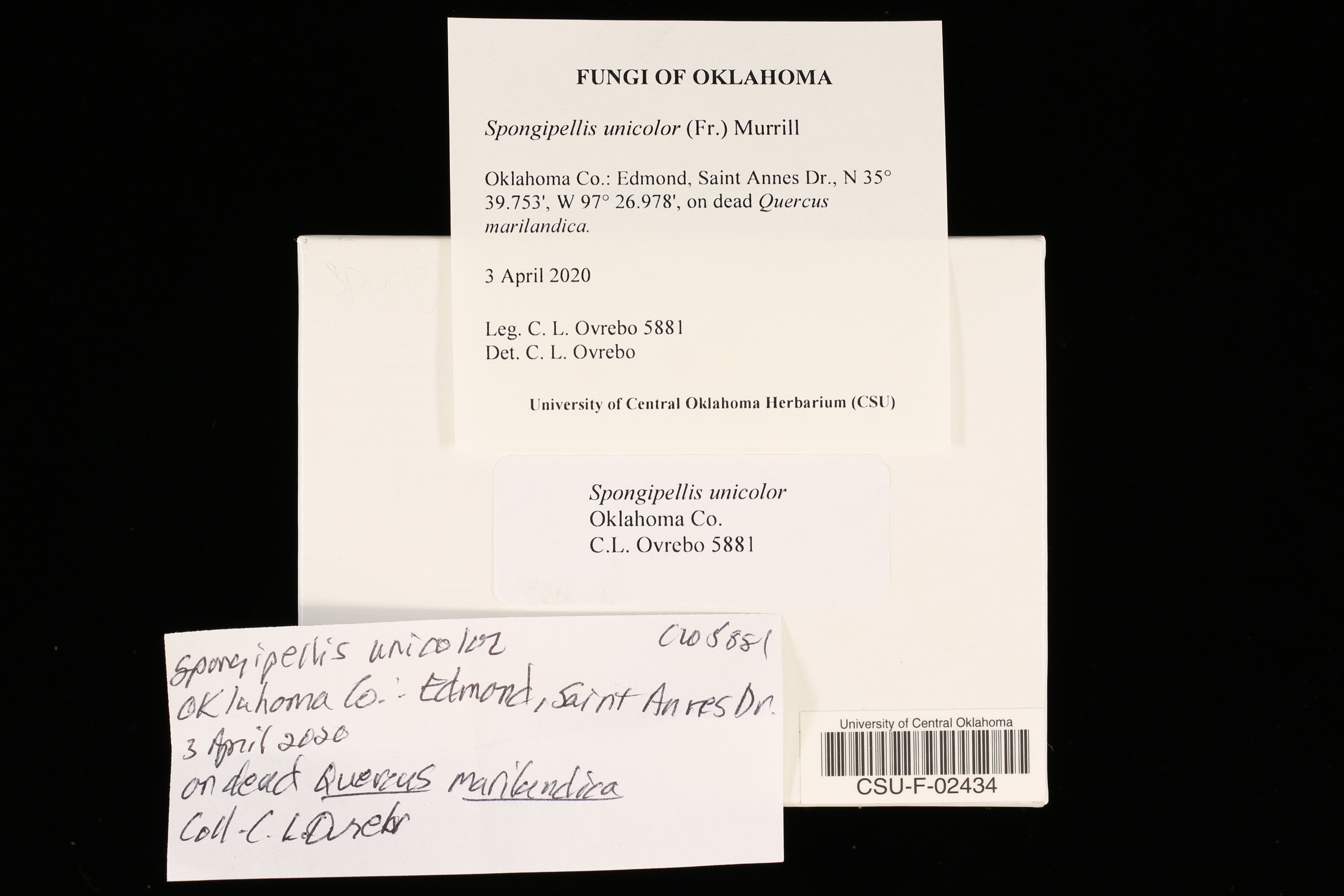
Spongipellis unicolor
species of fungus
Cymatoderma elegans
species of fungus
Phlebia subochracea
species of fungus

Cymatoderma caperatum
species of fungus

Bulbillomyces
Bulbillomyces is a fungal genus of uncertain familial placement in the order Polyporales. Bulbillomyces is monotypic, containing the single species Bulbillomyces farinosus, a crust fungus. The genus was circumscribed by the Swiss mycologist Walter Jülich in 1974. The fungus was reported as new to Japan in 2002.
Niemelaea
Niemelaea is a genus of poroid crust fungi in the family Meruliaceae. The genus was circumscribed by Russian mycologists in 2015 to contain three fungi formerly placed in the genus Ceriporiopsis. Niemelaea fungi are characterized by their crust-like fruit body, large, thin-walled angular pores, and a monomitic hyphal system. Spores made by these fungi are ellipsoid and have refractive contents. The genus is named in honour of Finnish mycologist and polypore specialist Tuomo Niemelä, who described the species Ceriporiopsis balaenae.
Scopuloides magnicystidiata
species of fungus
Lilaceophlebia
Lilaceophlebia is a genus of three species of crust fungi in the family Meruliaceae. The genus was first proposed by Erast Parmasto in 1968 as a section of the genus Phlebia. Viacheslav Spirin and Ivan Zmitrovich elevated the taxon to generic status in 2004.
Mycoacia rubiginosa
species of fungus
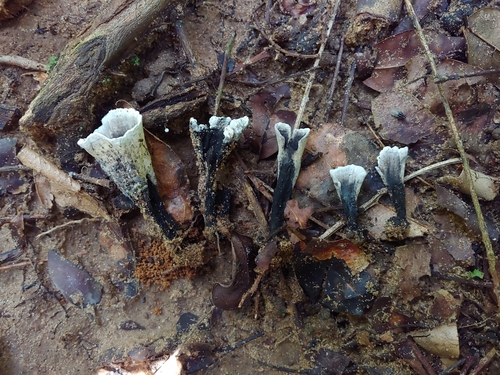
Coralloderma
Coralloderma is a genus of fungi in the family Meruliaceae. The genus contains two species found in Asia and Australia.
Cerocorticium molle
species of fungus
Phlebia coccineofulva
species of fungus