Category
page 1Metaphysical theories

materialism
In philosophy and metaphysics, materialism is a form of monism holding that matter is the fundamental substance of nature, so that all things, including mind and consciousness, arise from material interactions and depend on physical processes, including those of the human brain and nervous system. It contrasts with monistic idealism, which treats consciousness as fundamental, and is related to naturalism, the view that only natural laws and forces operate in the universe, and to physicalism, the view that all that exists is ultimately physical. Physicalism extends materialism by including form

existentialism
Existentialism is a family of philosophical views and inquiry that explore the human individual's struggle to lead an authentic life despite the apparent absurdity or incomprehensibility of existence. In examining meaning, purpose, and value, existentialist thought often includes concepts such as existential crises, angst, courage, and freedom.

animism
Animism (from meaning 'breath, spirit, life') is the belief that places, objects, and creatures all possess a distinct spiritual essence. Animism perceives all things—animals, plants, rocks, rivers, weather systems, human handiwork, and in some cases words—as being animated, having agency and free will. Animism is used in anthropology of religion as a term for the belief system of many indigenous peoples in contrast to the relatively more recent development of organized religions. Animism is a metaphysical belief which focuses on the supernatural universe: specifically, on the concept of the i

idealism
Idealism in philosophy, also known as philosophical idealism or metaphysical idealism, is the set of metaphysical perspectives asserting that, most fundamentally, reality is equivalent to mind, spirit, or consciousness; that reality or truth is entirely a mental construct; or that ideas are the highest type of reality or have the greatest claim to being considered "real". Because there are different types of idealism, it is difficult to define the term uniformly.
.jpg)
determinism
Determinism is the metaphysical view that all events within the universe (or multiverse) can occur only in one possible way. Deterministic theories throughout the history of philosophy have developed from diverse and sometimes overlapping motives and considerations. Like eternalism, determinism focuses on particular events rather than the future as a concept. Determinism is often contrasted with free will, although some philosophers argue that the two are compatible. The antonym of determinism is indeterminism, the view that events are not deterministically caused.

monism
thumb|The circled dot was used by the Pythagoreans and later Greeks to represent the first metaphysical being, the Monad or The Absolute.
Monism attributes oneness or singleness () to a concept, such as to existence. Various kinds of monism can be distinguished:
Priority monism states that all existing things go back to a source that is distinct from them; e.g., in Neoplatonism everything is derived from The One. In this view only the One is ontologically fundamental or prior to everything else.
Existence monism posits that, strictly speaking, there exists only a single thing, the universe,

atomism
Atomism () is a natural philosophy proposing that the physical universe is composed of fundamental indivisible components known as atoms.

dualism
thumb|alt=Diagram of a circle divided into two sides|Dualism divides a domain or phenomenon into two separate principles or kinds.
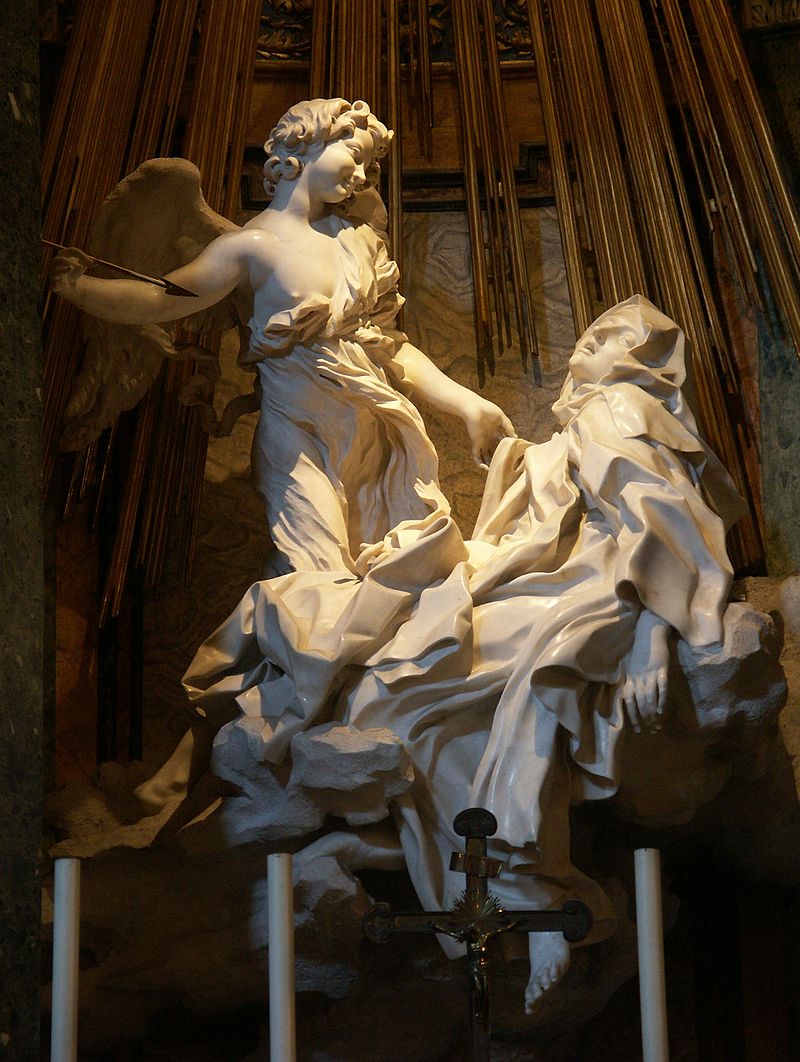
ecstasy
advanced emotion, subjective experience of total involvement of the subject, with an object of their awareness

absurdism
thumb|200px|right|Sisyphus, the symbol of the absurdity of existence, painting by [[Franz Stuck (1920)]]

naturalism
belief that only natural laws, entities and forces operate in the universe

essence
Essence () has various meanings and uses for different thinkers and in different contexts. It is used in philosophy and theology as a designation for the property or set of properties or attributes that make an entity the entity it is or, expressed negatively, without which it would lose its identity. Essence is contrasted with accident, which is a property or attribute the entity has accidentally or contingently, but upon which its identity does not depend.

demiurge
In the Platonic, Neopythagorean, Middle Platonic, and Neoplatonic schools of philosophy, the Demiurge () is an artisan-like figure responsible for fashioning and maintaining the physical universe. Various schools of Gnostics adopted the term demiurge.

reductionism
thumb|René Descartes, in De homine (1662), claimed that non-human animals could be explained reductively as automata; meaning essentially as more mechanically complex versions of this [[Digesting Duck.]]
.jpg)
objectivism
Objectivism is a philosophical system named and developed by Russian-American writer and philosopher Ayn Rand. She described it as "the concept of man as a heroic being, with his own happiness as the moral purpose of his life, with productive achievement as his noblest activity, and reason as his only absolute".
substance
basic ontological concept
pluralism
philosophical theory

hylozoism
thumb|upright=1.3|Sphera volgare, featuring the Sun, the [[Moon, the winds and the stars as living. Woodcut illustration from an edition of De sphaera mundi, Venice, 1537.]]

Conceptualism
thumb|Peter Abelard, a French philosopher, theologian and preeminent logician, put forward the theory of conceptualism.
In metaphysics, conceptualism is a theory that explains universality of particulars as conceptualized frameworks situated within the thinking mind. Intermediate between nominalism and realism, the conceptualist view approaches the metaphysical concept of universals from a perspective that denies their presence in particulars outside the mind's perception of them. Conceptualism is anti-realist about abstract objects, just like immanent realism is (their difference being that i
occasionalism
Occasionalism is a philosophical doctrine about causation which says that created substances cannot be efficient causes of events. Instead, all events are taken to be caused directly by God. (A related concept, which has been called "occasional causation", also denies a link of efficient causation between mundane events, but may differ as to the identity of the true cause that replaces them.) The doctrine states that the illusion of efficient causation between mundane events arises out of God's causing of one event after another. However, there is no necessary connection between the two: it is
absolute idealism
type of idealism in metaphysics
metaphysical naturalism
philosophical worldview rejecting 'supernatural or supernaturalism' and holds that there is nothing but natural elements, principles, and relations of the kind studied by the natural sciences
parallelism
philosophical theory that mental and bodily events occur together, without any causal interaction between them
abstract and concrete
classifications that denote whether a term describes an object with a physical referent or one with no physical referents
dynamism
philosophical system in which matter consists essentially of simple and indivisible units, substances, or forces; esp. one that reduces to matter to force
Why is there anything at all?
metaphysical question
corpuscularianism
Corpuscularianism, also known as corpuscularism (), is a set of theories that explain natural transformations as a result of the interaction of particles (minima naturalia, partes exiles, partes parvae, particulae, and semina). It differs from atomism in that corpuscles are usually endowed with a property of their own and are further divisible, while atoms are neither. Although often associated with the emergence of early modern mechanical philosophy, and especially with the names of Thomas Hobbes, René Descartes, Pierre Gassendi, Robert Boyle, Isaac Newton, and John Locke, corpuscularian theo

actualism
In analytic philosophy, actualism is the view that everything there is (i.e., everything that has being, in the broadest sense) is actual. Another phrasing of the thesis is that the domain of unrestricted quantification ranges over all and only actual existents.
Plato's unwritten doctrines
metaphysical theory, alleged by his pupils and others to be esoterically taught by Plato, but not clearly given in his writings; the Tübingen School reconstructs it to comprise The One—a monistic principle—and The Indefinite Dyad of indeterminacy
open individualism
philosophical concept
mechanism
belief that natural wholes are composed of parts lacking any intrinsic relationship to each other
bundle theory
ontological theory about objecthood in which an object consists only of a collection (bundle) of properties, relations or tropes; originated by Hume
mereological nihilism
philosophical thesis
Quietism
view on the purpose of philosophy
animalism
philosophical theory of personal identity that asserts that humans are animals
abstract object theory
branch of metaphysics regarding abstract objects
Nonexistent objects
concept in metaphysics
irrealism
philosophical position first proposed by Nelson Goodman
Panchikarana
Pancikarana () is a Vedantic theory of how matter came into existence, originating from the primordial five subtle elements.
metaphysical nihilism
Philosophical Sub-Viewpoint of Nihilism