Category
page 1Microeconomics

microeconomics
thumb|right|300px|Microeconomics analyzes the market mechanisms that enable buyers and sellers to establish [[relative prices among goods and services. Shown is a marketplace in Delhi.]]

goods
thumb|Tangible medical goods stacked in a warehouse|alt=Cardboard boxes stacked in a warehouse
behavioral economics
discipline of economy studying the effects of psychological, cognitive, emotional, cultural and social factors on decisions
elasticity
responsiveness of one economic variable to a change in another (e.g. supply or demand as a function of changed price, cross-price, income, wealth, advertising, etc.), ranging from inelastic to elastic
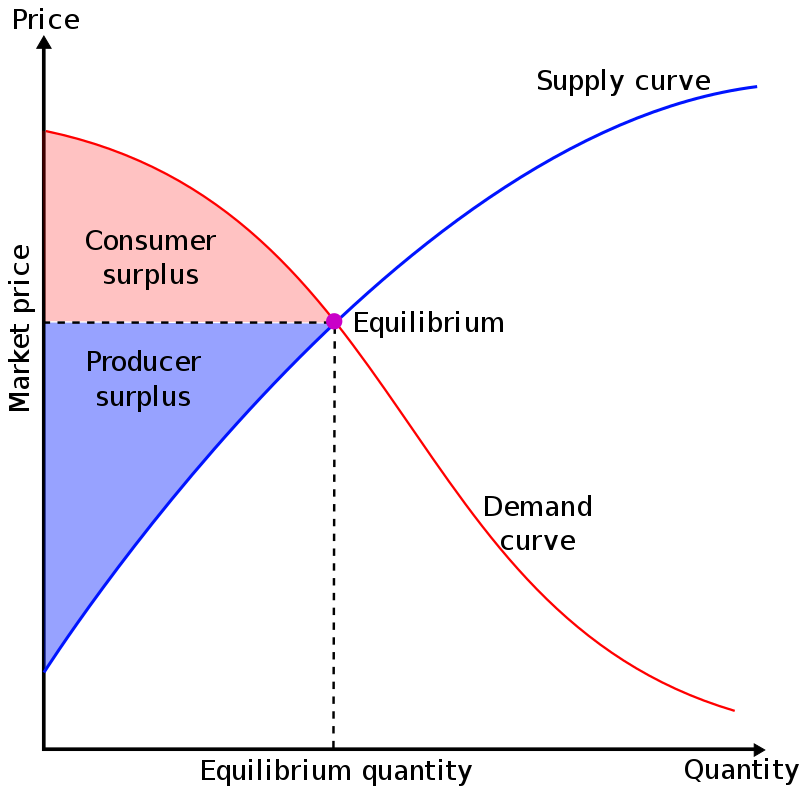
surplus
monetary benefit that accrues to parties to an economic transaction
economic efficiency
situation in which nothing can be improved without something else being hurt

incentive
Incentives are anything that persuade a person or organization to alter their behavior to produce a desired outcome. Incentives are widely studied in personnel economics, where researchers and human resource managers examine how firms use pay, career opportunities, performance evaluation, and other mechanisms to motivate employees and improve organizational outcomes. Higher incentives are often associated with greater levels of effort and higher levels of performance. In comparison, disincentives discourage certain actions.
information economics
branch of microeconomic theory that studies how information affects economics
cost of living
cost to maintain a standard of living
evolutionary economics
part of mainstream economics
Slutsky equation
equation in economics
preference
concept in economics
microfoundations
Microfoundations are an effort to understand macroeconomic phenomena in terms of individual agents' economic behavior and interactions. Research in microfoundations explores the link between macroeconomic and microeconomic principles in order to explore the aggregate relationships in macroeconomic models.
Robinson Crusoe economy
economy with one consumer, one producer and two goods
Profit motive
Motivation for businesses to maximize profits
price mechanism
concept in economics
aggregation problem
difficulty of treating an empirical or theoretical aggregate as if it reacted like a less-aggregated measure
economic unit
economics term; economically independent decision maker, such as a private household or a company
False economy
economics concept
Minimum efficient scale
economic measure of business efficiency