Category
page 1Microhylidae
.png)
Microhylidae
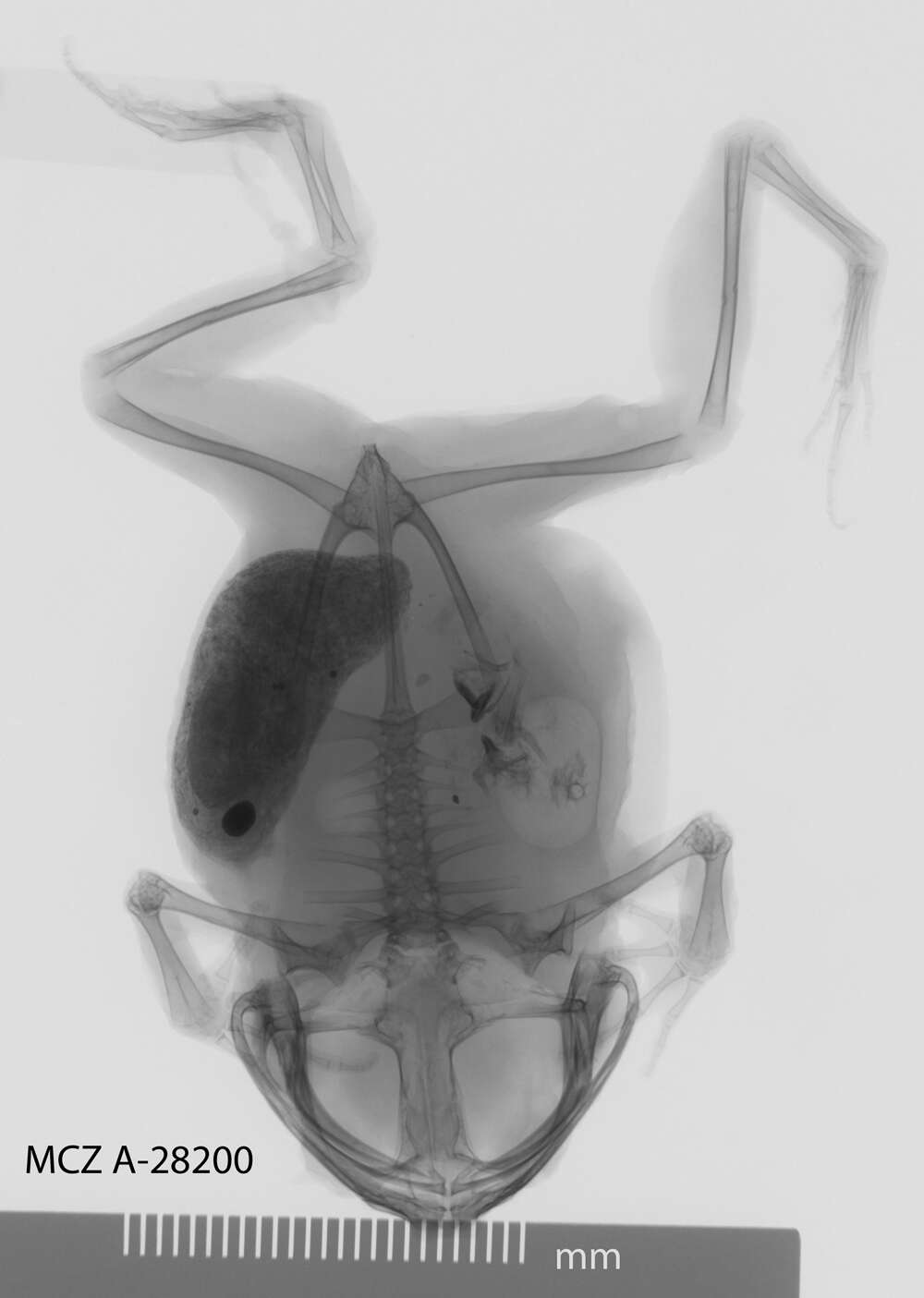
The Microhylidae, commonly known as narrow-mouthed frogs, are a geographically widespread family of frogs. The 683 species are in 57 genera and 11 subfamilies.
Paedophryne amauensis
frog in the microhylid genus Paedophryne

Dyscophus
genus of amphibians

Paedophryne
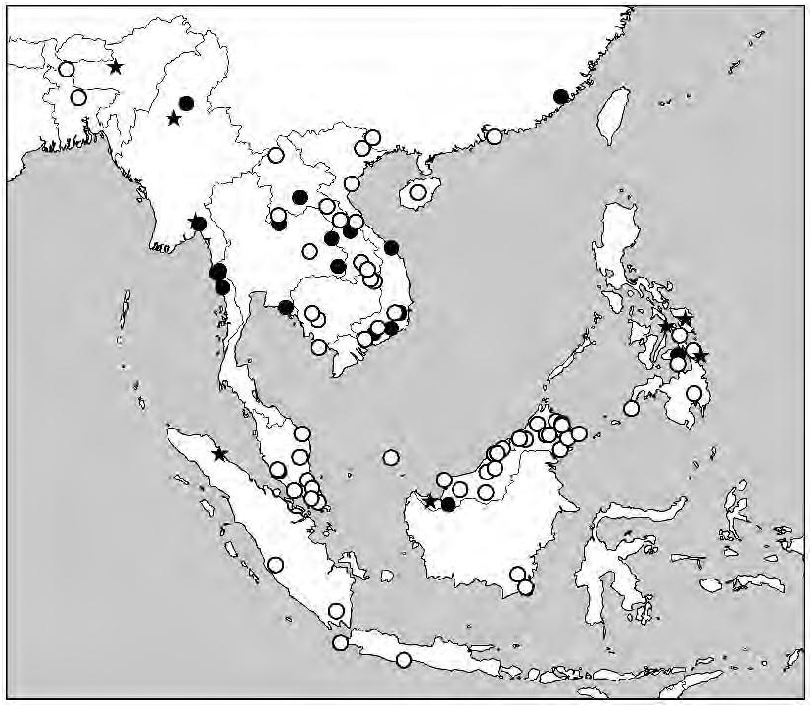
thumb|250px|Map of localities where Paedophryne specimens have been found (P. titan from Normanby Island (Papua New Guinea)|Normanby Island, not shown)
Scaphiophryne
Scaphiophryne is a genus of microhylid frogs endemic to Madagascar. Some of the species are strikingly marked, while others are highly cryptic. They are rather plump and generally found on the ground. Several species in the genus are threatened because of habitat loss and overcollection for the international pet trade.
Asterophrys
Asterophrys is a genus of microhylid frogs found in New Guinea. Their common name is New Guinea bush frogs, although this name may also specifically refer to Asterophrys turpicola.
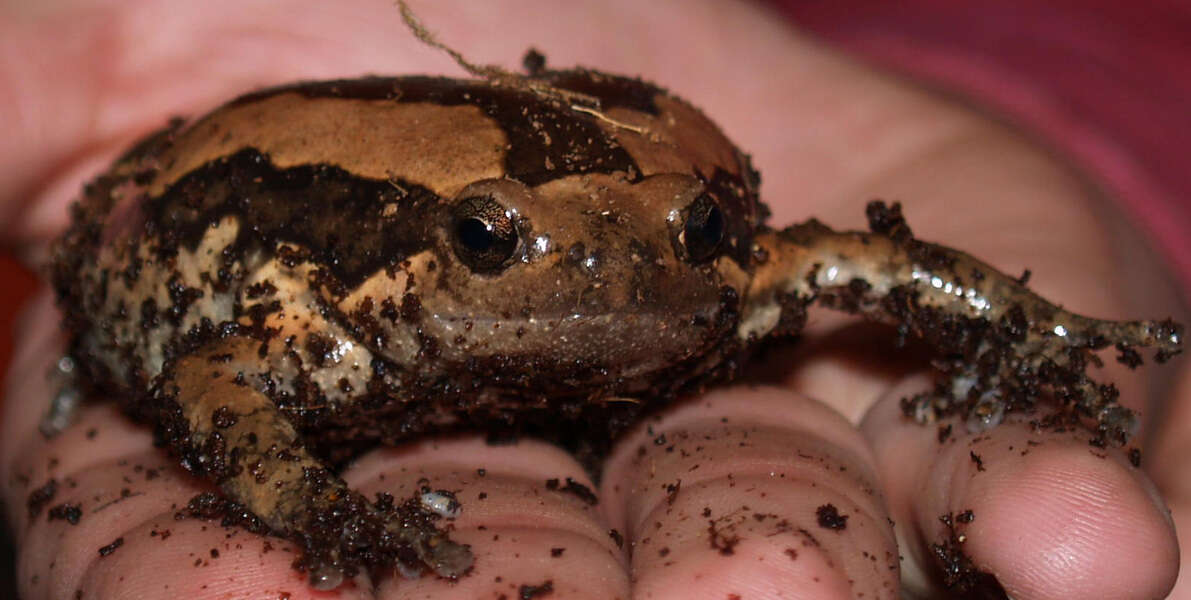
Kaloula
Kaloula is a genus of microhylid frogs found in southern and eastern Asia. They are sometimes known as the Asian narrowmouth toads.
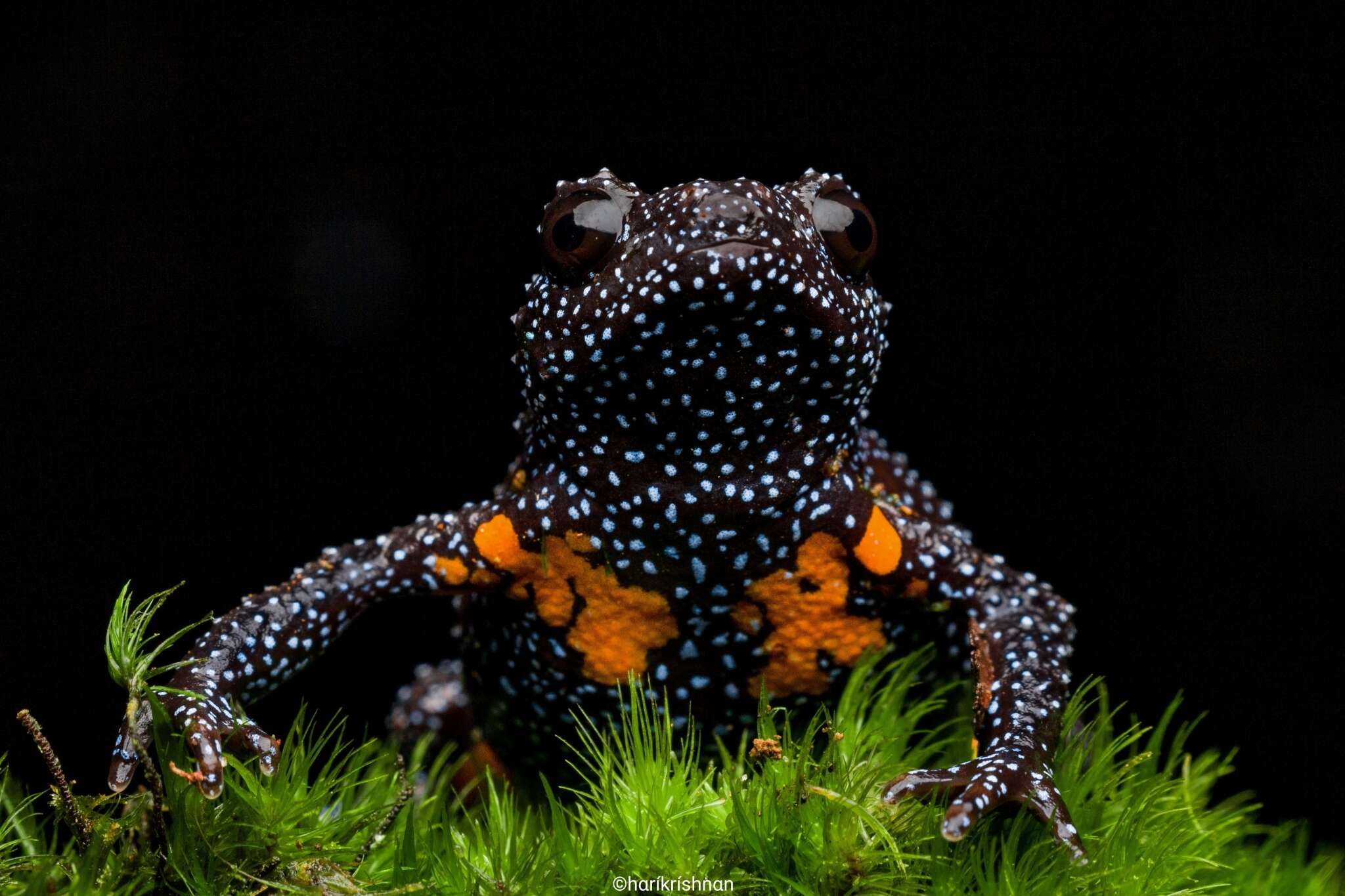
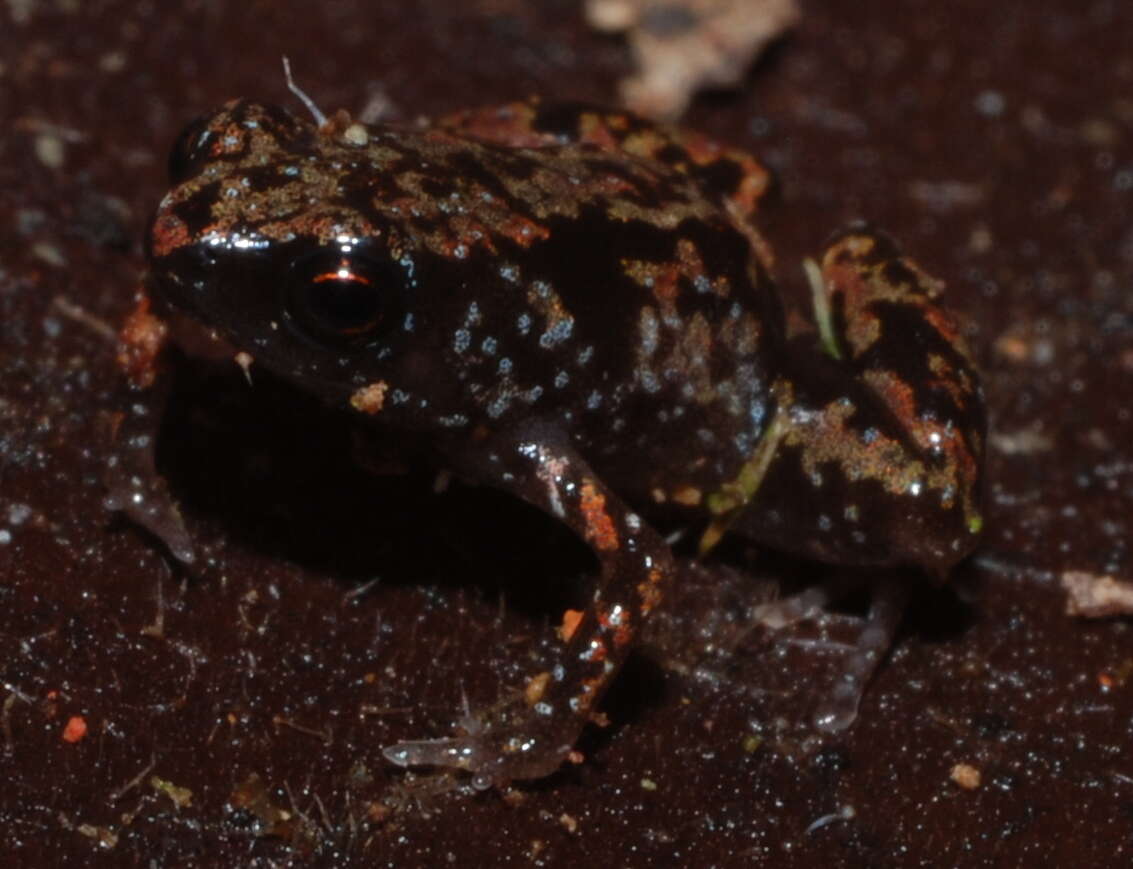
Melanobatrachus indicus
Melanobatrachus is a genus of narrow-mouthed frogs in the family Microhylidae. It is the only remaining genus in the monotypic subfamily Melanobatrachinae. It contains a single species, Melanobatrachus indicus, also known as the Indian black microhylid frog and Malabar black narrow-mouthed frog. It is endemic to wet evergreen forests of southern Western Ghats in Kerala and Tamil Nadu states of India. It has been recorded from Anaimalai, Munnar, Palni hills, Periyar Tiger Reserve and Kalakkad Mundanthurai Tiger Reserve

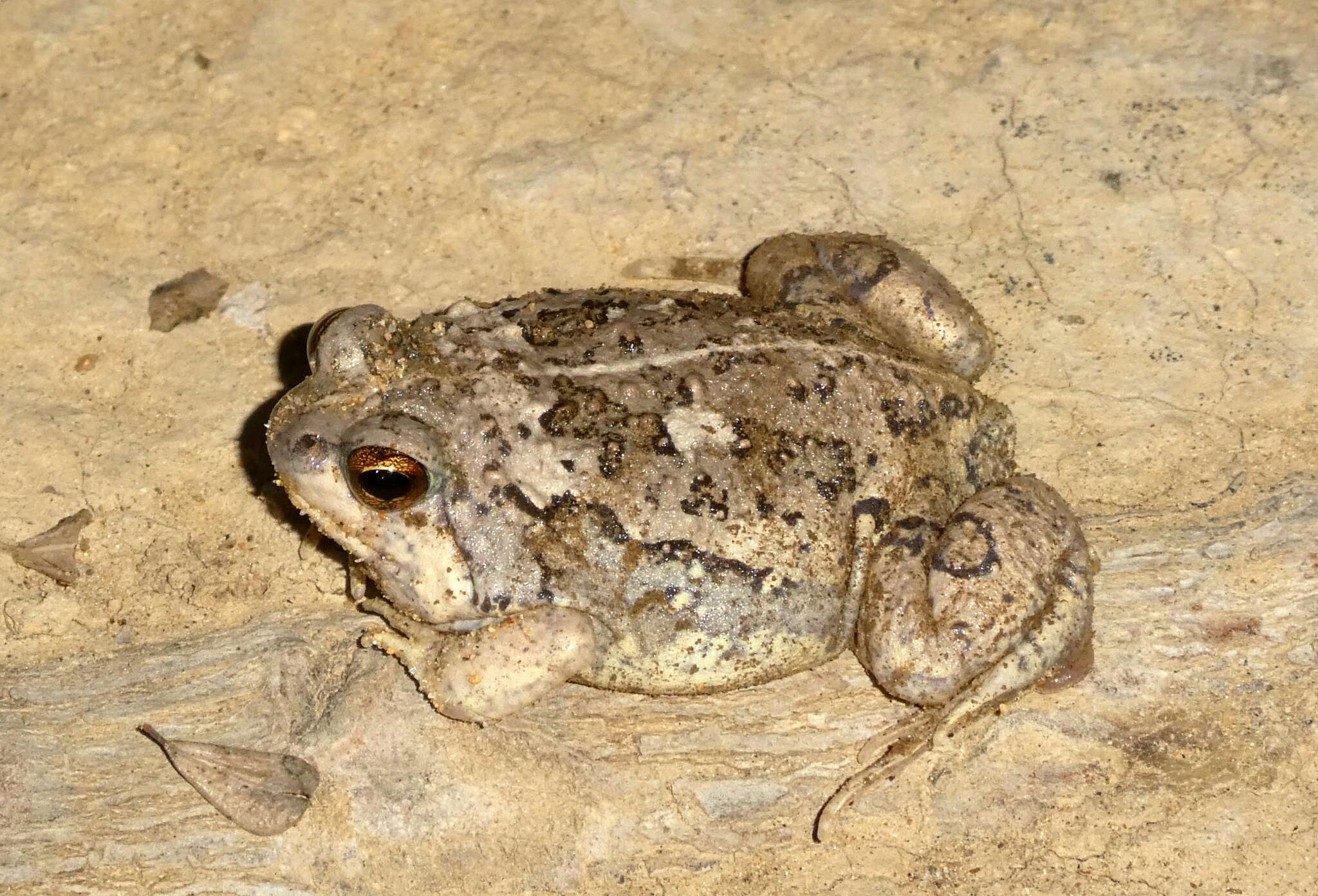
Gastrophryne
Gastrophryne, the narrowmouth toads (also American narrowmouth toads, North American narrow-mouthed toads), is a genus of microhylid frogs found in the Americas between Honduras and southern United States.
Its name means ‘belly-toad’, referring to its large belly, from the Ancient Greek ' (, ‘belly, stomach’) and ' (, ‘toad’).
Microhyla
Microhyla, commonly known as the rice frogs or narrow-mouthed frogs, is a genus of frogs in the family Microhylidae. It consists of 42 species of diminutive frogs. Members of this genus are widespread from Ryukyu Is. in Japan, and throughout South-east Asia, (China, Sumatra, Java, Bali, Borneo, India and Sri Lanka).
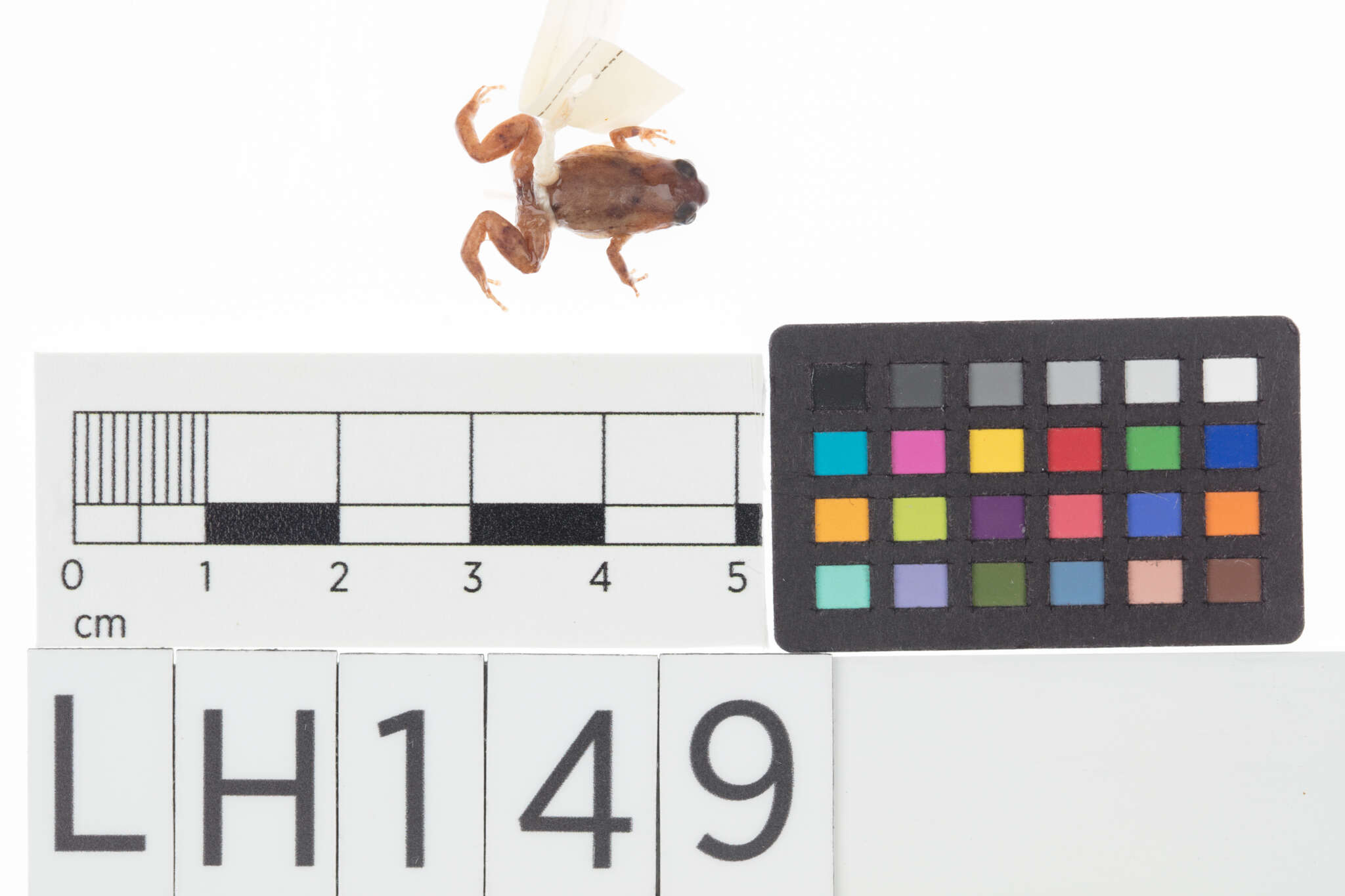
Cophixalus
Cophixalus (rainforest frogs or nursery frogs) is a genus of microhylid frogs. These are arboreal species with expanded toe-pads, endemic to Moluccan Islands, New Guinea and northeastern Queensland, Australia.

Mantophryne
Mantophryne is a genus of microhylid frogs. The genus is found in New Guinea, Louisiade Archipelago, and Woodlark Island.

Phrynomantis
Phrynomantis is a genus of frog in the family Microhylidae. They are also known as rubber frogs, red-marked frogs, red-marked short-headed frogs, and snake-necked frogs. The genus is found in Subsaharan Africa.
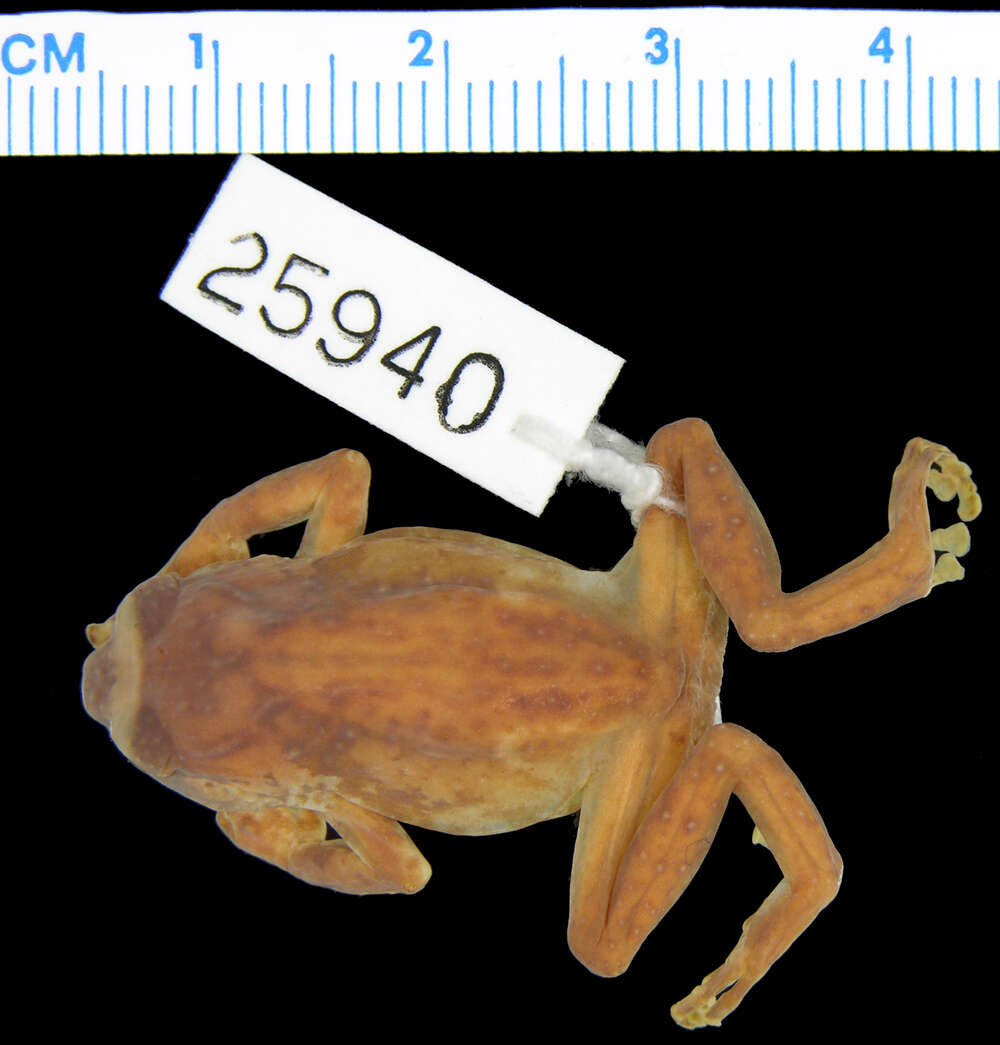
Choerophryne
Choerophryne is a genus of microhylid frogs, commonly known as Torricelli mountain frogs, endemic to New Guinea. These frogs are small, with the body length measured from snout to vent between 11 and 23 mm.
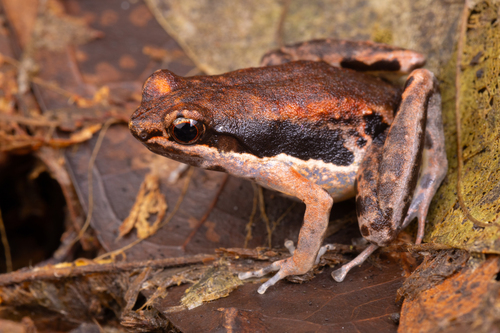
Hylophorbus
Hylophorbus is a genus of microhylid frogs endemic to New Guinea. Common name Mawatta frogs has been coined for them.

Stereocyclops
Stereocyclops (common name: Brazilian dumpy frogs) is a small genus of microhylid frogs. It is endemic to the Atlantic forest of eastern Brazil. Molecular phylogeny suggests that it is sister taxon to the clade containing Dasypops and Myersiella.
Kalophrynus
Kalophrynus is a genus of microhylid frogs. It is the only genus in the subfamily Kalophryninae. The species in this genus are found in southern China, in Southeast Asia to Java and Philippines, and in Assam, India.
-from-Papua-New-Guinea-ZooKeys-333-093-g002.jpg)
Oreophryne
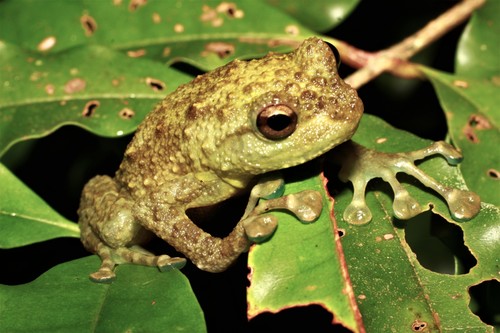
thumb|Portraits in life of A paratype of Oreophryne cameroni from Keki Lodge, Adelbert Mts., 850 m elevation; B paratype of Oreophryne cameroni from Torricelli Mts., 550 m elevation; C paratype of Oreophryne parkopanorum from near summit of Mt. Sapau, Torricelli Mts., 1100–1300 m elevation; D holotype of Oreophryne parkopanorum from near summit of Mt. Sapau, Torricelli Mts., 1100–1300 m elevation; E holotype of Oreophryne gagneorum from Rossel Island, 720 m elevation; and F paratype of Oreophryne gagneorum from Rossel Island, 720 m elevation.
Cophyla
Cophyla is a genus of microhylid frogs endemic to Madagascar.

Barygenys
Barygenys is a genus of microhylid frogs. They are endemic to New Guinea and the adjacent Louisiade Archipelago. So far only known from Papua New Guinea, the range of the genus is expected to reach Papua province in the Indonesian part of New Guinea. Despite not being known from Papua, common name Papua frogs has been suggested for them.

Chiasmocleis
Chiasmocleis is a genus of microhylid frogs. They are found in tropical South America north and east of the Andes. Their common name is humming frogs or silent frogs, the latter referring to the formerly recognized Syncope.
Paradoxophyla
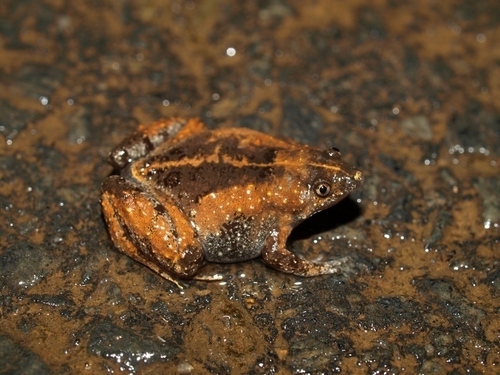
Paradoxophyla is a small genus of microhylid frogs endemic to Madagascar.
Austrochaperina
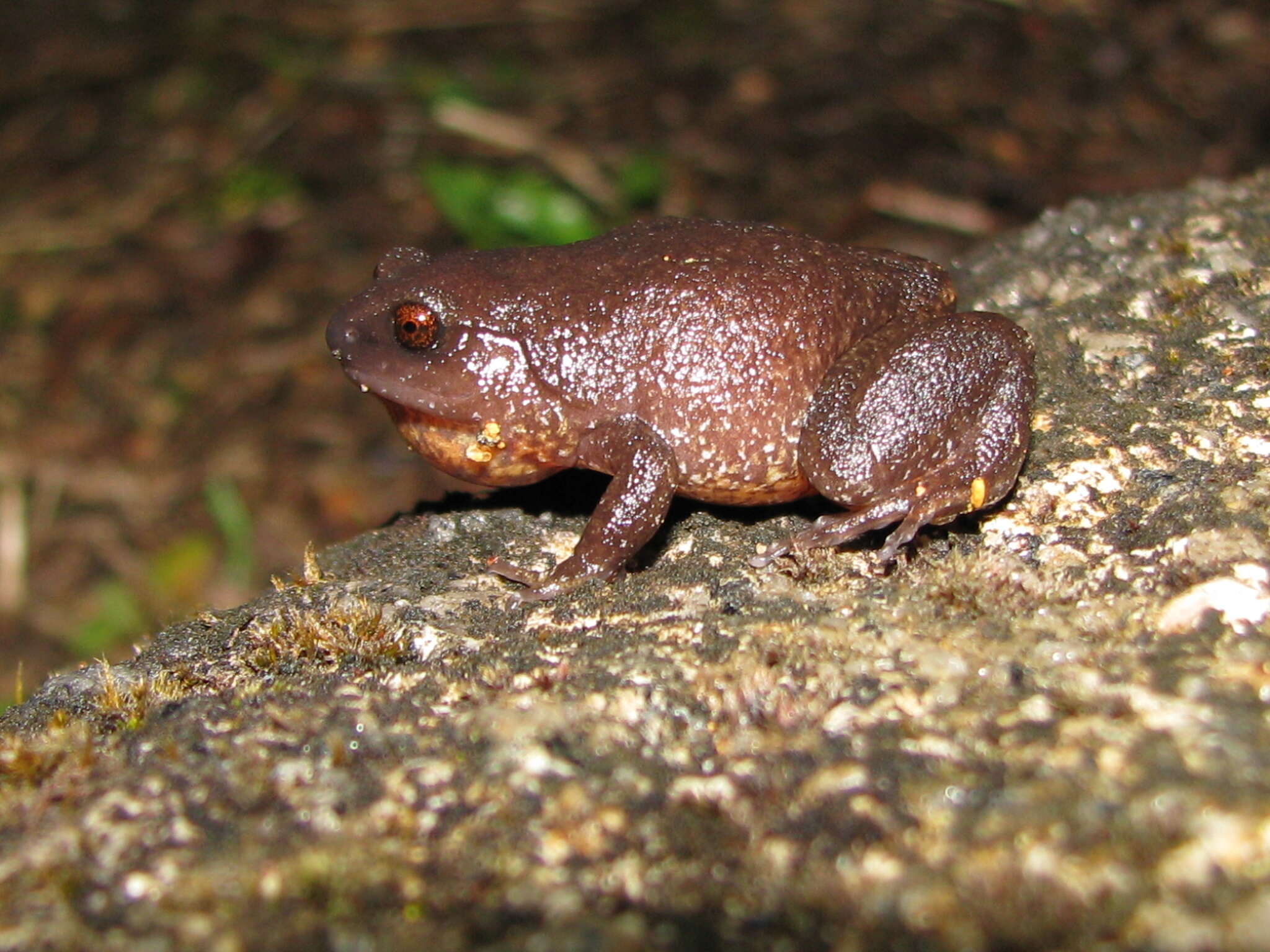
Austrochaperina is a genus of microhylid frogs found on New Guinea, New Britain and Australia.

Asterophryinae
Asterophryinae is a subfamily of microhylid frogs distributed in an area from the Peninsular Malaysia through the Malay Archipelago to northern Australia.
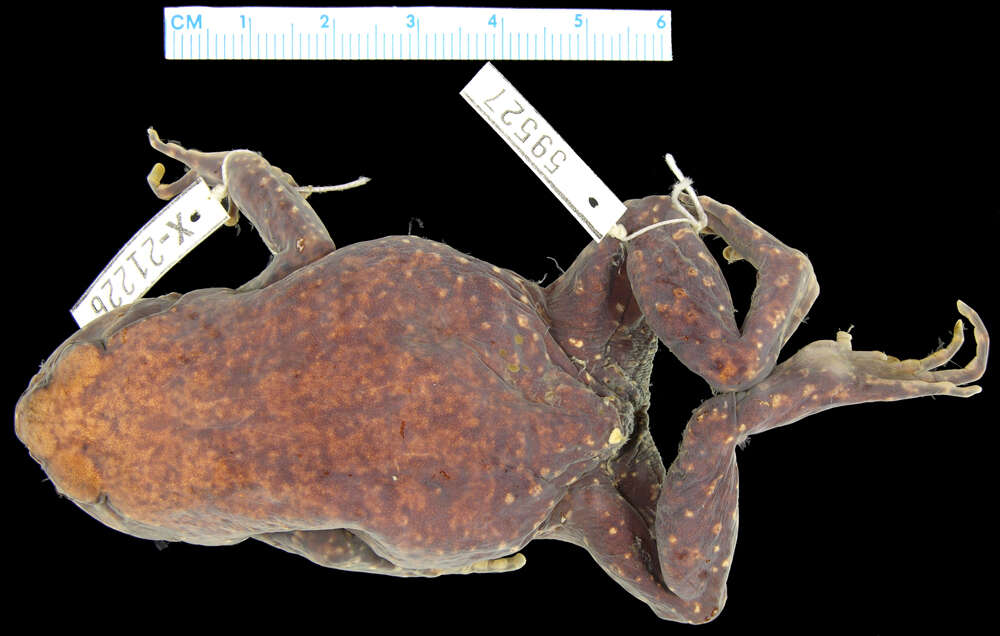
Callulops
Callulops is a genus of microhylid frogs from Sulawesi as well as the New Guinea region, from Talaud Islands and the Maluku Islands (Moluccas) in the northwest to the Louisiade Archipelago in the east.
They are medium- to large-sized terrestrial frogs inhabiting burrows on the forest floor, often under large rocks. Because their population densities can be low, and they are difficult to observe and collect owing to their lifestyle, many species are known only from few specimens.

Uperodon
Uperodon is a genus of microhylid frogs. They occur in South Asia (Pakistan, India, Sri Lanka, Bhutan, Nepal, and Bangladesh) and Myanmar. Uperodon reached its current composition in 2016 when the genus Ramanella was brought into its synonymy. The common names of these frogs are globular frogs and balloon frogs in reference to their stout appearance, or dot frogs, the last specifically referring to the former Ramanella.

Elachistocleis
Elachistocleis is a genus of microhylid frogs found in southern America from Panama southwards. Their common name is oval frogs, although for historic reasons not all species are named so.
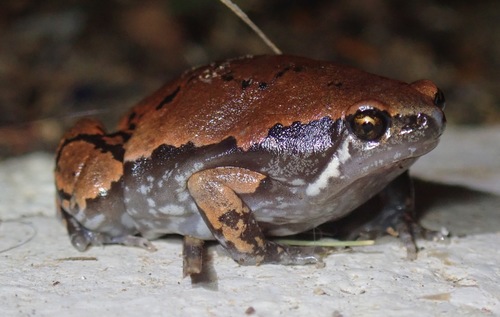
Hypopachus
Hypopachus is a genus of microhylid frogs (common name: sheep frogs) found in the Americas between Costa Rica and the southern United States. They can bury themselves under the ground or moss. Its name means ‘somewhat thick’, referring to its tough skin.
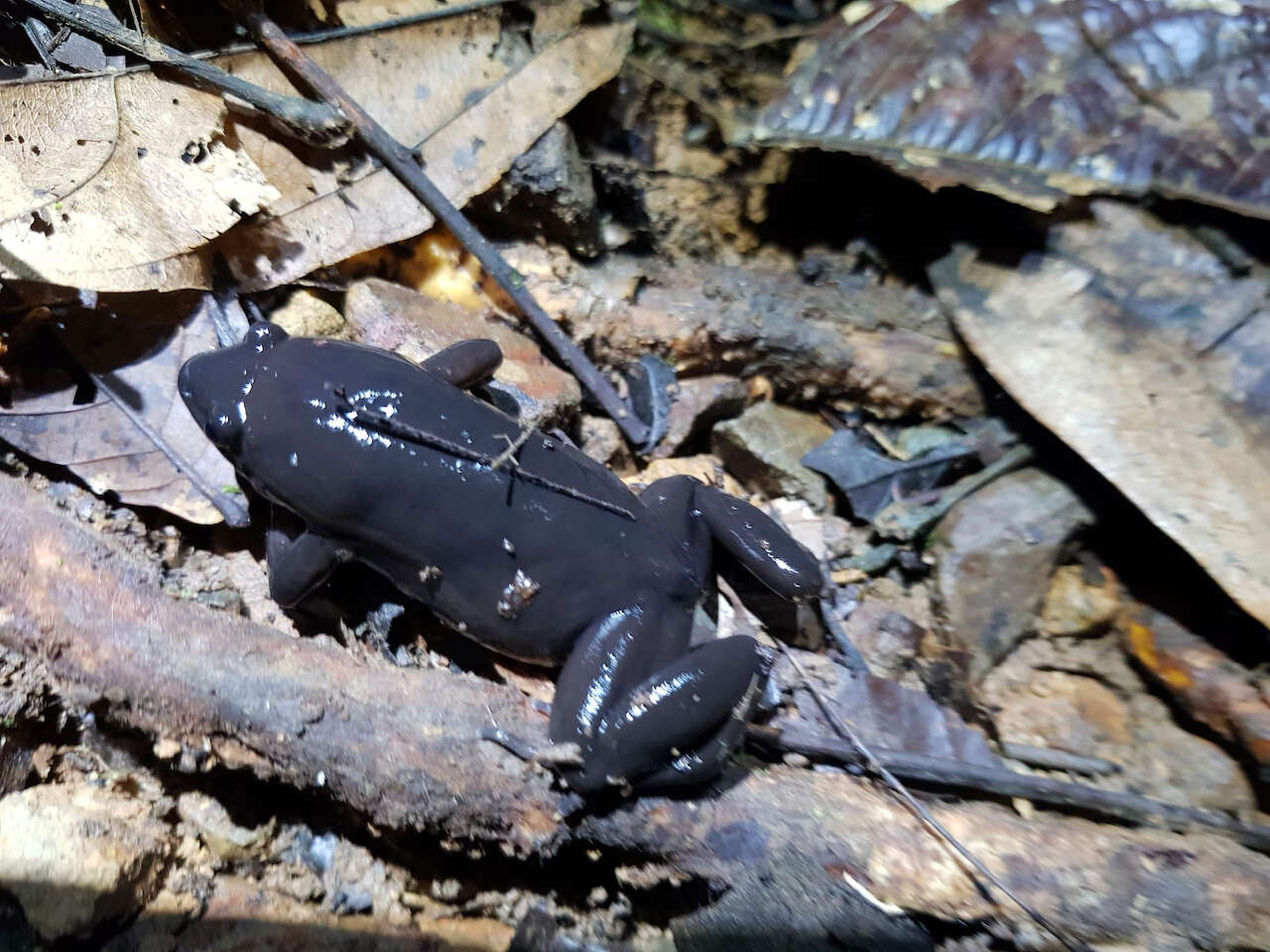
Ctenophryne
Ctenophryne is a genus of microhylid frogs. They occur in southern Central America (Costa Rica, Panama) and South America. Their common names are egg frogs and Nelson frogs, the latter applying to species in the formerly recognized Nelsonophryne.
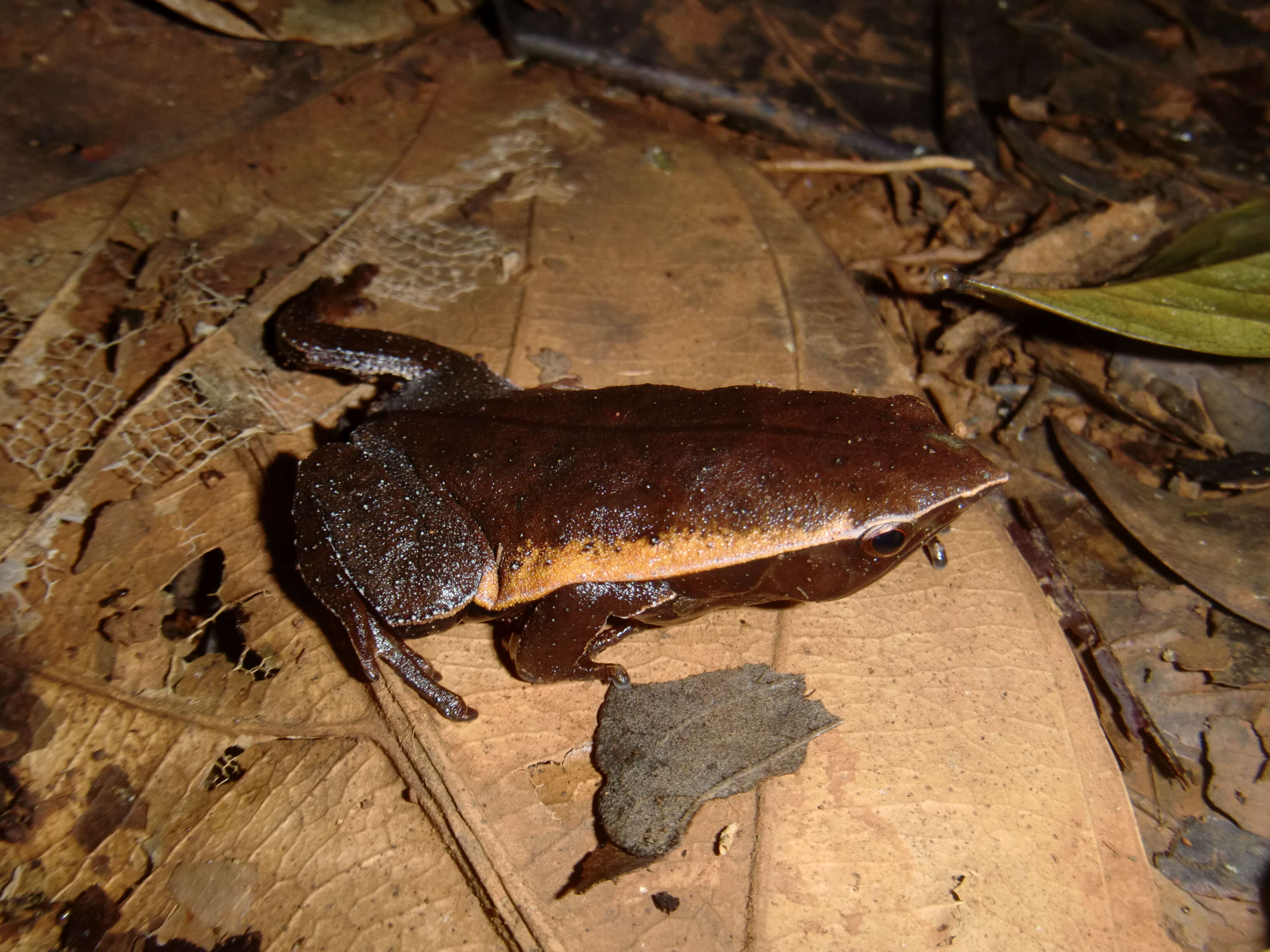
Otophryne
Otophryne is a small genus of microhylid frogs from northern South America. They are sometimes known as the pancake frogs.
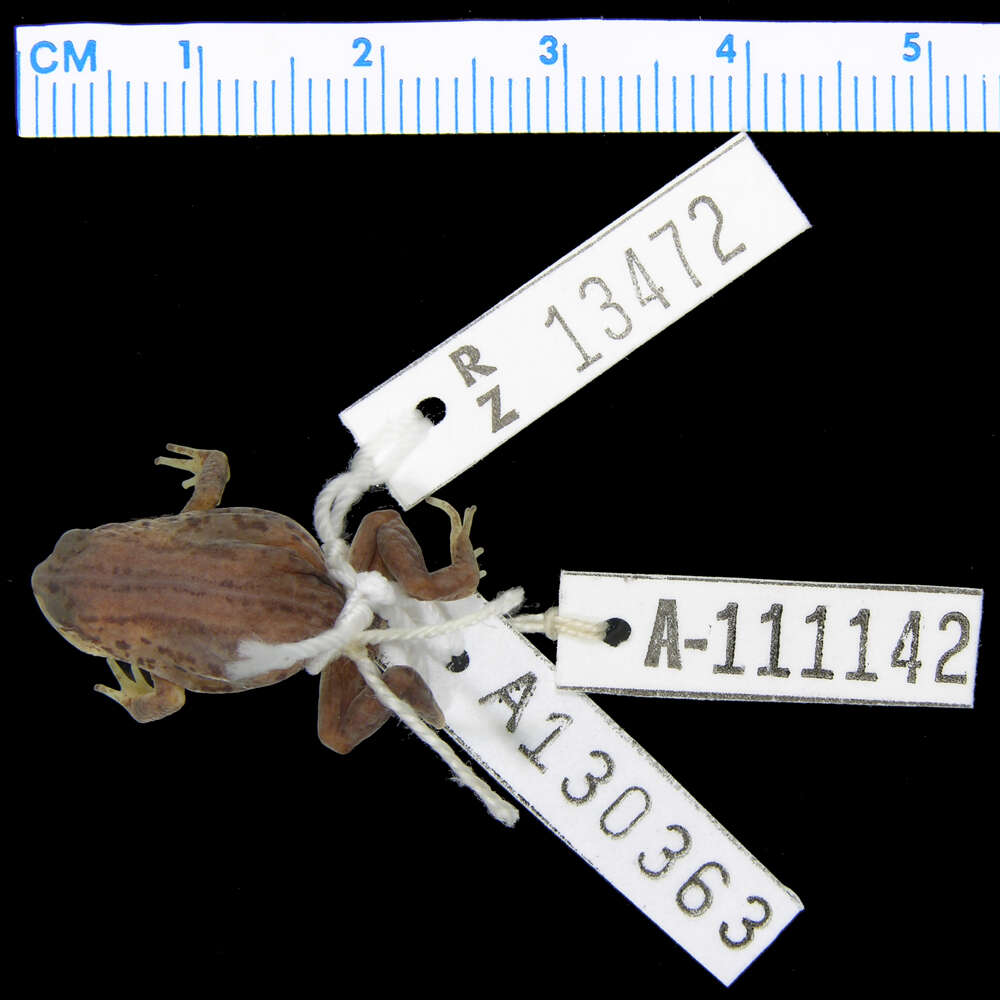
Aphantophryne
Aphantophryne is a genus of microhylid frogs found in New Guinea and in Mindanao, the Philippines. Originally described by Fry in 1917, Richard G. Zweifel considered in 1956 Aphantophryne synonymous to Cophixalus. The genus was resurrected in 1989 to house two new species in addition to the type species, A. pansa. A molecular study on the subfamily Asterophryinae in 2017 revealed that two species originally included in the genus Oreophryne were more closely related to Aphantophryne than to other Oreophryne, and were consequently moved to this genus. The study also revealed a number of undescri

Chaperina fusca
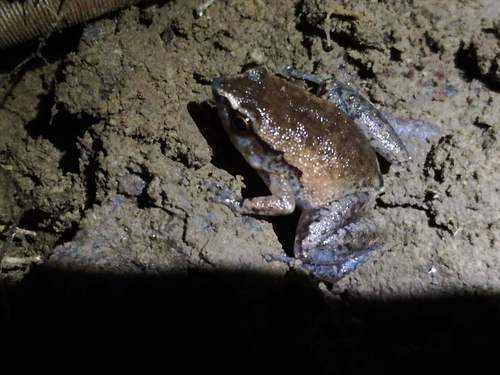
Chaperina is a genus of frogs in the family Microhylidae. It is the only genus in the subfamily Chaperininae. It is also itself monotypic, being represented by the single species, Chaperina fusca, commonly known as the brown thorny frog, spiny-heeled froglet, and saffron-bellied frog.
It is found on the Malay Peninsula, in Borneo and in the Philippines (Palawan, Mindanao, and Jolo islands). It is abundant in Borneo but uncommon on the Malay Peninsula and patchily distributed in the Philippines.
Copiula
Copiula is a genus of microhylid frogs endemic to New Guinea. The common name Mehely frogs has been coined for them. They are leaf-litter inhabitants.
Xenorhina
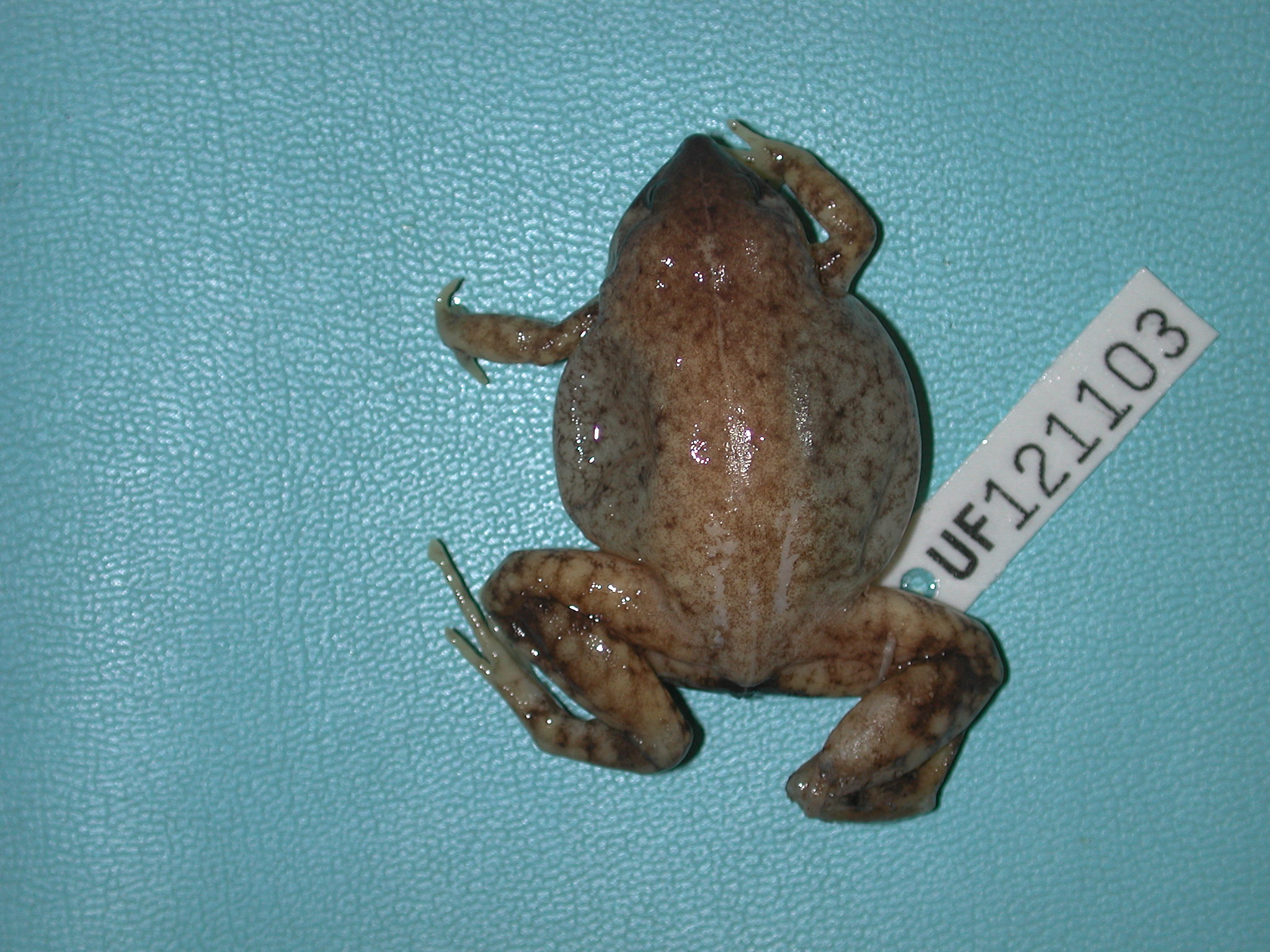
Xenorhina is a genus of microhylid frogs. The genus is endemic to New Guinea. They are sometimes known as the snouted frogs or fanged frogs, the latter referring to the now-synonymized genus Xenobatrachus.

Synapturanus
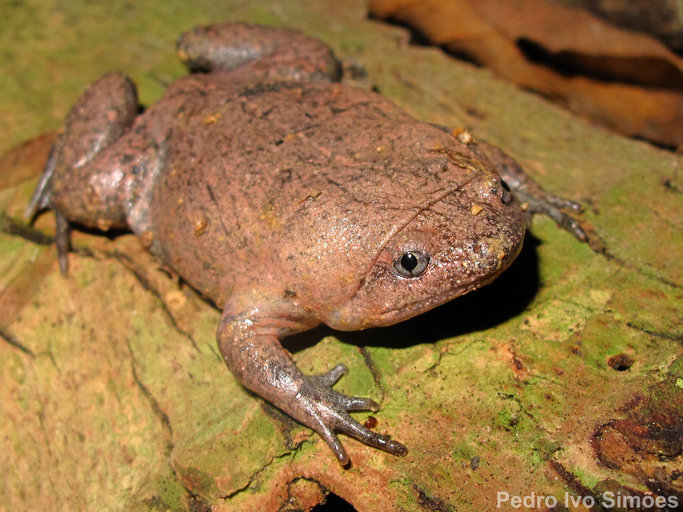
Synapturanus is a genus of microhylid frogs. They are found in northern South America. Common name disc frogs has been coined for the genus. Because of their fossorial life style, their natural history is poorly known.
Hamptophryne
Hamptophryne (common name: bleating frogs) is a small genus of microhylid frogs from South America. The genus was previously monotypic, but because of the close phylogenetic relationship between Hamptophryne and Altigius, another monotypic genus, the latter was placed in synonymy with Hamptophryne in 2012.
Paedophryne swiftorum
species of amphibian
%20(19759582984).jpg)
Hoplophryne
Hoplophryne is a genus of microhylid frogs. The genus is endemic to mountain forests of Tanzania. They are also known as three-fingered frogs or African banana frogs (not to be confused with Afrixalus, another African genus known as "banana frogs").
Metaphrynella
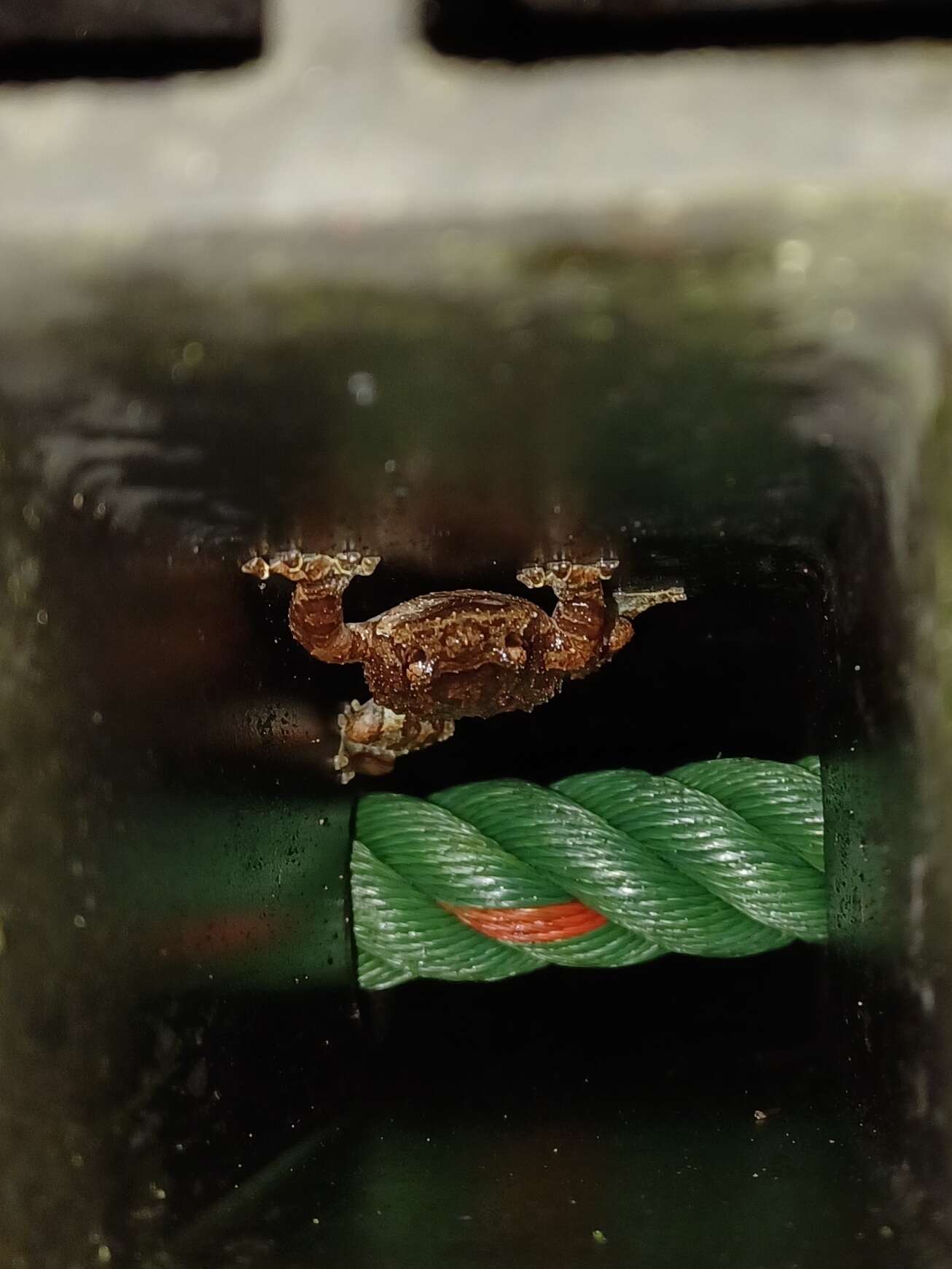
Metaphrynella is a small genus of microhylid frogs from the southern Malay Peninsula and Borneo. They are sometimes known as the Borneo treefrogs or tree hole frogs. The common name refers to the microhabitat of these frogs: males call from tree holes and tadpoles develop in the water contained in those holes.
Microhylinae
The Microhylinae are a subfamily of microhylid frogs. It contains 9 genera. Phylogenetic studies have estimated the family Microhylidae to be about 52 million years old.
Glyphoglossus
Glyphoglossus is a genus of frogs in the family Microhylidae. The genus occurs in Southeastern Asia. Common name balloon frogs has been coined for it, whereas the common name squat frogs refers to the Calluella species that are now included in this genus. They are fossorial frogs that spend only limited time on the soil surface and are typically known from only few specimens.
Gastrophrynoides
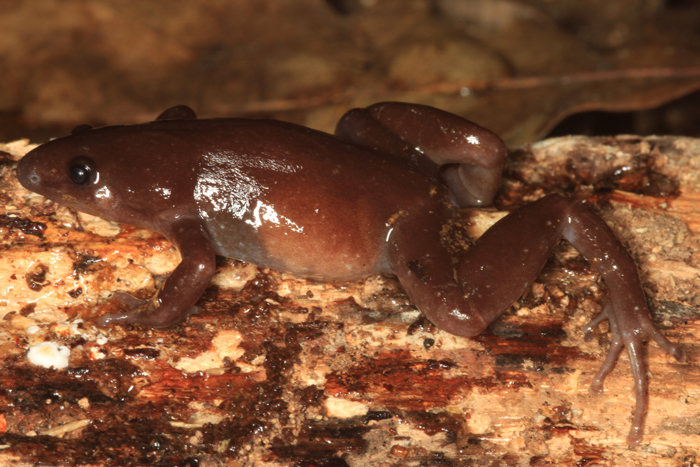
Gastrophrynoides is a small genus of microhylid frogs. There are two species known from the Malay Peninsula and Borneo. Common name Borneo narrowmouth toads has been coined for the genus.
Metamagnusia slateri
species of Amphibia
Scaphiophryninae
The Scaphiophryninae are a subfamily of microhylid frogs native to Madagascar.
Phrynella pulchra
Phrynella is a genus of frogs in the family Microhylidae. It is monotypic, being represented by the single species, Phrynella pulchra.
It is found in Indonesia, Malaysia, and Thailand.
Its natural habitats are subtropical or tropical moist lowland forests and intermittent freshwater marshes.
It is threatened by habitat loss.
Parhoplophryne usambarica
Parhoplophryne is a monotypic frog genus in the family Microhylidae. The sole species is Parhoplophryne usambarica, sometimes known as the Usambara black-banded frog or Amani forest frog. It is endemic to the East Usambara Mountains in Tanzania. It is only known from one specimen collected in the 1920s and is feared to be extinct.
Nanohyla
Nanohyla is a genus of frogs in the family Microhylidae. Members of the genus are known as pygmy narrow-mouthed frogs. The members of the genus are found throughout Southeast Asia in the countries of Vietnam, Laos, Cambodia, Thailand, Malaysia, Brunei, Indonesia and the Philippines.
Sphenophryne
Sphenophryne is a genus of frogs in the family Microhylidae from New Guinea. It reached its current composition in 2017 when Rivera and colleagues brought the genera Genyophryne, Liophryne, and Oxydactyla into synonymy of the then-monotypic Sphenophryne. However, the AmphibiaWeb continues to recognize these genera as valid.
Adelastes
Adelastes is a genus of frogs in the family Microhylidae. It is the only genus in the subfamily Adelastinae and is also itself monotypic, being represented by the single species, Adelastes hylonomos, commonly known as the Neblina frog.
Dasypops
Dasypops is a genus of frog in the family Microhylidae. It is monotypic, being represented by the single species, the Rio Mutum frog (Dasypops schirchi). It is endemic to the coastal plain of Espírito Santo and Bahia states of eastern Brazil.
Its natural habitats are lowland forests, including secondary forests and forest edges. It is an explosive breeder that breeds in temporary pools.
It is potentially threatened by habitat loss.
Mysticellus franki
species of frog
Arcovomer
Arcovomer is a genus of frogs in the family Microhylidae. It is monotypic, being represented by the single species Arcovomer passarellii, commonly known as '''Passarelli's frog'''. It is endemic to south-eastern Brazil and is found in the states of Espírito Santo, Rio de Janeiro, and São Paulo. Frogs from Espírito Santo may represent another, undescribed species. The name honours Antonio Passarelli who collected the holotype.
Dermatonotus
Dermatonotus is a genus of frogs in the family Microhylidae. It is monotypic, being represented by the single species, Dermatonotus muelleri, commonly known as '''Muller's termite frog'''. It is found in Argentina, Bolivia, Brazil, and Paraguay.
Myersiella
Myersiella is a genus of frogs in the family Microhylidae. It is monotypic, being represented by the single species, Myersiella microps. It is endemic to southeastern Brazil and occurs in Espírito Santo, Rio de Janeiro, southeastern Minas Gerais, and southeastern São Paulo state. The genus name honors George S. Myers. The genus is sometimes known as the elongated frogs, while the sole species is known as Rio elongated frog.
Siamophryne
thumb|S. troglodytes tadpole
Siamophryne is a genus of frog found in Thailand. It is monotypic, consisting of only one species, the Tenasserim cave frog (Siamophryne troglodytes). Its closest relative is the genus Vietnamophryne.
Oninia
Oninia is a genus of frogs belonging to the family Microhylidae.