Category
page 1Military dictatorships

Sudan
Sudan, officially the Republic of the Sudan, is a country in Northeast Africa. It borders the Central African Republic to the southwest, Chad to the west, Libya to the northwest, Egypt to the north, the Red Sea to the east, Eritrea and Ethiopia to the southeast, and South Sudan to the south. Sudan has a population of 51.8 million people as of 2025 and occupies 1,886,068 square kilometres (728,215 square miles), making it Africa's third-largest country by area. Sudan's capital and most populous city is Khartoum.

Burkina Faso
Burkina Faso is a landlocked country in West Africa. It is bordered by Mali to the northwest, Niger to the northeast, Benin to the southeast, Togo and Ghana to the south, and Ivory Coast to the southwest. It covers an area of 274,223 km2. In 2024, the country had an estimated population of approximately 23,286,000. After independence it was called the Republic of Upper Volta from 1958 to 1984. It was renamed Burkina Faso by then-president Thomas Sankara. Its citizens are known as Burkinabes, and its capital and largest city is Ouagadougou.

Guinea-Bissau
Guinea-Bissau, officially the Republic of Guinea-Bissau, is a country in West Africa that covers with an estimated population of 2,080,000. It borders Senegal to its north and Guinea to its southeast.

Manchukuo
Manchukuo or Manchoukuo, officially the Manchou Empire after 1934 and State of Manchoukuo prior, was a puppet state of the Empire of Japan in Manchuria that existed from 1932 until its dissolution in 1945. It was ostensibly founded as a republic, its territory consisting of the lands seized in the Japanese invasion of Manchuria; it was later declared to be a constitutional monarchy in 1934, though very little changed in the actual functioning of government. Manchukuo received limited diplomatic recognition, primarily from states aligned with the Axis powers, with its existence widely regarded

martial law
imposition of direct military control of a government

Tokugawa shogunate
1603–1868 Japanese military government
Second French Empire
government of France under Napoleon III, from 1852 to 1870
French First Republic
republic governing France, 1792–1804

Second Polish Republic
country in Central and Eastern Europe (1918–1939)

military occupation
effective provisional control of a certain power over a territory

Goryeo
Goryeo (; ) was a Korean state founded in 918, during a time of national division called the Later Three Kingdoms period, that unified and ruled the Korean Peninsula until the establishment of Joseon in 1392. Goryeo achieved what has been called a "true national unification" by Korean historians as it not only unified the Later Three Kingdoms but also incorporated much of the ruling class of the northern kingdom of Balhae, who had origins in Goguryeo of the earlier Three Kingdoms of Korea. According to Korean historians, it was during the Goryeo period that the individual identities of Gogurye
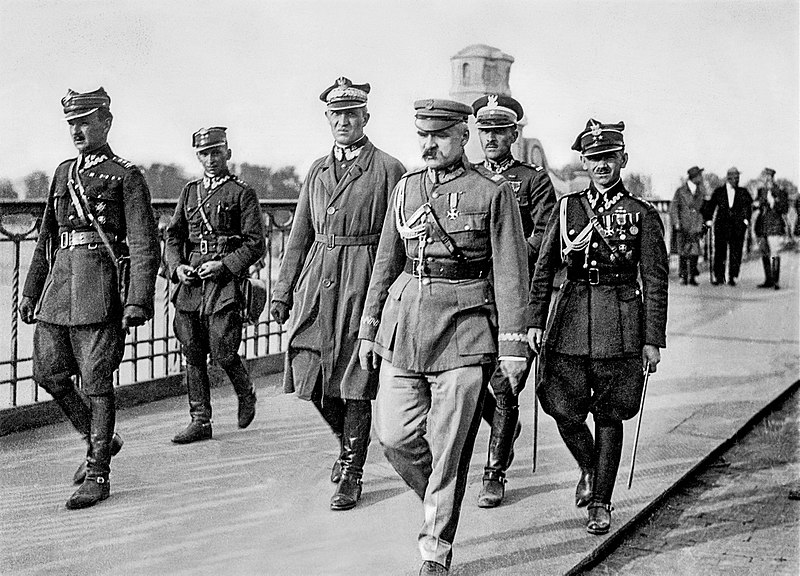
military dictatorship
form of dictatorial military rule
Francoist Spain
1939–1975 dictature period of Spain

Yemen Republic
former country

Republic of Upper Volta
former country (1958–1984) in West Africa

Kingdom of Laos
former country

Greek junta
military rulers of Greece (1967–1974)
Derg
The Derg or Dergue (, ), officially the Provisional Military Administrative Council (PMAC), and also often simply known as Socialist Ethiopia, was the military junta that ruled Ethiopia, including present-day Eritrea, from 1974 to 1987, when they formally "civilianized" the administration, though remaining in power until 1991.

Transkei
Transkei ( , meaning the area beyond [[Great Kei River|[the river] Kei]]), officially the Republic of Transkei (), was an unrecognised state in the southeastern region of South Africa from 1976 to 1994. It was, along with Ciskei, a Bantustan for the Xhosa people, and operated as a nominally independent parliamentary democracy. Its capital was Umtata (renamed Mthatha in 2004).

military junta
government led by a committee of military leaders
Pahlavi Iran
former sovereign state (1925–1979)
Ashikaga shogunate
feudal military government of Japan (1336–1573)

Ukrainian State
anti-socialist government in Ukraine (except West Ukraine), 1918

Hussain Muhammad Ershad
President of Bangladesh from 1983 to 1990 Former (6th) Army chief of Bangladesh
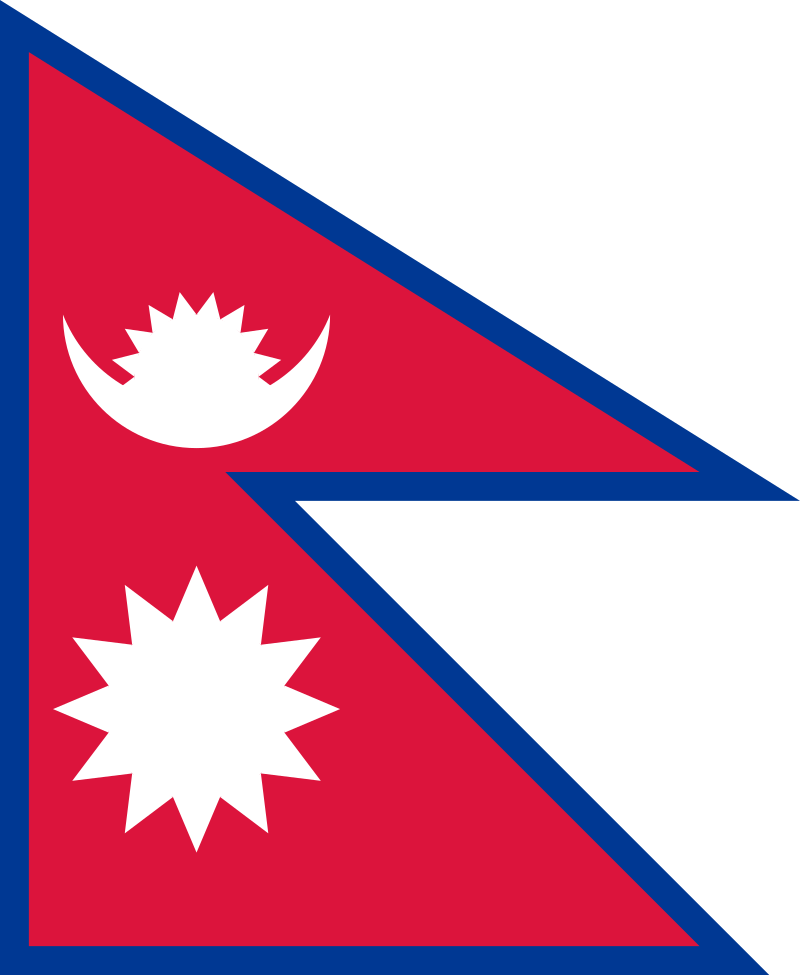
Kingdom of Nepal
sovereign monarchy in South Asia, lasting from 1768–2008
Khmer Republic
former country of Asia
National Reorganization Process
1976–1983 Argentine military dictatorship
Kamakura shogunate
feudal military government of Japan
Republic of Dahomey
former country
First Portuguese Republic
1910–1926 republic in Southwestern Europe
Wa State
unrecognized state of the ethnic Wa peoples located within Myanmar
Second Syrian Republic
Republic between 1950 and 1963

Mengjiang
Mengjiang, also known as Mengkiang, officially the Mengjiang United Autonomous Government, was an autonomous zone of the Wang Jingwei regime in Inner Mongolia. It was formed in 1939 as its own puppet state of the Empire of Japan, and from 1940 was placed under the sovereignty of the Wang Jingwei regime, which was itself a puppet government. It consisted of the previously Chinese provinces of Chahar and Suiyuan, corresponding to the central part of modern Inner Mongolia. It has also been called Mongukuo or Mengguguo (or Mengkukuo; ; in analogy to Manchukuo, another Japanese puppet state in Manc

Marcos Pérez Jiménez
president of Venezuela (1952-1958)
Somali Democratic Republic
former country in Africa
Second Hellenic Republic
historiographical concept of Greece (1924–1935)
Second Philippine Republic
puppet state established in 1943 during the Japanese occupation of the Philippines
Brazilian military government (1964–1985)
1964-1985 military regime in Brazil
1980 Turkish coup d'état
12 September 1980 government coup in Turkey
Albanian Kingdom
period in 20th century Albanian history
The Protectorate
period during the Commonwealth of England under the rule of the Lord Protector
Empire of China
1915–1916 country
Martial law in Poland
Martial Law introduced by the government of the People's Republic of Poland, to suppress democratic mouvents and Solidarnosc activity
Beiyang Government
internationally recognized government of the Republic of China which was in place in Beijing from 1912 to 1928
Dai Viet
Vietnamese monarchy (10th–19th century)
Centrocaspian Dictatorship
provisional government in Azerbaijan
Republic of Kuwait
former country
Republic of the Congo (Léopoldville)
former country (1960–1971) in Africa, predecessor of Zaire
Military dictatorship of Chile
period of Chilean history under the rule of General Augusto Pinochet
Supreme Council of the Armed Forces
statutory body of between 20 and 25 senior Egyptian military officers
Lê dynasty
imperial dynasty in Vietnam
.jpg)
Sanation
Sanation (, ) was a Polish political movement that emerged in the interwar period, prior to Józef Piłsudski's May 1926 ''Coup d'État, and gained influence following the coup. In 1928, its political activists went on to form the Nonpartisan Bloc for Cooperation with the Government (BBWR'').
Republic of Egypt
1953–1958 republic in Northern Africa
First Brazilian Republic
1889–1930 federal republic in South America
Somoza family
Ruling family of Nicaragua from 1936 to 1979
Russian State
period of Russian history (1918–1920)
First Republic of Iraq
state forged in 1958 in Iraq and ended in 1968
National Government of the Republic of China
Kuomintang-ruled government of the Republic of China between 1925 and 1948
Republic of Cuba
historical period in Cuba between 20 May 1902 and 1 January 1959
National Council for Peace and Order
military junta of Thailand