Category
page 2Millipede genera
Charactopygus
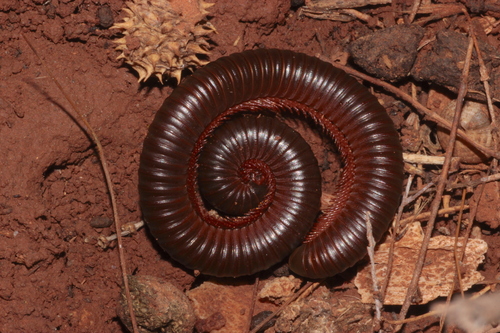
Charactopygus is a genus of millipedes in the family Spirostreptidae. They are found in East Africa and Madagascar.
Chondromorpha
Chondromorpha is a genus of millipedes belonging to the family Paradoxosomatidae.
Prosopodesmus
Prosopodesmus is a genus of flat-backed millipedes in the family Haplodesmidae. These millipedes are found primarily in Australia and southern Japan. This genus includes the species P. panporus, which is notable for exhibiting sexual dimorphism in segment number: Whereas adult females of this species feature the usual 20 segments (counting the collum as the first segment and the telson as the last) usually observed in the order Polydesmida, the adult males of this species feature only 19 segments.
Rhopalomeris
Rhopalomeris is a genus of pill millipede found in Indochina.
Brevitibius
Brevitibius is a genus of millipedes in the family Spirostreptidae. It contains the following species:
Brevitibius angolanus
Brevitibius obtusus
Brevitibius ondundu
Brevitibius oongongololo
Brevitibius polyptychus
Brachydesmus
Brachydesmus is a genus of millipedes belonging to the family Polydesmidae. The Czech zoologist Camill Heller first described this genus to contain the type species B. subterraneus. This genus now includes about 75 described species.
Nopoiulus
Nopoiulus is a genus of millipedes belonging to the family Blaniulidae.
Urochordeuma
Urochordeuma is a genus of millipedes in the order Chordeumatida and the only genus in the family Urochordeumatidae. Adult millipedes in this family have 30 segments (counting the collum as the first segment and the telson as the last). The two species are known from the U.S. state of Washington, where U. bumpusi is known from Pierce County, and U. porona from King County.

Orthoporus
Orthoporus is a genus of spirostreptid millipedes, containing around 80 species, distributed from the southern United States to Brazil and Argentina.
Sphaerobelum
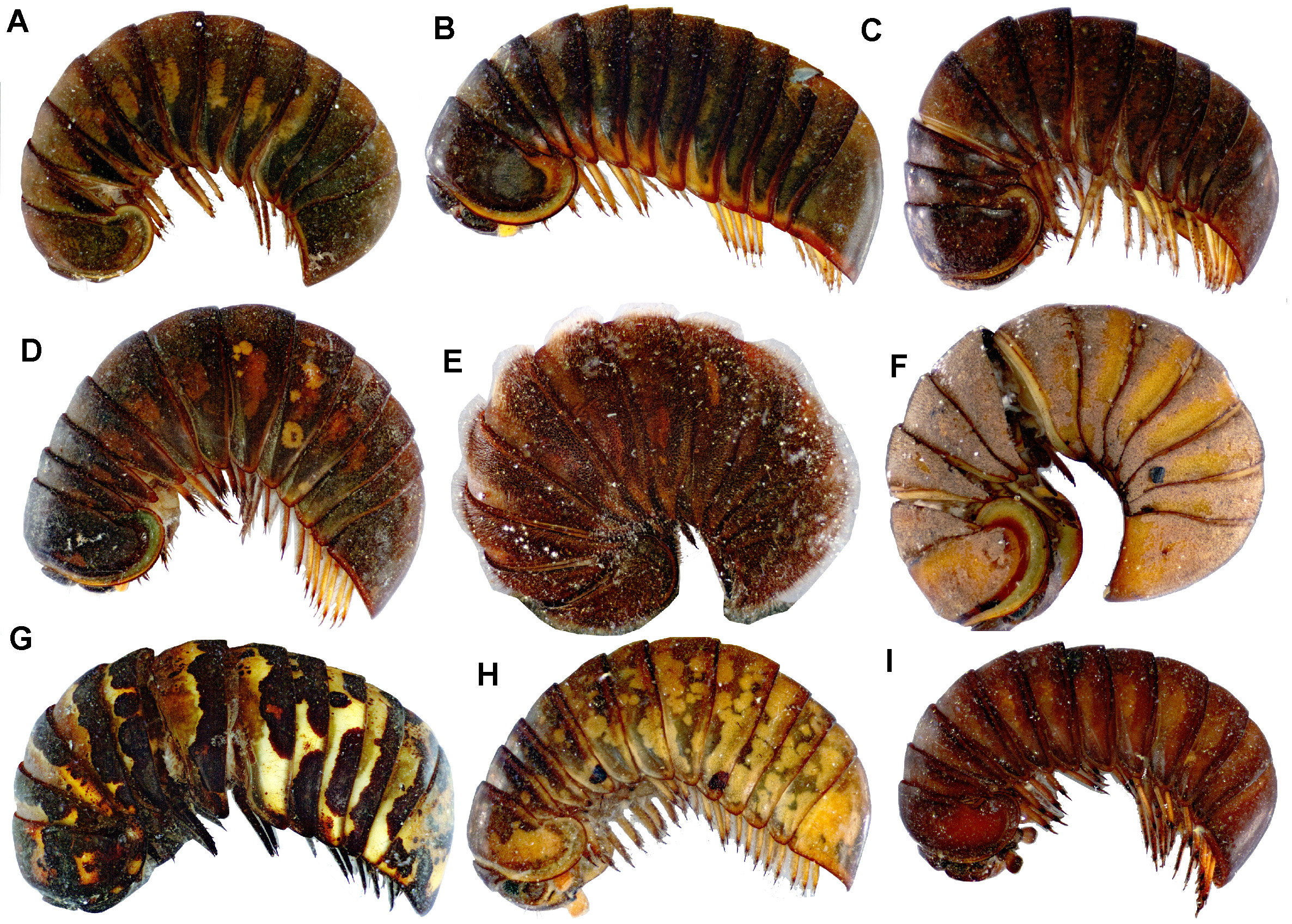
Sphaerobelum is a genus of giant pill-millipedes in the family Zephroniidae, endemic to Southeast Asia, with most species occurring in Thailand, Laos and Vietnam. Members of this genus are characterised by volvation, jewel-like coloration and distinct morphological adaptations. Several species are restricted to limestone karsts and forested habitats and recent molecular studies confirm the genus' distinctness from closely related genera such as Zephronia.

Parafontaria
Parafontaria is a genus of "flat-backed" millipedes (order Polydesmida) consisting of 14 species native to Japan and Korea. Parafontaria laminata armigera, formerly called train millipedes, has been synonymized with P. laminata. This is because some populations exhibit periodical swarming behavior during which large numbers congregate and can impact train passage when this congregation occurs on tracks. Documentation of this event goes back to 1920. Individuals vary from around as adults, and feed on leaf litter as well as soil, making them comparable to earthworms in facilitating decompositio
Spelaeoglomeris
Spelaeoglomeris is a genus of pill millipede found in France and Spain.
Leptoiulus
Leptoiulus is a genus of millipedes belonging to the family Julidae.
Aulodesmus
Aulodesmus is a genus of millipedes belonging to the family Gomphodesmidae.
Devillea
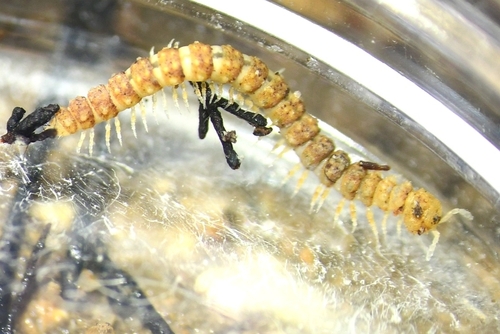
genus of myriapods
Eumastigonus
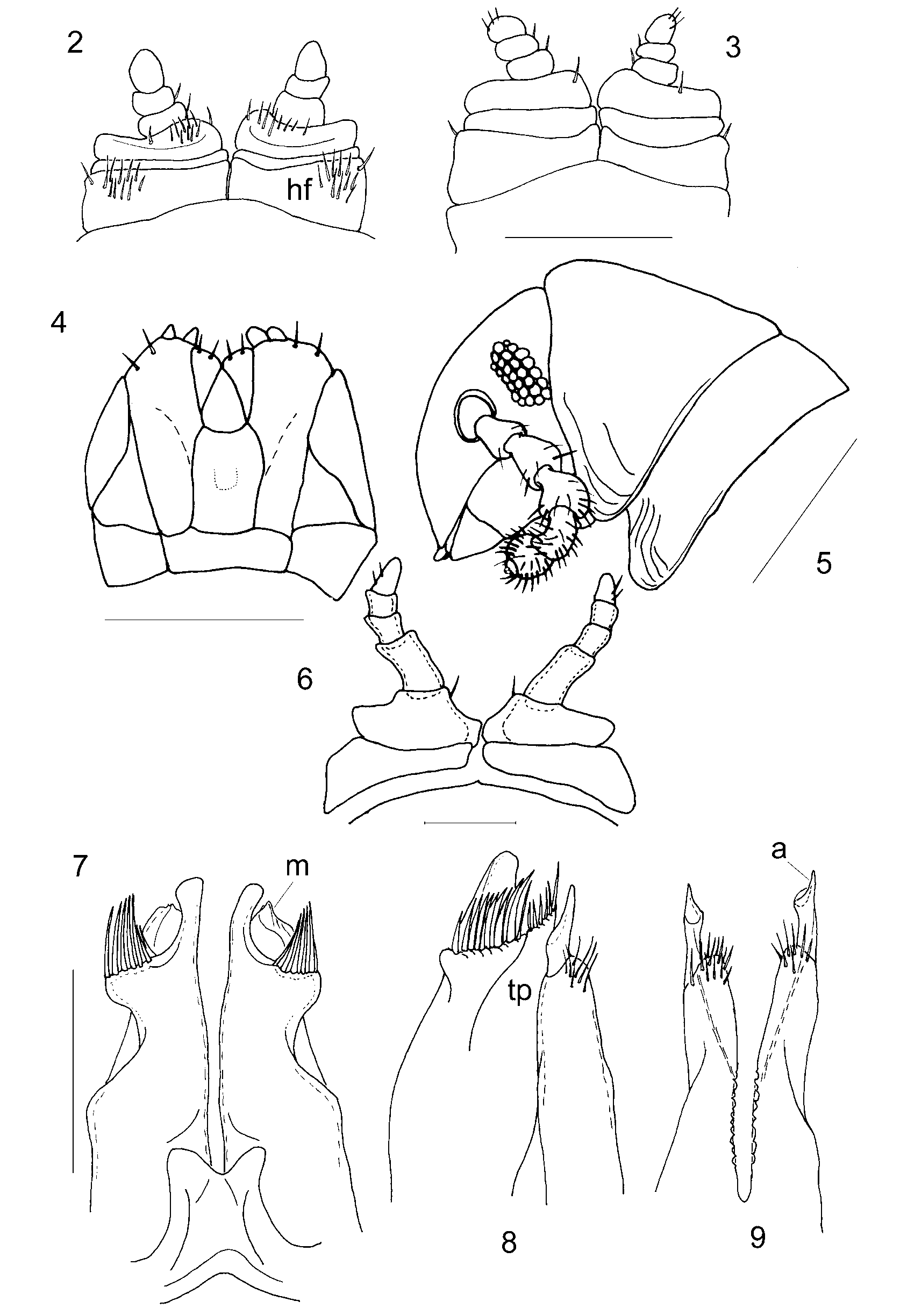
Eumastigonus is a genus of millipede, endemic to New Zealand. They are large, long, generally brown, and important in breaking down nutrients and rotting matter in the ecosystem. There are at least 8 species. They were described initially by Chamberlin in 1920. Along with other families and orders of millipedes in New Zealand, this genus is poorly known and there are many undescribed species. Identification to the species level in the field may often be impossible.
Rhinotus
Rhinotus is a genus of millipedes in the family Siphonotidae. There are at least 20 described species of the family Rhinotus.

Monographis
Monographis is a terrestrial genus of millipede in the family Polyxenidae comprising 10 species.

Eutrichodesmus
Eutrichodesmus is a genus of millipedes in the family Haplodesmidae. Containing 54 species, this genus is among the genera with the greatest number of species not only in the family Haplodesmidae but also in the order Polydesmida. This genus includes the species E. peculiaris, notable for featuring sexual dimorphism in segment number: The adult females have 20 segments (counting the collum as the first segment and the telson as the last), but the adult males have only 19 segments. Millipedes in this genus are found in southern Japan, Taiwan, southern China, mainland Southeast Asia, Indonesia,
Tylobolus
Tylobolus is a genus of millipedes in the order Spirobolida with seven known species found in western North America. It is in the family Spirobolidae, and is the type genus of the subfamily Tylobolinae. The genus was named by Orator F. Cook in 1904.
Thalassisobates
Thalassisobates is a genus of millipedes.
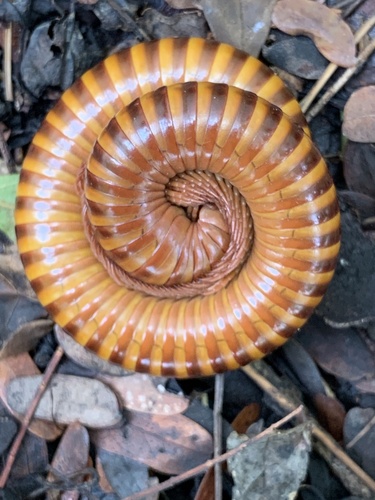
Thyropygus
Thyropygus is a genus of millipedes in the family Harpagophoridae, widely distributed throughout Southeast Asia. It is the most-species rich genus of Harpagophoridae in Southeast Asia. Over 30 species occur in Thailand.
Cearostreptus
Cearostreptus is a genus of millipedes in the family Spirostreptidae. It contains the following species:
Cearostreptus schubarti (Krabbe, 1982)
Cearostreptus triangulatus (Schubart, 1945)
Onychoglomeris
Onychoglomeris is a genus of pill millipede found in North Italy and the Balkans. In 1971, Onychoglomeris tyrolensis, then Glomeris tyrolensis, was designated as the genus's type species.
Spiromimus
Spiromimus is a genus of millipedes in the family Pachybolidae. They mostly live in rainforests and dry land.
Rhymogona
Rhymogona is a genus of millipedes belonging to the family Craspedosomatidae.
Trachysphaera
Trachysphaera is a genus of dwarf pill millipedes in the order Glomerida. Just over 30 species are known, making it the third most species-rich genus of Glomerida. Trachysphaera species are patchily distributed throughout Europe and western Asia, extending from Spain to Caucasia. Members of this genus are tiny, with modified appearances resembling that of calcareous stones.
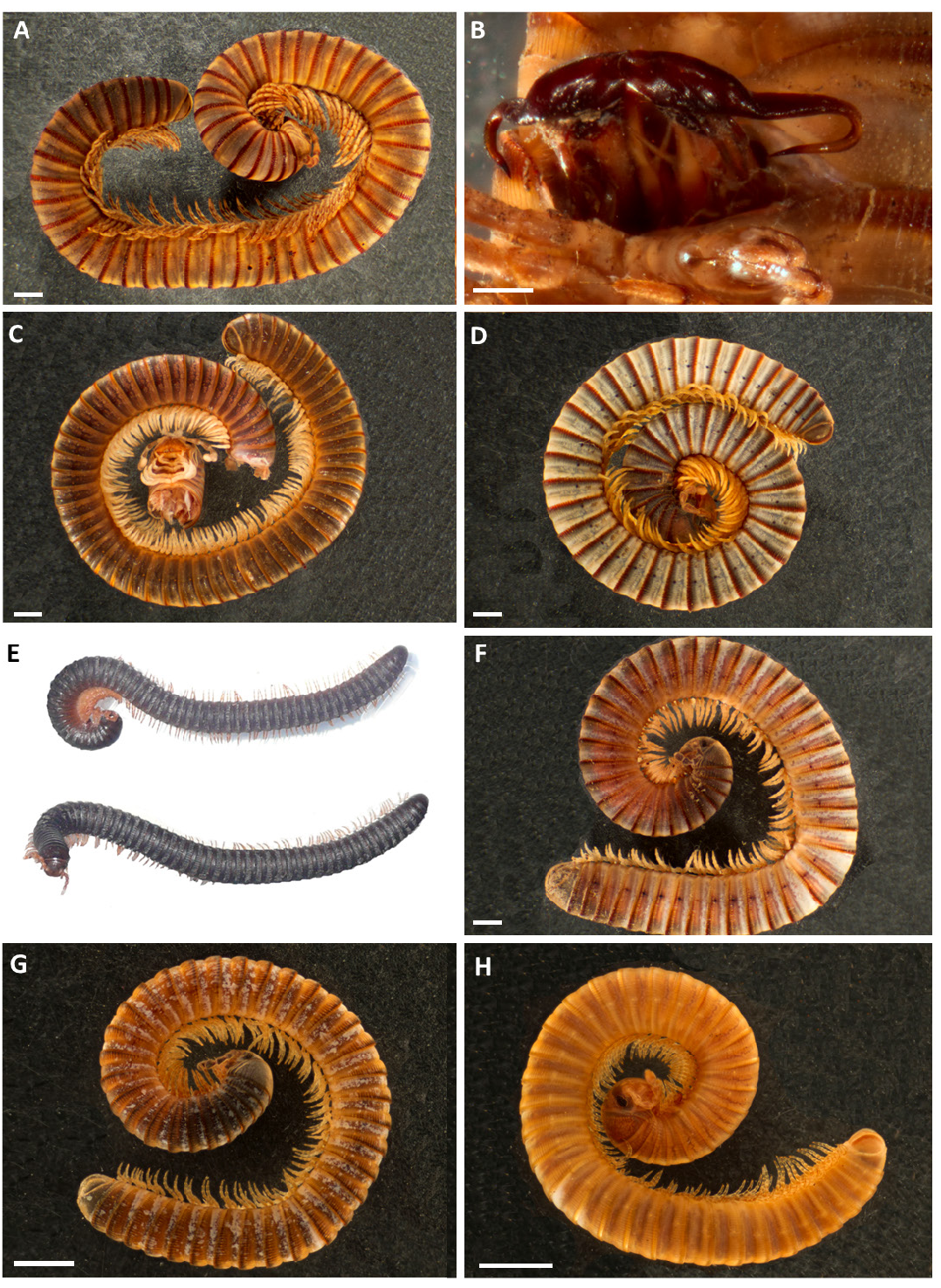
Attemsostreptus
Attemsostreptus is a genus of millipedes in the family Spirostreptidae. It contains the following species:
Attemsostreptus cataractae
Attemsostreptus costatus
Attemsostreptus julostriatus
Attemsostreptus leptoptilos
Attemsostreptus reflexus
Bucinogonus
Bucinogonus is a genus of millipedes in the family Spirostreptidae. It contains the following species:
Bucinogonus aviceps
Bucinogonus kandti
Bucinogonus silvestrii
Plusioporus
Plusioporus is a genus of millipedes in the family Spirostreptidae. It contains the following species:

Haasea
thumb | right | A pair of Haasea flavescens
Haasea is a genus of millipedes in the family Haaseidae. This genus is the largest in this family, with 17 accepted species. Millipedes in this genus have either 28 or 30 segments (counting the collum as the first segment and the telson as the last).
Mardonius
genus of myriapods
Brachycybe
Brachycybe (Greek for "short head") is a genus of social millipedes found in temperate forests of North America and East Asia. In North America they are found in the Pacific coastal region from Oregon to southern California and in eastern regions including the southern Appalachian Mountains, the Cumberland Plateau, the Ozark Mountains, and parts of the Gulf Coastal Plain. Species in this genus are often referred to as "feather millipedes" due to their shape.
Doratogonus
Doratogonus is a genus of millipedes in family Spirostreptidae. They are relatively large, at long, relatively common, and distributed across Southern Africa. Many of the species are listed on the IUCN Red List due to habitat destruction.
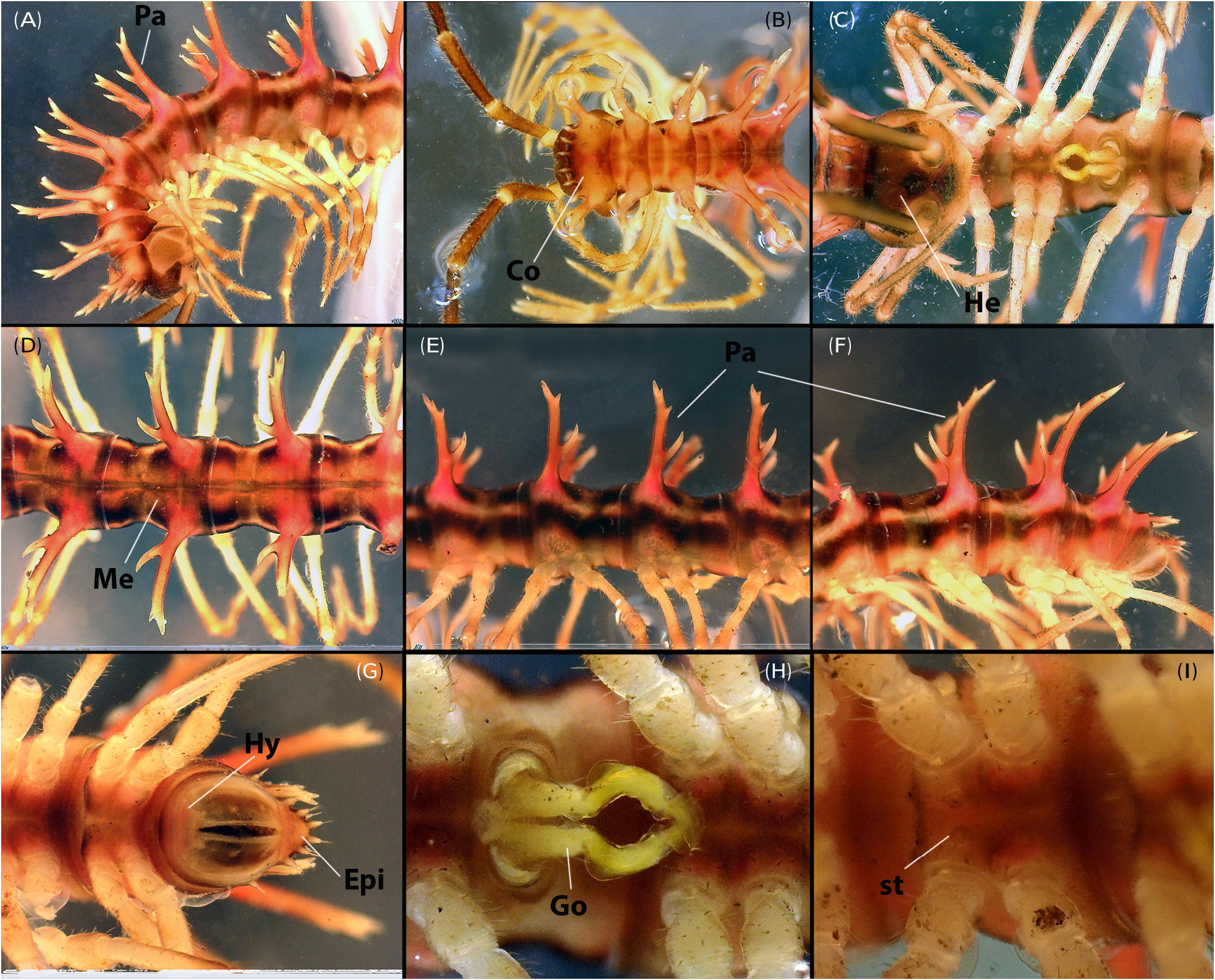
Hylomus
Hylomus is a genus of millipede of the family Paradoxosomatidae found in southeast Asia.
Gymnostreptus
Gymnostreptus is a genus of millipedes in the family Spirostreptidae. It contains the following species:
Calostreptus
Calostreptus is a genus of giant African millipedes in family Spirostreptidae, containing three species:
Calostreptus carinatus Attems, 1928
Calostreptus chelys Cook, 1896
Calostreptus cooki Kraus, 1958
Apiomeris
Apiomeris is a genus of pill millipede found in North and East India, Myanmar, Thailand, and the Malay Archipelago to Celebes.
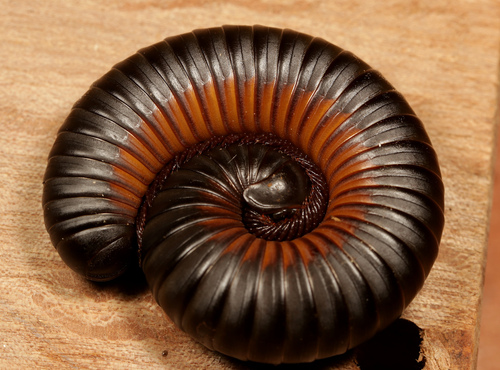
Camaricoproctus
Camaricoproctus is a genus of millipedes in the family Spirostreptidae. It contains the following species:
Camaricoproctus bombycinus (Attems, 1928)
Camaricoproctus disparatidens (Lawrence, 1965)
Camaricoproctus gracilidens (Lawrence, 1965)
Camaricoproctus pauciannulatus (Jeekel, 1956)
Camaricoproctus planidens (Lawrence, 1965)
Camaricoproctus torquidens (Lawrence, 1965)
Camaricoproctus transvaalicus (Lawrence, 1966)
Camaricoproctus tumididens (Lawrence, 1965)

Trichopetalum
genus of myriapods
Antichiropus
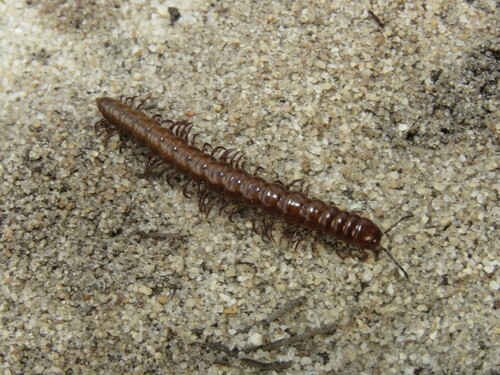
Antichiropus is a genus of millipede in the family Paradoxosomatidae. The genus is very distinctive in the form of the gonopod, which is typically coiled through at least a full circle. It is probably endemic to Australia. Some species have small ranges of less than 10000 km2, classifying them as short-range endemic invertebrates.
Semionellus
Semionellus is a genus of flat-backed millipedes in the family Xystodesmidae. There are at least three described species in Semionellus.