Category
page 1Mimicry

bioluminescence
thumb|Flying and glowing firefly, [[Photinus pyralis]]
thumb|upright |Female glowworm, [[Lampyris noctiluca]]
Bioluminescence is the production of light by an organism as the result of a chemiluminescence reaction. It occurs in a wide variety of organisms, including marine vertebrates and invertebrates, terrestrial arthropods such as fireflies, some fungi, and microorganisms such as some bacteria and dinoflagellates. In some animals, the light is bacteriogenic, produced by symbiotic bacteria such as those from the genus Vibrio; in others, it is autogenic, produced by the animals themselves. Bi

mimicry
thumb|upright=1.2|Many insects including hoverfly|hoverflies (C, D, E) and the [[wasp beetle (F) are Batesian mimics of stinging wasps (A, B), which are Müllerian mimics of each other.]]

Menura
A lyrebird is either of two species of ground-dwelling Australian birds that compose the genus Menura, and the family Menuridae. They are most notable for their ability to mimic a variety of natural and artificial sounds from their environment and for the striking beauty of the male bird's huge tail when it is fanned out in courtship display. Lyrebirds have unique plumes of neutral-coloured tailfeathers and are among Australia's best-known native birds.
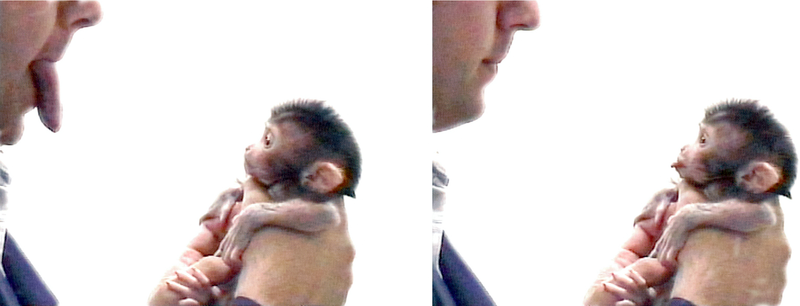
mirror neuron
type of neuron associated with empathy

Misumena vatia
species of arachnid

crypsis
In ecology, crypsis is the ability of an animal or a plant to avoid observation or detection by other animals. It may be part of a predation strategy or an antipredator adaptation. Methods include camouflage, nocturnality, subterranean lifestyle and mimicry. Crypsis can involve visual, olfactory (with pheromones) or auditory concealment. When it is visual, the term cryptic coloration, effectively a synonym for animal camouflage, is sometimes used, but many different methods of camouflage are employed in nature.
eyespot
color mark that looks somewhat like an eye
Batesian mimicry
form of mimicry where a harmless species has evolved to imitate the warning signals of a harmful species

Sesia apiformis
species of insect
animal colouration
general appearance of an animal resulting from the reflection or emission of light from its surfaces
Müllerian mimicry
natural phenomenon in which two or more distasteful species, that may or may not be closely related and share one or more common predators, have come to mimic each other's warning signals
ant mimicry
animals evolving to resemble ants
Vavilovian mimicry
form of mimicry in plants where a weed comes to share one or more characteristics with a domesticated plant
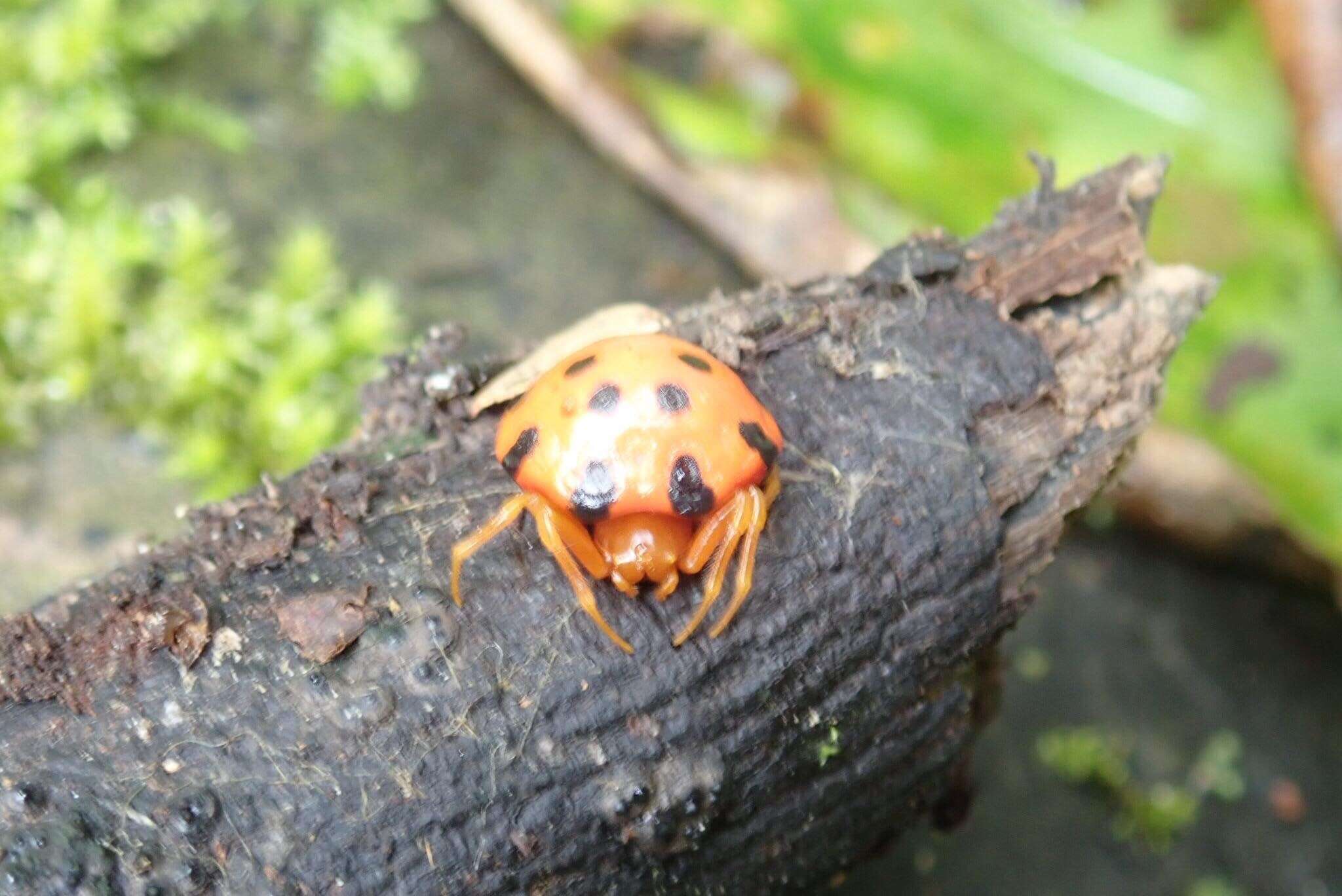
Paraplectana tsushimensis
species of arachnid

Pseudocopulation
Pseudocopulation is a behavior similar to copulation that serves a reproductive function for one or both participants but does not involve actual sexual union between the individuals. It is most generally applied to a pollinator attempting to copulate with a flower adapted to mimic a potential female mate. The resemblance may be visual, but the key stimuli are often chemical and tactile. The form of mimicry in plants that deceives an insect into pseudocopulation is called Pouyannian mimicry after the French lawyer and amateur botanist Maurice-Alexandre Pouyanne.
aggressive mimicry
form of mimicry in which an organism displays similar traits to others to avoid detection
Mimicry in plants
evolutionary mechanism
Vincetoxicum nakaianum
species of plant
automimicry
thumb|Eyespot (mimicry)|Eyespots of [[foureye butterflyfish (Chaetodon capistratus) mimic its own eyes, which are camouflaged with a disruptive eye mask, deflecting attacks from the vulnerable head.]]
Coloration evidence for natural selection
early evidence for Darwinism from animal coloration

Brachoria
Brachoria is a genus of polydesmidan millipedes in the family Xystodesmidae inhabiting the Eastern United States. Also known as the Appalachian mimic millipedes, at least 30 species are known, with highest diversity in the Appalachian Mountains, especially the Cumberland Plateau and Ridge and Valley Province.
Deception in animals
deception by non-human animals
Thorlaksonius platypus
species of crustacean