Category
page 1Miocene taxonomic orders

Anseriformes
Anseriformes is an order of birds also known as waterfowl that comprises 178 living species of birds in three families: Anhimidae (three species of screamers), Anseranatidae (the magpie goose), and Anatidae, the largest family, which includes the other 174 species of waterfowl, among them the ducks, geese, and swans. Most modern species in the order are highly adapted for an aquatic existence at the water surface. With the exception of screamers, males have penises, a trait that has been lost in the Neoaves, the clade consisting of all other modern birds except the galliformes and paleognaths.

Charadriiformes
Charadriiformes (, from Charadrius, the type genus of family Charadriidae) is a diverse order of small to medium-large birds. It includes about 390 species and has members in all parts of the world. Most charadriiform birds live near water and eat invertebrates or other small animals; however, some are pelagic (seabirds), others frequent deserts, and a few are found in dense forest. Members of this group can also collectively be referred to as shorebirds.

Gruiformes
The Gruiformes are an order containing a considerable number of living and extinct bird families, with a widespread geographical diversity. Gruiform means 'crane form'.

Piciformes
Nine families of largely arboreal birds make up the order Piciformes (), the best-known of them being the Picidae, which includes the woodpeckers and close relatives. The Piciformes contain about 71 living genera with a little over 450 species, of which the Picidae make up about half.

Accipitriformes
The Accipitriformes (; ) are an order of birds that includes most of the diurnal birds of prey, including hawks, eagles,
vultures, kites, ospreys and secretary birds, but not falcons or seriemas. The generally nocturnal owls, also considered birds of prey, are a separate order from the accipitriformes.
Ciconiiformes
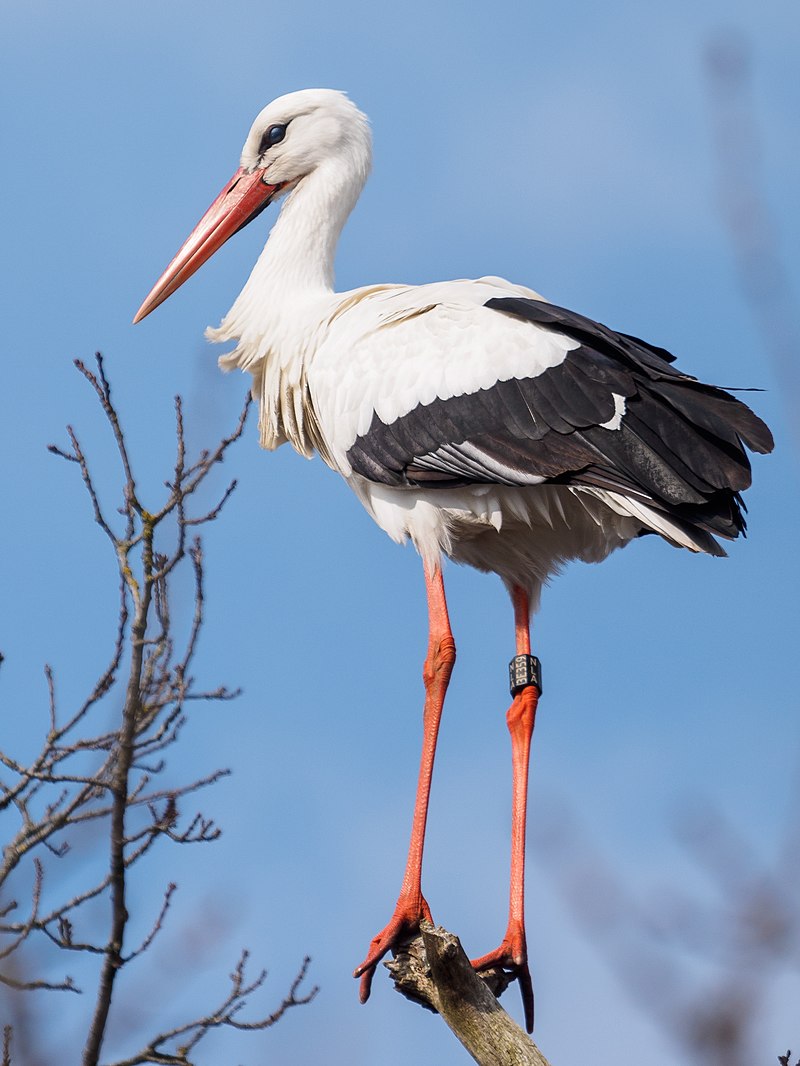
REDIRECT Stork

Coraciiformes
The Coraciiformes are a group of usually colourful birds including the kingfishers, the bee-eaters, the rollers, the motmots, and the todies. They generally have syndactyly, with three forward-pointing toes (and toes 3 & 4 fused at their base), though in many kingfishers one of these is missing.
Falconiformes
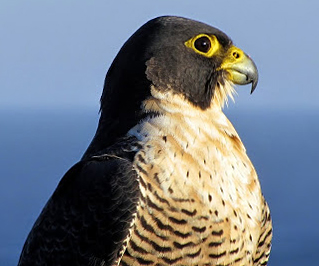
The order Falconiformes () is represented by the extant family Falconidae (falcons and caracaras) and a handful of enigmatic Paleogene species. Traditionally, most other diurnal bird of prey families Cathartidae (New World vultures and condors), Sagittariidae (secretarybird), Pandionidae (ospreys), and Accipitridae (hawks) were classified in Falconiformes. A variety of comparative genome analyses published since 2008, however, found that falcons are part of a clade of birds called Australaves, which also includes seriemas, parrots and passerines. Within Australaves falcons are more closely rel

Apodiformes
The Apodiformes is an order, or taxonomic grouping, of birds which traditionally contained three living families—the Apodidae (swifts), the Hemiprocnidae (treeswifts), and the Trochilidae (hummingbirds); however, in the Sibley-Ahlquist taxonomy, this order is elevated to the superorder Apodimorphae, in which hummingbirds are separated into a new order, the Trochiliformes. With nearly 450 species identified to date, it is the most diverse order of birds after the Passeriformes (the "perching" birds).

Procellariiformes
Procellariiformes is an order of seabirds that comprises four families; the albatrosses, the petrels and shearwaters, and two families of storm petrels. Formerly called Tubinares and still called tubenoses in English, Procellariiformes are often referred to collectively as the petrels, a term that has been applied to all members of the order, or more commonly all the families except the albatrosses. They are almost exclusively pelagic (feeding in the open ocean), and have a cosmopolitan distribution across the world's oceans, with the highest diversity being the seas around New Zealand.

Caprimulgiformes
REDIRECT Nightjar
Cuculiformes
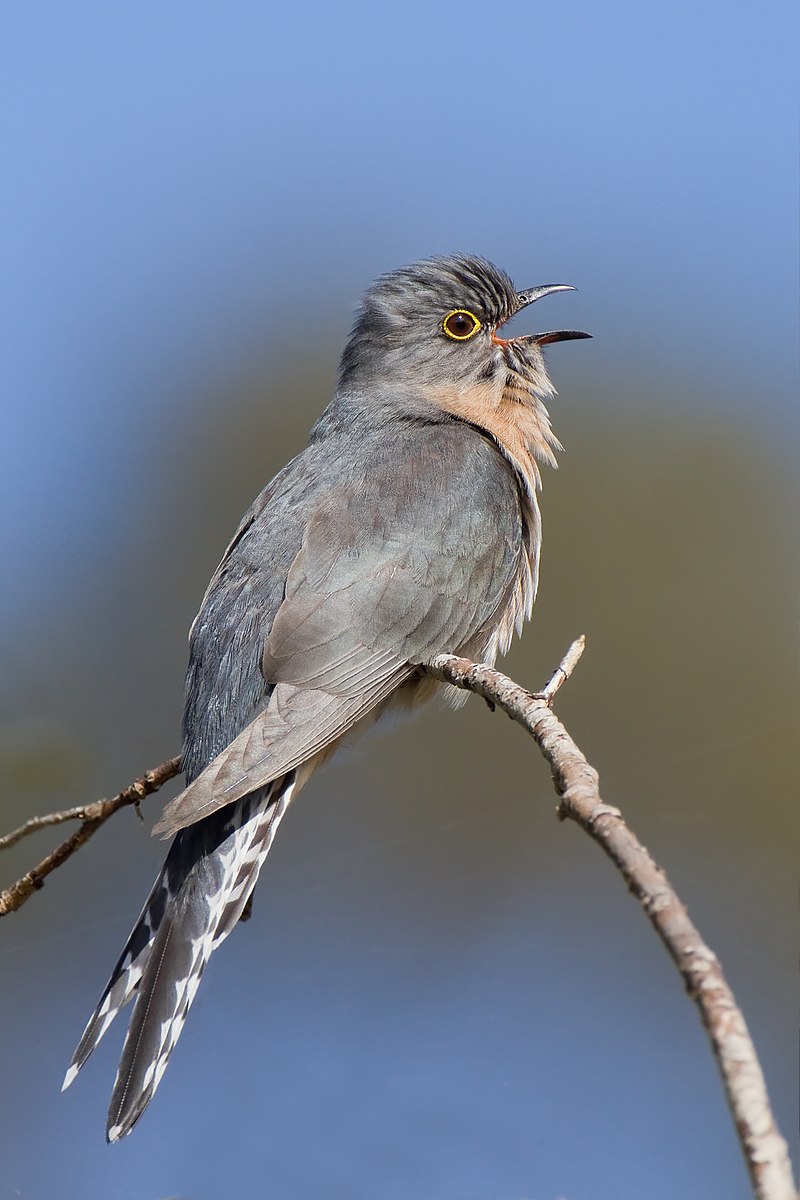
REDIRECT Cuckoo

Bucerotiformes
Bucerotiformes is an order of birds that contains the hornbills, ground hornbills, hoopoes and wood hoopoes. These birds were previously classified as members of Coraciiformes. The clade is distributed in Africa, Asia, Europe and Melanesia.

Therapsida
Therapsida is a clade comprising a major group of eupelycosaurian synapsids that includes mammals and their ancestors and close relatives. Many of the traits today seen as unique to mammals had their origin within early therapsids, including limbs that were oriented more underneath the body, resulting in a more "standing" quadrupedal posture, as opposed to the lower sprawling posture of many reptiles and amphibians.

Casuariiformes
The Casuariiformes is an order of large flightless birds that has four surviving members: the three species of cassowary, and the only remaining species of emu. They are divided into either a single family, Casuariidae, or occasionally two, with the emu splitting off into its own family, Dromaiidae. The IOC World Bird List and Cornell Lab of Ornithology's Birds of the World both do not recognize Dromaiidae, placing the emu in the family Casuariidae.

Gaviiformes
Gaviiformes () is an order of aquatic birds containing the loons or divers and their closest extinct relatives. Modern gaviiformes are found in many parts of North America and northern Eurasia (Europe, Asia and debatably Africa), though prehistoric species were more widespread.
%20white%20background.jpg)
Cariamiformes
Cariamiformes (or Cariamae) is an order of primarily flightless birds that has existed for over 50 million years. The group includes the family Cariamidae (seriemas) and the extinct families such as Phorusrhacidae, Bathornithidae, Idiornithidae, and Ameghinornithidae. Extant members (seriemas) are only known from South America, but fossils of many extinct taxa are also found in other continents including Europe and North America. Though traditionally considered a suborder within Gruiformes, both morphological and genetic studies show that it belongs to a separate group of birds, Australaves, w

Phoenicopteriformes
Phoenicopteriformes is a group of water birds which comprises flamingos and their extinct relatives. Flamingos (Phoenicopteriformes) and the closely related grebes (Podicipedidae) are contained in the parent clade Mirandornithes.

Notostraca
The order Notostraca, containing the single family Triopsidae, is a group of crustaceans known as tadpole shrimp or shield shrimp. The two genera, Triops and Lepidurus, are considered living fossils, with similar forms having existed since the end of the Devonian, around 360 million years ago. They have a broad, flat carapace, which conceals the head and bears a single pair of compound eyes. The abdomen is long, appears to be segmented and bears numerous pairs of flattened legs. The telson is flanked by a pair of long, thin caudal rami. Phenotypic plasticity within taxa makes species-level ide

Choristodera
Choristodera (from the Greek χωριστός chōristos + δέρη dérē, 'separated neck') is an extinct order of semiaquatic diapsid reptiles that ranged from the Middle Jurassic, or possibly Triassic, to the Miocene (168 to 20 or possibly 11.6 million years ago). Choristoderes are morphologically diverse, with the best known members being the crocodile-like neochoristoderes such as Champsosaurus. Other choristoderans had lizard-like or long necked morphologies. Choristoderes appear to have been confined to the Northern Hemisphere, having been found in North America, Asia, and Europe, and possibly also N

Rheiformes
Rheiformes is an order that contains the family Rheidae (rheas). It is in the infraclass Paleognathae, which contains all ratites. Extant members are found in South America. While the IOC World Bird List and the Clements Checklist categorise Rheiformes as its own order, the BirdLife Data Zone includes rheas, along with ostriches, tinamous, cassowaries, emu, and kiwis, in the order Struthioniformes. Of the two extant species of rheas recognized by the IUCN Red List, , Rhea americana is listed as near threatened, while Rhea pennata is listed as least concern. From 2014 to 2022, the IUCN recognis
Coliiformes
REDIRECT Mousebird
Sphenisciformes
REDIRECT Penguin
Apterygiformes
REDIRECT Kiwi (bird)
Musophagiformes
REDIRECT Turaco
Tinamiformes
REDIRECT Tinamou
Trogoniformes
REDIRECT Trogon

Podicipediformes
REDIRECT Grebe
Opisthocomiformes
REDIRECT Opisthocomidae
Otidiformes
REDIRECT Bustard