Category
page 1Modern obsolete currencies

ruble
thumb|5,000 Russian rubles of the 2023 series, the highest available nominal in circulation
thumb|500 Belarusian rubles of the 2009 series, the highest available nominal in circulation, though it is rarely seen

Deutsche Mark
official currency of West Germany and later Germany from 1948 to 2002
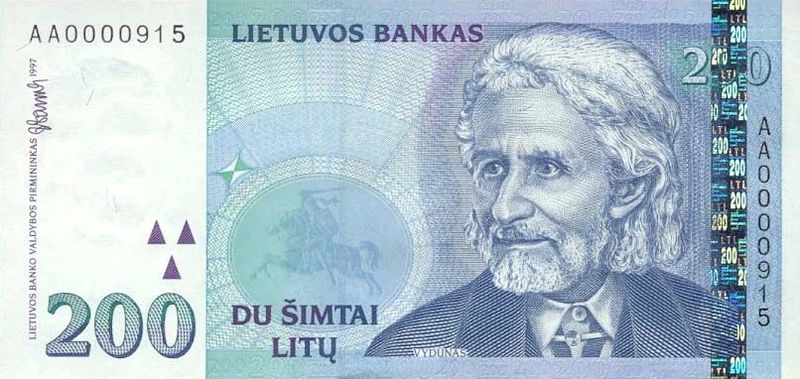
Lithuanian litas
former currency of Lithuania

dinar
thumb|300px|right|Nations in dark green currently use a currency known as the dinar. Nations in light green previously used a dinar. States of former Yugoslavia appear in the inset to the lower left.

modern Greek drachma
former currency of Greece (1833 ... 2002)

Italian lira
currency

Slovak koruna
currency of Slovakia, 1993–2008

thaler
thumb|300px|Four thalers and one double thaler, compared to a U.S. Quarter (United States coin)|quarter (bottom center):
Clockwise from top left:
Saxe-Altenburg 1616 (reverse),
Saxony 1592,
Austria 1701 (obverse),
Saxony 1592 (obverse),
Center: double thaler, Austria 1635 (obverse).
A thaler, or taler ( ; , previously spelled ), is one of the large silver coins minted in the states and territories of the Holy Roman Empire and the Habsburg monarchy during the Early Modern period. A thaler size silver coin has a diameter of about and a weight of about 25 to 30 grams (roughly 1 ounce). The word
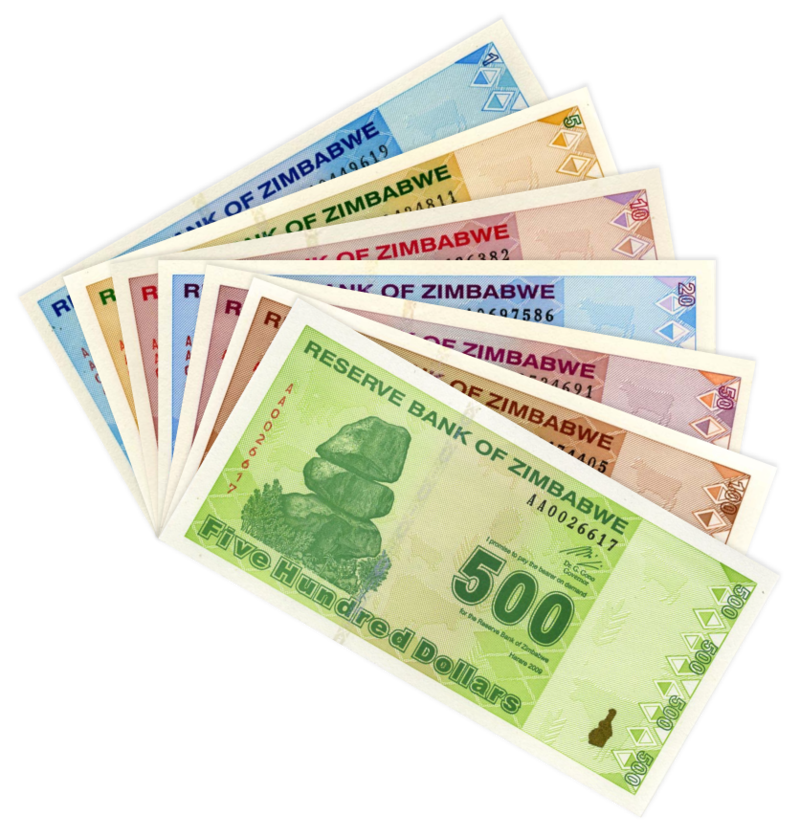
Zimbabwean dollar
former currency of Zimbabwe, from 1980 to 2009

Soviet ruble
currency of the Union of Soviet Socialist Republics; briefly used by post-Soviet states after the dissolution of the Soviet Union
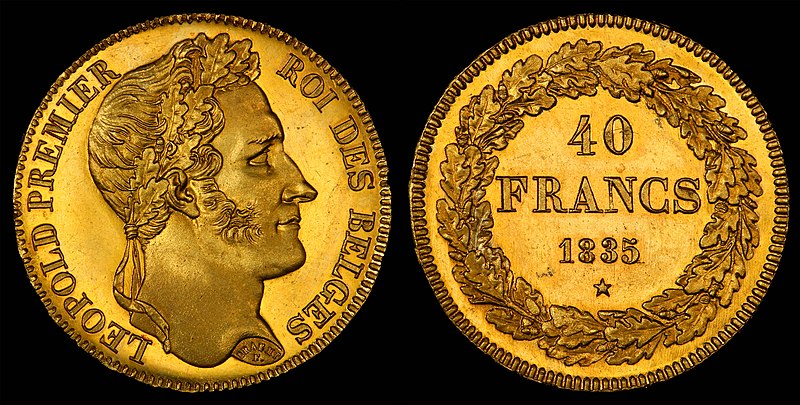
Belgian franc
currency of the Kingdom of Belgium from 1832 until 2002
Cypriot pound
old currency
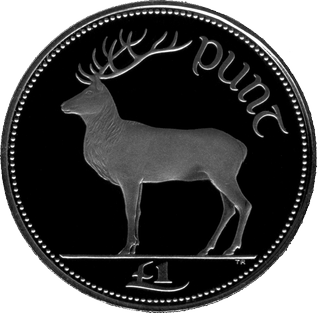
Irish pound
former currency of Ireland

Finnish markka
currency of Finland in 1860–2002
Slovenian tolar
obsolete Slovenian currency
Portuguese escudo
former currency of Portugal from 1911 until 1999
Hungarian pengő
former currency of Hungary, used 1927–1946
Luxembourg franc
former Luxemburg currency
Maltese lira
Currency of Malta from 1972 until 2008
Yugoslav dinar
currency of the three Yugoslav states between 1918 and 2003

Reichsmark
The ' (; sign: ℛ︁ℳ︁; abbreviation: RM') was the currency of Germany from 1924 until the fall of Nazi Germany in 1945, and in the American, British and French occupied zones of Germany, until 20 June 1948. The was then replaced by the , to become the currency of West Germany and then all of Germany after the 1990 reunification. The was used in the Soviet occupation zone in Germany until 23 June 1948, where it was replaced by the East German mark. The was subdivided into 100 (Rpf or ℛ︁₰). The mark is an ancient Germanic weight measure, traditionally a half pound, later used for several coins; ()

groschen
thumb|upright=1.4|Barile (large groschen), Florence, 1506
East German mark
currency
Czechoslovak koruna
currency in 1953–1993
convertible peso
deprecated Cuban currency
Netherlands Antillean guilder
currency of Kingdom of the Netherlands
Vatican lira
currency of the Vatican City between 1929 and 2002
Artsakh dram
currency
Cook Islands dollar
currency of the Cook Islands
Salvadoran colón
old Salvadoran currency
German mark
German currency from 1871–1923

écu
thumb|The first écu, issued by Louis IX of France, in 1266.
The term écu () may refer to one of several French coins. The first écu was a gold coin (the ''écu d'or) minted during the reign of Louis IX of France, in 1266. The value of the écu varied considerably over time, and silver coins (known as écu d'argent'') were also introduced.
Sammarinese lira
currency

piastre
thumb|alt= 10 Egyptian piastres (copper-nickel alloy composition and silver color); coin's obverse depicts Muhammad Ali Mosque from a flat perspective, coin reverse contains a Kufic font inscription of “Jumhuriyat Masr Al-Arabia”, translating to the Arab Republic of Egypt, below which the denomination of 10 piastres is written as number hovering over the word “qurush”, translating to piastres, which bends with the curvature of the coins edge, which is surrounded by the Gregorian (1984) and Hijra (1404) dates. | Image of 10 Egyptian piastres (currently valueless, thus absent from circulation)
t

Papiermark
The Papiermark (; 'paper mark') was a derisive term for the Mark (sign: ℳ︁) after it went off the gold standard, and most specifically with the era of hyperinflation in Germany of 1922 and 1923. Formally, the same German mark was used from 1871 to 1923. Like many countries, Germany departed the gold standard due to the outbreak of World War I, and stopped issuing gold coins backed in marks in August 1914. Precious metals rapidly disappeared from circulation, and inflation occurred as paper money was used to cover war debts in 1914 to 1918. Still, the papiermark is more associated with the earl

Rentenmark
The Rentenmark (; RM) was a currency issued on 15 November 1923 to stop the hyperinflation of 1922 and 1923 in Weimar Germany, after the previously used Papiermark had become almost worthless. It was subdivided into 100 Rentenpfennig and was replaced in 1924 by the Reichsmark.
Bosnia and Herzegovina dinar
Currency of Republic of Bosnia and Herzegovina (1991-1998)

kuruş
thumb|upright=.75|right|Current Turkish 50 kuruş coin
Kuruş ( ; ), also gurush, ersh, gersh, grush, grosha, and grosi, are all names for currency denominations in and around the territories formerly part of the Ottoman Empire. The variation in the name stems from the different languages it is used in (Arabic, Amharic, Turkish, and Greek) and the different transcriptions into the Latin alphabet. In European languages, the kuruş was known as the piastre.
Croatian dinar
former currency
Spanish dollar
former coin of the Spanish Empire
French livre
currency of Kingdom of France and its predecessor state of West Francia from 781 to 1794
Louis d'or
French coin
Monegasque franc
currency
Ecuadorian sucre
former currency of Ecuador
Manchukuo yuan
currency
Para
currency
Napoleon
colloquial term for a former French gold coin
Armenian rouble
independent currency of the First Republic of Armenia and the Armenian Soviet Socialist Republic between 1919 and 1923
Spanish real
former currency of Spain

Ukrainian karbovanets
The Karbovanets (, plural: карбованці, karbovantsi for 2–4, or карбованців, karbovantsiv for 5 or more), also colloquially known as kupon (, plural: купони, kupony) or coupon from the banknote printing, is a former unit of currency in Ukraine in four separate periods of the 20th century. It is also a predecessor currency of today's Ukrainian hryvnia. The karbovanets was subdivided into one hundred kopiykas, but no denominations in kopiykas were ever issued, owing to inflation.
2016 Indian banknote demonetisation
500 and 1000 Indian rupee banknote demonetisation in November 2016
Bohemian and Moravian koruna
currency during WW2 on the territory of Bohemia and Moravia (Czechoslovakia)
sequin
type of currency
Gulf rupee
currency used in the countries of the Persian Gulf and the Arabian Peninsula between 1959 and 1966
Korean won
Official currency of the Korean Empire from 1902 to 1910
Palestine pound
Currency of Mandatory Palestine
Argentine austral
former currency in Argentina (–1992)
French Indochinese piastre
currency of French Indochina between 1885 and 1952

spesmilo
The spesmilo (, plural spesmiloj ) is an obsolete decimal international currency, proposed in 1907 by René de Saussure and used before World War I by a few British and Swiss banks, primarily the Ĉekbanko Esperantista.
East African shilling
currency issued for use in British controlled areas in East Africa from 1921 until 1969