Category
page 1Modernism

James Joyce
Irish novelist and poet (1882–1941)
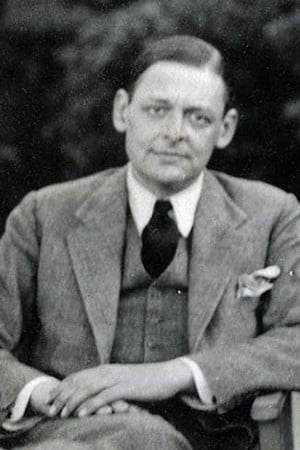
T. S. Eliot
US-British poet (1888–1965)

existentialism
Existentialism is a family of philosophical views and inquiry that explore the human individual's struggle to lead an authentic life despite the apparent absurdity or incomprehensibility of existence. In examining meaning, purpose, and value, existentialist thought often includes concepts such as existential crises, angst, courage, and freedom.

surrealism
Surrealism is an art and cultural movement that developed in Europe in the aftermath of World War I in which artists aimed to allow the unconscious mind to express itself, often resulting in the depiction of illogical or dreamlike scenes and ideas. Its intention was, according to leader André Breton, to "resolve the previously contradictory conditions of dream and reality into an absolute reality, a super-reality", or surreality. It produced works of painting, writing, photography, theatre, filmmaking, music, comedy and other media as well.

modernism
Modernism was an early 20th-century movement in literature, visual arts, performing arts, and music that emphasized experimentation, abstraction, and subjective experience. Philosophy, politics, architecture, and social issues were all aspects of this movement. Modernism centered around beliefs in a "growing alienation" from prevailing "morality, optimism, and convention" and a desire to change how "human beings in a society interact and live together".
%20Building%201989-94%20by%20Terry%20Farrell.jpg)
Postmodernism
alt=Terry Farrell "SIS Building" (1994)|thumb|360x360px|SIS Building (1994) by Terry Farrell: Detail view of the British intelligence service ([[MI6) headquarters in London, a "hulking, postmodern fortress" influenced by 1930s industrial modernist design and Mayan and Aztec temples.]]

avant-garde
thumb|right|300px|Avant-garde cinema, The Love of Zero (1928), a short film directed by the artist Robert Florey

Symbolism
late nineteenth-century art movement of French, Russian and Belgian origin seeking to represent absolute truths symbolically through language and metaphorical images

Post-impressionism
Post-Impressionism (also spelled Postimpressionism) was a predominantly French art movement which developed roughly between 1886 and 1905, from the last Impressionist exhibition to the birth of Fauvism. Post-Impressionism emerged as a reaction against Impressionists' concern for the naturalistic depiction of light and colour. Its broad emphasis on abstract qualities or symbolic content means Post-Impressionism encompasses Les Nabis, Neo-Impressionism, Symbolism, Cloisonnism, the Pont-Aven School, and Synthetism, along with some later Impressionists' work. The movement's principal artists were

Minimalism

Anthony Giddens, Baron Giddens
British sociologist (born 1938)

Sadegh Hedayat
Iranian writer

Georg Brandes
Danish literature critic and scholar (1842–1927)

Daniil Kharms
Russian writer (1905–1942)
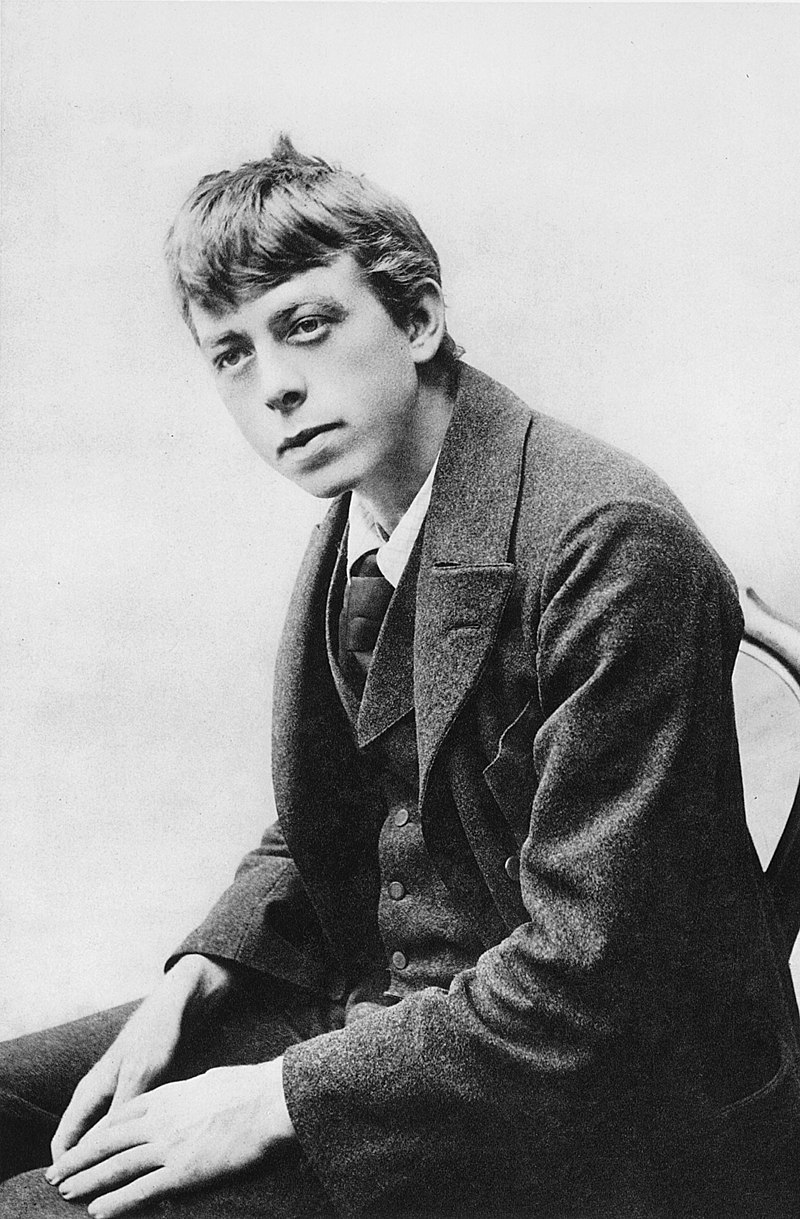
Robert Walser
Swiss writer (1878–1956)

modernity
Modernity, a topic in the humanities and social sciences, is both a historical period (the modern era) and the ensemble of particular socio-cultural norms, attitudes, and practices that arose in the wake of the Renaissancein the Age of Reason of 17th-century thought and the 18th-century Enlightenment. Commentators variously consider the era of modernity to have ended by 1930, with World War II in 1945, or as late as the period falling between the 1980s and 1990s; the following era is often referred to as "postmodernity". The term "contemporary history" is also used to refer to the post-1945 ti
cynicism
attitude or state of mind characterized by a general distrust of others' motives
modern dance
genre of western concert or theatrical dance
Hospital de Sant Pau
cultural property in Barcelona, Spain
mod
subculture in England
counterculture of the 1960s
cultural phenomenon that developed first in the United States and United Kingdom and spread throughout much of the Western world between the early 1960s and the early 1970s
Generation of ‘27
group of Spanish poets
expressionist architecture
architectural style
Exposition Internationale des Arts et Techniques dans la Vie Moderne (1937)
exhibition held in Paris in 1937

Catalan modernism
Modernisme (, Catalan for "modernism"), also known as Catalan modernism and Catalan art nouveau, is the historiographic denomination given to an art and literature movement associated with the search of a new entitlement of Catalan culture, one of the most predominant cultures within Spain. Nowadays, it is considered a movement based on the cultural revindication of a Catalan identity. Its main form of expression was Modernista architecture, but it also encompassed many other arts, such as painting and sculpture, and especially the design and the decorative arts (cabinetmaking, carpentry, forg
metanarrative
In social theory, a metanarrative (also master narrative, or meta-narrative and grand narrative; or ) is an overarching narrative about smaller historical narratives, which offers a society legitimation through the anticipated completion of a (as yet unrealized) master idea. The term was popularized by the writing of French philosopher Jean-François Lyotard in 1979. Metanarrative is considered a foundational concept of postmodernism.
bean bag chair
1960s anatomic chair design

flâneur
thumb|Paul Gavarni, , 1842
Menno ter Braak
Dutch writer (1902-1940)
Wiener Werkstätte
production community of artists in Vienna

Black Mountain College
college in the United States known for its liberal and arts education
Carlos Raúl Villanueva
Venezuelan architect (1900–1975)
Form follows function
design philosophy of 19–20th centuries
Karl Vennberg
Swedish poet (1910-1995)
Jack of Diamonds
Russian/Soviet art group
Wassily Chair
chair design by Marcel Breuer
Eugen Lovinescu
Romanian writer and academic (1881–1943)
Tulip chair
chair designed by Eero Saarinen
New York School
group of American poets, painters, dancers, and musicians active in the 1950s and 1960s in New York City
existence precedes essence
central claim of existentialism formulated by Sartre
Million Programme
Swedish housing programme
Buddhist modernism
new movements based on reinterpreted Buddhism
Edith Maude Hull
British writer (1880–1947)
_projection_at_MoMA-PS1_by_Ebon_Fisher%2C_2000.jpg)
post-postmodernism
Post-postmodernism is a wide-ranging set of developments in critical theory, philosophy, architecture, art, literature, and culture which are emerging from, and reacting to, postmodernism and its antecedent, modernism. While there are varied definitions of post-postmodernism, common themes include a focus on sincere reconnection with the world that modernism had positioned the observer above, or postmodernism had alienated them from. In contrast to the ironic and unstable belief systems endemic to postmodernism, common themes of post-postmodernism include sincerity, trust, faith, immersion and
Scandinavian design
20th century design movement
Wiener Moderne
culture of Vienna, Austria, 1890–1910

Neomodern architecture
thumb|The Bay Adelaide Centre in Toronto. When first proposed in the 1980s the building had a strongly postmodernist design. The final design, completed in 2009, adopted the neomodern style.
Neomodern or neomodernist architecture is a reaction to the complexity of postmodern architecture and eclecticism in architecture, seeking greater simplicity. The architectural style, which is also referred to as New Modernism, is said to have legitimized an outlook of comprehensive individualism and relativism.
Eames Lounge Chair
chair designed by Charles and Ray Eames
modernist poetry
poetry written in Modernist tradition

Cultural Bolshevism
nazi slogan opposing modernist and progressive cultural movements

Ornament and Crime
architecture essay by Adolf Loos
mid-century modern
architectural, interior, product, and graphic design of the mid-20th century
Revista de Occidente
academic journal
Cercle et Carré
artist collective
Albert Bloch
American artist (1882-1961)
We Have Never Been Modern
book by Bruno Latour
Stockholm Exhibition of year 1930
exhibition of art
Danish modern
style of furniture

George Morren
Belgian painter (1868-1941)
Jane Heap
American artist, editor, publisher (1883-1964)