Category
page 1Mollusc subclasses

Ammonoidea
Ammonoids are extinct, typically coiled-shelled cephalopods composing the subclass Ammonoidea. They are more closely related to living octopuses, squid, and cuttlefish (which compose the clade Coleoidea) than they are to nautiluses (family Nautilidae), which they resemble. The earliest ammonoids appeared during the Emsian stage of the Early Devonian, around 410-408 million years ago, with the last species vanishing during or soon after the Cretaceous–Paleogene extinction event approximately 66 million years ago. They are often called ammonites, which is most frequently used for members of the

Nautiloid
Nautiloids are a group of cephalopods (Mollusca) which originated in the Late Cambrian and are represented today by the living Nautilus and Allonautilus. Fossil nautiloids are diverse and species rich, with over 2,500 recorded species. They flourished during the early Paleozoic era, when they constituted the main predatory animals. Early in their evolution, nautiloids developed an extraordinary diversity of shell shapes, including coiled morphologies and giant straight-shelled forms (orthocones). No orthoconic and only a handful of coiled species, the nautiluses, survive to the present day.

Coleoidea
Coleoidea or Dibranchiata is one of the two subclasses of cephalopod molluscs containing all the various taxa popularly thought of as "soft-bodied" or "shell-less" (i.e. octopus, squid and cuttlefish). Unlike its sister groups, the shelled Ammonoidea and Nautiloidea, the coleoids have at most an internal shell called cuttlebone or gladius that is used for buoyancy or as muscle attachment. Some species, notably the incirrate octopuses (including commonly known varieties living in the shallows), have lost their internal shell altogether, while in some it has been replaced by a chitinous support
Heterodonta
Heteroconchia is a taxonomic infraclass of diverse bivalve molluscs, belonging to the subclass Autobranchia.

Prosobranchia
thumb|Shells from a variety of prosobranch gastropods, from Ernst Haeckel's [[Artforms of Nature, 1904.]]
Pteriomorphia
The Pteriomorphia are a subclass of saltwater clams, marine bivalve molluscs. They contain several major orders, including the Arcida, Ostreida, Pectinida, Limida, Mytilida, and Pteriida. It also contains some extinct and probably basal families, such as the Evyanidae, Colpomyidae, Bakevelliidae, Cassianellidae, and Plicatostylidae.
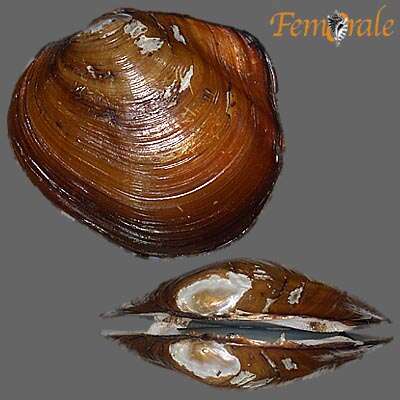
Palaeoheterodonta
Palaeoheterodonta is a subterclass of bivalve molluscs. It contains the extant orders Unionida (freshwater mussels) and Trigoniida. They are distinguished by having the two halves of the shell be of equal size and shape, but by having the hinge teeth be in a single row, rather than separated into two groups, as they are in the clams and cockles.

Protobranchia
Protobranchia is a subclass of bivalve molluscs. It contains the extant orders Nuculanida, Nuculida, and Solemyida.

Orthogastropoda
thumb|right|alt=a red shelled marine snail with a white and black spotted foot|Conus geographus (a marine snail)
Orthogastropoda was a major taxonomic grouping of snails and slugs, an extremely large subclass within the huge class Gastropoda according to the older taxonomy of the Gastropoda (Ponder & Lindberg, 1997).
Eogastropoda
Eogastropoda was a previously used taxonomic category of snails or gastropods, a subclass which was erected by Ponder and Lindberg in 1997. It was one of two great divisions (subclasses) of the class Gastropoda, the snails. The other subclass of gastropods was the Orthogastropoda.

Neoloricata
Neoloricata comprises the living representatives of the polyplacophoran molluscs, but also includes several species only known from fossils.
Orthoceratoidea
Orthoceratoidea, from Ancient Greek ὀρθός (orthós), meaning "straight", and κέρας (kéras), meaning "horn", is a major subclass of nautiloid cephalopods. Members of this subclass usually have orthoconic (straight) to slightly cyrtoconic (curved) shells, and central to subcentral siphuncles which may bear internal deposits. Orthoceratoids are also characterized by dorsomyarian muscle scars (a small number of large scars concentrated at the top of the body chamber), extensive cameral deposits, and calciosiphonate connecting rings with a porous and calcitic inner layer.