Category
page 1Mongol Empire

Mongol Empire
13th- and 14th-century empire originating in Mongolia
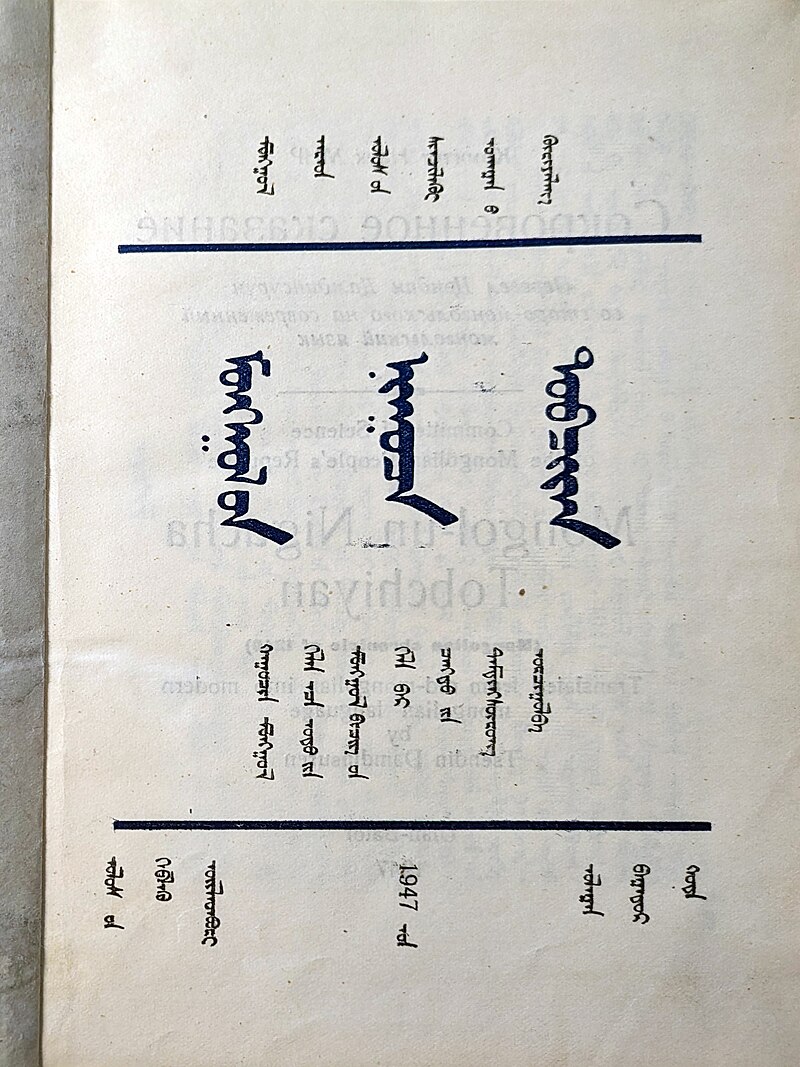
The Secret History of the Mongols
work about the life of Genghis Khan and Ögedei Khan

kurultai
thumb|right|Timur's great 'kurultai', from a 16th century copy of Sharaf al-Din Ali Yazdi's Zafarnama
A kurultai (, ), also called a quriltai, was a medieval political and military council consisting of members of a Mongol khan's family, imperial sons-in-law, captains of the army and others during and before the Mongol empire.

Borjigin
The Borjigin or Borjigids are a Mongol tribal clan founded in the early 10th century or, around 900 AD. by Bodonchar Munkhag. The senior line of Borjigids provided ruling princes for Mongolia and Inner Mongolia until the 20th century. The clan formed the ruling class among the Mongols and other peoples of Central Asia and Eastern Europe. Today, the Borjigids are found in Mongolia, Inner Mongolia, Buryatia, and Xinjiang, and genetic research shows that descent from Genghis Khan and Timur is common throughout Central and East Asia.

Yassa
The Yassa (alternatively Yasa, Yasaq, Jazag or Zasag; ) was the oral law code of the Mongols, gradually built up through the reign of Genghis Khan. It was the de facto law of the Mongol Empire, even though the "law" was kept secret and never made public. The Yassa seems to have its origin in wartime decrees, which were later codified and expanded to include cultural and lifestyle conventions. By keeping the Yassa secret, the decrees could be modified and used selectively. It is believed that the Yassa was supervised by Genghis Khan himself and his adopted son Shigi Qutuqu, then the high judge
Tarkhan
Tarkhan (, or ; ; ; ; ; alternative spellings Tarkan, Tarkhaan, Tarqan, Tarchan, Turxan, Tarcan, Turgan, Tárkány, Tarján, Tarxan) is an ancient Central Asian title used by various Turkic, Hungarian, Mongolic, and Iranian peoples. Its use was common among the successors of the Mongol Empire and Turkic Khaganate.

Darughachi
thumb|Mongol rider with administrator. Painting on silk from the Yuan dynasty|Yuan era. Art and History Collection, on loan to the [[Arthur M. Sackler Gallery.]]
White Horde
Mongol horde of the 13th-15th century, controlling the eastern territory of the Golden Horde

Noyan
Noyan (from Classical Mongolian 'lord, master') was a title of authority, which was used to refer to civil-military leaders of noble ancestry in the Central Asian khanates. The title was originally used as a title of authority in the Mongol Empire. In modern times, it is used as a given name or surname in Asia.
%2C%20Timurid%20genealogy%2C%201405-1409%2C%20Samarkand%20(TSMK%2C%20H2152).jpg)
Barlas
The Barlas (; Chagatai Turkic/ Barlās; also Berlās) were a Mongol tribal confederation clan, which later became Turkified in Central Asia, forming a nomadic confederation. They were a sub-clan of the Borjigin, emerged within the Khamag Mongol confederation in present-day Mongolia in the early to mid-12th century, and traced their military roots to one of the elite regiments of the Mongol Empire’s Kheshig guard. The Barlas spawned as one imperial dynasties with two major empires in Asia: the Timurid Empire in Central Asia and Persia; and its later branch, the Mughal Empire in the Indian subcont
tug
pole with circularly arranged horse or yak tail hairs of varying colors arranged at the top
Blue Horde
Mongol horde of the 13th-14th centuries, controlling the western territories of the Golden Horde
.jpg)
Baghatur
Baghatur (also Batur, Batyr, Baatar, etc.) is a historical Turkic and Mongolic honorific title, in origin a term for "hero", "valiant warrior", "brave". The Papal envoy Plano Carpini ( 1185–1252) compared the title with the equivalent of European Knighthood.
thumb|Illustration of "Koblandy Batyr," a Kazakh [[epic poem, on a Soviet stamp (1988).]]
The word was common among the Mongols and became especially widespread, as an honorific title, in the Mongol Empire in the 13th century; the title persisted in its successor-states, and later came to be adopted also as a regnal title in the Ilkhanate
paiza
A paiza or paizi or gerege (, , pāiza, páizi) was a tablet carried by Mongol officials and envoys to signify certain privileges and authority. They enabled Mongol nobles and officials to demand goods and services from civilian populations.
House of Ögedei
former country, one of successor states to the broken-up Mongol Empire

yarlık
thumb|Jarlig of Temür Qutlugh khan (copy), 1397.
A jarlig, also written yarlyk (from and ), is an edict, permission, license, or written commandant of Mongol and Chinggisid rulers' "formal diplomas." It was one of three non-fundamental law pronouncements that had the effect of regulation or ordinance, the other two being debter (a record of precedence cases for administration and judicial decisions) and billing (maxims or sayings attributed to Genghis Khan). The jarliq provides important information about the running of the Mongol Empire.
Örtöö
messenger system in the Mongol Empire
division of the Mongol Empire
from 1259 when Möngke Khan died, to 1294

darugha
Darugha (, , from Mongol: daru-, 'to press, to seal') was a territorial subdivision in the Mongol Empire. A darugha was ruled by a darughachi.

Kangnido
The Honil Gangni Yeokdae Gukdo Ji Do ("Map of Integrated Lands and Regions of Historical Countries and Capitals (of China)"), often abbreviated as Kangnido, is a world map completed by the Korean scholars Kwon Kun and Yi Hoe in 1402, during the Joseon dynasty.
Ergenekon
founding myth of Turkic and Mongolic peoples
Mongol bow
recurved composite bow used in Mongolia
Shengwu qinzheng lu
Chinese translation of a Mongolian chronicle describing the lives of Genghis Khan and his son Ögedei Khan

Mongol heartland
Geographical area term
Imperial Seal of Mongolia
seal of the Mongol Empire
Sulduz (tribe)
Mongolian tribe
Baljuna Covenant
oath sworn by Temüjin (Genghis Khan) in 1203
Ibn al-Alqami
Shi'a vizier and advisor to the last Abbasid caliph
Letter from Güyük Khan to Pope Innocent IV
1246 letter
religion in the Mongol Empire
mongol religious practice under the system of Genghis Khan
Sō Sukekuni
Japanese Warrior and Ruler of Tsushima
Zaisan
Oirat minister overseeing an otok (horde or province), particularly under the Dzungar Khanate
Ortogh
Ortogh, also ortoq (Turkic: ortaq; Mongolian: ортог; Persian: urtak) was a merchant partnered with the state and individual aristocrats in the Mongol Empire. The term derived from the Turkic word ortak, meaning "partner." The institution allowed merchants to pool their resources and thereby reduce the risk of failed caravans, allowing for the expansion of long-distance trade and a substantial reduction in its costs.