Category
page 1Monotypic angiosperm genera

Amborella trichopoda
Amborella is a monotypic genus of understory shrubs or small trees endemic to the main island, Grande Terre, of New Caledonia in the southwest Pacific Ocean. The genus is the only member of the family Amborellaceae and the order Amborellales and contains a single species, Amborella trichopoda. Amborella is of great interest to plant systematists because molecular phylogenetic analyses consistently place it as the sister group to all other flowering plants; as a result, it is critical for understanding angiosperm evolution. It is understood to be the most basal extant flowering plant, and is on
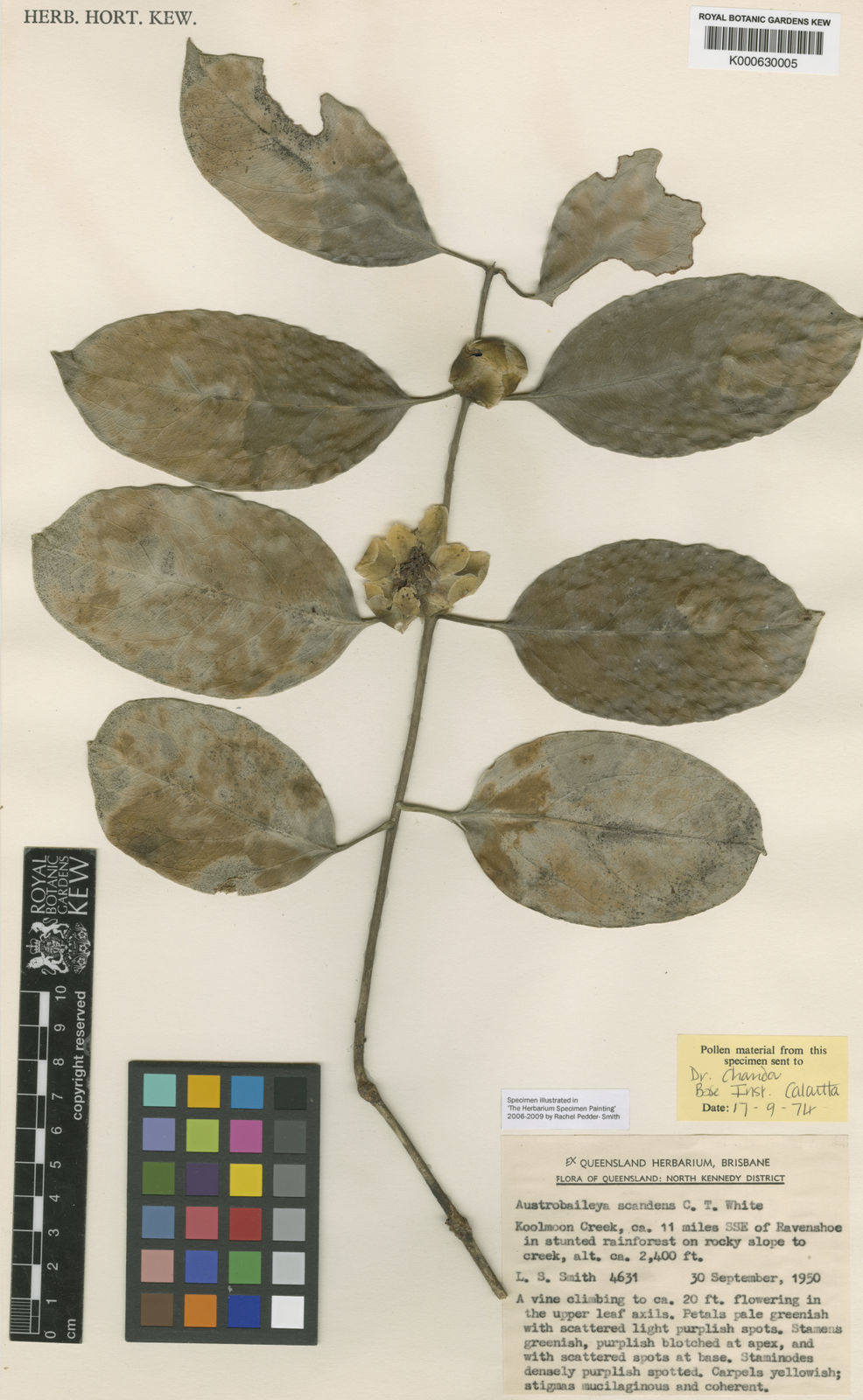
Austrobaileya scandens
Austrobaileya is the sole genus in the plant family Austrobaileyaceae – the family is thus 'monotypic' as it includes a single child taxon. It is one of the basal angiosperm families, the most ancient group of flowering plants. The genus is also monotypic, containing the single species Austrobaileya scandens. The species is endemic to the Wet Tropics bioregion of Queensland, Australia, where it occurs in well-developed upland rainforest. It was first described in 1933.

Brasenia
Brasenia is a genus belonging to the family Cabombaceae, consisting of one species, Brasenia schreberi, commonly known as watershield. It is widely distributed in North America, the West Indies, northern South America (Venezuela, Guyana), eastern Asia (China, Japan, Korea, Primorye), Australia, the Indian subcontinent, and parts of Africa.
thumb|For sale in a Japanese supermarket, 2014
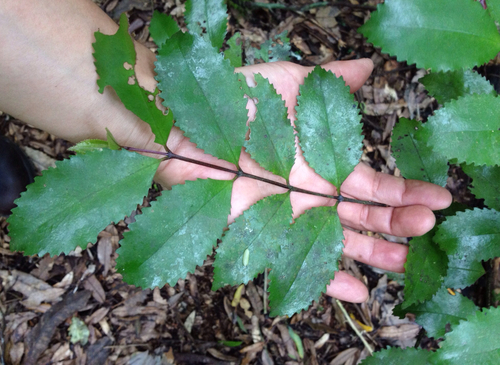
Atherosperma
thumb|Flowers at Leura
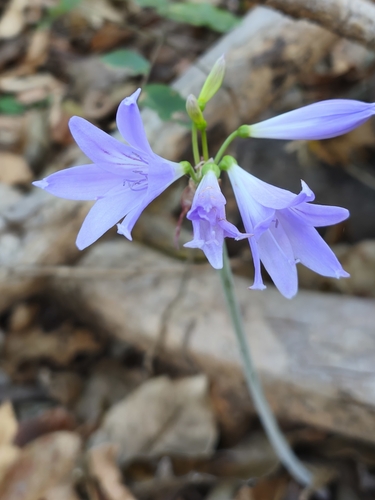
Cearanthes
Cearanthes is a monotypic genus of flowering plants belonging to the family Amaryllidaceae. The only species in this genus is Cearanthes fuscoviolacea Ravenna, which is endemic to Northeastern Brazil.