Category
page 1Monotypic annelid genera

Tyrannobdella rex
Tyrannobdella is a monotypic genus of leech, of family Praobdellidae, found in South America in the upper reaches of the Amazon. This newly found genus of leech takes sustenance from the mucous membranes of the mammalian upper respiratory tract, and is known to feed upon humans. It has eight teeth. Tyrannobdella rex was discovered feeding upon the mucous membrane of a girl who had recently bathed in the upper Amazon in Peru.

Poeobius meseres
Poeobius is a genus of marine polychaete worm. It contains the single species Poeobius meseres, or balloon worm. This is a common and abundant resident in the midwater around the mesopelagic and bathypelagic zones, especially in Monterey Bay. They can be found at around 300-2,500 m (980-8,200 ft) depth from Japan to Alaska to the Gulf of California, and have also been reported in South America.
Antillesoma
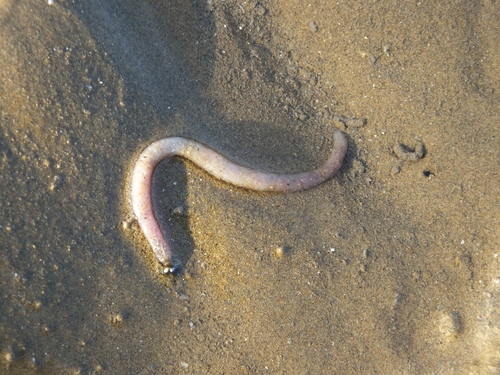
Antillesoma is a genus of peanut worms (Phylum Sipuncula). The genus belongs to the family Phascolosomatidae. Antillesoma was described in 1973 by Stephen and Edmonds.

Hermadion
Hermadion is a genus of marine polychaete worms belonging to the family Polynoidae, the scaleworms. Hermadion contains a single species, Hermadion magalhaensi which is known from the South Atlantic, South Pacific and southern Indian Oceans at depths to about 110 m.
Metabonellia
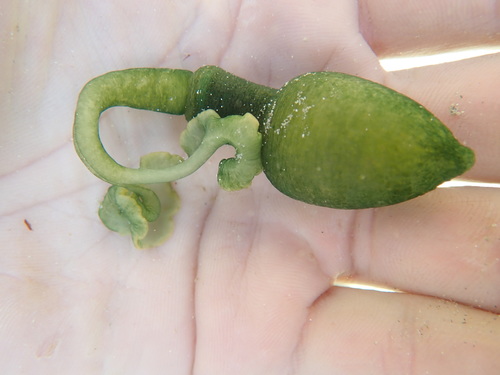
Metabonellia is a genus of marine spoon worms in the family Bonelliidae. It is a monotypic genus and Metabonellia haswelli is the only species. It is commonly known as the green spoon worm and is found in shallow waters around Australia.
Sonatsa meridionalis
Sonatsa is a genus of marine, mud-dwelling polychaete worms containing the sole species Sonatsa meridionalis. S. meridionalis was described in 1919 by Ralph Vary Chamberlin from a single specimen collected by the research ship USS Albatross during a 1904–05 survey of the southeast Pacific Ocean. The type specimen was collected between Peru and the Galapagos Islands, from muddy sediment at a depth of around 4 km. The name Sonatsa derives from the Goshute words soma, meaning "many", and natsani, meaning "hook", while the specific name meridionalis is Latin for "southern".