Category
page 1Monotypic Cnidaria genera

Lophelia pertusa
Lophelia pertusa, the only species in the genus Lophelia, is a cold-water coral that grows in the deep waters throughout the North Atlantic ocean, as well as parts of the Caribbean Sea and Alboran Sea. Although L. pertusa reefs are home to a diverse community, the species is extremely slow growing and may be harmed by destructive fishing practices, or oil exploration and extraction.
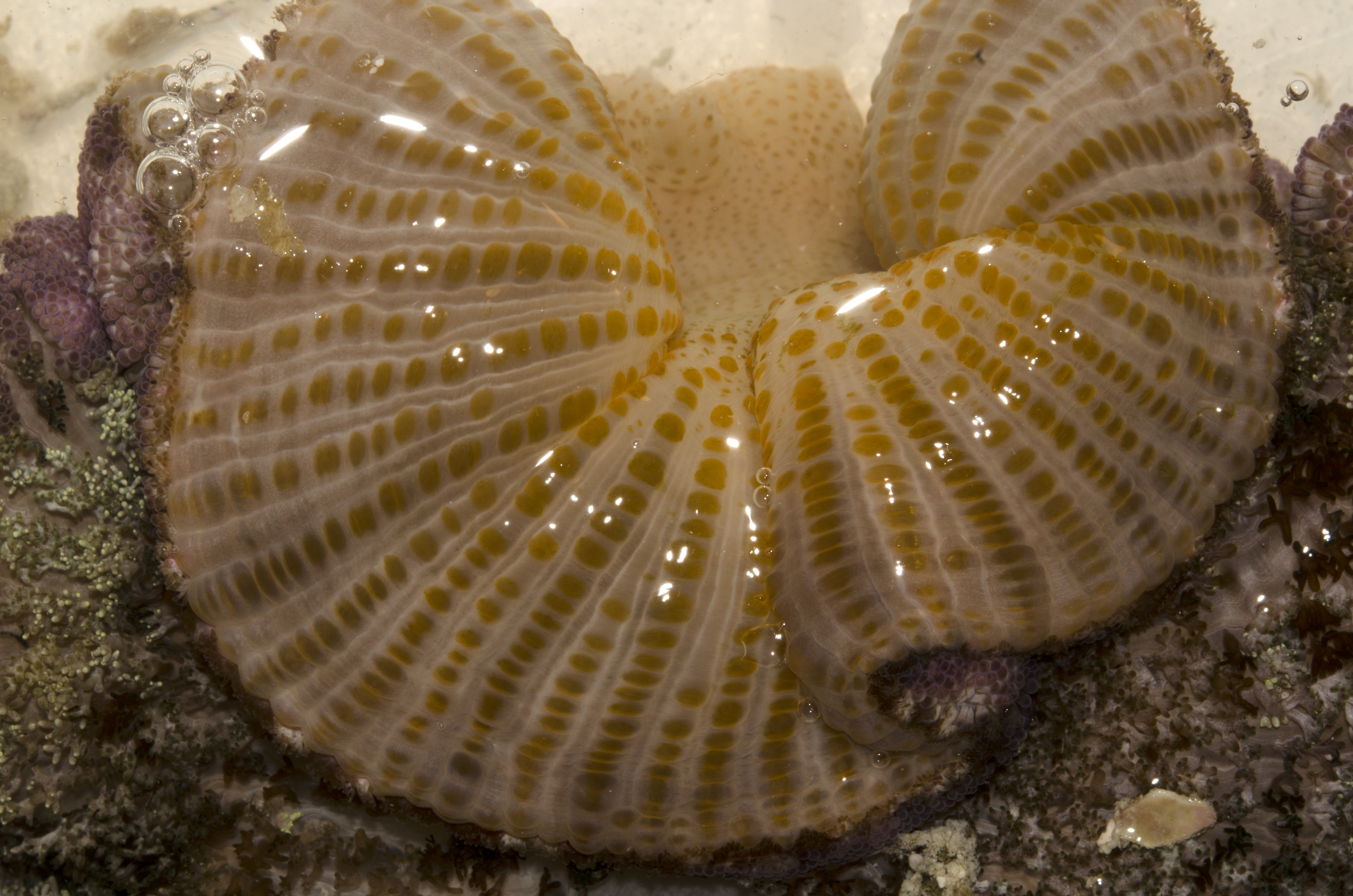
Cryptodendrum adhaesivum
Cryptodendrum is a genus of sea anemones in the family Thalassianthidae. It is monotypic with a single species, Cryptodendrum adhaesivum, also commonly known as the adhesive anemone, pizza anemone, and nap-edged anemone. Like all symbiotic anemones it hosts zooxanthellae, symbiotic algae that help feed their host.

Velella
Velella is a monospecific genus of hydrozoa in the family Porpitidae. Its only known species is Velella velella, a cosmopolitan (widely distributed) free-floating hydrozoan that lives on the surface of the open ocean. It is commonly known by the names sea raft, by-the-wind sailor, purple sail, little sail, or simply Velella.

Montastraea
Montastraea is a genus of colonial stony coral found in the Caribbean seas. It is the only genus in the monotypic family Montastraeidae and contains a single species, Montastraea cavernosa, known as great star coral. It forms into massive boulders and sometimes develops into plates. Its polyps are the size of a human thumb and fully extend at night.
Pelagia
genus of cnidarians
Stygiomedusa
Stygiomedusa gigantea, commonly known as the giant phantom jelly, is the only known species in the monotypic genus of deep sea jellyfish, Stygiomedusa. It is in the Ulmaridae family. With only around 118 sightings in 110 years, it is a jellyfish that is rarely seen, but believed to be widespread throughout the world, with the exception of the Arctic Ocean.

Eusmilia fastigiata
Eusmilia is a genus of stony coral in the family Meandrinidae. It is a monotypic genus represented by the species Eusmilia fastigiata, commonly known as the smooth flower coral. It is found on reefs in the Caribbean Sea.

Manicina areolata
species of cnidarian
Physophyllia ayleni
species of cnidarian
Maasella edwardsii
Maasella is a genus of soft coral in the family Paralcyoniidae. It is monotypic, with only a single species, Maasella edwardsi. Usually of greenish brown or golden brown color, each polyp has eight pinnate tentacles. This soft coral is found in the Mediterranean Sea and the Atlantic Ocean, at depths of between .
Catalaphyllia
Catalaphyllia is a monotypic genus of stony coral in the family Euphylliidae from the western Pacific Ocean. It is represented by a single species, Catalaphyllia jardinei, commonly known as elegance coral (or wonder coral, ridge coral). It was first described by William Saville-Kent in 1893 as Pectinia jardinei.

Dichocoenia
Dichocoenia is a monotypic genus of stony coral in the family Meandrinidae. It is represented by a single species, Dichocoenia stokesii, which is commonly known as pineapple coral, elliptical star coral, or pancake star coral. It is mostly found in the Caribbean Sea and the western Atlantic Ocean. Dichocoenia stokesii has irregular calyces and its form can be either a massive, hemispherical hump or a flat, platform-like structure.
Acaulis
Acaulis is a genus of hydrozoans that typically lives in polar environments but is known to have been observed in subtropical and boreal regions. Its only species is Acaulis primarius. They are said to range in depth from below sea level, and also reproduce asexually.
Mussa
genus of cnidarians
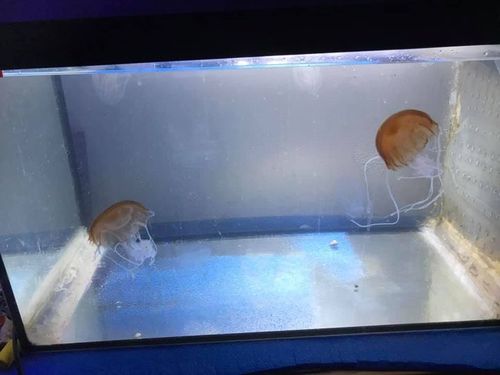
Mawia benovici
Mawia is a genus of jellyfish in the family Pelagiidae. It is a monotypic genus with the sole species Mawia benovici. The team who discovered this jellyfish named it benovici after a late colleague, Adam Benovic. Originally belonging to the genus Pelagia, it was later moved into its own genus, which was named after the Arab warrior-queen Mavia. Although described based on specimens from the Adriatic Sea, a part of the Mediterranean, it was speculated that these might be transplants (via ballast water) rather than a part of its natural range. A later study found specimens in Senegal, indicating
Varitentacula yantaiensis
Varitentacula yantaiensis is a species of deep sea hydrozoan of the family Halicreatidae. It is the only species in the monotypic genus Varitentacula.
Homoeonema
Homoeonema platygonon is a species of deep sea hydrozoan of the family Halicreatidae. It is the only species in the monotypic genus Homoeonema.
Allantactis parasitica
Allantactis is a monotypic genus of sea anemones, and Allantactis parasitica is the only species in the genus. This sea anemone lives at bathyal depths in the North Atlantic Ocean and has a symbiotic relationship with a gastropod mollusc.
Gonactinia
Gonactinia is a monotypic genus of sea anemones, and G. prolifera is the only species in the genus. It is sometimes called the storey anemone and is found on either side of the northern Atlantic Ocean.
Stegella
Stegella is a monotypic genus of hydrozoans belonging to the family Campanulinidae. The only species is Stegella lobata.
Herpolitha
Herpolitha is a monotypic genus of mushroom corals in the family Fungiidae. The only member of the genus is Herpolitha limax, commonly known as the tongue, slipper, mole or striate boomerang coral. It is a free-living species and is native to reefs and lagoons in the Indo-Pacific region. The International Union for Conservation of Nature has assessed this coral as being of "least concern".
Liriope
genus of cnidarians
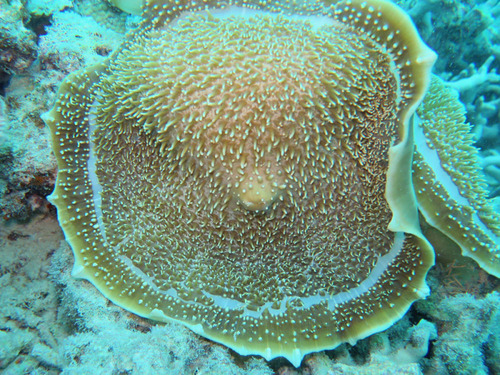
Amplexidiscus
Amplexidiscus fenestrafer, also known as the elephant ear anemone, is a species of coral belonging to the phylum Cnidaria. The name "elephant ear anemone" is a misnomer because it is actually a species of coral. It is the only species in the monotypic genus Amplexidiscus.

Aiptasia pallida
Exaiptasia is a genus of sea anemone in the family Aiptasiidae, native to shallow waters in the temperate western Atlantic Ocean, the Caribbean Sea and the Gulf of Mexico. It is monotypic with a single species, Exaiptasia diaphana, and commonly known as the brown anemone, glass anemone, pale anemone, or simply as Aiptasia.
Chiropsoides buitendijki
Chiropsoides is a genus of box jellyfish in the family Chiropsalmidae. It is monotypic, with a single species, Chiropsoides buitendijki. The most distinct species characteristics are the shape of the gastric saccules, the pedalial canals, and the unilateral pedalial branching.
Ctenella
Ctenella is a monotypic genus of stony coral in the family Euphylliidae. It is represented by a single species, Ctenella chagius. These corals are massive in size with meandering valleys between the calyces which have solid, non-porous walls and fine, evenly spaced, solid septae. They are found in the Indian Ocean being endemic to the Chagos Archipelago. It forms solid, smooth hemispherical domes.
Astroides
Astroides is a genus of stony cup corals in the family Dendrophylliidae. It is monotypic and the only species is Astroides calycularis, which is endemic to the western Mediterranean Sea. The species was first described in 1766 by the German naturalist Peter Simon Pallas.

Poralia
Poralia is a genus of jellyfish in the family Ulmaridae. It is a monotypic genus containing a single species, Poralia rufescens. This jellyfish is pelagic, and is found in deep water in most of the world's oceans.
Actinostephanus
genus of cnidarians

Protanthea
Protanthea simplex is a species of sea anemone found in deep water off the coasts of north west Europe. It is the only species in the monotypic genus Protanthea.
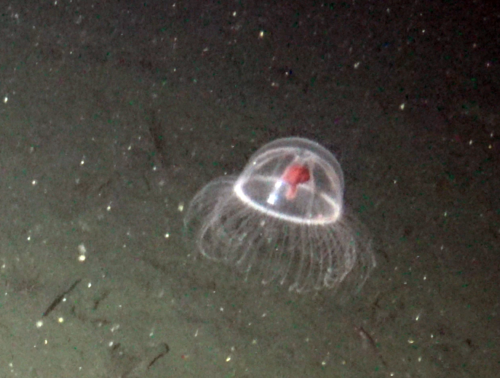
Benthocodon
Benthocodon is a genus of hydrozoans of the family Rhopalonematidae. The genus contains two known species: Benthocodon hyalinus and Benthocodon pedunculatus, however due to the small size and red pigmentation, they can easily be confused with related genera. Unlike many hydromedusae, these jellyfish do not have a sessile stage. Rather, they spend their entire lives in the water column as plankton. The genus Benthocodon can be found near the sea floor in the Pacific Ocean from Antarctica to California to the Arctic Ocean.
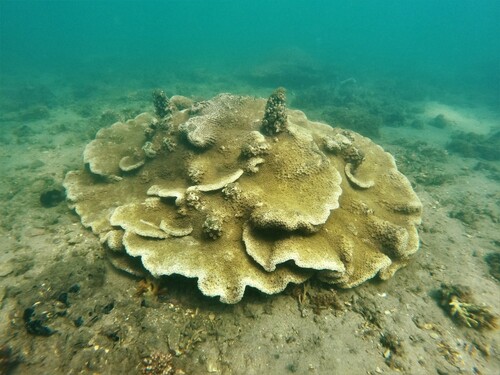
Duncanopsammia
Duncanopsammia is a monotypic genus of stony corals. It is represented by the single species, Duncanopsammia axifuga, commonly called whisker coral, duncanops coral, or simply duncan coral. Individual polyps are fairly large with round skeletal bases (corallites) in diameter and larger central discs from which multiple tentacles radiate; the polyps form a structure branching at irregular intervals to form a large colony.
Knopia
Knopia is a monotypic genus of corals belonging to the family Clavulariidae. The only species is Knopia octocontacanalis.
Dofleinia
Dofleinia armata, commonly known as the striped anemone or armed anemone, is a species of sea anemone in the family Actiniidae. It is the only species in the genus Dofleinia.
Annisis sprightly
Annisis is a genus of deep-sea bamboo coral in the family Isididae. It is monotypic with a single species, Annisis sprightly.
Balanopsammia
Balanopsammia is a monotypic genus of corals in the family of tree-leaved corals, Dendrophylliidae. It is represented by a single species, Balanopsammia wirtzi, which occurs in Atlantic waters around the Cape Verde islands of Santiago and Sal. Both the genus and the species were first named and described in 2013 by Ocaña & Brito. The genus name refers to the long confusion in the identification of the species as a Balanophyllia. The species name wirtzi refers to Peter Wirtz who collected several marine species in the East Atlantic.

Halicreas
Halicreas minimum is a species of deep sea hydrozoan of the family Halicreatidae. It is the only species in the monotypic genus Halicreas.
Trichydra
Trichydra is a monotypic genus of cnidarians belonging to the monotypic family Trichydridae. The only species is Trichydra pudica.
Dactylotrochus
Dactylotrochus is a genus of large polyp stony corals from the Red Sea and western Pacific Ocean. It is monotypic with a single species, Dactylotrochus cervicornis. It inhabits the deep sea and is believed to be azooxanthellate.

Boloceroides
Boloceroides is a genus of sea anemones in the family Boloceroididae. It is monotypic, the sole species being Boloceroides mcmurrichi. It has a cosmopolitan distribution in tropical and temperate oceans.
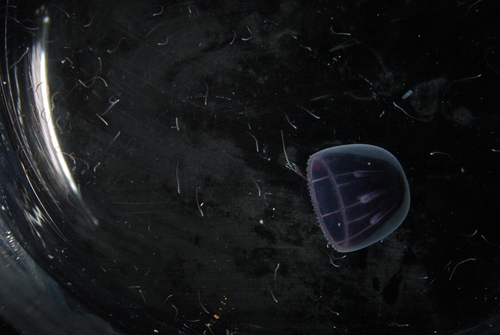
Vampyrocrossota
Vampyrocrossota is a genus of hydrozoans of the family Rhopalonematidae. The genus only contains one species, Vampyrocrossota childressi. Unlike many hydromedusae, these animals do not have a sessile stage. Rather, they spend their entire lives in the water column as plankton. It is the only known species with a medusa that is truly black.
Halimedusa
Halimedusa is a monotypic genus of hydrozoans belonging to the family Halimedusidae. The only species is Halimedusa typus.
Csiromedusa medeopolis
Csiromedusa medeopolis is a species of hydrozoan described in 2010.
It was discovered in the estuarine waters of the River Derwent near to the Commonwealth Scientific and Industrial Research Organisation's Marine and Atmospheric Research branch in Hobart, Tasmania, Australia. C. medeopolis has been described as presenting a new family and genus as well as species.