Category
page 1Monotypic Commelinales genera

Philydrum lanuginosum
Philydrum is a genus of tufted, herbaceous, aquatic macrophyte plants, one of three genera constituting the plant family Philydraceae.
Schiekia orinocensis
Schiekia is a monotypic genus of herbs belonging to the family Haemodoraceae and first described as a genus in 1957. The sole recognised species, S. orinocensis is native to South America (Brazil, Bolivia, Colombia, Venezuela, Guyana, Suriname, French Guiana). This plant grasped the minds of many scientists who tried fruitlessly to discover its purpose in the natural order.

Blancoa
Blancoa is a monotypic genus of perennial herbs in the family Haemodoraceae; the single species is Blancoa canescens, commonly known as the winter bell. It is endemic to the southwestern corner of Western Australia. It has nodding red to pink flowers, a clumping habit and grows to be 10 to 40 cm in height. The genus is named in honour of Francisco Manuel Blanco, a Spanish friar and botanist who compiled the first comprehensive flora of the Philippines.
Sauvallia
Sauvallia is a monotypic genus of monocotyledonous flowering plants in the family Commelinaceae, first described as a genus in 1871. The genus consists of a single species, Sauvallia blainii, which was endemic to Cuba.

Aetheolirion
Aetheolirion is a genus of monocotyledonous flowering plants in the dayflower family, first described in 1962. It consists of a single species, Aetheolirion stenolobium, endemic to Thailand.
Barberetta
Barberetta is a genus of herbaceous perennial plants in the family Haemodoraceae. It contains only one known species, Barberetta aurea.
Pyrrorhiza
Pyrrorhiza is a genus of herbs in the family Haemodoraceae, first described as a genus in 1957. It contains only one known species, Pyrrorhiza neblinae, endemic to the Sierra de la Neblina in Amazonas State, Venezuela.
Triceratella
Triceratella is a genus of annual monocotyledonous flowering plants in the dayflower family. The genus consists of a single species, Triceratella drummondii. It is known to occur in Zimbabwe and Mozambique, but has only been collected twice. Because of its rarity, DNA sequences have never been used to determine its relatives, but it is believed to be closely related to the early diverging genus Cartonema, with which it shares a number of characters unique for the dayflower family, such as a yellow flowers, glandular hairs, and a lack of glandular microhairs. It differs from Cartonema, however,
Siderasis
Siderasis is a genus of monocotyledonous flowering plants in the dayflower family, first described in 1837. It consists of a single known species, Siderasis fuscata, endemic to the State of Rio de Janeiro in southeastern Brazil, though it is also naturalized on the Island of Java in Indonesia.
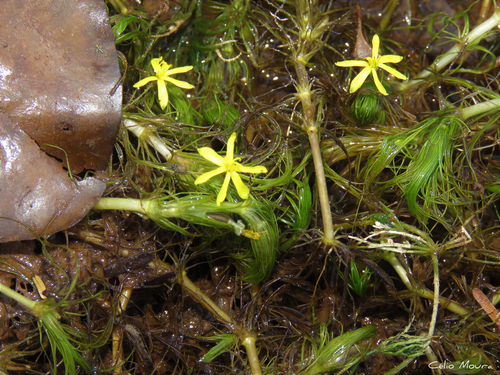
Hydrothrix
Hydrothrix Hook.f. was previously a monotypic flowering plant genus of Pontederiaceae, but is currently included in a broader and monophyletic Heteranthera.