Category
page 1Monotypic Hymenoptera genera

Protonectarina sylveirae
Protonectarina sylveirae is a neotropical swarm-founding wasp species that ranges widely across South America. This species relies heavily on the consumption of animal protein rather than nectar. P. sylveirae preys heavily on agricultural pests to coffee crops, keeping pest populations low.
Myanmymar
Myanmymar is an extinct genus of fairyfly preserved in Burmese amber from Myanmar. It has only one species, Myanmymar aresconoides. It is dated to the earliest part of the Cenomanian stage of the Late Cretaceous, around 99 million years old. As of 2011, it is the oldest known fossil mymarid.
Kikiki
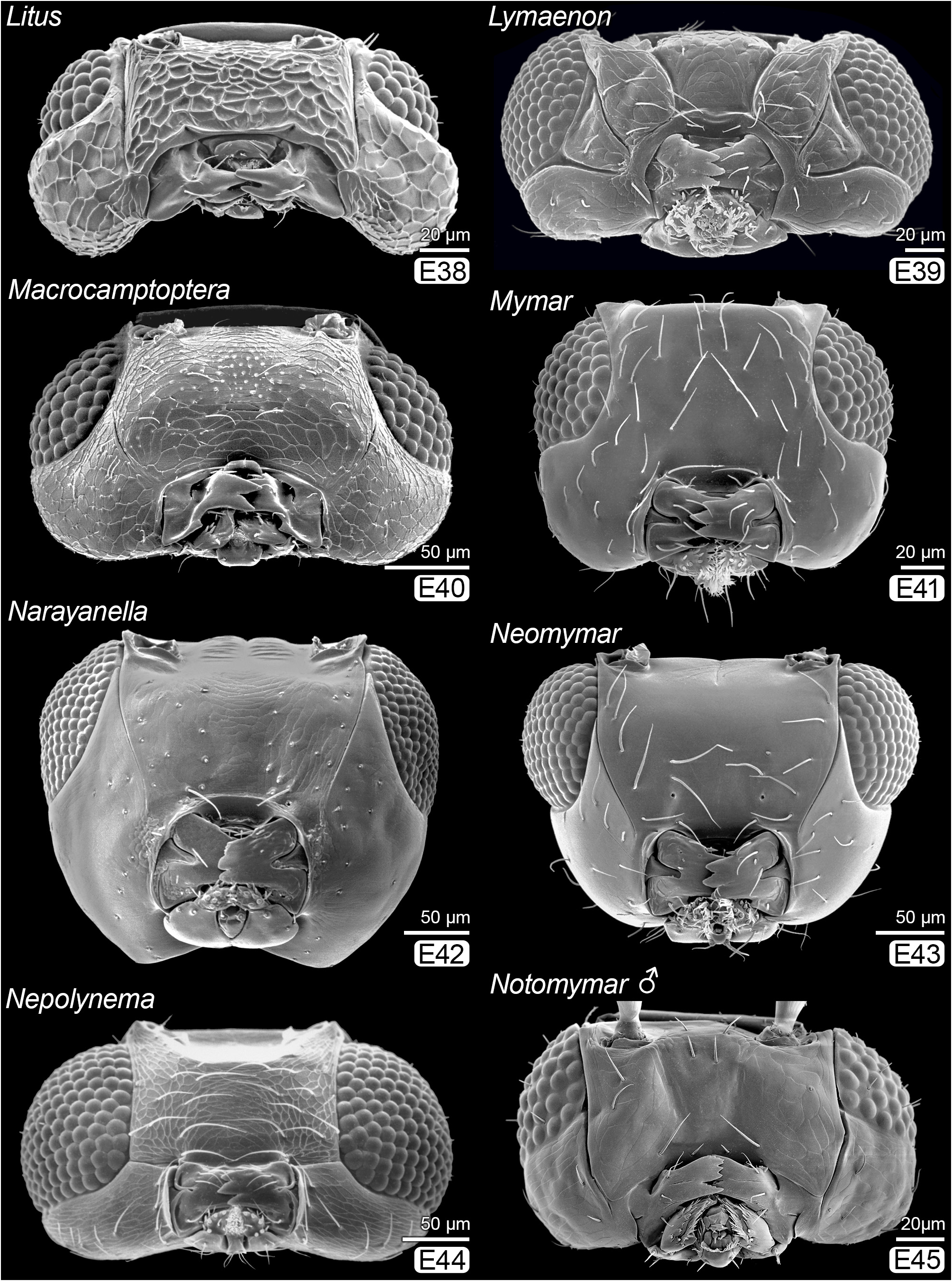
Kikiki is a genus of fairyfly wasps containing a single species, Kikiki huna, known from Hawaii, Costa Rica, Nagarcoil, and Trinidad. At (150 μm), it is the smallest flying insect known . It is a close relative of wasps in the genus Tinkerbella. It was discovered in the Hawaiian Islands by John T. Huber and John W. Beardsley, and published in 2000. The name Kikiki huna consists of two Hawaiian words that both carry the meaning 'tiny bit'.
Mymarilla wollastoni
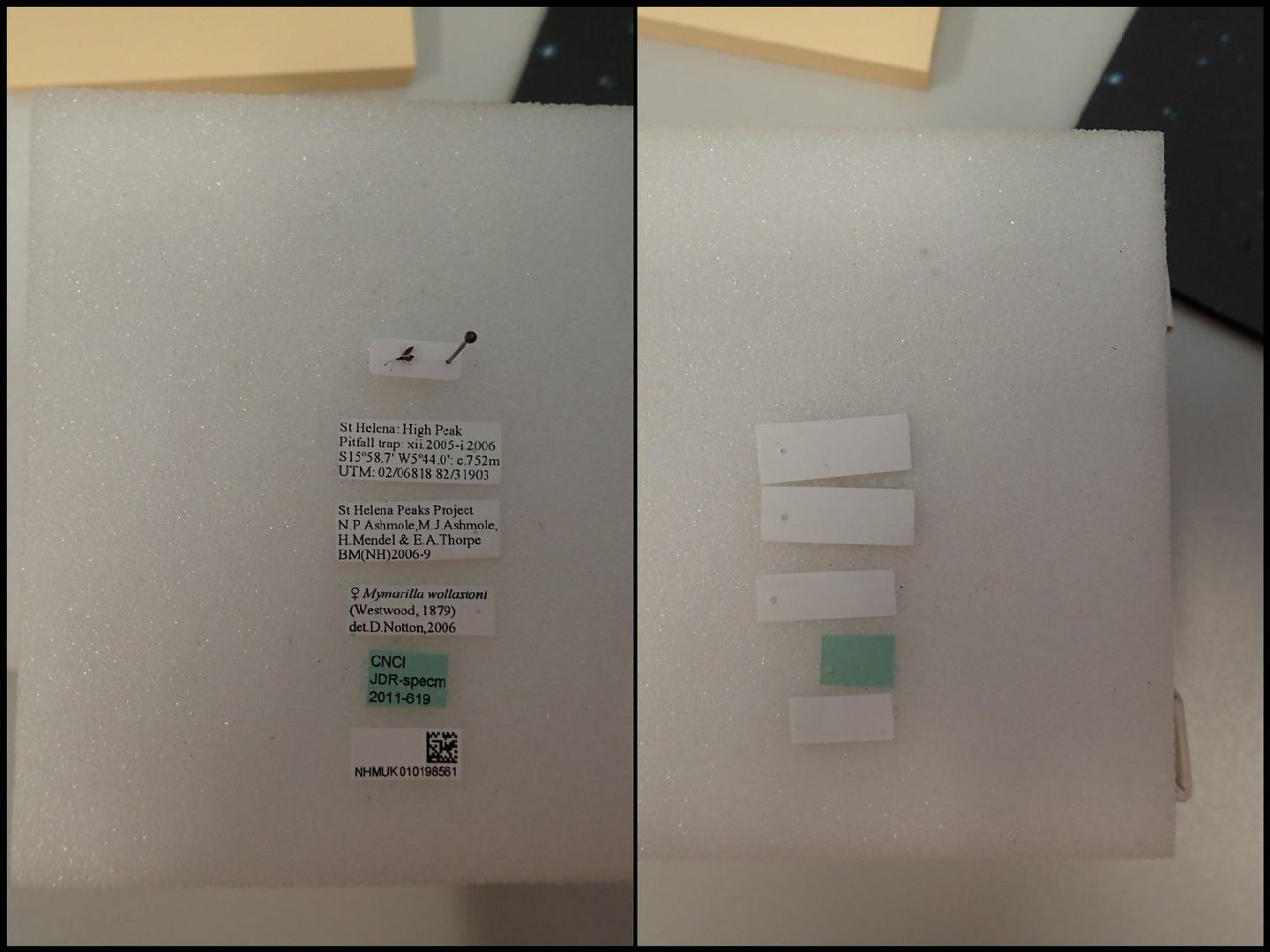
Mymarilla wollastoni is a species of fairyflies endemic to the island of Saint Helena in the southern Atlantic. It is the only species classified under the genus Mymarilla. They are characterized by relatively smooth, shiny black bodies and densely hairy (setose) and domed forewings. They bear superficial resemblance to members of the genus Cremnomymar which inhabit similar habitats of remote wind-swept oceanic islands, but they are believed to be most closely related to the genus Stephanodes. They were first described by the English entomologist John Obadiah Westwood in 1879, from specimens c
Exeirus
The Australian cicada killer wasp, Exeirus lateritius, the sole member of the genus Exeirus, is a large, solitary, ground-dwelling, predatory wasp. It is related to the more common genus of cicada killers, Sphecius. In Australia, E. lateritius hunts over 200 species of cicada.

Dasyscolia ciliata
Dasyscolia ciliata is a species of scoliid wasp found throughout the Mediterranean. It is the only species in the genus Dasyscolia. It is the only known pollinator of the European Ophrys speculum. The male wasp is tricked into pollinating the Ophrys orchid via pseudocopulation. The orchid's Pouyannian mimicry has the flower effectively mimicking the female wasp in appearance and scent.
Zyzzyx
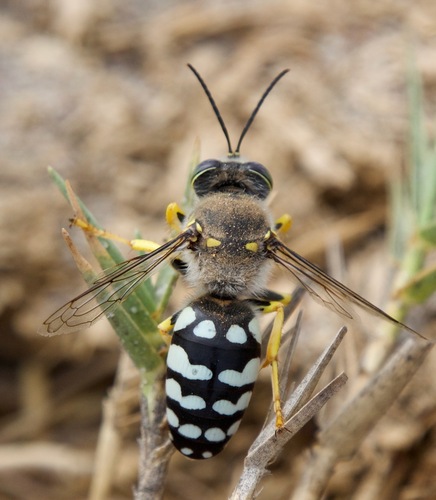
Zyzzyx is a monospecific genus of sand wasp, containing a brightly coloured, medium-sized species, Zyzzyx chilensis. It is primarily a predator on flies, but has been observed to consume skippers. "Zyzzyx" is a replacement name proposed in 1937 by V. S. L. Pate for Therapon, originally described by J. Parker in 1929.
Tinkerbella nana
Tinkerbella is a genus of fairy wasps, containing the single species Tinkerbella nana from Costa Rica. It is one of the smallest known flying arthropods and belongs to the family Mymaridae.
Dodogaster
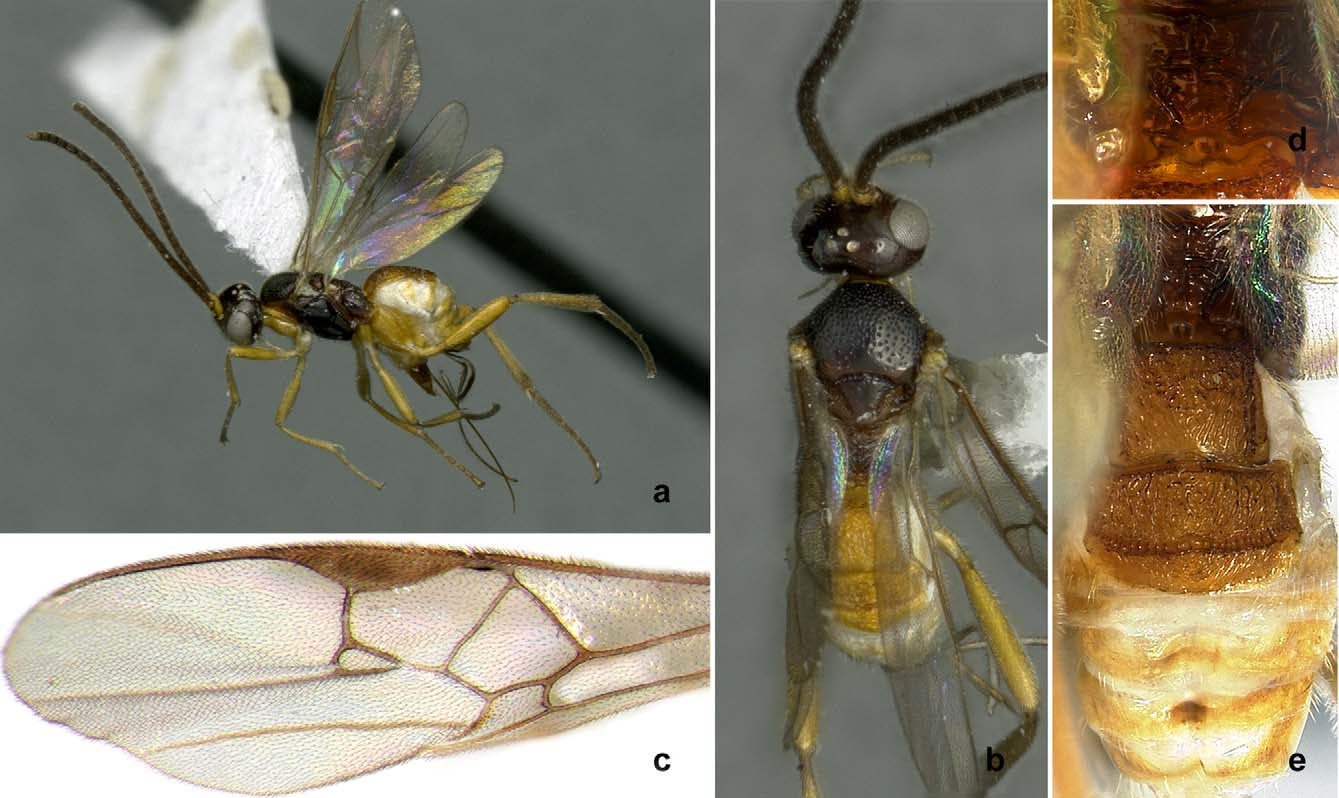
Dodogaster is a genus of braconid wasps. It currently consists only of the type species Dodogaster grangeri, found in Africa and also described by Rousse & Gupta, 2013
Afromaimetsha
Afromaimetsha robusta is an extinct species of wasp which existed in Botswana during the late Cretaceous period, and the only species in the genus Afromaimetsha.
Arzonella
Arzonella is a monotypic genus of wasps belonging to the family Encyrtidae. The only species is Arzonella curiosa.

Thoreauella
Thoreauella is a monotypic genus of wasps belonging to the family Figitidae. The only species is Thoreauella amatrix.
Caradiophyodus
Caradiophyodus is an extinct genus of minute wasps in the superfamily Platygastroidea within the order Hymenoptera. The genus was described in 2023 by George Poinar Jr. and Fernando E. Vega and placed in the monotypic family Caradiophyodidae and is represented by a single species, Caradiophyodus saradae. The fossil was found in mid-Cretaceous Burmese amber from northern Myanmar and represents one of the earliest known records of platygastroid wasps.