Category
page 1Monotypic Rosales genera

Antiaris
Antiaris is a genus in the mulberry and fig family Moraceae. It is a monotypic genus, i.e. it contains only one species, namely Antiaris toxicaria. The genus was at one time considered to consist of several species, but is now regarded as just one variable species which can be further divided into five subspecies. One significant difference within the species is that the size of the fruit decreases as one travels from Africa to Polynesia. Antiaris has a remarkably wide distribution in tropical regions, occurring in Australia, tropical Asia, tropical Africa, Indonesia, the Philippines, Tonga, a
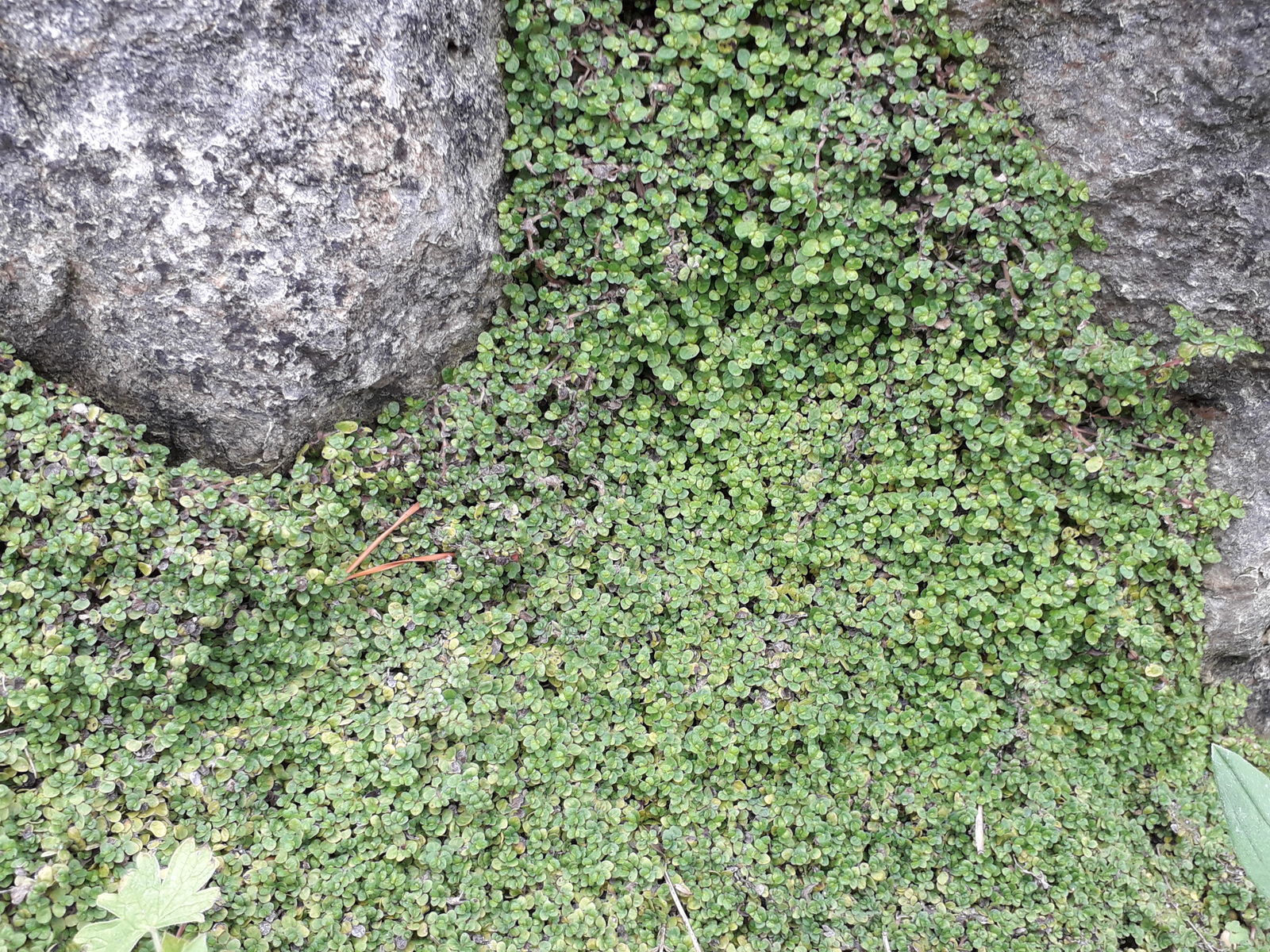
Soleirolia soleirolii
Soleirolia soleirolii (, syn. Helxine soleirolii) is a flowering plant in the nettle family. It has a number of common names, including '''baby's tears, angel's tears, peace in the home, bits and pieces, bread and cheese, Corsican creeper, Corsican curse, friendship plant, mind-your-own-business, pollyanna vine, Paddy's wig, and mother of thousands'. It should not be confused with Kalanchoe daigremontiana'', another plant known as mother of thousands.

Morus mesozygia
Afromorus mesozygia, known as black mulberry or African mulberry, is the only species in the genus Afromorus. The plant is a small- to medium-sized forest tree of Tropical Africa. Its leaves and fruit provide food for the mantled guereza, a colobus monkey native to much of Tropical Africa, and for the common chimpanzee of West and Central Africa. It is also a commercial hardwood.
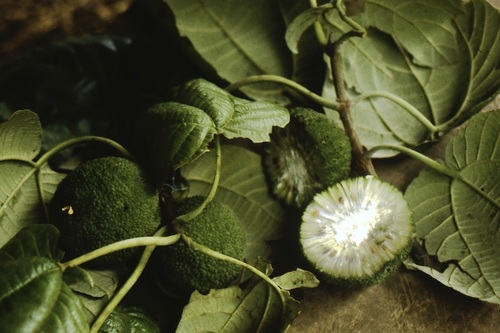
Bagassa
Bagassa guianensis is a tree in the plant family Moraceae which is native to the Guianas and Brazil. It is valued as a timber tree and as a food tree for wildlife. The juvenile leaves are distinctly different in appearance from the mature leaves, and were once thought to belong to different species.
Barbeya
Barbeya is the only genus in the family Barbeyaceae, and has only one species, Barbeya oleoides. It is a small tree native to the mountains of Somalia, Ethiopia, and the Arabian Peninsula. It can be found locally abundant in the transition zone between the dry, evergreen, Afromontane forests and lower-elevation evergreen bushlands.
Hemiptelea
Hemiptelea is a genus of flowering plants belonging to the family Ulmaceae. It contains a single species, Hemiptelea davidii, a tree native to China and Korea.

Malaisia scandens
Malaisia scandens (syn. Trophis scandens), the burny vine or crow ash, is a species of large woody vines, constituting part of the fig plant family. They grow naturally in rainforests in Australia and Malesia. It is the only species in the genus Malaisia.
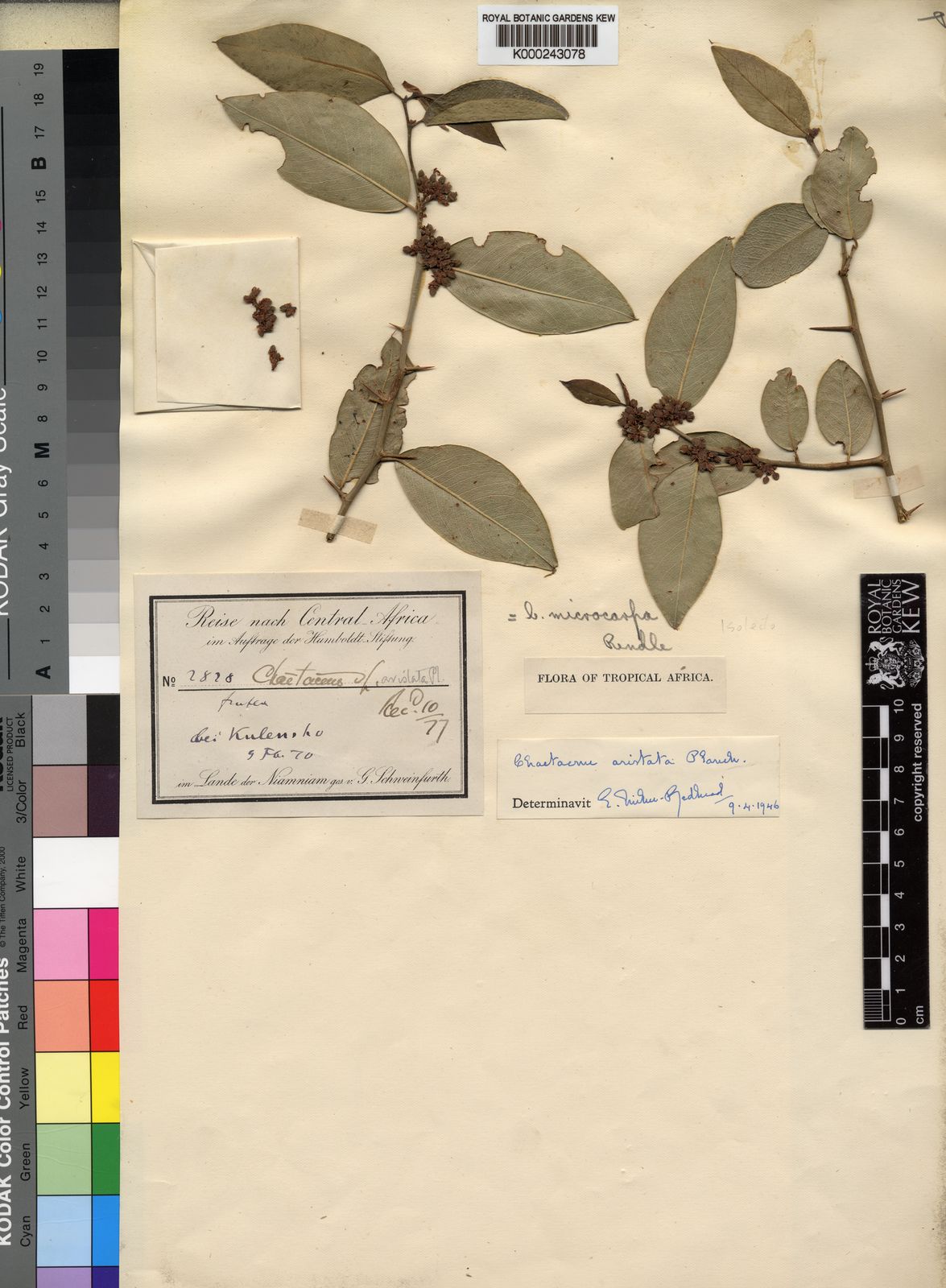
Chaetachme
Chaetachme is a monotypic genus of flowering plants native to eastern and western Africa, including Madagascar, containing the single species Chaetachme aristata. Its English common name is thorny elm, and it is known as muyuyu in Kikuyu. Traditionally placed in the Elm family, it is more recently placed in the family Cannabaceae, thought to be possibly closely related to Celtis.

Metatrophis
Metatrophis is a genus of plant in the nettle family, Urticaceae. Its only species is Metatrophis margaretae, endemic to the island of Rapa Iti in the Tubuai Islands.

Sarcochlamys
Sarcochlamys is a monotypic genus of flowering plants belonging to the family Urticaceae. The only species is Sarcochlamys pulcherrima. It is a dioecious, evergreen shrub or small tree.
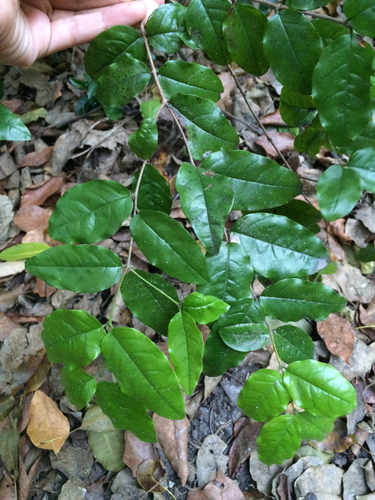
Krugiodendron
Krugiodendron ferreum, commonly known as the black ironwood or leadwood, is a species of tree in the family Rhamnaceae. It is found in southern Florida, throughout the Caribbean and from southern Mexico to Honduras. Originally described by Martin Vahl, its specific epithet is the Latin adjective ferreus ("iron-like").
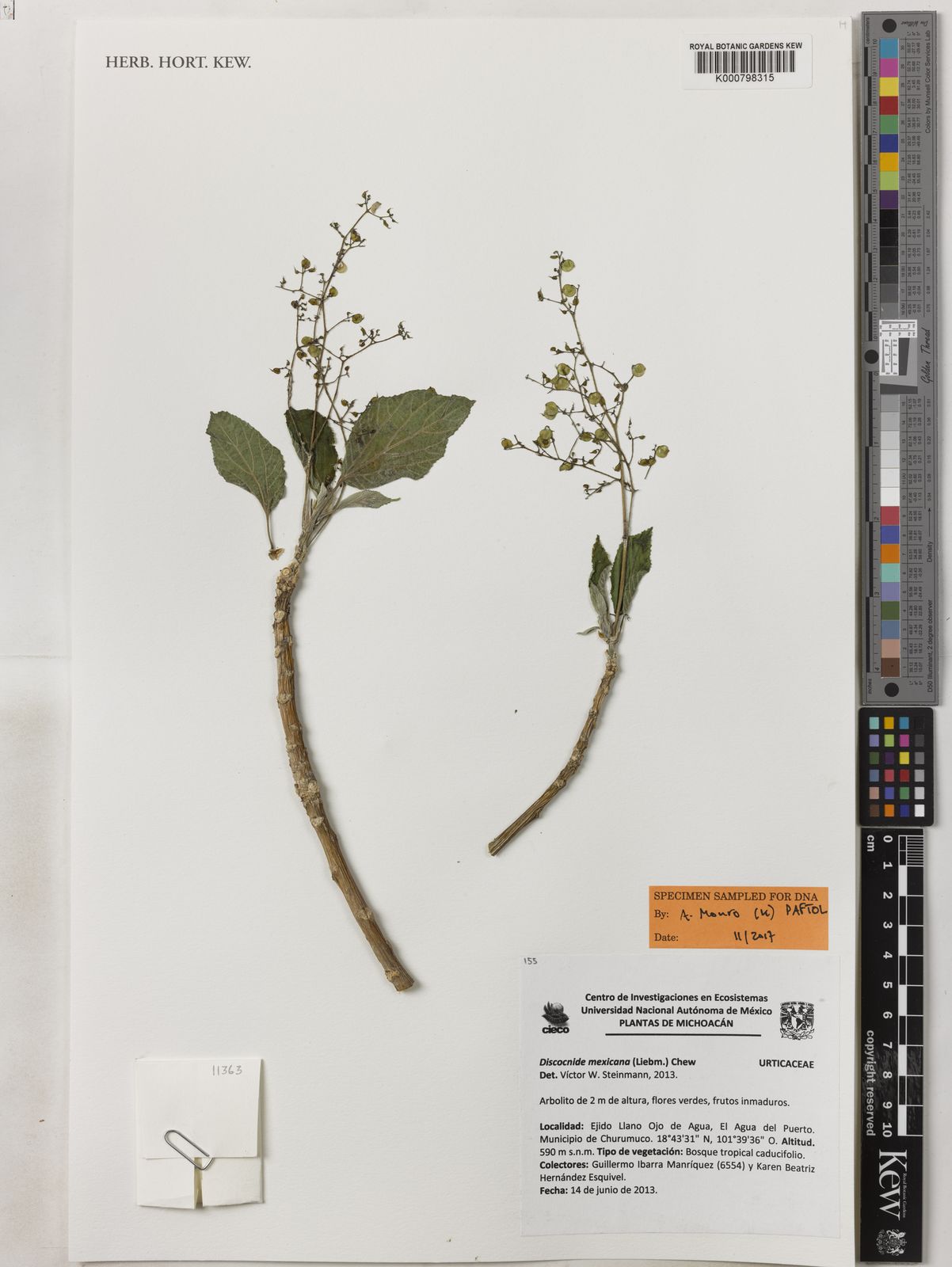
Discocnide
Discocnide is a monotypic genus of flowering plants belonging to the family Urticaceae. The only species is Discocnide mexicana.

Bosqueiopsis
Bosqueiopsis gilletii is a species of flowering plant belonging to the family Moraceae. It is the sole species in genus Bosqueiopsis. It is native to tropical Africa, where it ranges from Republic of the Congo through Democratic Republic of the Congo to Tanzania and Mozambique.
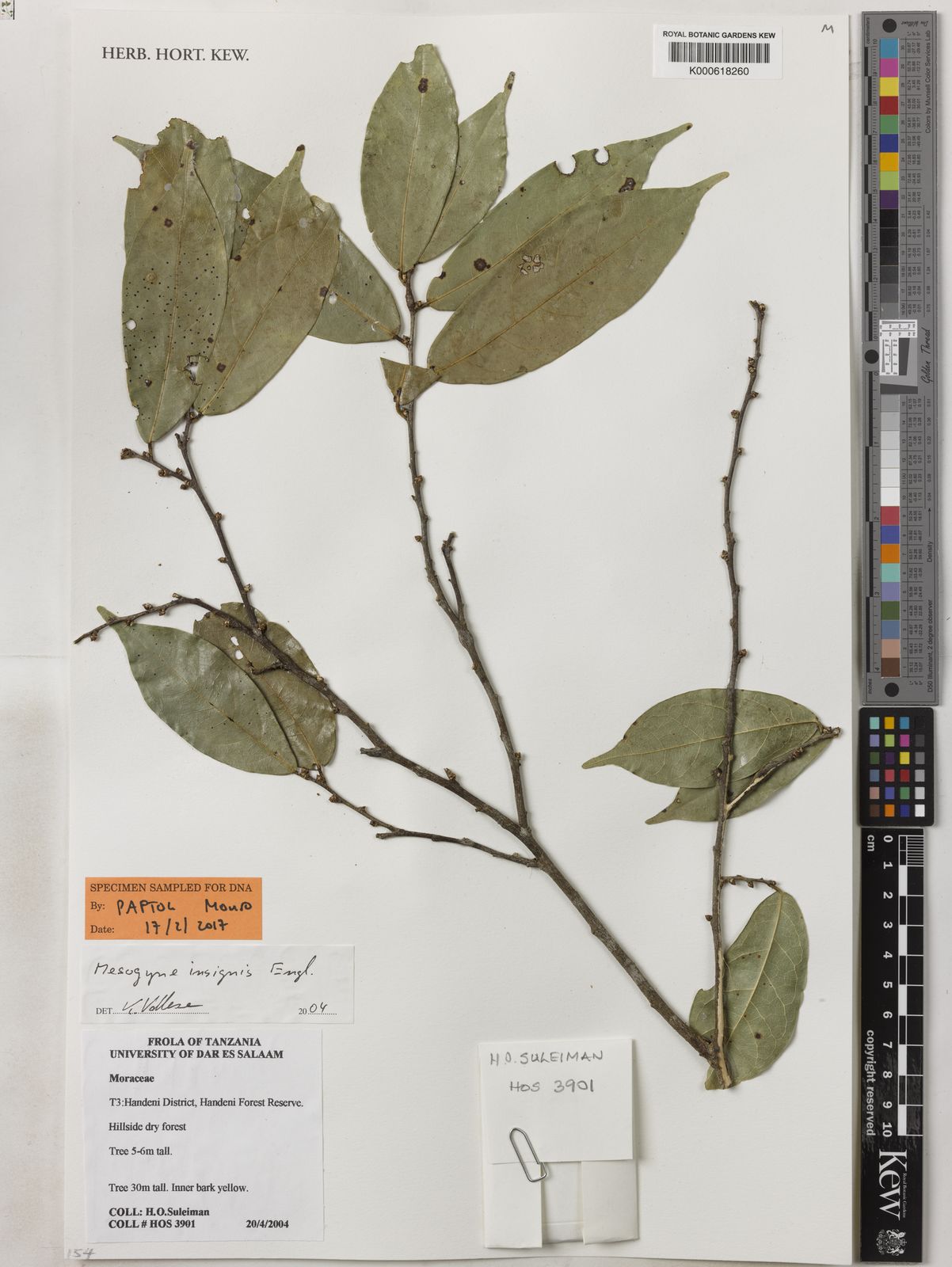
Mesogyne
Mesogyne insignis is a species of flowering plants in the family Moraceae. It is the sole species in genus Mesogyne. It is a tree native to the island of São Tomé in the Gulf of Guinea and to eastern Tanzania.
Neodistemon
Neodistemon is a monotypic genus of flowering plants belonging to the family Urticaceae. The only species is Neodistemon indicus.
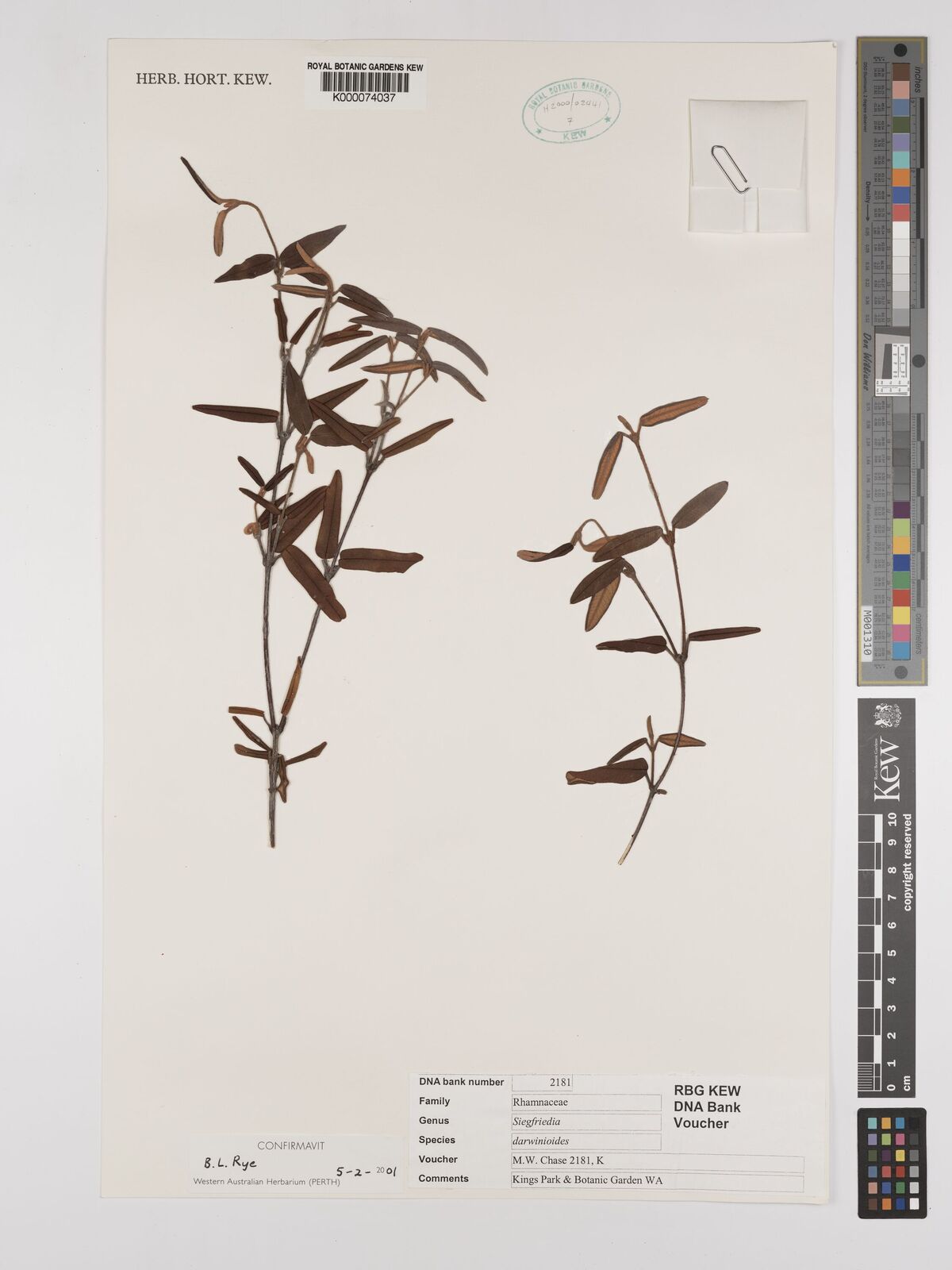
Siegfriedia
thumb|Foliage
Siegfriedia is a monotypic genus flowering plant belonging to the family Rhamnaceae. It is a small plant with smooth leaves leaves and bell-shaped flowers. The only species is Siegfriedia darwinioides, it is endemic to Western Australia.

Doerpfeldia
Doerpfeldia is a monotypic genus of flowering plants belonging to the family Rhamnaceae. The only species is Doerpfeldia cubensis.
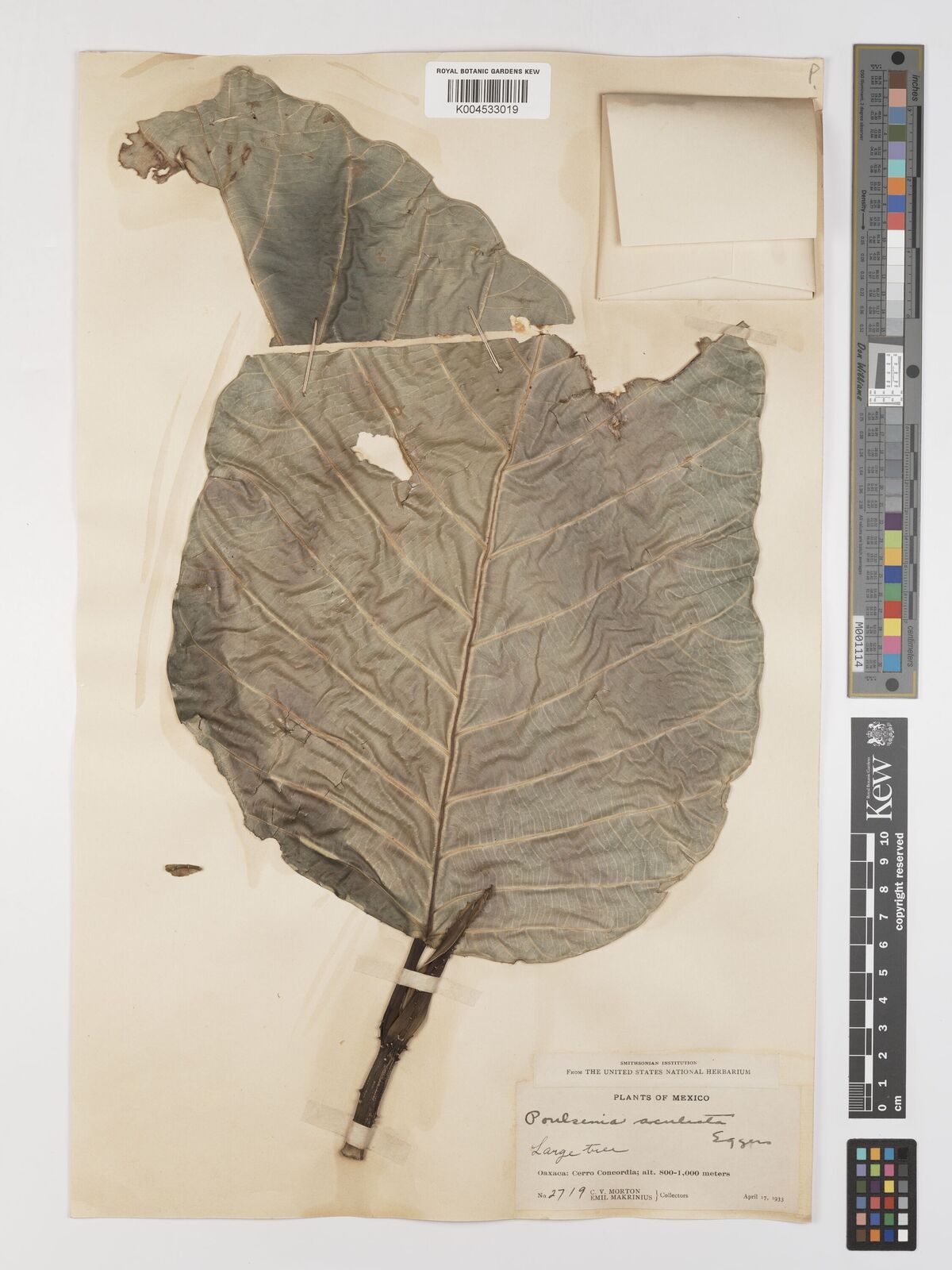
Poulsenia
Poulsenia is a monotypic genus of trees in the family Moraceae. The only species is Poulsenia armata, native to rainforests from Mexico south to Bolivia.
Kentrothamnus
Kentrothamnus is a monotypic genus of flowering plants in the family Rhamnaceae, native to Bolivia and Argentina. The only species is Kentrothamnus weddellianus. It is an actinorhizal plant.
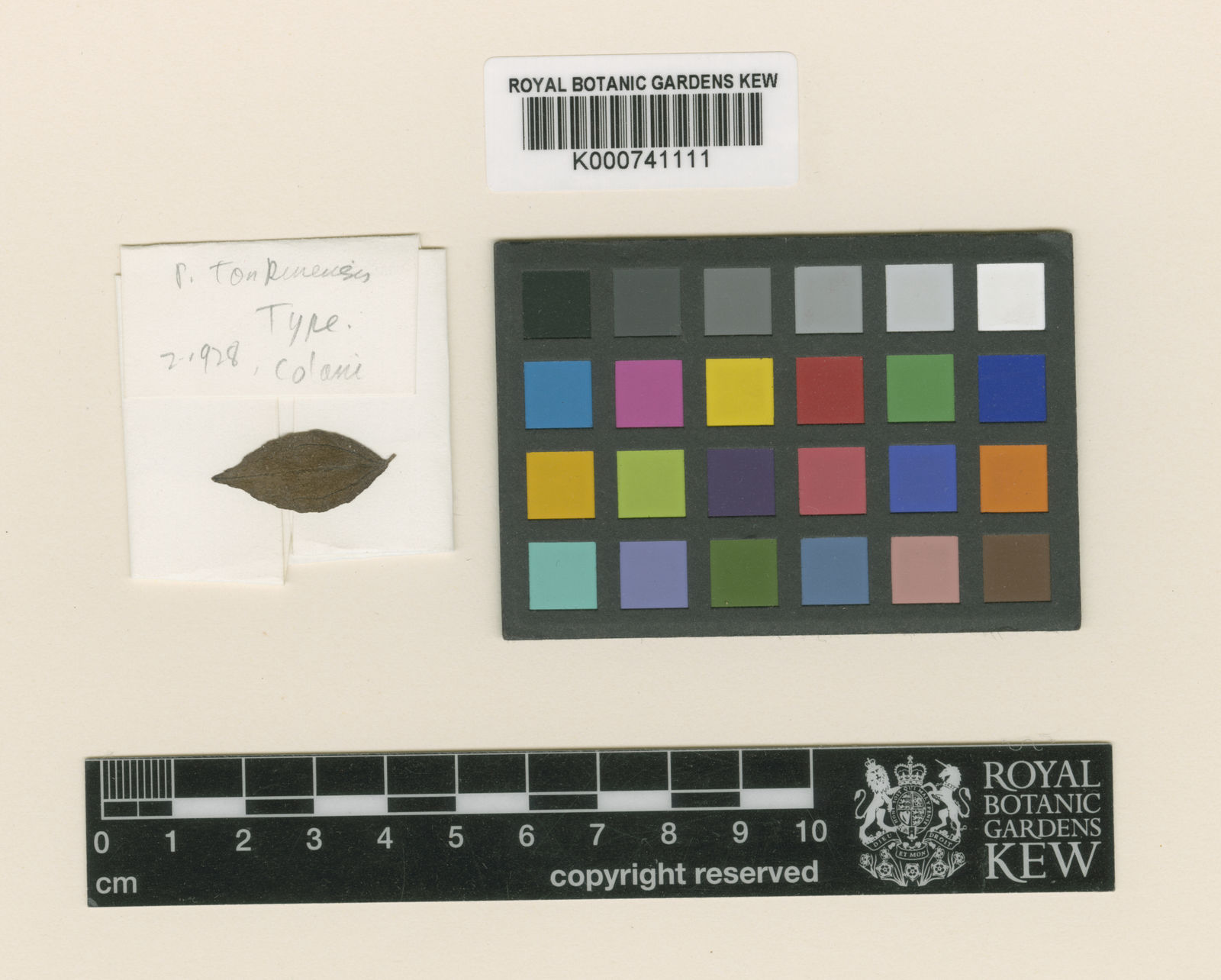
Petelotiella
Petelotiella is a monotypic genus of flowering plants belonging to the family Urticaceae. It contains just one species, Petelotiella tonkinensis.

Maesopsis
Maesopsis eminii, the umbrella tree, is a species of tree in the family Rhamnaceae found in India and Africa. It is the only species in the genus Maesopsis. It is often grown as a plantation tree, and as a shade tree in coffee plantations and other crops. Birds and monkeys may disperse the seeds. Since this tree grows fast it is often used for regeneration of destroyed forest lands. Its timber is used for construction and firewood and its leaves for animal fodder.

Noltea
Noltea is a monotypic genus of flowering plants. The single species, Noltea africana (commonly known as the soap bush or soap dogwood), is a small, bushy tree of about 4 metres that is endemic to the southern Cape of South Africa, where it grows beside rivers and in pockets of afro-montane forest. It has small, white, mildly fragrant flowers and when it grows larger it assumes a willow shape, with slightly weeping branches. The leaves are long and serrated and the young growth is purple in colour.
Schistocarpaea
Schistocarpaea is a monotypic genus of flowering plants belonging to the family Rhamnaceae. The only species is Schistocarpaea johnsonii. Its native range is Queensland.