Category
page 1Monotypic Salticidae genera
Astia
Astia is a monotypic genus of Australian jumping spiders containing the single species, Astia hariola. It was first described by Ludwig Carl Christian Koch in 1879, and is only found in New South Wales and Queensland. They are noticeable by the patterns on the dorsal surface of the abdomen that are either a creamy white or orange pale patch.
Wallaba
Wallaba is a monotypic genus of Guyanese jumping spiders containing the single species, Wallaba metallica. It was first described by Cândido Firmino de Mello-Leitão in 1940, and is found in Guyana. It was synonymized with Sidusa in 2015, but was revalidated by Jerzy Prószyński in 2017.
Nebridia
Nebridia is a monotypic genus of Venezuelan jumping spiders containing the single species, Nebridia semicana. It was first described by Eugène Louis Simon in 1902, and is only found in Venezuela. It was briefly considered a synonym of Amphidraus, it was elevated to genus status in 2017.
Matagaia chromatopus
Matagaia is a genus of jumping spiders. Its only species, M. chromatopus, was only found on Fernando de Noronha Island, an isolated group of volcanic islands located in the South Equatorial Atlantic, about 350 km from the nearest Brazilian mainland.
Planiemen rotundus
Planiemen is a genus of jumping spider erected in 2007 for the sole species Planiemen rotundus, formerly placed in the genus Pachyballus. It is endemic to Yemen.
Albionella
Albionella is a genus of jumping spiders found in Panama.
Stagetillus
Stagetillus is a monotypic genus of Southeast Asian jumping spiders containing the single species, Stagetillus opaciceps. It was first described by Eugène Louis Simon in 1885, and is found in Indonesia, Philippines and Malaysia.
Asaphobelis
Asaphobelis is a monotypic genus of Brazilian jumping spiders containing the single species, Asaphobelis physonychus. It was first described by Eugène Louis Simon in 1902, and is only found in Brazil.
Damoetas
Damoetas is a monotypic genus of Australian jumping spiders containing the single species Damoetas nitidus. It was first described by George and Elizabeth Peckham in 1886, and is only found in New South Wales and Queensland. Two species that were once in this family, Damoetas christae and Damoetas galianoae have since been moved to Hermosa.
Vailimia
Vailimia is a genus of Asian jumping spiders. The type species was described in 1907 from a single male about long. It was originally thought to be close to Harmochirus, but the male pedipalp, chelicera, and cephalothorax drawn by Proszynski in 1984, and information gained from later collected specimens indicates otherwise. Subsequently, five more species have been identified. It may be a synonym for Pancorius.
Atelurius
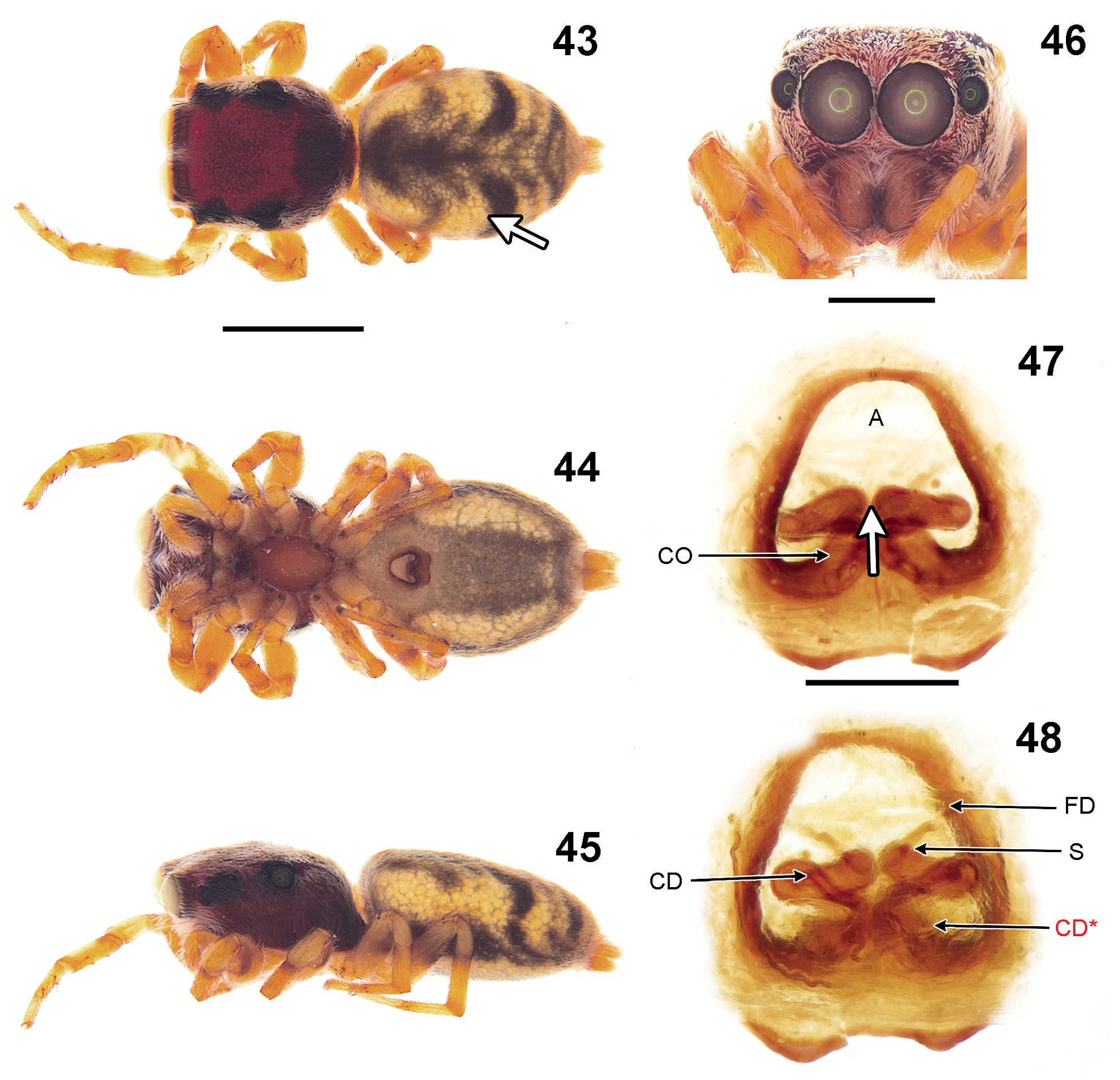
Atelurius is a monotypic genus of South American jumping spiders containing the single species, Atelurius segmentatus. It was first described by Eugène Louis Simon in 1901, and is only found in Brazil and Venezuela.
Sparbambus
Sparbambus is a genus of jumping spiders containing the two species, Sparbambus gombakensis and Sparbambus sindhudurg. It was first described by J. X. Zhang, J. R. W. Woon & D. Q. Li in 2006, and is found in China, India and Malaysia. They are similar to members of Wanlessia. The name is derived from the Indian bambu, referring to the habitat where the species was initially found. The prefix spar denotes that the genus is in the subfamily Spartaeinae. The two species name refers to the type localities, the Ulu Gombak Malaysia and Sindhudurg Maharashtra, India.
Gypogyna
Gypogyna is a genus of jumping spiders that occurs in Colombia, Brazil, Paraguay, and Argentina. Its only species is Gypogyna forceps.
Udvardya
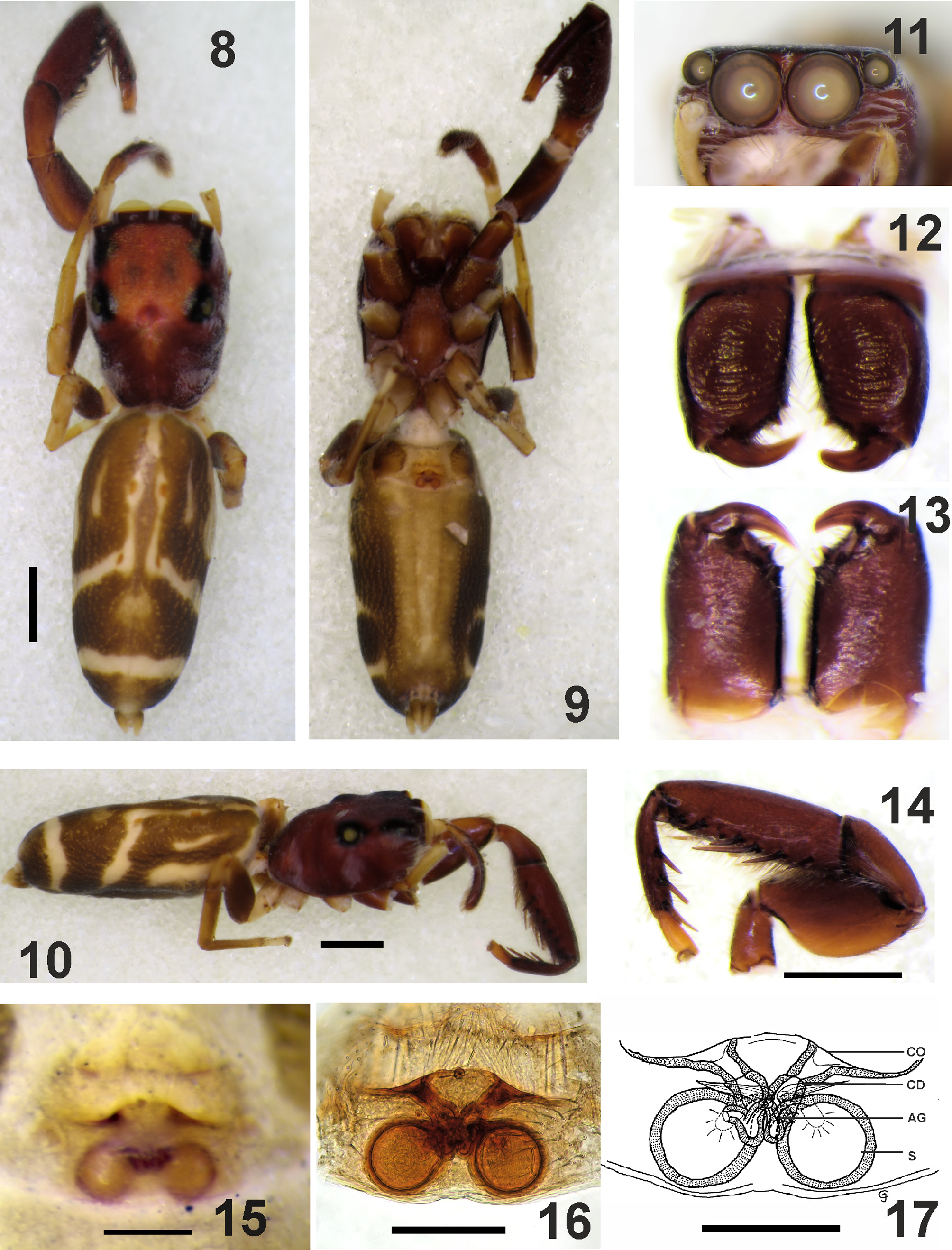
Udvardya is a genus of jumping spider endemic to New Guinea. , it contains only one species, Udvardya elegans.
Yepoella
Yepoella is a monotypic genus of Argentinian jumping spiders containing the single species, Yepoella crassistyli. It was first described by María Elena Galiano in 1970, and is found in Argentina. A second species, Y. tenuistyli Galiano, 1970, was moved to Theriella in 1996.
Edilemma
Edilemma is a monotypic genus of Brazilian jumping spiders containing the single species, Edilemma foraminifera. It was first described by G. R. S. Ruiz & Antônio Domingos Brescovit in 2006, and is only found in Brazil.
Anarrhotus
Anarrhotus is a genus of jumping spiders. The only described species Anarrhotus fossulatus is endemic to Malaysia. It is one of several monotypic genera from Southeast Asia where, despite their first description dating back more than a hundred years, there are no habitat details, although genital and sometimes other drawings are now available for several of them. Anarrhotus is only known from a single male specimen, the pedipalp of which was drawn by Proszynski (1984). The original describer Eugène Simon put the genus close to Pancorius. The male is 6 mm long.
Magyarus
Magyarus is a monotypic genus of Vietnamese jumping spiders containing the single species, Magyarus typicus. It was first described by Marek Michał Żabka in 1985, and is only found in Vietnam.
Darwinneon
Darwinneon is a monotypic genus of jumping spiders containing the single species, Darwinneon crypticus. It was first described by B. Cutler in 1971, and is only found on the Galápagos Islands. The name is a combination of the Neon and Charles Darwin. Crypticus means "hidden" in Latin.
Astilodes
Astilodes is a monotypic genus of jumping spiders containing the single species, Astilodes mariae. It was first described by Marek Michał Żabka in 2009, and is only found in Queensland.
Nimbarus
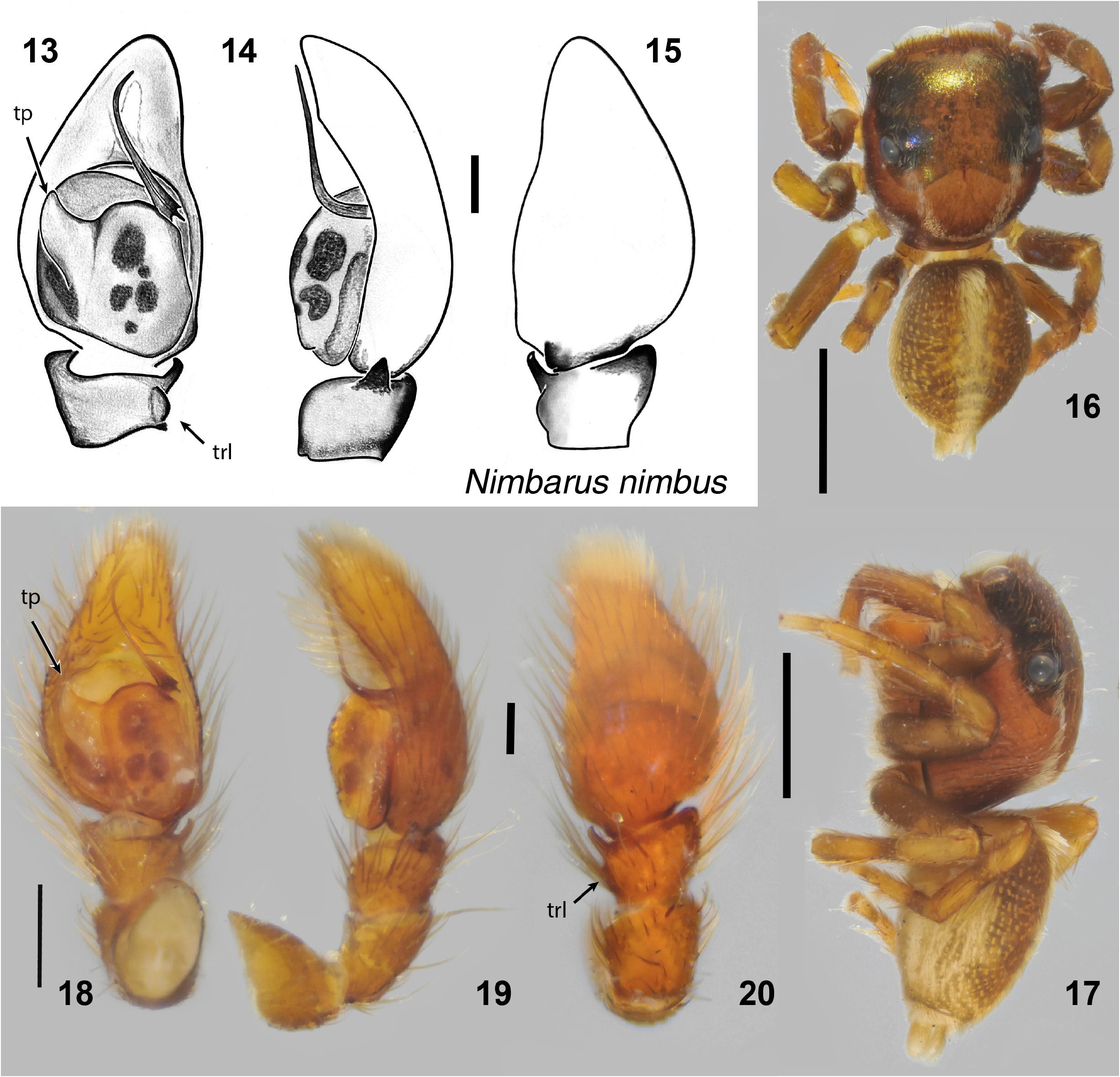
Nimbarus is a monotypic genus of Guinean jumping spiders containing the single species, Nimbarus pratensis. It was first described by C. Rollard & Wanda Wesołowska in 2002, and is only found in Guinea. The name is derived from the Nimba Mountains, where the species was first found. The species name is derived from the Latin "pratensis", meaning "meadow", for the habitat where this species can be found.
Longarenus
Longarenus is a spider genus of the family Salticidae (jumping spiders). Its only described species, Longarenus brachycephalus, is endemic to Equatorial Guinea.
Megaloastia
Megaloastia is a genus of spiders from Western Australia, which is placed in the jumping spider family, Salticidae. The genus has only one species, Megaloastia mainae.
Parathiodina
Parathiodina is a monotypic genus of jumping spiders containing the single species, Parathiodina compta. It was first described by E. B. Bryant in 1943, and is only found on Hispaniola. The name is a combination of the Ancient Greek "para" (), meaning "alongside", and the salticid genus Thiodina.
Maileus
Maileus is a monotypic genus of jumping spiders containing the single species, Maileus fuscus. It was first described by G. Peckham & Elizabeth Peckham in 1907, and is only found on Borneo. It is closely related to the genus Microhasarius.
Monaga
Monaga is a monotypic genus of Panamanian jumping spiders containing the single species, Monaga benigna. It was first described by Arthur Merton Chickering in 1946, and is only found in Panama.
Tanybelus
Tanybelus is a monotypic genus of South American jumping spiders containing the single species, Tanybelus aeneiceps. It was first described by Eugène Louis Simon in 1902, and is found only in Venezuela and Colombia.
Rishaschia
Rishaschia is a monotypic genus of South American jumping spiders containing the single species, Rishaschia mandibularis. It was first described by D. Makhan in 2006, and is found in Suriname, Ecuador, Guyana, Brazil, and French Guiana.
Anicius
Anicius is a monotypic genus of Mexican jumping spiders containing the single species, Anicius dolius. It was first described by Ralph Vary Chamberlin in 1925, and is only found in Mexico.
Necatia
Necatia is a genus of the jumping spider family Salticidae. Its only species, Necatia magnidens, is found in southern China.
Pachypoessa
Pachypoessa is a monotypic genus of jumping spiders containing the single species, Pachypoessa lacertosa. It was first described by Eugène Louis Simon in 1902, and is only found in Africa.
Letoia
Letoia is a genus of jumping spiders endemic to Venezuela. It contains only one species, Letoia ephippiata.
Furculattus
Furculattus is a genus of the spider family Salticidae (jumping spiders). Its only species is Furculattus maxillosus. It occurs on the Gazelle Peninsula of New Britain, New Guinea, where it was found in the canopy of rain forests.
Uxuma
Uxuma is a monotypic genus of Gabonese jumping spiders containing the single species, Uxuma impudica. It was first described by Eugène Louis Simon in 1902, and is found in Gabon.
Mikrus
Mikrus is a monotypic genus of East African jumping spiders containing the single species, Mikrus ugandensis. It was first described by Wanda Wesołowska in 2001, and is only found in Uganda and Kenya.
Orvilleus
Orvilleus is a monotypic genus of Panamanian jumping spiders containing the single species, Orvilleus crassus. It was first described by Arthur Merton Chickering in 1946, and is only found in Panama.
Pensacolops
Pensacolops is a monotypic genus of Brazilian jumping spiders containing the single species, Pensacolops rubrovittata. It was first described by M. J. Bauab V. in 1983, and is only found in Brazil. The name is a combination of the salticid genus Pensacola and the Ancient Greek "-ops" (), meaning "to look like". The species name is a combination of the Latin rubrus, meaning "red", and vittatus, which means "striped".
Haplopsecas
Haplopsecas is a genus of jumping spiders with a single described species, Haplopsecas annulipes. It is found in Venezuela.
Idastrandia
Idastrandia is a genus of jumping spiders endemic to Singapore. Its only described species is Idastrandia orientalis.
Caribattus
Caribattus is a monotypic genus of jumping spiders containing the single species, Caribattus inutilis. It was first described by E. B. Bryant in 1950, and is only found on the Greater Antilles. The name is derived from "Caribbean", and -attus, a common suffix for salticid genera. The species name inutilis is Latin for "useless".
Allodecta
Allodecta is a monotypic genus of jumping spiders containing the single species, Allodecta maxillaris. It was first described by Elizabeth B. Bryant in 1950, and is only found on the Greater Antilles.
Aruattus
Aruattus is a monotypic genus of Indonesian jumping spiders containing the single species, Aruattus agostii. It was first described by D. V. Logunov & G. N. Azarkina in 2008, and is only found in Indonesia. The name is a combination of the Aru Islands, and attus, a prefix often used for salticid genera, meaning "jumper". The species is named after its collector, D. Agosti.
Phyaces
Phyaces is a monotypic genus of Sri Lankan jumping spiders containing the single species, Phyaces comosus. It was first described by Eugène Louis Simon in 1902, and is only found in Sri Lanka.
Mburuvicha
Mburuvicha is a monotypic genus of south american jumping spiders containing the single species, Mburuvicha galianoae. It was first described by C. L. Scioscia in 1993, and is found in Argentina, Brazil and Uruguay. The name is derived from the Guaraní word Mburuvicha, meaning "chief". The species name honors arachnologist María Elena Galiano.
Giuiria
Giuiria is a monotypic genus of Ethiopian jumping spiders containing the single species, Giuiria unica. It was first described by Embrik Strand in 1906, and is only found in Ethiopia.
Toloella
Toloella is a monotypic genus of Panamanian jumping spiders containing the single species, Toloella eximia. It was first described by Arthur Merton Chickering in 1946, and is found only in Panama.
Platypsecas
Platypsecas is a monotypic genus of Venezuelan jumping spiders containing the single species, Platypsecas razzabonii. It was first described by Lodovico di Caporiacco in 1955, and is only found in Venezuela. The type locality is El Junquito in the Capital District. Gustavo R. S. Ruiz and Antonio D. Brescovit though the genus was "possibly in Euophryinae"; Wayne P. Maddison followed their "tentative suggestion" and classified the genus in the tribe Euophryini within the clade Saltafresia and subfamily Salticinae.
Gramenca
Gramenca is a genus of the spider family Salticidae (jumping spiders). Its single described species, Gramenca prima, is found in Guinea.
Macopaeus
Macopaeus is a genus of jumping spiders endemic to Madagascar. It contains only one species, Macopaeus spinosus. Two other species (M. celebensis Merian, 1911 and M. madagascarensis Peckham & Peckham, 1903) were described in this genus in the early 20th century. However, these were transferred to the genus Brettus in 1980.
Taivala
Taivala is a monotypic genus of jumping spiders containing the single species, Taivala invisitata. It was first described by G. Peckham & Elizabeth Peckham in 1907, and is found in Sarawak, Borneo. Only females have been found, but it is thought to be closely related to Pseudamycus. A female epigyne was drawn by Proszynski in 1984.
Augustaea
Augustaea is a monotypic genus of ant-like Singaporean jumping spiders containing the single species, Augustaea formicaria. It was first described by C. Szombathy in 1915, and is only found in Singapore. They are about long, and placed close to Agorius.
Pseudemathis
Pseudemathis trifida (male).jpg|Pseudemathis trifida (male)
Pseudemathis trifida (femelle).jpg|Pseudemathis trifida (female)
Pseudemathis is a monotypic genus of African jumping spiders containing the single species, Pseudemathis trifida. It was first described by Eugène Louis Simon in 1902, and is found only in Africa. The name is a combination of the Ancient Greek "pseudo-" (), meaning "false", and the salticid genus name Emathis.
Malloneta
Malloneta is a monotypic genus of West African jumping spiders containing the single species, Malloneta guineensis. It was first described by Eugène Louis Simon in 1902, and is only found in Africa.
Jajpurattus
Jajpurattus is a spider genus of jumping spiders) found in India. Its single described species is Jajpurattus incertus.
Lakarobius
Lakarobius is a spider genus of the jumping spider family, Salticidae. Its only species, Lakarobius alboniger, is endemic to Fiji.
Ceglusa
Ceglusa is a monotypic genus of Burmese jumping spiders containing the single species, Ceglusa polita. It was first described by Tamerlan Thorell in 1895, and is only found in Myanmar. It was described from a single long female, and no drawings exist. and no studies were published on it since. Its taxonomic relationships within the family are unknown.
Leptathamas
Leptathamas is a spider genus of the jumping spider family, Salticidae, with one described species, which occurs only in New Guinea.
Plesiopiuka
Plesiopiuka is a monotypic genus of Brazilian jumping spiders containing the single species, Plesiopiuka simplex. It was first described by G. R. S. Ruiz in 2010, and is only found in Brazil.
Saaristattus
Saaristattus is a monotypic genus of Malaysian jumping spiders containing the single species, Saaristattus tropicus. It was first described by D. V. Logunov & G. N. Azarkina in 2008, and is found only in Malaysia. The name is a combination of Michael Saaristo and attus, a common suffix for salticid genera, meaning "jumper". The species name means "tropical".
Cavillator
Cavillator is a monotypic genus of Zimbabwean jumping spiders containing the single species, Cavillator longipes. It was first described by Wanda Wesołowska in 2000, and is only found in Zimbabwe.