Category
page 1Mosaic law in Christian theology

Ten Commandments
biblical principles relating to ethics and worship
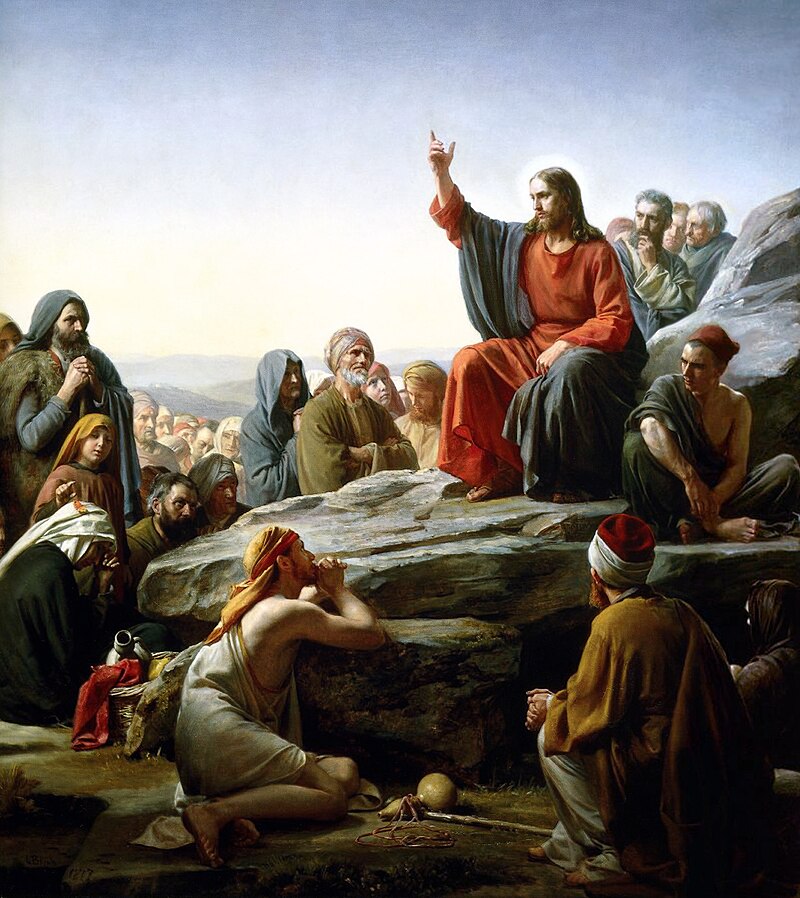
Sermon on the Mount
collection of sayings and teachings of Jesus

Marcionism
Marcionism was an early Christian dualistic belief system originating with the teachings of Marcion of Sinope in Rome around 144. Marcion was an early Christian theologian, evangelist, and an important figure in early Christianity. He was the son of a bishop of Sinope in Pontus. About the middle of the 2nd century (140–155) he traveled to Rome, where he joined the Syrian gnostic Cerdo.
Council of Jerusalem
first Christian synod (c. 48–50 AD)
Jewish Christian
members of the Jewish movement that later became Christianity

antinomianism
Antinomianism ( [] 'against' and [] 'law') is a term used to describe any view which rejects laws or legalism and argues against moral, religious or social norms (), or is at least considered to do so. The term has both religious and secular meanings.

supersessionism
thumb|Paul the Apostle is often cited by those who believe that Israelite religious law is no longer needed in observance.
Supersessionism, also called fulfillment theology by its proponents and replacement theology by its detractors, is the Christian doctrine that the Christian Church has superseded the Jewish people, assuming their role as God's covenanted people, thus asserting that the New Covenant through Jesus has superseded or replaced the Mosaic covenant. Supersessionists hold that the universal Church has become God's "New Israel" and thus Christians are the people of God, not Jews.
Catholic doctrine regarding the Ten Commandments
influence of Hebrew Bible law of Moses in doctrines of the Roman Catholic Church
New Covenant
biblical interpretation
Christian ethics
branch of Christian theology that defines virtuous behavior and wrong behavior from a Christian perspective

Quartodecimanism
Quartodecimanism (from the Vulgate Latin quarta decima in Leviticus 23:5, meaning fourteenth) is the name given to the practice of commemorating the death of Christ on the day of Passover, the 14th of Nisan according to biblical dating, on whatever day of the week it occurs. The Quartodeciman controversy in the Church was the question of whether to celebrate Easter on Sunday (the first day of the week), or at the time of sacrifice of the Passover lamb.
Sabbath in Christianity
inclusion or adoption in Christianity of a Sabbath day

Sabbatarianism
thumb|300px|Sabbath Eve, painting by Alexander Johnston (artist)|Alexander Johnston
thumb|300px|Christian denominations teaching first-day Sabbatarianism, such as the Free Presbyterian Church of Ulster, observe the Lord's Day as a day of worship and rest.
Sabbatarianism advocates the observation of the Sabbath in Christianity, in keeping with the Ten Commandments.

Judaizers
The Judaizers were a faction of the Jewish Christians, both of Jewish and non-Jewish origins, who regarded the Levitical laws of the Old Testament as still binding on all Christians. They tried to enforce Jewish circumcision upon the Gentile converts to early Christianity and were strenuously opposed and criticized for their behavior by the Apostle Paul, who employed many of his epistles to refute their doctrinal positions.
.jpg)
God-fearer
thumb|right|250px|Sardis Synagogue (3rd century, [[Turkey) had a large community of God-fearers and Jews integrated into the Roman civic life.]]
theonomy
Theonomy (from Greek 'god' and 'law') is a hypothetical Christian form of government in which divine law governs societies. Theonomists hold that societies should observe divine law, particularly the Old Testament’s judicial laws. The movement’s chief architects were Gary North, Greg Bahnsen, and R.J. Rushdoony.
New Perspective on Paul
Protestant school of interpretation of Pauline literature, founded in the 1960s, seeking to lift Pauline literature out of the Lutheran-Reformed framework and interpret them based on what is said to be an understanding of 1st-century Judaism
Law and Gospel
topic in Lutheran and Reformed theology concerning the relationship between God's Law and the Gospel of Jesus
Sabbath in seventh-day churches
part of the beliefs and practices of seventh-day churches
Mosaic covenant
covenant between God and the biblical Israelites
dual-covenant theology
school of thought in Christianity
Christian views on the old covenant
dispute and controversy in Christianity
circumcision controversy in early Christianity
Incident at Antioch
dispute between Paul and Peter said to haven taken place during the Apostolic Age
Paul the Apostle and Judaism
Paul the Apostle and Jewish Christianity