Category
page 1Mosquito genera
.jpg)
Anopheles
Anopheles () is a genus of mosquito first described by the German entomologist J. W. Meigen in 1818, and are known as nail mosquitoes and marsh mosquitoes. Many such mosquitoes are vectors of the parasite Plasmodium, a genus of protozoans that cause malaria in birds, reptiles, and mammals, including humans. The Anopheles gambiae mosquito is the best-known species of marsh mosquito that transmits the Plasmodium falciparum, which is a malarial parasite deadly to human beings; no other mosquito genus is a vector of human malaria.

Aedes
Aedes (also known as the tiger mosquito or colloquially "dengue mosquito") is a genus of mosquitoes originally found in tropical and subtropical zones, but now found on all continents except Antarctica. Some species have been spread by human activity: Aedes albopictus, a particularly invasive species, was spread to the Americas, including the United States, in the 1980s, by the used-tire trade.

Culex
thumb|alt=Diagram of larva body with parts labeled |Anatomy of a Culex larva
thumb|alt=Diagram of adult mosquito body with parts labeled |Anatomy of a Culex adult

Culiseta
Culiseta is a genus of mosquitoes. Most Culiseta species are cold-adapted, and only occur in warmer climates during the colder parts of the year or at higher elevations where temperatures are lower. Species found in Southern California are larger than most mosquitoes species, specifically C. inornata, C. particeps, and C. incidens. These species are found throughout the year in Southern California and feed on several vertebrate species, such as birds, livestock, rodents, reptiles, and humans. The larvae of most species are found bogs, marshes, ponds, streams, ditches, and rock pools, but an Af

Toxorhynchites
Toxorhynchites, also called elephant mosquitoes or mosquito eaters, is a genus of diurnal and often relatively colorful mosquitoes, found worldwide between about 35° north and 35° south. Most species occur in forests. It includes the largest known species of mosquito, at up to in length and in wingspan. It is among the few kinds of mosquito that do not consume blood. The adults subsist on carbohydrate-rich materials, such as honeydew, or saps and juices from damaged plants, refuse, fruit, and nectar.
Psorophora
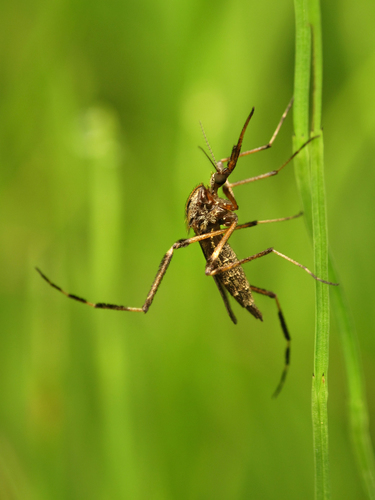
Psorophora is a genus of mosquitoes in the subfamily Culicinae and tribe
Aedini, described by French entomologist Robineau-Desvoidy in 1827. The subgenera and species included within Psorophora are listed below.

Coquillettidia
Coquillettidia is a mosquito genus erected by entomologist Harrison Gray Dyar Jr. in 1904 based primarily on unique features of its "peculiar" male genitalia. The specific epithet honors Dyar's colleague Daniel William Coquillett.
Mansonia
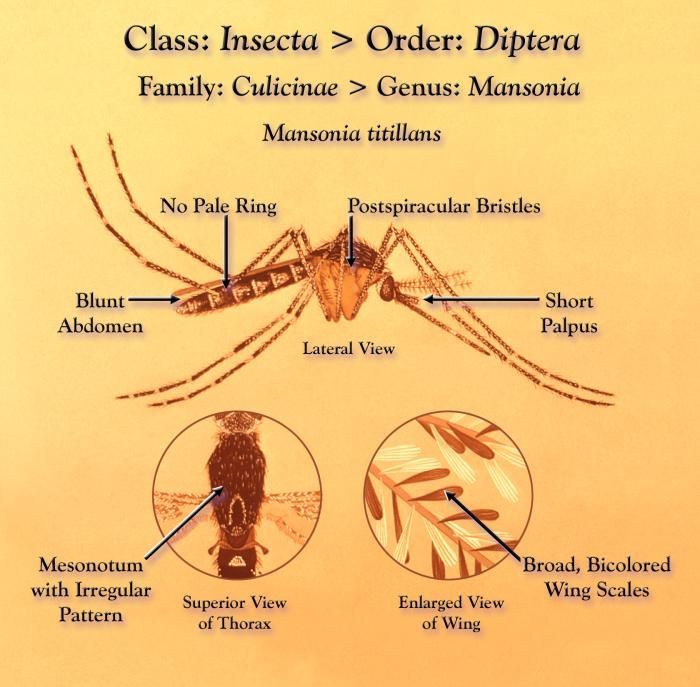
genus of insects
Lutzia
Lutzia is a genus of mosquitos. First described in 1903 by Frederick Vincent Theobald, it includes species whose larval stages exhibit predatory behavior. The type species is Lutzia bigoti.

Sabethes
Sabethes or canopy mosquitos are primarily an arboreal genus, breeding in plant cavities. The type species is Sabethes locuples, first described by Jean-Baptiste Robineau-Desvoidy in 1827.

Haemagogus
thumb | 220x124px | right | Haemagogus
Haemagogus is a genus of mosquitoes in the dipteran family Culicidae. They mainly occur in Central America and northern South America (including Trinidad), although some species inhabit forested areas of Brazil, and range as far as northern Argentina. In the Rio Grande Do Sul area of Brazil, one species, H. leucocelaenus, has been found carrying yellow fever virus. Several species have a distinct metallic sheen.

Aedeomyia
Aedeomyia is a genus of mosquitoes in the family Culicidae, comprising seven recognized species. These mosquitoes are distributed across tropical and subtropical regions worldwide, including Africa, Asia, Australia, and the Americas. Certain species, notably A. squamipennis, are vectors of arboviruses such as the Gamboa virus and potentially the Venezuelan Equine Encephalitis virus, underscoring their medical significance.
Uranotaenia
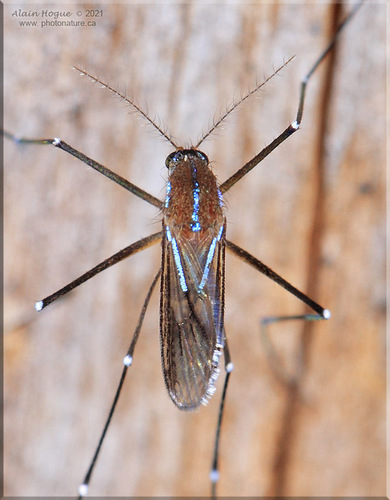
Uranotaenia is a genus of mosquitoes containing at least 270 species. It is the only member of the tribe Uranotaeniini. Larvae of this genus are distinctive among the Culicinae because they rest nearly parallel to the water surface rather than perpendicular to it, a posture similar to the Anophelinae, though unlike the Anophelinae they retain a functional siphon.

Bironella
Bironella is one of the three mosquito genera in the subfamily Anophelinae. Its species are found around New Guinea, from the Maluku Islands east to New Britain and south to northern Australia. The other two genera in the subfamily are Anopheles, which has a nearly worldwide distribution, and Chagasia, which is found in the Neotropics.
Eretmapodites
The Afrotropical mosquito genus Eretmapodites contains species that exhibit facultative cannibalism in their larval developmental stages. The species was first described in 1901 by Frederick Vincent Theobald. The type species is Eretmapodites quinquevittatus Theobald
Ochlerotatus
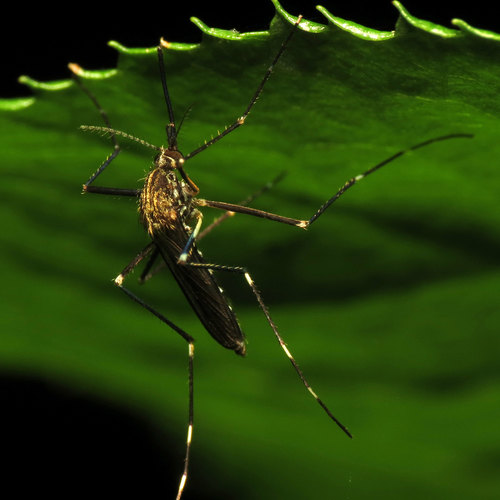
Ochlerotatus is a genus of mosquito. Until 2000, it was ranked as a subgenus of Aedes but was reclassified as a distinct genus based on taxonomic studies. This change resulted in the renaming of many subgenus species, and revisions of related taxa in the Aedini tribe are ongoing. Some authors, however, still use traditional taxonomic names in their publications.

Wyeomyia
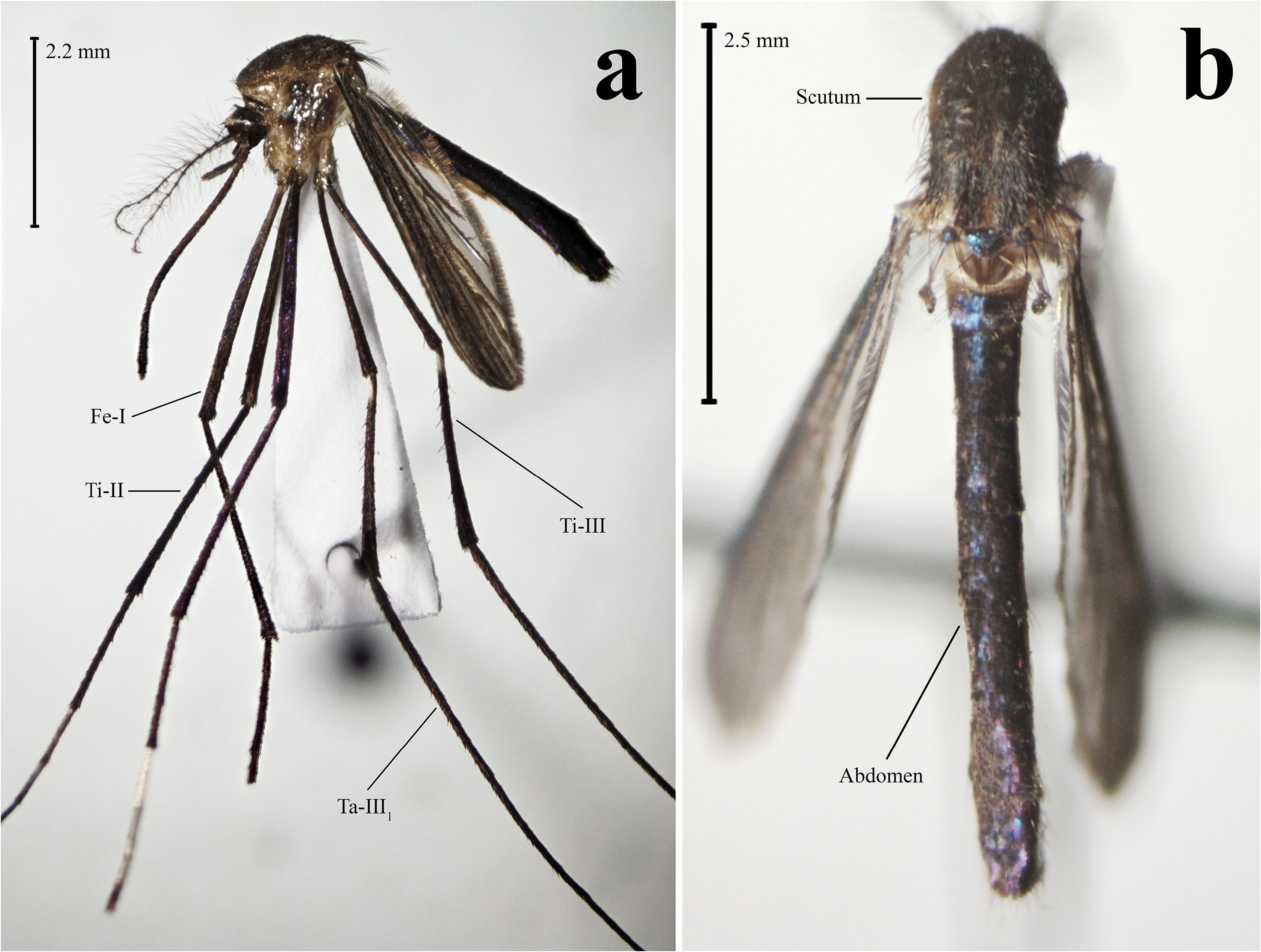
Wyeomyia is a genus of mosquitoes first described in 1901 by Frederick Vincent Theobald. The genus's 140 species can be difficult to characterize because of their diversity and the need for additional taxonomic work to further delineate them. Adults resemble genus Limatus and Sabethes mosquitoes more closely than other genera in the New World tribe Sabethini, but differ by their scutal scales ranging in color from a relatively dull bronzy with a slight metallic sheen in most species, to a metallic gold. There are other distinguishing characters as well.
Trichoprosopon
Trichoprosopon is a genus of mosquitoes which occurs in the Neotropical region, ranging from Mexico south to Argentina. There are currently 17 described species recognized, but there is also an unknown number of undescribed species. They are a poorly understood group with a confused taxonomic history.They are sometimes referred to as hairy-lipped mosquitoes.
Chagasia
Chagasia is one of the three mosquito genera in the subfamily Anophelinae. The other two genera are Anopheles (nearly worldwide distribution) and Bironella (Australasia only). The genus consists of five species in the Neotropical region. These include C. ablusa Harbach, C. bathana Dyar, C. bonneae Root, C. fajardi Lutz and C. rozeboomi Causey, Deane & Deane.
Verrallina
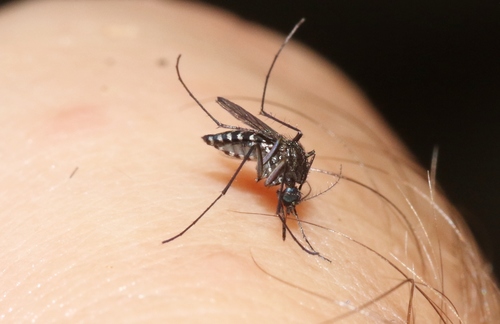
Verrallina is a mosquito genus erected by entomologist Frederick Vincent Theobald in 1903. It belongs to the family Culicidae, subfamily Culicinae, and tribe Aedini. The genus is notable for its three subgenera—Harbachius, Neomacleaya, and Verrallina—and comprises approximately 94 species.

Kimia
genus of insects
Opifex
genus of insects